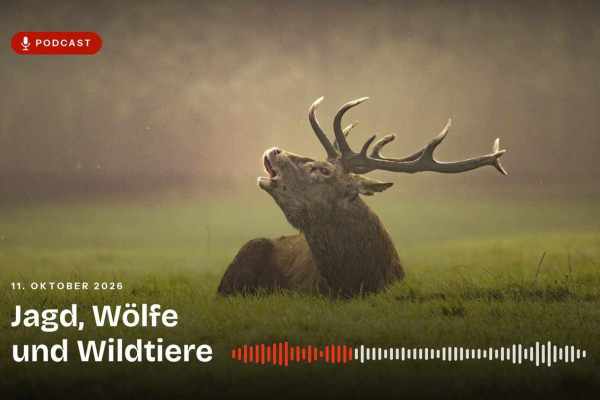
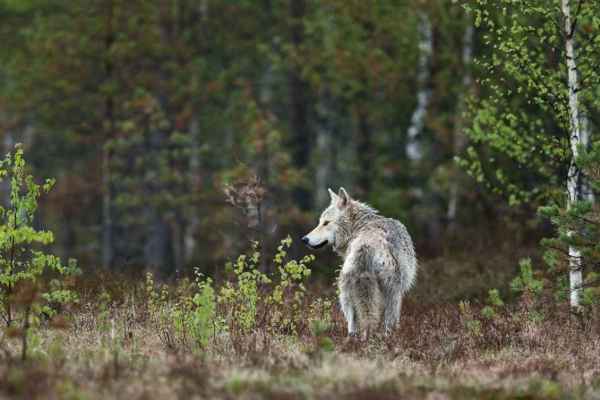
Podcast episode: wolf policy and hunting conflicts
Wolf figures without foundation, a Ticino motion for kills after the first livestock attack, fox hunting without any success monitoring, Zurich's delayed driven-hunt dates and a week full of missed shots.

Podcast episode: wolf policy and hunting conflicts
This edition of «Wild beim Wild» covers wolf figures that do not stand up to scrutiny, motions that would make even the first livestock attack grounds for a kill, recreational hunting without a goal or success monitoring, Zurich's handling of driven-hunt dates, and a week full of missed shots from Bavaria to the Marche.
Wolf: figures that don't hold up
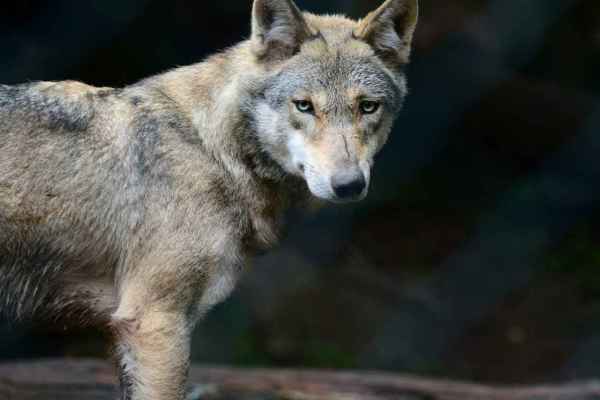
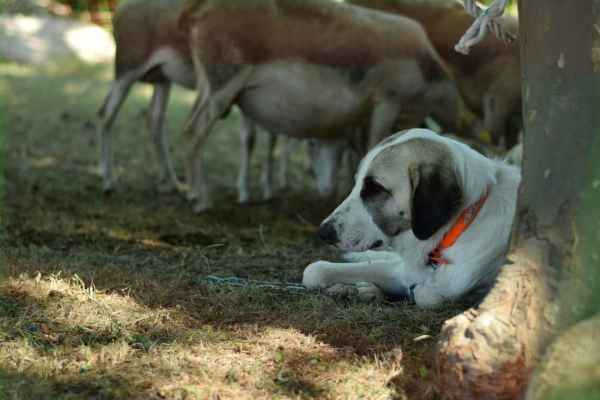
The late Bavarian hunting minister Hubert Aiwanger leaves behind a wolf policy that lives on. The fact check of his statements shows that the official DBBW data do not support the 30 per cent annual increase he claimed; the number of confirmed wolf territories actually fell most recently from 289 to 287. In the case of the otter, the Administrative Court held that its conservation status is unfavourable, something not even the Free State disputed. In Switzerland, a motion in the Ticino Grand Council demands that on “unprotectable” alpine pastures the very first livestock attack count as significant damage. This category accounts for around 47 per cent of the livestock killed recorded by the canton, and according to cantonal data only 6 of 131 animals killed were protected.
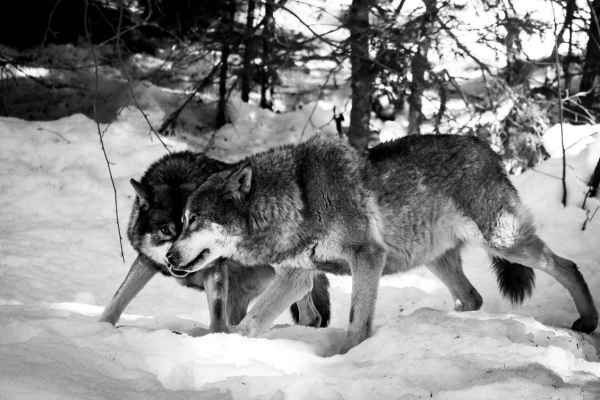
In the canton of Schwyz, the public prosecutor has, according to Landammann Sandro Patierno, not pursued the complaints about the regulation of the Chöpfenberg pack. The factual question remains: what was killed was four pups born this year, the attacks attributed to the pack trace back to older wolves, and the FOEN gave its approval before the canton had reported a single attack for 2026. A study by UZH and KORA at the same time shows that acceptance remained stable despite more wolves: the share of clear opponents fell from 37.5 to 31.8 per cent, and the attitude is explained mainly by altitude and population density, not by proximity to the wolf. The SVP Nidwalden nevertheless wants to reduce the population to 50 to 100 animals, which would mean killing 71 to 86 per cent of the 350 confirmed wolves. All kills of the season are recorded by the wolf counter.
Fox, red deer, crow: recreational hunting without any monitoring of results
The Aargau cantonal government rejected the fox hunting petition, saying the situation has “not changed” since September 2025, without citing a single study or figure. IG Wild beim Wild responds with an open letter to Landammann Stephan Attiger: seven questions, deadline 20 November. The figures are available: in 2025, recreational hunters in Aargau shot 1,837 foxes, and a further 1,220 were registered as found dead. In the canton of Zug, a SWILD expert report concluded that spatially uncoordinated fox hunting does not regulate the population sustainably, and Zug has since stopped promoting fox hunting. If you want to write yourself: addresses and a template letter can be found on the page Fox hunting Aargau.
In St. Gallen, a red deer petition with 439 signatures demands 300 to 400 additional kills of stags, even though the office itself states that for red deer, the killing of females and young animals is decisive. The petition does not mention that red deer stay in the forest because they are not tolerated on meadows and alpine pastures and are driven into cover by hunting pressure. The canton of Lucerne is examining an incentive system for crow hunting costing roughly 50,000 francs, although the government sees its effect only as “theoretical”.
Transparency: Zurich keeps people waiting
A citizen requested, via a freedom-of-information request, the dates of the Zurich driven hunts. The fisheries and hunting administration wants to consult the hunting societies first and decide “no earlier than mid-December”, by which time around four fifths of the regular period will have elapsed. The municipality of Geroldswil shows that it can be done differently: it published the date, time and area of two hunts. At the same time, Zurich is announcing a partial revision of the hunting legislation because the wildlife damage regulation has “not worked” since 2023: prevention contributions and estimated damage have risen steadily.
Hunting accidents: when the target is not identified
In Türkheim in the Unterallgäu a 23-year-old recreational hunter shot two heavily pregnant cows on 5 November, mistaking them for wild boars in the dark. Cows of these breeds weigh around 700 to 750 kilograms when heavily pregnant. Bavaria has no legal requirement for regular proof of shooting proficiency. In France, a red deer drowned during a hunt with hounds (parforce hunt) in Amboise in the pond of a private property, the dogs on top of it; three days later, in the Gironde, a red deer brought to bay seriously injured a 19-year-old.
In Upper Austria, a recreational hunter was acquitted after a red kite died in his drop-net trap following capture. The expert witness doubted the trap's suitability for martens, yet it is still not banned; BirdLife Austria speaks of a vacuum in the hunting act. And in Grottazzolina in the province of Fermo a 70-year-old recreational hunter shot the Labrador belonging to the mayor's family with two shots; his firearms licence has been revoked.
Wolf figures without a basis, fox kills without a goal, dates that are meant to stay secret, and shots at anything that moves in the dark: rarely is anything proven, even more rarely is anything checked, and non-human animals bear the consequences. The question of this episode is: Why does recreational hunting never have to prove its usefulness?
More on the subject of recreational hunting: What the research says about this is shown by Hunting fact-checked: the state of research.
The position of IG Wild beim Wild: IG Wild beim Wild rejects recreational hunting. Our model is the canton of Geneva, which has managed without recreational hunting since 1974: without hunting seasons, without hunting dogs, without driven hunts, without high seats, without the animal cruelty and crime that go hand in hand with hunting season elsewhere. What has worked there for over fifty years disproves every position paper by JagdSchweiz. An association that bases its policy on claims it refutes in its own documents is not a professional organisation, but a factory for misinformation.
Wild animals need a voice
Once a week: research, petitions and background information on recreational hunting. Free of charge and can be unsubscribed from at any time.
All articles are written by IG Wild beim Wild as well as by external co-authors. Research, structuring and editorial processes may be supported by AI-assisted tools.
Support our work
With your donation you help protect animals and give their voice a hearing.
Donate now →