Children and recreational hunting: where youth protection ends
Fictional violence in the evening schedule can earn a reprimand, while trophy photos on a public broadcaster are treated as everyday reality.
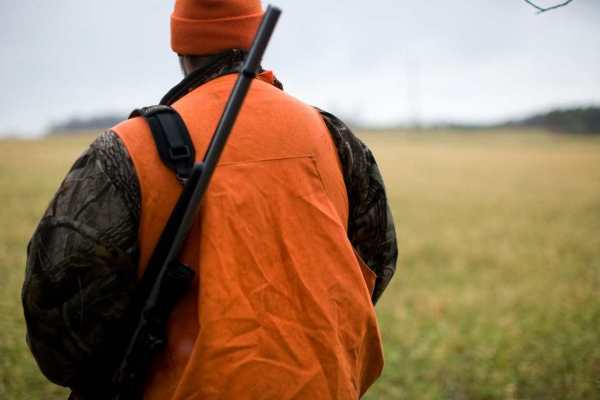
Photo: Juliane Liebermann / Unsplash
What I Won't Pass On
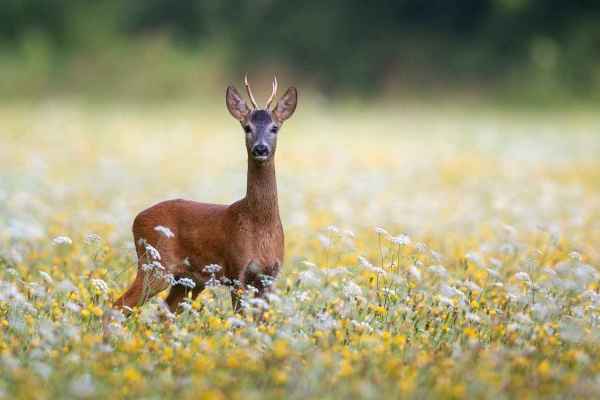
In Switzerland, a film containing violent scenes needs an age rating. A television programme with disturbing images needs a late broadcast slot or a timely warning. A child standing next to a recreational hunter when he shoots a roe deer has no comparable protection. The Independent Complaints Authority for Radio and Television (UBI) must now assess part of this contradiction: how a licence-fee-funded broadcaster shows killed wild animals, including with children standing beside them.
What youth media protection regulates in Switzerland
Since 1 January 2025, parts of the Federal Act on the Protection of Minors in the Areas of Film and Video Games (JSFVG) have been in force. It creates the framework for a uniform, Switzerland-wide age rating and age verification system, with implementation taking place in stages. Minors are to be protected from content that may endanger their development.
For radio and television, Art. 5 of the Federal Act on Radio and Television (RTVG) applies. It requires broadcasters to “ensure, through the choice of broadcast time or other measures, that minors are not confronted with programmes that endanger their physical, mental, moral or social development”.
How strict this standard is can be seen in a case from French-speaking Switzerland. On 6 July 2011, TSR ran a report of around two and a half minutes in its main evening news bulletin about horror films at the film festival in Neuchatel, with short clips including murder and torture scenes. The UBI and subsequently the Federal Supreme Court found a violation of Art. 5 RTVG. The news was often watched by families, and the presenter's warning had come only seconds before the report. The violence in the clips was acted.
Real violence without any age limit
There is nothing staged about recreational hunting. An animal is shot, sometimes flees still wounded, dies, and is gutted and butchered. Switzerland has no nationwide minimum age for children who take part. Whether a child is present is largely left to the discretion of the adults and the hunting parties, as we showed in “Children and recreational hunting in Switzerland: law, risks and psychology”.
In the protection of minors from harmful media, it is not only whether violence is shown that counts, but also how it is portrayed. The German review bodies FSK and FSF ask whether content frightens, whether it presents violence as successful and desirable, and whether it gives children a distorted picture of right and wrong. In recreational hunting, all three can coincide. The person who kills is often the child's mother or father. The kill is celebrated, bystanders offer congratulations, and the child is told that killing serves nature conservation. For a film, exactly this would be scrutinised.
What research knows and what it does not
In the Journal of Child & Adolescent Trauma, the authors Roshni Trehan Ladny and Laura Meyer reviewed 17 studies on how children are affected when they witness violence against animals. Their finding: such experiences can burden children lastingly, even when no violence is done to the children themselves. The authors also note, however, that studies on socially sanctioned violence against animals, such as hunting or slaughter, are extremely rare. They consider it possible that killing “for food” softens the effect. Whether that holds for recreational hunting is an open question. In Switzerland it is not necessary for nutrition, and trophy photos, congratulations and competitions such as the one run by RTR put the kill at the centre, not the meal.
That little research has been done does not mean recreational hunting is harmless for children. We know of no independent study showing that it does children good to be present when non-human animals are killed. The claim that it is educationally valuable comes from those who are looking for new recruits for their hobby. How violence is learned in childhood is described in «Children, hunting and the socialisation of violence» . The studies on this are collected in «Hunting Fact-Checked» .
Real life as a free pass
Part of this question now lies with the UBI, the Swiss Independent Complaints Authority for Radio and Television. IG Wild beim Wild has taken RTR's hunting formats to Bern with 114 signatures. Ombudsman Toni Hess had previously rejected the complaint. On the protection of minors, he writes in his final report of 30 October 2026:
“The trophy photos are part of hunting, and therefore part of lived reality. Moreover, they are not capable of endangering the physical, mental or moral development of minors.”
In doing so, Hess is completely at odds with what experts and specialist bodies state. In 2018 the UN Committee on the Rights of the Child recommended that Spain also exclude minors as spectators at bullfights. In 2024 it asked South Africa whether it would criminalise the participation of children in trophy hunting. In Poland, the government's Commissioner for Children's Rights in 2018 fully supported the ban on taking children along on hunts. And a study by the Burgenland University of Applied Sciences involving 1,050 young adults, which RTR itself reported on, shows that between 96.1 and 98.5 per cent of emotional reactions to photos with animals killed are negative, and 73.3 per cent want a content warning before such images. The Stiftung Kinderschutz Schweiz (Swiss Child Protection Foundation) also notes that even witnessing violence can place a severe psychological burden on children, and warns that the consequences are regularly underestimated or downplayed. It applies this to violence between parents. Why it should be any different when a parent kills an animal before the child's eyes, the final report does not explain.
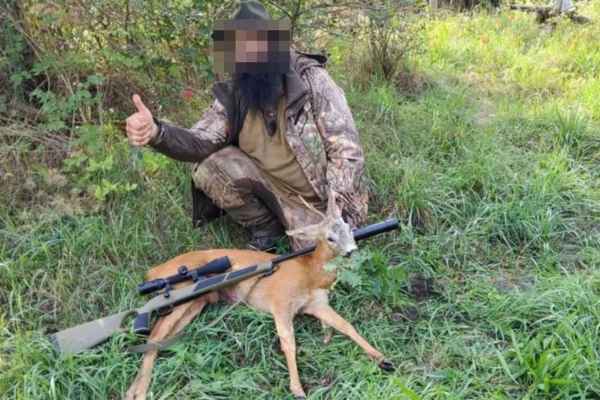
By the Ombudsman's logic, the law protects children from staged violence, but not from the real thing. Yet on its freely accessible hunting portal, RTR itself has published images of children next to dead wild animals: a toddler next to a shot fox, a girl with a chamois in her arms, blood clinging to the animal's muzzle. There was no warning, and no age limit either. According to Kinderschutz Schweiz , children have a right to their own image from birth. A toddler cannot consent to publication on a portal accessible nationwide. How it came to this is set out in “RTR: SRG broadcaster raffles off a hunting licence and picks the ‘most beautiful’ trophy photo”.
Commentary: A hunting licence does not make anyone an educator
Child protection does not begin only once a child has demonstrably come to harm. For film and television, Switzerland recognised this long ago: age ratings apply as a precaution, not only once an expert report has established harm. Why should a different standard apply to real killings than to fictional ones?
A hunting licence is no proof that someone can raise children, and tradition does not prove that something is harmless. Recreational hunters call it hunting culture or custom when children are present at the killing, help with gutting and pose for the trophy photo. For the vast majority of people with common sense, this is not culture but a lack of culture: children are taught that killing a sentient being is a reason to celebrate. That Toni Hess, ombudsman of the SRG.R in Chur, dismisses the trophy photos on RTR's hunting portal as “a reality of life” and sees no danger in them for minors shows how far this lack of culture extends: right up to the very body that is supposed to protect the public.
In this way, children are conditioned to do something that runs against their own nature. If a child had to choose what to eat, it would take the apple, not the hare. Research supports this: a study by the University of Exeter with 479 participants shows that children aged between 9 and 11 are less likely than adults to see farm animals as food, want them to be treated better and judge eating animals to be morally less acceptable. The view that some animals are simply food is therefore not innate. It is learned, and recreational hunting teaches it to children particularly early and particularly graphically.
Anyone who leaves the question of whether children should be present at killings solely to recreational hunters lets those who profit from it be the judges. Poland has drawn the consequence and excluded minors from hunting. There, in a Survey in 2018, 80 per cent of the population spoke in favour of such a ban. Switzerland can do this too: our petition “Protect minors from recreational hunting” calls for this ban at federal level. For members of cantonal councils, there is a template text for a parliamentary motion.
Do you have a tip, a source or a correction for this article? Write to us.
More on the subject of recreational hunting: In the dossier Psychology of recreational hunting we put research, motives and social consequences into perspective. What the research says about this is shown by Hunting fact-checked: the state of research.
The position of IG Wild beim Wild: IG Wild beim Wild rejects recreational hunting. Our model is the canton of Geneva, which has managed without recreational hunting since 1974: without hunting seasons, without hunting dogs, without driven hunts, without high seats, without the animal cruelty and crime that go hand in hand with hunting season elsewhere. What has worked there for over fifty years disproves every position paper by JagdSchweiz. An association that bases its policy on claims it refutes in its own documents is not a professional organisation, but a factory for misinformation.
Wild animals need a voice
Investigations, petitions and background on recreational hunting. As a thank-you, you will immediately receive our free guide «Recreational hunting on your doorstep: what you can do».
Support our work
With your donation you help protect animals and give their voice a hearing.
Donate now →