Stop Fox Hunting – Write to Your Cantonal Parliament
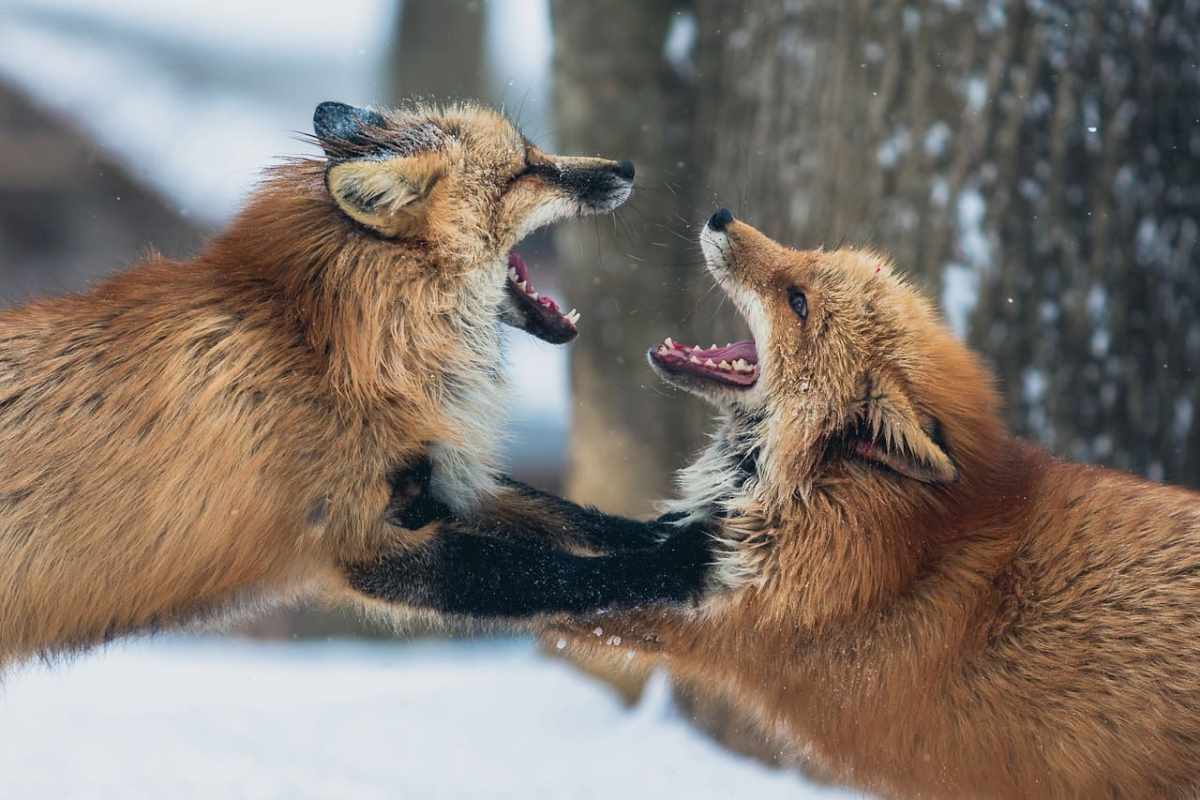
Every year, around 19,000 red foxes are shot in Switzerland. The official justification: population regulation, disease control, protection of ground-nesting birds. More than 30 years of wildlife biology research consistently show no sustainable regulatory effect from fox hunting. A study by the Sorbonne (Jiguet et al. 2026) has for the first time quantified the economic balance sheet: Hunting costs amount to over 100 million euros annually – almost 64 euros per animal killed. The damage caused: only 8 to 23 million euros. Recreational hunting costs the public up to thirteen times what it is supposedly preventing.
The canton of Lucerne is the only canton that systematically records the health status of killed foxes. Of 2,217 foxes killed, only 39 showed signs of disease. Over 98 percent of the animals shot were healthy. At the same time, a French study from the Nancy region (Comte et al. 2017) shows that intensive hunting increases the prevalence of fox tapeworm from 44 to 55 percent – because young foxes fill the gaps and carry a higher parasite load. In Luxembourg, the infection rate fell from around 40 to under 10 percent after fox hunting was banned in 2015.
Most cantons respond to petitions on fox hunting without citing a single study. The canton of Zug is the only exception: in 2025 it commissioned an independent study from SWILD. The result (May 2026): fox hunting does not regulate populations sustainably, does not improve disease control, and is inferior to non-lethal methods. The Zug findings are already having an effect beyond the canton's borders: Basel-Stadt is taking up the evidence and has shown itself open to examining whether to forgo regular fox hunting.
You can do something, no matter which canton you live in. Get in touch directly with your cantonal parliament member or your National Councillor. It's legal, effective, and takes only a little time.
Important: Don't rely on email alone. We have received feedback from several cantons that messages about hobby fox hunting sometimes come back as undeliverable. Whether this is due to faulty addresses or a targeted filter cannot be determined from the outside. It is therefore better to use several channels: write a letter, make a phone call, or seek a personal conversation. You can also contact the parties and parliamentary groups directly – a message to a party or group secretariat is often more effective than one to individual council members. A phone call or letter cannot be filtered out as easily as an email and often leaves more of an impression.
Choose your canton
We have prepared complete contact lists and canton-specific background information for the following cantons:
👉 Canton of Lucerne – 120 cantonal parliament members; RUEK rejected the petition without citing any studies
👉 Canton of Glarus – Cantonal parliament with 60 members; the government rejected the petition without citing any studies
👉 Canton of Basel-Landschaft – Cantonal parliament with 90 members; the government rejected the petition without citing any studies
👉 Canton of Zug – the only canton with an independent scientific study (SWILD 2026); initial consequences have been drawn
👉 Canton of Basel-Stadt – the cantonal government is open to «an in-depth examination of doing away with fox hunting»; template letter and contact details for the cantonal parliament
👉 Canton of Bern – cross-party motion in the Cantonal Parliament (GLP, SVP, Green Party, SP, FDP) calls for fox management instead of fox hunting; the government itself admits that hunting non-threatened species such as the fox is «in fact an end in itself»
👉 Canton of Uri – Cantonal parliament with 64 members; the security department answered the petition with boilerplate text and no studies
👉 Canton of Thurgau – Cantonal parliament with 130 members; the cantonal government rejected evidence-based fox hunting (April 2026) without citing a single study
👉 Canton of Appenzell Outer Rhodes – Cantonal parliament with 65 members; cantonal councillor Biasotto responds in detail but contradicts himself; BAFU figures show that recreational hunting kills the vast majority, not the wildlife wardens
👉 Canton of Zurich – Cantonal parliament with 180 members; around 2000 foxes per year with no kill quota, the hunting authority dismisses an independent cost study as “not serious”
👉 Canton of Solothurn – cantonal parliament with 100 members; Cantonal Councillor Jeker rejected the petition without citing a single study, relying solely on a position paper by JagdSchweiz; despite 90 years of hunting, fallen game numbers are at a record high
In all other cantons you can use the universal template letter below and obtain the email addresses via your cantonal parliament's website.
Template letter – usable for all cantons
Copy this text into your email program, adjust the name, place of residence and salutation, and send it as a personal email from your own inbox.
Subject: Fox hunting – please take action
Please state the specific goal of fox hunting in your canton, the data on goal achievement, and the scientific basis that justifies routine hunting over targeted, non-lethal measures.
Dear Ms [Name] / Dear Mr [Name]
I am writing to you directly as a citizen because I am concerned about the practice of fox hunting in Switzerland.
Every year, around 19,000 red foxes are shot in Switzerland. The canton of Lucerne is the only one that systematically records the health status of killed foxes: of 2,217 animals killed, only 39 showed signs of disease – over 98 percent were healthy. This shows no significant contribution to disease control, since killing almost exclusively healthy animals does not curb disease.
More than 30 years of wildlife biology research consistently show no sustainable regulatory effect from fox hunting. Compensation effects – higher birth rates, immigration – quickly offset kills (Baker & Harris 2006; Rushton et al. 2006; Kämmerle et al. 2019). When it comes to fox tapeworm, hunting is even counterproductive: a French study from the Nancy region (Comte et al. 2017) showed that intensive hunting increased prevalence from 44 to 55 percent, because young foxes fill the gaps and carry a higher parasite load. In Luxembourg, the infection rate fell from around 40 to under 10 percent after fox hunting was banned in 2015. A study by the Sorbonne (Jiguet et al. 2026) has for the first time quantified the economic balance sheet: hunting costs amount to over 100 million euros annually – almost 64 euros per animal killed. The officially reported damage amounts to only 8 to 23 million euros. Hunting costs the public up to thirteen times what it is supposedly preventing.
Rabies was not defeated by hunting, but by oral vaccine bait programmes starting in 1978. Foxes are also a natural protective factor against tick-borne diseases: they regulate mice and rodents, which are considered the main reservoirs for ticks carrying Lyme disease. The Swiss National Park has been free of hunting since 1914 – over a hundred years, without any population explosion or disease problems.
In 2025, the canton of Zug was the only canton to commission an independent study on fox hunting (SWILD, May 2026). The result: fox hunting shows no demonstrable regulatory effect on the population, does not improve disease control, and is inferior to non-lethal protective measures. The hunting commission subsequently decided to no longer proactively promote fox hunting. The canton of Geneva has managed without recreational hunting since 1974 – and thus, in effect, without fox hunting too: only state game wardens are permitted to intervene there, and in the last two years there has not been a single regulatory kill. The canton of Basel-Stadt also indicated in June 2026 that it is open to examining in depth whether to forgo regular fox hunting, likewise drawing on the Zug expert report.
I ask you to advocate for a scientifically grounded review of fox hunting and to examine whether this practice – with no proven benefit, considerable animal suffering, and at the taxpayers' expense – is still appropriate and proportionate. No federal law compels the cantons to hunt foxes. The canton of Zug has shown that this room for manoeuvre can be used.
Kind regards
[Your name]
[Your place of residence]
Important note
Please copy the template letter into your own email program and send it as a personal email from your own inbox.
You can find the email addresses of cantonal parliament members on the official website of your cantonal parliament – usually under «Members» or «Council Members».
The Zug SWILD report
The canton of Zug is so far the only Swiss canton to have responded to Pascal Wolf's fox hunting petition with a genuine scientific study. In autumn 2025, the Department of the Interior commissioned SWILD – Urban Ecology, Wildlife Research, Communication – to produce an expert report. The second version appeared in May 2026 and was presented to the hunting commission on 16 June 2026.
The result is unambiguous: the fox hunting currently practised cannot sustainably regulate populations, does not improve disease control and is inferior to non-lethal methods when it comes to protecting livestock. The experience from Geneva (since 1974) and Luxembourg (since 2015) confirms that wildlife management works without recreational hunting of the red fox.
The full study is publicly accessible: Scientific Basis for Fox Hunting
What Science Says
More than 30 years of wildlife biology research consistently show: intensive fox hunting does not sustainably reduce populations, does not improve disease control and does not effectively protect ground-nesting birds. The canton of Zug had this confirmed by SWILD in 2026. Cantons such as Geneva (since 1974) and countries such as Luxembourg (since 2015) demonstrate that wildlife management works without recreational hunting.
The full study overview: Studies: The Impact of Recreational Hunting on Wild Animals
📌 SWILD – Kistler C. & Bontadina F. (2026): Scientific Basis for Fox Hunting. Canton of Zug.
The only cantonal commissioned report on fox hunting in Switzerland to date. No sustainable regulatory effect, no contribution to disease control, non-lethal methods superior.
📌 Jiguet F. et al. (2026): Biological Conservation.
383,299 red foxes killed per year in France – no statistical link to a reduction in damage.
Hunting costs exceed 100 million euros annually – almost 64 euros per animal killed. The officially reported damage: only 8 to 23 million euros. The hunt costs up to thirteen times what it allegedly prevents.
📌 German Animal Welfare Federation (2026): New study – hunting foxes and other predators expensive and ineffective.
The German Animal Welfare Federation describes the Jiguet study as groundbreaking and calls for a shift towards evidence-based wildlife management. Instead of blanket hunting, prevention and deterrence are needed.
📌 Comte S. et al. (2017): Echinococcus multilocularis management by fox culling: An inappropriate paradigm.
Intensive hunting increased the prevalence of fox tapeworm from 44 to 55 per cent.
📌 Baker PJ et al. (2002): Effect of British hunting ban on fox numbers. Nature.
During the British hunting ban of 2001, there was no increase in fox populations.
📌 Summaries of Scientific Literature on the Red Fox (PDF)
A compilation of key study findings on the population biology, disease role and effects of hunting on the red fox.
What Has Happened So Far in the Cantons
Canton of Lucerne – the canton where the petition began and where the dispute has dragged on the longest:
📌 No to Fox Hunting: Lucerne Motion Exposes a Lack of Facts
The original motion by Lucerne lawyer Pascal Wolf, which fundamentally questions the hunting system.
📌 Lucerne and the red fox: when politics ignores facts
The RUEK waves off the petition – Luxembourg, Geneva and Ticino have long shown the opposite.
📌 Fox hunting in Lucerne: 98 percent of the killed animals were healthy
The canton's own statistics contradict the main justification for fox hunting.
📌 Lucerne RUEK to Wild beim Wild: “Tone down the language” instead of answers
Instead of addressing the scientific evidence, the commission admonishes the tone of the enquiry.
🧠 The Psychology of Recreational Hunting in the Canton of Lucerne
Why fox hunting is upheld even though the canton's own figures speak against it.
Canton of Zug – the only canton to have the evidence scientifically examined and to draw consequences from it:
📌 Canton of Zug: Authorities Curb Fox Hunting After Study
Following the SWILD report, the hunting commission decides to stop proactively promoting fox hunting.
🧠 Psychology of recreational hunting in the canton of Zug
What it means psychologically when a canton actually has the evidence examined instead of fending it off.
Canton of Bern – political movement in the Grand Council, but resistance from government and the association:
📌 Fox management instead of fox hunting: Bern motion calls for a replacement
Six parliamentary groups are calling with Motion 237-2026 for a system change: away from recreational hunting of the fox, towards scientific fox management.
📌 Fox Hunting: Bern Government Refuses to Examine the Evidence
The cantonal government rejects the preceding motion while itself admitting that hunting non-threatened species such as the fox is «in fact an end in itself».
📌 Stop Fox Hunting – Write to the Bern Grand Council
Cross-party Motion 237-2026 calls for fox management instead of fox hunting. Debate in the Grand Council at the earliest in 2027.
📌 Fox Hunting Panel Discussion in Utzenstorf: Four Recreational Hunters, One Non-Hunter and No Real Dialogue
How the debate is conducted locally when recreational hunters keep it among themselves.
🧠 The Psychology of Recreational Hunting in the Canton of Bern
What drives the association and the government to stick to fox hunting even though politics has long since moved on.
Canton of Glarus – rejected without scientific examination, followed by public objection:
📌 Glarus Rejects Fox Hunting Petition Without Examining the Evidence
Three paragraphs, not a single study, petition rejected.
📌 Open letter to the Glarus Landammann regarding the rejection of the fox hunting petition
The response to the fact-free rejection: a public call to examine the evidence after all.
🧠 Psychology of recreational hunting in the canton of Glarus
What lies behind a rejection that dispenses with any scientific examination.
Canton of Basel-Landschaft – rejected twice, with a contradiction between the two answers:
📌 Basel-Landschaft backpedals: first regulation, now «no target»
The second response, dated 11 August 2026, contradicts the first. The canton claims that the findings from Zug have “already been taken into account”, yet the current hunting directive from March 2026 continues to prescribe an eight-month fox hunting season.
📌 Canton of Basel-Landschaft Responds to Fox Hunting Petition – Without a Single Scientific Source
The first response, dated 16 June 2026: four pages of administrative language, not a single study cited.
📌 Dumbing Down the Public in the Canton of Basel-Landschaft
While the evidence is ignored, the canton celebrates 35 new recreational hunters.
🧠 The Psychology of Recreational Hunting in the Canton of Basel-Landschaft
What it says about an administration when it ignores evidence while celebrating new recruits at the same time.
Canton of Uri – rejected with a generic statement of principle, without any studies whatsoever:
📌 Stop Fox Hunting – Write to the Uri Cantonal Council
The security department fails to answer any of the six petition questions and contradicts itself with its own example from Geneva.
🧠 The Psychology of Recreational Hunting in the Canton of Uri
Why the Uri electorate continues to allow hunting of even endangered species, and how deeply the reflex to kill is embedded in the canton's approach to wild animals.
Canton of Basel-Stadt – from an enquiry to an opening, prompted by the Zug report:
📌 Stop Fox Hunting – Write to the Basel-Stadt Grand Council
Template letter and contact for the Grand Council. The cantonal government is open to a more thorough examination of a possible waiver.
📌 After Bern and Lucerne: Basel Questions Fox Hunting
In the Basel Grand Council, a Grand Councillor demands a scientific review.
📌 Basel-Stadt Examines Ending Fox Hunting, Prompted by a Zug Report
The cantonal government declares itself open to a thorough examination of a possible waiver. Five foxes killed by hunters per year, twice as many road kills, no benefit proven.
🧠 Psychology of recreational hunting in the canton of Basel
Why fox hunting persists even in an urban canton with hardly any hunters.
Canton of Thurgau – cantonal government rejected evidence-based fox hunting, even though the canton had already banned earth hunting:
📌 Stop Fox Hunting – Write to the Thurgau Grand Council
Template letter and contact for the Grand Council. The cantonal government itself admits that fox hunting does not control the population.
📌 Canton of Thurgau Permanently Bans Earth Hunting
In 2017, the Grand Council became the first canton in Switzerland to ban earth hunting of foxes and badgers.
🧠 Psychology of recreational hunting in the canton of Thurgau
Why Thurgau frames recreational hunting as a “service” to agriculture, thereby immunising itself against criticism.
Canton of Appenzell Outer Rhodes – a detailed response that contradicts itself:
📌 Stop Fox Hunting – Write to the Appenzell Outer Rhodes Cantonal Council
Template letter and contact for the cantonal council. Cantonal Councillor Biasotto himself admits: no target, no data, no studies. Federal Office for the Environment (BAFU) figures show that the wildlife wardens remove only a fraction of foxes, while recreational hunting kills hundreds of healthy animals every year.
🧠 Psychology of recreational hunting in the canton of Appenzell Outer Rhodes
Rescuing roe deer fawns by drone in spring, shooting 602 roe deer in autumn: the cognitive dissonance of Appenzell Outer Rhodes' recreational hunting.
Canton of Zurich – a citizen presents the economic balance sheet to the hunting authority:
📌 Stop fox hunting – write to the Zurich cantonal parliament
Template letter and contact details for the cantonal parliament. Around 2000 foxes per year with no kill quota; the hunting authority dismissed an independent cost study as “not serious”, and a citizen is demanding access to the game record files.
📌 Zurich: Citizen Confronts Hunting Authority with Fox Hunting's Million-Franc Balance Sheet
How the justifications for fox hunting dissolve as soon as the costs are set against the alleged damage.
🧠 The Psychology of Recreational Hunting in Zurich
Acceptance and violence in urban space: what psychologically shapes recreational hunting in the most urban canton.
Canton of Solothurn – rejected on the grounds that evidence would be too costly:
📌 Stop fox hunting – write to the Solothurn cantonal parliament
Template letter and contact details for the cantonal parliament. The cantonal government calls the benefit of fox hunting «indisputable», yet admits that monitoring would overstretch its resources; its sole source is a position paper by JagdSchweiz. 866 foxes were killed in 2024, and despite 90 years of hunting, fallen game numbers are at a record high.
🧠 The psychology of recreational hunting in the canton of Solothurn
Driven hunts, Hubertus masses and political defence: why criticism of hunting in Solothurn is not examined, but framed as an attack on order.
Cross-Cantonal – the bigger picture behind the individual cases:
📌 Killed by the Million – for Nothing: New Study Exposes Hunters' Tall Tales
Study in “Biological Conservation”: kills reduce neither populations nor damage.
📌 Recreational Hunters as False Wildlife Experts
How Pascal Wolf submitted petitions in more than 12 cantons – and what the authorities made of them.