Geneva Hunting Ban
"Predators are widely present but do not cause any problems", says the fauna inspector. "We do not regulate foxes, martens or badgers."

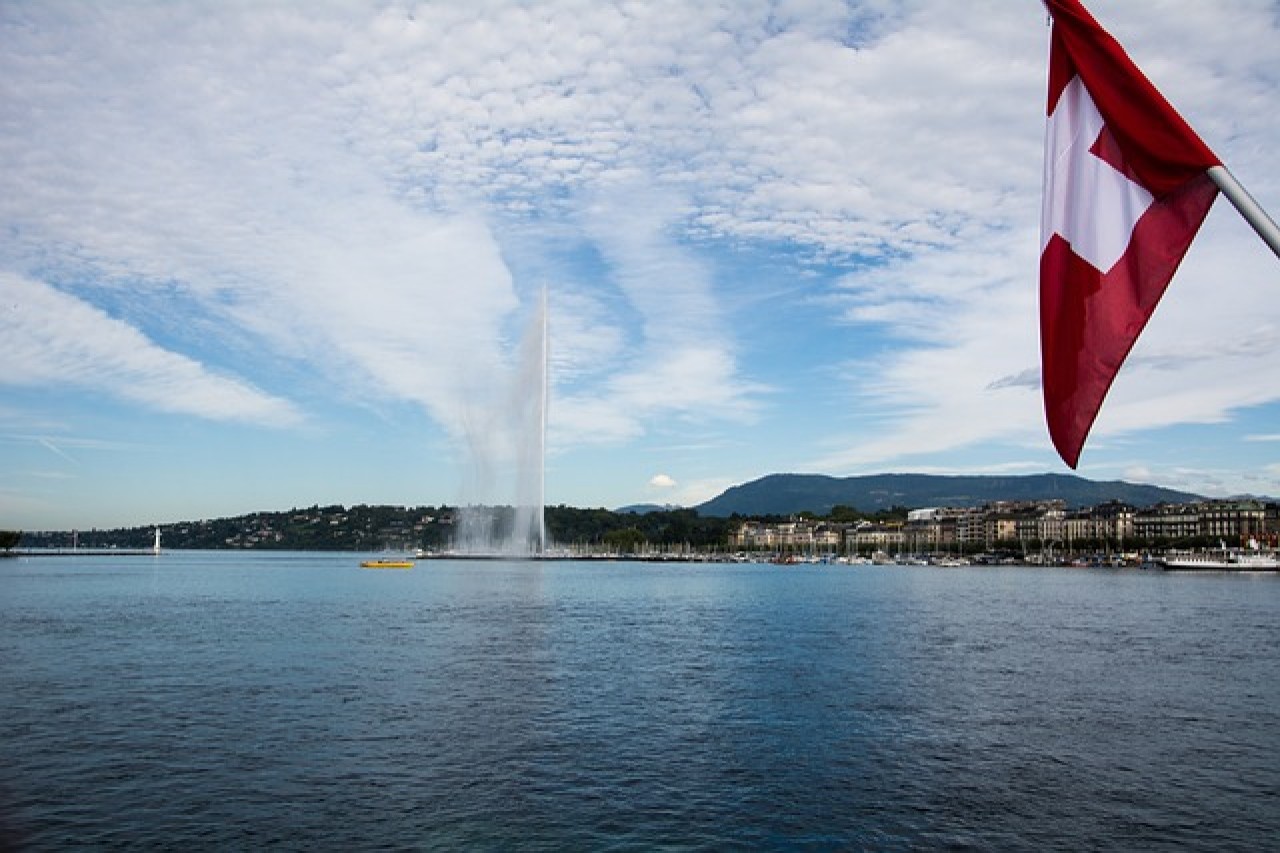
The beautiful canton of Geneva has had a hunting ban for hobby hunters since 19 May 1974.
Around two thirds of voters said yes at the time to the hunting ban demanded by animal welfare advocates. Since then, the state has regulated the world of wildlife and limited its impact on people and the environment with the help of game wardens.
The hunting ban in Geneva was a sensation and attracted widespread attention well beyond the canton. For the hunting world it was a shock — and remains so to this day. For the example of Geneva proves that it is possible — even in a densely populated cultivated landscape — to do without hobby hunters; indeed, that nature and animals are far better off as a result, and that people too benefit from it.
Due to the high hunting pressure in the surrounding areas of France and the canton of Vaud, wild animals even seek asylum in Geneva. Some of the hunted animals swim across the Rhône into the canton of Geneva. The wildlife is cared for by around a dozen professional environmental wardens (personnel costs approximately 600’000 francs per year; the total budget for wildlife management amounts to approximately 1.2 million francs). These nature conservationists also carry out a wide range of other tasks, such as monitoring fishing, supervising nature reserves, preventing wildlife damage, and performing special duties relating to forestry and agriculture. For this they share just under 3 full-time positions.
If dubious amateurs were once again to be involved in wildlife management, costs would not be lower either, since they would have to be intensively supervised and monitored, as is the case in the other cantons.
Of the total area of 280 square kilometers, the densely populated canton of Geneva, with 500,000 inhabitants, has 30 square kilometers of forest and 110 square kilometers of farmland. Expressed as a percentage: 45 percent of the canton is used for agriculture, 25 percent is built up, 15 percent consists of forest and river, and a further 15 percent is taken up by Lake Geneva.
Wildlife damage to agriculture is practically insignificant, says environmental officer Gottlieb Dandliker. The canton spends 250,000 francs per year on prevention, plus 350,000 francs per year on wildlife damage, for which pigeons are largely responsible.In total, the canton must raise around 1.2 million francs per year for wildlife management, which corresponds to a cup of coffee per inhabitant, or a subsidy to agriculture of just over 3%.
By comparison, fishing would consume considerably more costs, even though licenses are sold. Dandliker therefore sees the hunting ban for hobby hunters in Geneva as the cheapest alternative for the canton and clearly financially sustainable in the long term.
Wildlife inspector Dandliker speaks of the fact that contact with wildlife has a therapeutic quality for people. By this he means discovering animal tracks, hearing animals, or even encountering them in the wild.
Wild boar in the canton of Geneva
Approximately 1 full-time position, or an average of 1,621 hours, is dedicated to the culling of wild boar. Young animals account for the majority of those shot (around 80%). Wild boar damage to crops was estimated at 17,830 (45,000) francs in 2014. Today, around 5 wild boar live per square kilometer of forest — a low level that remains stable. The population can now be well controlled, according to Dandliker. Over the past 10 years, around 327 wild boar per year have been shot in Geneva. Since the hunting ban in 1974, the average has in fact been only around 125.Prior to the hunting ban in 1974, wild boar had been eradicated from the canton of Geneva by hobby hunters over the course of decades, along with other animal species.
One reason why wild boar in particular are shot is: they love ripe, sugar-rich grapes. In a wine-growing canton like Geneva, this is a problem, especially at the onset of autumn. When a herd of wild boar breaks into a vineyard, the animals can easily consume 300 to 400 kilograms of grapes in a single night. Winegrowers are understandably anxious in the days and weeks before the grape harvest.
The canton is aware of the most affected areas.The state provides farmers with electric fences. Near protected areas, it even installs them itself.Farmers receive 1 franc per running metre for the installation. They are responsible for maintaining the fences until they are removed. Fruit trees are also protected with nets to prevent deer and hares from gnawing on the bark. If animals cause damage nonetheless, the canton covers the losses.
It is notable that virtually no forestry damage is reported.The damage figures in the canton of Geneva are comparable to those of Schaffhausen, 50’130 (58’870) – even though hunting is permitted in Schaffhausen.During the hunting season in France and the canton of Vaud, there are also more wild boar and other wildlife in Geneva, seeking refuge there.
Hunting ban in Geneva
The hunting ban in Geneva brought an improvement in terms of safety. Since its introduction, game wardens in Geneva have taken over the duties of hobby hunters. No additional posts were created.For culling operations, game wardens are only out at night and use light amplifiers and infrared technology. This helps to locate the animals and also reduces the risk of accidents.
In 2011, for example, not a single red deer, roe deer, red fox, badger, marten, brown hare, etc. was shot in Geneva, according to the federal hunting statistics. Unlike other cantons, Geneva still enjoys very healthy hare populations.
Night-vision devices are now used in various cantons (Zurich, St. Gallen, Thurgau, Aargau), and the canton of Geneva served as a model for this.This increases accuracy and reduces the suffering of wildlife.Telescopic sights were also once controversial and are today well established.
«This regulation is carried out exclusively by game wardens; no amateur hunters are involved,» says Gottlieb Dandliker.For these «Gardes de l’environnement», safety, ethics and animal welfare play a major role: «We cannot afford a single accident.»Animal welfare means above all preventing animals from being wounded by gunshots. “This happens on a massive scale in the surrounding area, in the canton of Vaud, in France. Driven hunts are conducted there, animals are shot and wounded, and are found or not found — or only a week later”, reports the fauna inspector. “Stressful situations like those in driven hunts — where the animals know: that was a truly terrible thing — do not occur in our regulation.” Lead sows are not shot — for ethical reasons. Because when the nursing mother is absent, the young ones die. The lead sows and the large boars are also not shot. “Through this, we hope to achieve stability within the group and in the animals’ behaviour”, explains Dandliker. “We regularly have groups of orphaned wild boar piglets here from the French hunt, which have lost their mother and come into the villages.” Such leaderless piglets can of course cause great damage. And it is well known that wild boar reproduce uncontrollably after the lead sow has been shot.
Although shooting takes place in darkness, the cantonal wildlife inspector Gottlieb Dandliker assures that: «99.5 percent of the animals shot are immediately dead.» The suffering is “minimal”, as is the stress for the animals that are not shot. There are almost no cases in which animals survive a shot wounded. Dandliker himself does not speak of a “complete ban on shooting”, but rather of a “control of the wildlife population by game wardens».
It is a shame that in Geneva, birth control methods such as immunocontraception are not yet being applied, so that the tiresome shooting of living beings could be brought to an end. There are always financial resources for tagging, transmitters, wildlife research, etc., but not for a sustainable and more ethical stabilisation of populations.

Culling by game wardens is not the same as regulation of wildlife by hobby hunters based on hunters’ jargon or a misguided understanding of nature.
Thus, in Geneva, an average of a few hundred animals per year are shot by professionals, while it is well over 100’000 wild animals (some of which are only seriously injured by amateur hobby hunters and must suffer for days before dying) in the remaining cantons.
It is deeply shameful — a sign of cultural failure — for Switzerland that cantonal authorities organise attractive hunts for the enjoyment of hobby hunters, such as the trophy hunt, and generate revenue from such blood money.
«JagdSchweiz knows that wildlife populations would fundamentally regulate themselves — even in our cultivated landscape.»
Umbrella organization JagdSchweiz 2011
Population
The residents live comfortably with the hunting ban in Geneva. In 2004, the Institut Erasm conducted a survey among the population. Nearly 90% were opposed toallowing thrill killers to pursue their bloody hobby once again. In 2009, a motion was brought before the cantonal council to vote on reintroducing hunting. It was clearly rejected with 71 votes to 5, with 6 abstentions.Before the hunting ban in 1974, approximately 420 hunting licenses were sold per year and 7 game wardens were active.
The people of Geneva are happy to pay for game wardens because they appreciate encountering living animals during their walks in the open countryside. This impression is scientifically confirmed. The canton found in a long-term study a significant increase in biodiversity.
Since Geneva has an airport, birds are shot in the interest of public safety. In addition, there are also authority-approved bird culls for the railway and a small number of farmers.
If one truly wants to engage with biodiversity at home, the hunting ban for hobby hunters in Geneva is an exemplary success story that attracts attention both domestically and abroad.
As a walker, one regularly sees wildlife such as hares hopping around or can observe beavers. Biodiversity is never greater than after the expulsion of hobby hunters. Geneva currently has a stable ungulate population of around 100 red deer and 330 roe deer.This canton can and must serve as a model for other regions.
The Geneva area today has international significance for bird conservation. Accordingly, this stretch of water, previously of little importance for bird conservation, has become a significant biotope for wintering pochards and tufted ducks, great crested grebes and little grebes, wigeons, gadwalls, teals and mallards. The waters in the canton of Geneva are also an important breeding and wintering area for the common merganser. The number of wintering waterfowl in the cantonal territory has multiplied over the years. The diversity among duck populations is impressive. And with regard to small game, the hare density in the canton of Geneva is among the highest in Switzerland. Furthermore, Geneva is one of the last strongholds for wild rabbits and grey partridges on Swiss soil.
Geneva is a pioneer canton: 10 percent of agricultural land is ecological compensation, meaning qualitatively high-value areas for biodiversity. Partridges, birds of prey, and predators such as martens and foxes also benefit from this.
«Predators are widely present, but do not cause any problems,» says the fauna inspector. «We do not regulate foxes, martens, or badgers.» In summer, a young lynx — an orphaned animal from the canton of Vaud — was released in Geneva. Apparently there was concern that the young animal would otherwise have been shot.
Wildlife Inspector Gottlieb Dandliker
Engadin National Park
In the Swiss National Park in the Engadin, hunting has not taken place for 100 years, and the chamois population there, for example, has remained constant at around 1’350 animals since 1920. Foxes are not hunted either. Contrary to predictions from recreational hunter circles, none of their prey species has become extinct. The transition from pasture for cows and sheep to deer grazing land led to a completely new species composition of the vegetation and a doubling of biodiversity!
«Even without hunting, there are not suddenly too many foxes, hares, or birds. Experience shows that nature can be left to its own devices.»
National Park Director and Wildlife Biologist Heinrich Haller
Further Content
- Dossier: Geneva and the Hunting Ban – A 50-Year Assessment
- FAQ: How does the Geneva hunting ban work?
- FAQ: Is hobby hunting necessary in Switzerland?
- FAQ: What alternatives to hunting exist?
- Dossier: Arguments for Professional Wildlife Wardens
- Dossier: What recreational hunting really costs Switzerland
- Template texts for hunting-critical motions in cantonal parliaments
- Federal popular initiative «For Professional Wildlife Protection»
- The Geneva Hunting Ban (PDF)
- Hunting Does Not Regulate I (Video)
- Hunting Does Not Regulate II (Video)
Find more background on current hunting policy in Switzerland in our Dossier on wildbeimwild.com.
| You can help all animals and our planet with compassion. Choose empathy on your plate and in your glass. Go vegan. |