Psychology of recreational hunting in Canton Appenzell Ausserrhoden
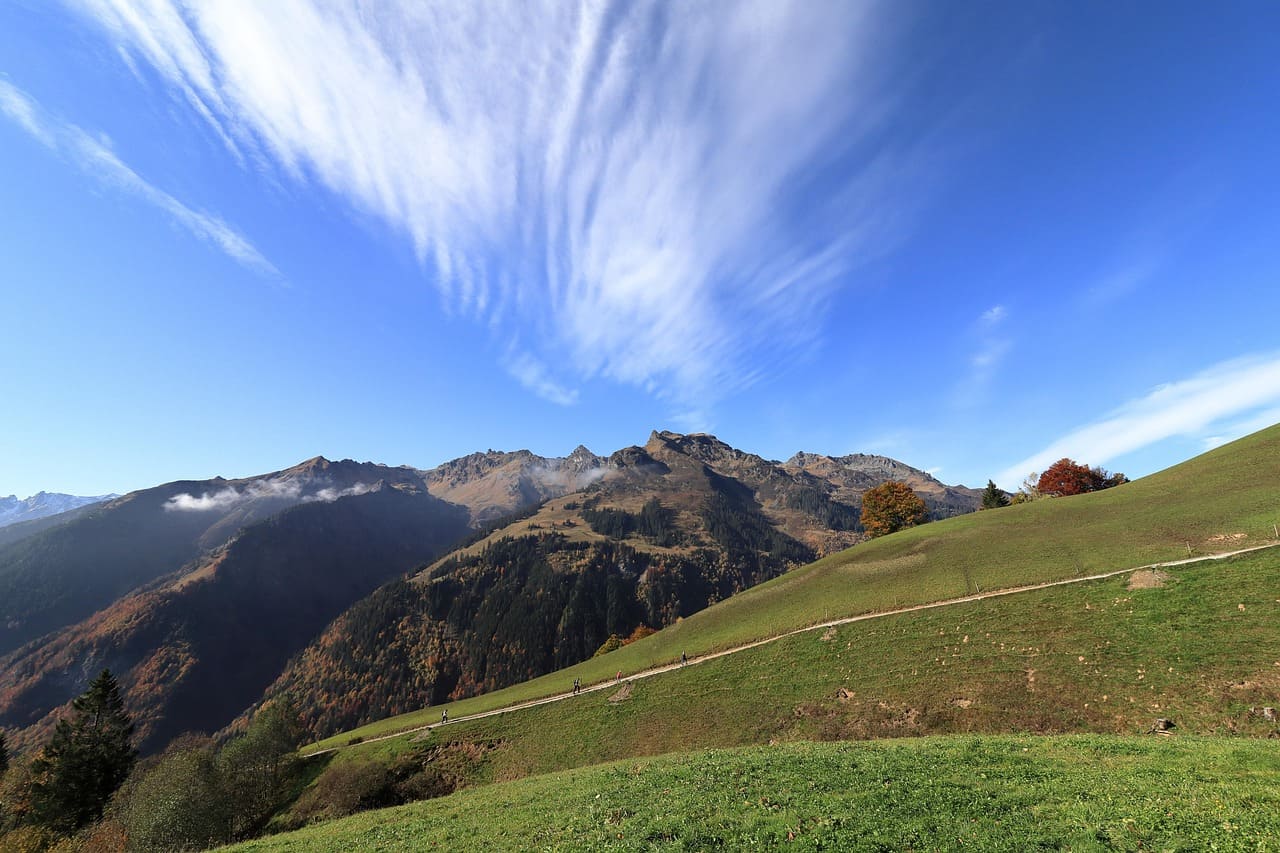
Appenzell Ausserrhoden is a hilly small canton in eastern Switzerland, stretching between Lake Constance and the Alpstein. Recreational hunting is practiced here as patent hunting. The Office for Space and Forest, Nature and Wildlife Division, is responsible for hunting planning. The canton is divided into three hunting districts: Hinterland, Mittelland and Vorderland. Since 2016, the hunting administrations of Appenzell Ausserrhoden, Appenzell Innerrhoden and St. Gallen have coordinated population surveys and hunting planning for red deer in the shared wildlife area.

The hunting plan for 2025/2026 provides for the shooting of 602 deer, 71 stags and 17 chamois.
The big game hunt for red deer and chamois lasts from September 1 to 20, with a second hunting period for red deer from November to December. The deer population is described as "healthy and slightly increasing." The chamois population, however, is "stable at a low level."
Fawn rescue and fawn killing: The paradox
Since 2024, the patent hunter association Appenzell Ausserrhoden offers comprehensive fawn rescue with drones and thermal imaging cameras. In spring, hobby hunters deploy with modern technology to save fawn from mowing death. In autumn, the same deer are then hunted. 602 animals according to the hunting plan.
Psychologically, this paradox is revealing because it exposes the central cognitive dissonance of recreational hunting: Hobby hunters rescue animals in order to kill them later. Fawn rescue is framed as 'wildlife management', as proof of connection to nature and responsibility. Yet from the animal's perspective, the logic is grotesque: survive in June, die in October. Psychologically, fawn rescue serves moral self-exoneration. It enables framing the killing in autumn as part of a 'holistic' engagement, rather than what it is: an armed recreational activity.
Chamois: Protection with a Backdoor
The chamois population in Appenzell Ausserrhoden is 'stable at a low level'. The shooting plan provides for 'protection in the hinterland' and 'stabilization' in the middle and foreground areas. Nevertheless, 17 chamois are released for shooting. Psychologically, the same pattern emerges as in Nidwalden: protection does not mean hunting stop, but hunting reduction. Even a species at 'low level' continues to be hunted, because complete abstinence would call into question the principle of hunting.
Red Deer: 'Undiminishedly High' Despite Hunting
The red deer population in the shared habitat of the cantons Appenzell Ausserrhoden, Appenzell Innerrhoden and St. Gallen is described as 'undiminishedly high'. Despite annual culls, despite coordinated intercantonal hunting planning and despite special hunts, the population does not decrease. Psychologically, this is a familiar pattern: recreational hunting claims to regulate wild animals, but through hunting pressure and population dynamics produces exactly the populations it then cites as justification for further hunting.
Wildlife Management as Identity Formation
The patent hunter association Appenzell Ausserrhoden actively stages itself as nature conservationists. Habitat improvements, hedge plantings, barbed wire removal: the wildlife management work is professionally documented and communicated. The cantonal president emphasizes the 'common strategy of all those interested in our nature' and hopes for 'good cooperation with environmental protection and nature conservation organizations'.
Psychologically, this self-presentation is classic reframing. Recreational hunting positions itself as 'partner of nature conservation', while simultaneously killing 690 wild animals annually in ungulates alone. The wildlife management work is real and commendable. But it is instrumentalized: it serves not primarily the animal, but the legitimation of killing. Those who plant hedges and rescue fawns can hardly be addressed as animal torturers. That is precisely the psychological function: wildlife management immunizes against criticism of recreational hunting.
The Geneva Model shows that habitat improvement and wildlife protection are possible even without recreational hunting. Wildlife management work is not an argument for hunting, but an argument for nature conservation, and that does not need weapons.
More on this in the dossier: Psychology of Hunting
Cantonal Psychology Analyses:
- Psychology of Recreational Hunting in Canton Glarus
- Psychology of Recreational Hunting in Canton Zug
- Psychology of Recreational Hunting in Canton Basel-Stadt
- Psychology of Recreational Hunting in Canton Schaffhausen
- Psychology of Recreational Hunting in Canton Appenzell Ausserrhoden
- Psychology of Recreational Hunting in Canton Appenzell Innerrhoden
- Psychology of Recreational Hunting in Canton Neuchâtel
- Psychology of Recreational Hunting in Canton Thurgau
- Psychology of Recreational Hunting in Canton Nidwalden
- Psychology of Recreational Hunting in Canton Uri
- Psychology of Recreational Hunting in Canton Obwalden
- Psychology of Recreational Hunting in Canton Schwyz
- Psychology of Recreational Hunting in Canton Jura
- Psychology of Recreational Hunting in Canton Basel-Landschaft
- Psychology of Recreational Hunting in Canton Zurich
- Psychology of Recreational Hunting in Canton Geneva
- Psychology of Recreational Hunting in Canton Bern
- Psychology of Recreational Hunting in Canton Solothurn
- Psychology of Recreational Hunting in Canton Aargau
- Psychology of Recreational Hunting in Canton Ticino
- Psychology of Recreational Hunting in Canton Valais
- Psychology of Recreational Hunting in Canton Graubünden
- Psychology of Recreational Hunting in Canton St. Gallen
- Psychology of Recreational Hunting in Canton Fribourg
- Psychology of Recreational Hunting in Canton Vaud
- Psychology of Recreational Hunting in Canton Lucerne
Support our work
With your donation you help protect animals and give voice to their cause.
Donate now →