Psychology of recreational hunting in the Canton of Graubünden
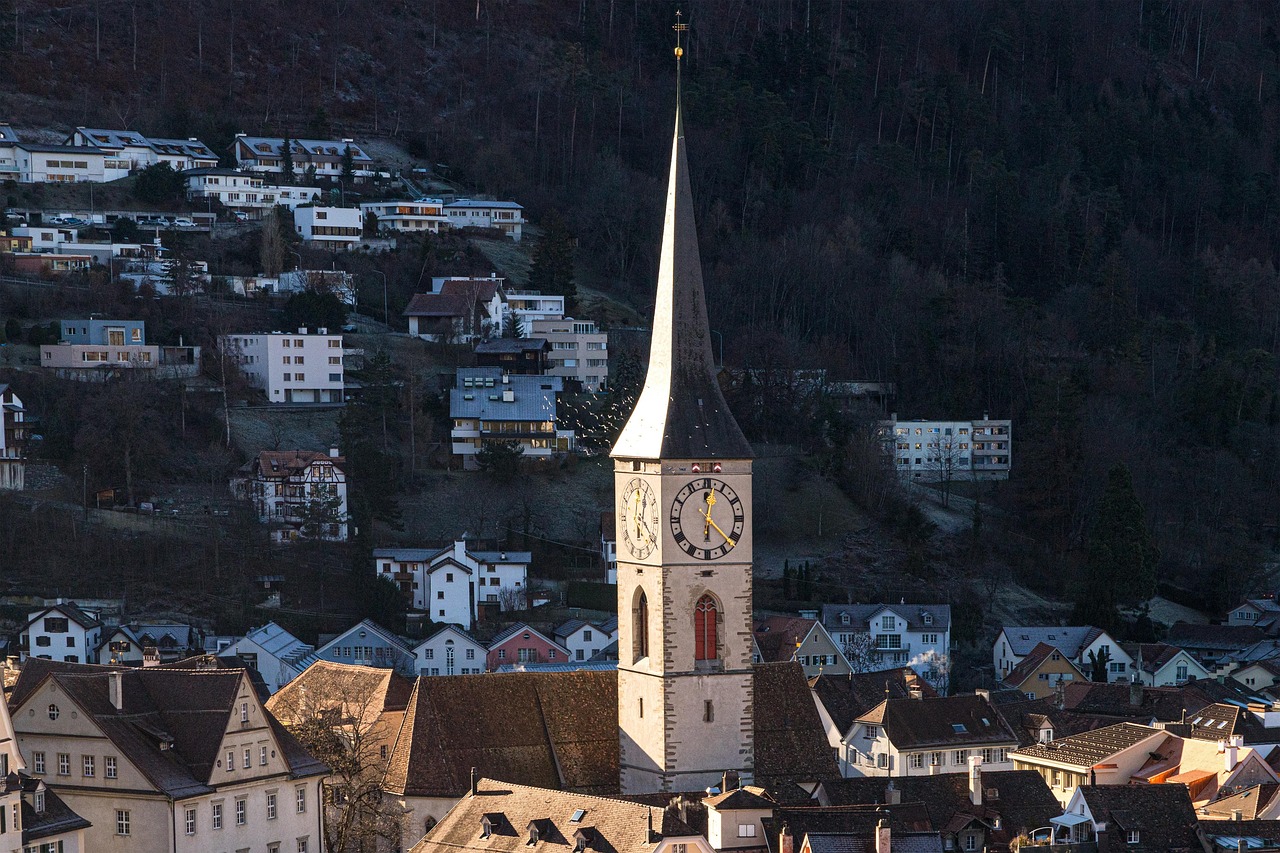
Graubünden is the largest canton in Switzerland by area. Graubünden exhibits a very high hunting intervention density. The cantonal hunting administration regularly justifies this through population regulation, damage prevention and tradition.

A more detailed analysis of hunting planning, kill quotas and the actual ecological situation reveals a different picture: Recreational hunting in Graubünden often follows an outdated intervention logic that is neither ecologically necessary nor broadly accepted by society.
Cantonal hunting planning is based on annually redefined shooting targets for various wildlife species. Particularly conspicuous is the high shooting density for so-called small game, including brown hare, ptarmigan and black grouse. These species have been under pressure for years due to habitat loss, climate change and tourist use of alpine areas. For the Alpine ptarmigan, the decline in Switzerland is well documented, and for grouse species, additive hunting pressure has also been described. For individual small game species in Graubünden, there are local indications of decline or fragmentation that are insufficiently considered politically in hunting planning.
Nevertheless, culls are regularly approved that are oriented less toward stable population trends than toward hunting traditions. Consistent hunting protection would be obvious from a wildlife protection perspective, but is hardly discussed politically.
Graubünden is characterized by patent hunting. Recreational hunting is thus not locally limited territory management, but a cantonally organized system of hunting seasons, patents, shooting targets and corrective measures. This structure creates permanent pressure to act: recreational hunting becomes normalized mass practice, and hunting success is framed as plannable performance.
The high hunt stands symbolically for the performance narrative of recreational hunting: presence in the field, fulfillment of targets, status in the group. When targets are missed, the logic of corrective steering moves to the foreground. This is exactly where special hunting becomes psychologically relevant: it acts like an institutionalized correction mode designed to force plan fulfillment, even when ecological necessity is disputed.
This fits the special hunt as a routine instrument and the criticism of this logic background text.
Small game regulations as psychological pattern
Cantonal hunting planning is based on annually redefined shooting targets for various wildlife species. Particularly conspicuous is the continuation of small game hunting, including brown hare, ptarmigan and black grouse. These species have been under pressure for years due to habitat loss, climate change and increasing disturbance from tourist use of alpine areas.
Especially for grouse species, the connection between habitat, disturbance and population development is well documented. Recreational hunting acts in such situations as an additional stress factor that can have additive effects depending on the initial situation. When populations are small, fragmented or unstable, the risk increases that culls are no longer compensated. Nevertheless, culls are regularly approved that in public perception are oriented less toward stable, transparently communicated population trends than toward hunting traditions.
Consistent hunting protection would be obvious from a wildlife protection perspective, but is hardly discussed politically as a standard option.
The continuation of small game hunting in Graubünden cannot be explained by ecological arguments alone. Rather, it shows a classic psychological pattern of recreational hunting: the cull is experienced as agency, regardless of whether a real regulatory effect is demonstrable.
This form of recreational hunting primarily fulfills social functions within the recreational hunting community. It stabilizes identity, belonging and status, while ecological costs are externalized. Similar mechanisms were already analyzed in the article on Psychology of recreational hunting in Canton Bern where hunting interventions likewise often carry symbolic character.
Trophy hunting in Graubünden: symbolism instead of wildlife protection
Particularly controversial is trophy hunting of prime specimens such as red deer, chamois, and ibex. Such shootings are officially presented as selective and population-stabilizing. In alpine populations, however, shooting large, genetically strong animals can favor long-term negative effects, such as through selection pressure, age structure, or reproductive dynamics.
In Graubünden, trophy hunting is nonetheless defended. The reason often lies less in wildlife biological necessity than in culturally deep-rooted narratives. The shooting of a prime animal is considered hunting success, proof of competence and masculinity. Psychologically, the signal matters, not the ecological balance. This is precisely where conflict arises with modern wildlife protection principles: protection is oriented toward the animal and the system, trophy logic is oriented toward status.
Unscientific wolf hunting and institutional failure
Hunting policy in Graubünden is a central point of conflict, particularly in dealing with the wolf. Shooting permits have repeatedly been justified with blanket damage arguments, although scientific data proves neither a general threat to livestock nor a negative impact on ungulate populations. Particularly problematic from a technical standpoint is that shootings sometimes occur preventively and without population-ecological necessity.
This practice contradicts wildlife biological findings and is regularly criticized by professional bodies outside the cantonal hunting administration. Wolf hunting in Graubünden is thus less scientifically founded than politically and emotionally motivated.
The canton of Graubünden has been selling wolf shootings for years as 'regulation' and 'damage prevention'. What matters is what the canton actually justifies, and whether these justifications are scientifically sound.
- Canton Graubünden: Pup shootings as 'proactive regulation'
In the media release of August 27, 2025, the direction is openly stated. Adrian Arquint says: 'up to a maximum of two-thirds of the confirmed pups may be culled.'
The canton simultaneously specifies the goal: In all packs with confirmed offspring, 'up to two-thirds of the confirmed young animals' should be culled.
- Canton Graubünden: Val Fex kill and shooting 'to prevent further damage'
In the Val Fex case (August 21, 2025), the Office for Hunting and Fishing formulates the shooting logic very directly: 'To prevent further damage, the shooting of the damage-causing wolf.'
This is the cantonal standard formula: First 'damage' is established, then shooting is justified as prevention. In the same document, the canton relies on the individual farm herd protection concept and speaks of 'emergency measures' (premature descent from alpine pastures). This is precisely where the investigation begins, because the public presentation 'despite protective measures' does not match the documented practice.
- Canton Graubünden: Psychological goal claims in the order
In the departmental order of August 28, 2025, wolf hunting is additionally justified with behavioral goals. The canton claims that shooting young animals should 'maintain and increase shyness', undesired behavior should 'not intensify and be passed on', emigration and damage should decrease, while simultaneously 'social structures' should be 'preserved' and 'social disorganization prevented'.
This is important because the canton here claims not only 'damage' but builds a psychological narrative: shootings should make wolves more shy, control learning, and keep packs stable. This is communicatively clever, but scientifically by no means as clear-cut as it sounds.
Scientific assessment: What does research say about culling as conflict resolution? The international body of studies has been relatively consistent for years on one point: lethal interventions are not a reliably effective tool unless coupled with consistent livestock protection and verifiable effectiveness monitoring.
First, evaluations show that killings after attacks do not lead stably and reliably to fewer repeat incidents. A large case study from Michigan (1998 to 2014) concludes that the results do not support the effectiveness of government lethal intervention to reduce further incidents.
Second, review papers and meta-analyses on conflict mitigation with predators show that non-lethal measures perform more convincingly on average and the evidence base for 'killing helps' is weak and contradictory.
Third, a systematic evaluation of protective measures against wolves found that lethal control and relocation were less effective than other measures, while fences, deterrence and herding work significantly better in many settings.
What does this mean for Graubünden specifically?
The canton justifies pup cullings simultaneously with 'damage prevention', 'increasing shyness' and 'preserving social structures'. This is a logical contradiction: anyone wanting to protect social structures must explain why precisely the repeated intervention in packs (including juveniles) does not increase the risk of maladaptations. And anyone wanting to prevent 'damage' must demonstrably show that livestock protection is implemented without gaps and that cullings bring measurable additional benefit in comparison. Precisely these proofs are missing in cantonal communication, while the interventions are maximal.
Criminal proceedings against the head of hunting administration
In the canton of Graubünden, several criminal proceedings are underway in the context of implementing hunting and animal protection legislation that directly concern the credibility of the cantonal hunting administration. Specifically, department head Adrian Arquint is the focus of criminal complaints for alleged exceeding of authority, misinformation to the public, and possible official crimes in the context of wolf cullings and livestock protection cases.
One trigger is a wolf attack on a sheep pasture in Val Fex (municipality of Sils in Engadin) in August 2025, in which 37 sheep were killed or had to be put down. In public communication, cantonal authorities claimed the attack occurred despite implemented livestock protection measures. Research shows, however, that at the time of the attack neither livestock protection dogs nor wolf-deterrent fences were present. The animals were grazing in an area that according to the individual livestock protection concept was expressly designated without protective measures.
This discrepancy between documented reality and public representation raises serious questions about official conduct. The suspicion: by spreading inaccurate information, the impression of failing livestock protection was created to retroactively legitimize hunting policy measures against protected predators. At the same time, possible violations of federal animal protection law by animal keepers and those responsible were downplayed or concealed.
The case is exemplary of a structural problem in Graubünden hunting enforcement. The institutional proximity between hunting administration, recreational hunters and agricultural interests hampers independent oversight. For wildlife protection, this means that wrong decisions can have not only legal but immediate fatal consequences for animals.
For wildlife protection this is particularly problematic, as enforcement errors have immediate fatal consequences for protected animals.
Hunting-free National Park and stable ungulate populations
An often overlooked reference space lies in the middle of the canton: the Swiss National Park. There, recreational hunting is prohibited. The National Park has demonstrated for over a hundred years that ungulate populations can fluctuate within natural ranges without recreational hunting, regulated by climate, food, diseases and predators.
The National Park thereby contradicts a core narrative of intensive hunting policy: that intensive hunting is absolutely necessary to maintain ecological balance. The existence of this hunting-free space reveals that many interventions do not follow from scientific necessity, but from institution, tradition and political determination to impose one's will.
The park is a piece of wilderness that is left to itself and where no one goes recreational hunting. That is not a problem, says former National Park director and wildlife biologist Heinrich Haller.
Even without recreational hunting, there are not suddenly too many foxes, hares or birds. Experience shows that nature can be left to itself.
Acceptance problem and social change
Social acceptance of recreational hunting in Graubünden is by no means homogeneous. While it is still considered natural in some rural regions, criticism is growing particularly in urban centers and tourism-oriented areas. Guests, second home owners and younger generations increasingly question why wild animals continue to be hunted in sensitive habitats.
This loss of acceptance resembles developments in Canton Zurich, where recreational hunting in urban areas is increasingly perceived as a foreign element.
Perception of violence and normalization
A central element of hunting-critical analysis is the perception of violence. In Graubünden, hunting violence is heavily normalized. Publicly visible shootings, hunting parades and media trivialization contribute to making killing appear as a legitimate means of wildlife management.
The comparison with Canton Geneva, where recreational hunting is banned, shows that wildlife management also functions without regular killing and is significantly less conflict-ridden socially.
Recreational hunting in Canton Graubünden is less an instrument of wildlife protection than a historically developed power and identity system. Small game regulations and trophy hunts continue despite often lacking ecological necessity. Contemporary wildlife policy would need to critically examine these practices and consistently place animal protection above hunting interests.
Why pleasure in killing is not a harmless recreational motive
In hunting communication, the act of killing is often glorified as a service to nature. Psychologically relevant here is the normalization of violence: When killing is framed as leisure, ritual or status symbol, moral inhibition thresholds decrease and empathy is deliberately excluded. These mechanisms are known from violence psychology.
People who take pleasure in killing living beings and paying for it show, from a psychological perspective, abnormal recreational behavior. This behavior contradicts fundamental mechanisms of empathy, compassion and moral inhibition as they are normally present in the general population. Psychologically, a violence-related motivation can be described here, even if it is politically or culturally tolerated.
Pleasure in killing is a classic characteristic of lust-based violence. The act of violence itself is rewarding. Not the result, not the necessity, but the killing. This is not a marginal phenomenon, but clearly described in violence psychology.
Those who experience recreational hunting as pleasure show a psychologically problematic violence motivation that works historically and structurally with devaluation and violence legitimation.
Hobby hunting in Graubünden is ultimately less an instrument of wildlife protection than a historically evolved system of power, identity, and ritual. Small game regulations, trophy hunting, and the political narrative surrounding wolf culling continue, even though their ecological necessity is often not demonstrably proven. A modern wildlife policy would need to consistently think from the animal's perspective: habitat, disturbance, biodiversity, livestock protection, transparency, and independent oversight, rather than quota fulfillment and status logic.
More on this in the dossier: Psychology of Hunting
Cantonal Psychology Analyses:
- Psychology of Hobby Hunting in the Canton of Glarus
- Psychology of Hobby Hunting in the Canton of Zug
- Psychology of Hobby Hunting in the Canton of Basel-Stadt
- Psychology of Hobby Hunting in the Canton of Schaffhausen
- Psychology of Hobby Hunting in the Canton of Appenzell Ausserrhoden
- Psychology of Hobby Hunting in the Canton of Appenzell Innerrhoden
- Psychology of Hobby Hunting in the Canton of Neuchâtel
- Psychology of Hobby Hunting in the Canton of Thurgau
- Psychology of Hobby Hunting in the Canton of Nidwalden
- Psychology of Hobby Hunting in the Canton of Uri
- Psychology of Hobby Hunting in the Canton of Obwalden
- Psychology of Hobby Hunting in the Canton of Schwyz
- Psychology of Hobby Hunting in the Canton of Jura
- Psychology of Hobby Hunting in the Canton of Basel-Landschaft
- Psychology of Hobby Hunting in the Canton of Zurich
- Psychology of Hobby Hunting in the Canton of Geneva
- Psychology of Hobby Hunting in the Canton of Bern
- Psychology of Hobby Hunting in the Canton of Solothurn
- Psychology of Hobby Hunting in the Canton of Aargau
- Psychology of Hobby Hunting in the Canton of Ticino
- Psychology of Hobby Hunting in the Canton of Valais
- Psychology of Hobby Hunting in the Canton of Graubünden
- Psychology of Hobby Hunting in the Canton of St. Gallen
- Psychology of Hobby Hunting in the Canton of Fribourg
- Psychology of Hobby Hunting in the Canton of Vaud
- Psychology of Hobby Hunting in the Canton of Lucerne
Support our work
With your donation, you help protect animals and give voice to their concerns.
Donate now →