Psychology of recreational hunting in Canton Neuchâtel
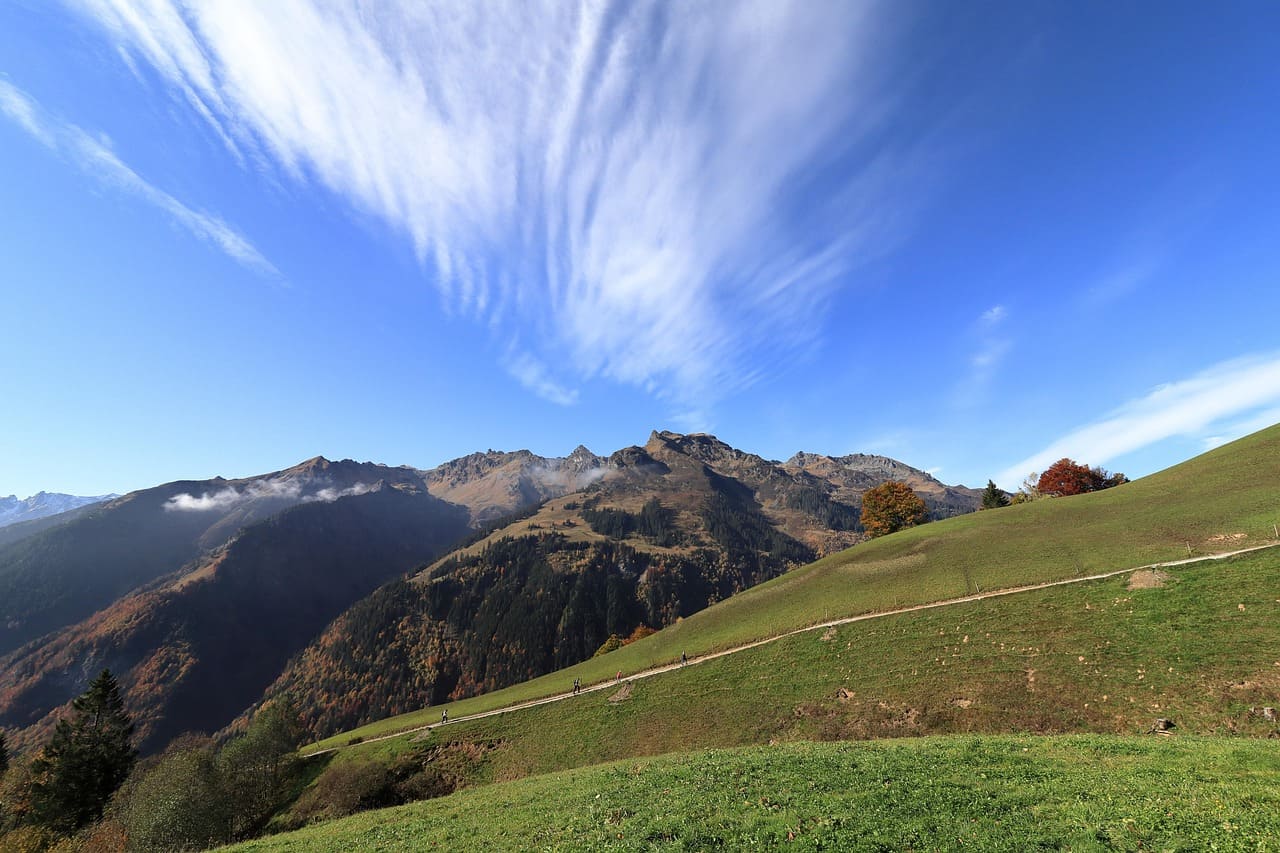
Canton Neuchâtel extends from the heights of the Jura to the southern shore of Lake Neuchâtel. As a French-speaking canton with patent hunting, it shares the hunting system with most western Swiss and Alpine cantons. Hunting is managed by the Service de la faune, des forêts et de la nature (SFFN), which is affiliated with the cantonal Département du territoire et de l'environnement (DTE). Big game hunting takes place in autumn, with the hunting season limited to a few weeks.


Neuchâtel lies along the Jura arc, which extends from Geneva to Schaffhausen and is considered the main corridor for wild boar expansion in Switzerland.
Wild boar hunting is accordingly a dominating theme. At the same time, Neuchâtel is a neighbor of Canton Geneva, which has abolished recreational hunting since 1974. This spatial proximity to the Geneva model makes Neuchâtel a psychologically particularly interesting case: One knows the alternative, lives next to it and ignores it nonetheless.
Wild boar and Jura arc: The perennial issue
Wild boar is the central topic of Neuchâtel's hunting policy. Along the Jura arc, wild boar populations have expanded significantly in recent decades. Culling numbers fluctuate strongly year to year, but the trend is rising. Agricultural damage from wild boar creates political pressure on hunting administration.
Psychologically, wild boar also functions in Neuchâtel as a legitimation instrument: As long as the 'wild boar plague' exists, recreational hunting is needed. That intensive hunting intensifies population dynamics by destroying social structures and increasing reproduction rates is not addressed in public discourse. Hunting pressure has made wild boar nocturnal and driven them into forests, from where they then break out into fields at night. Recreational hunting creates the behavioral pattern it then combats.
Francophone hunting culture: different language, same patterns
In French-speaking Switzerland, one speaks of 'la chasse', not 'der Jagd'. The linguistic difference obscures that the psychological mechanisms are identical. In Neuchâtel too, recreational hunting is framed as tradition, as connection to nature, as service to the community. Here too, hobby hunters maintain an interpretive monopoly over wildlife questions. Here too, public debate about alternatives is absent.
A difference from German-speaking Switzerland is the stronger reference to French hunting culture. In France, hunting (la chasse) is a politically charged topic, closely connected with rural identity and resistance against urban elites. This dynamic radiates to French-speaking Switzerland. Hunting criticism in Neuchâtel is more quickly framed as 'urban interference' or 'ideological paternalism' than in German-speaking Switzerland. Cultural proximity to France reinforces defensive reflexes.
Geneva as suppressed neighbor
Neuchâtel and Geneva are both francophone cantons in French-speaking Switzerland. They share language, culture and numerous political traditions. And yet: What Geneva has demonstrated since 1974, professional wildlife management without recreational hunting, finds no resonance in Neuchâtel. The Canton of Geneva shows a stable roe deer population of around 680 animals (2024), regulated by merely 20 to 36 specialized culls by professional wildlife wardens per year. This ratio of less than 5 percent extraction is a fraction of what is common in cantons with recreational hunting.
Psychologically, this suppression is revealing. Neuchâtel could not only know the Geneva model, but as a francophone neighboring canton could also easily adapt it culturally. That this does not happen lies not in factual barriers, but in identity-political barriers. Recreational hunting in Neuchâtel understands itself as an independent tradition, not as a system needing reform. The Geneva path is dismissed not as a model, but as a special case, as an 'exception that cannot be generalized'. This classification is psychologically a protective strategy: What is framed as an exception need not be taken seriously as an alternative.
Patent hunting at Jura: Between forest and wine
Neuchâtel's patent hunting takes place in a canton that is geographically divided: the ridges of the Jura with dense forests and the southern slopes with vineyards and cultivated land. Recreational hunting plays out in both spaces, with different target species. In the forests, roe deer, chamois and wild boar are hunted, at the lake and in the lowlands waterfowl and foxes.
Psychologically, this spatial diversity creates a broad legitimation base: Recreational hunting can present itself as forest protector, agricultural helper or population regulator depending on context. This flexibility of justification is typical of hunting psychology: The narrative adapts to context, the practice always remains the same.
Neuchâtel as missed opportunity
No other canton would find it easier to adopt the Geneva model than Neuchâtel. The linguistic and cultural proximity exists, the administrative structures are similar, the ecological challenges comparable. That Neuchâtel nevertheless clings to recreational hunting is psychologically revealing: proximity to the model strengthens resistance, not weakens it. The more visible the alternative, the greater the pressure to differentiate oneself from it.
Neuchâtel thus demonstrates in condensed form what applies to the entire hunting psychology: facts do not change the system. Not because the facts are weak, but because the system is stronger than the facts. Public pressure, democratic processes and cantonal referendums are the only instruments that can change systems. Geneva has proven it. Neuchâtel could be next.
More on this in the dossier: Psychology of Hunting
Cantonal Psychology Analyses:
- Psychology of Recreational Hunting in Canton Glarus
- Psychology of Recreational Hunting in Canton Zug
- Psychology of Recreational Hunting in Canton Basel-Stadt
- Psychology of Recreational Hunting in Canton Schaffhausen
- Psychology of Recreational Hunting in Canton Appenzell Ausserrhoden
- Psychology of Recreational Hunting in Canton Appenzell Innerrhoden
- Psychology of Recreational Hunting in Canton Neuchâtel
- Psychology of Recreational Hunting in Canton Thurgau
- Psychology of Recreational Hunting in Canton Nidwalden
- Psychology of Recreational Hunting in Canton Uri
- Psychology of Recreational Hunting in Canton Obwalden
- Psychology of Recreational Hunting in Canton Schwyz
- Psychology of Recreational Hunting in Canton Jura
- Psychology of Recreational Hunting in Canton Basel-Landschaft
- Psychology of Recreational Hunting in Canton Zurich
- Psychology of Recreational Hunting in Canton Geneva
- Psychology of Recreational Hunting in Canton Bern
- Psychology of Recreational Hunting in Canton Solothurn
- Psychology of Recreational Hunting in Canton Aargau
- Psychology of Recreational Hunting in Canton Ticino
- Psychology of Recreational Hunting in Canton Valais
- Psychology of Recreational Hunting in Canton Graubünden
- Psychology of Recreational Hunting in Canton St. Gallen
- Psychology of Recreational Hunting in Canton Fribourg
- Psychology of Recreational Hunting in Canton Vaud
- Psychology of Recreational Hunting in Canton Lucerne
Support our work
With your donation you help protect animals and give voice to their concerns.
Donate now →