Psychology of recreational hunting in the canton of Schaffhausen
In the canton of Schaffhausen, hunting season lasts almost the entire year. Roebucks may be hunted from May 2nd to the end of January, wild boar from July to the end of February, sika deer from August to January. These hunting seasons are among the longest in Switzerland. Psychologically, this means: Wildlife in the canton of Schaffhausen has hardly any phase of the year when they are undisturbed by armed humans. The concept of 'rest period' exists only in the few weeks of closed season, not as a fundamental principle.

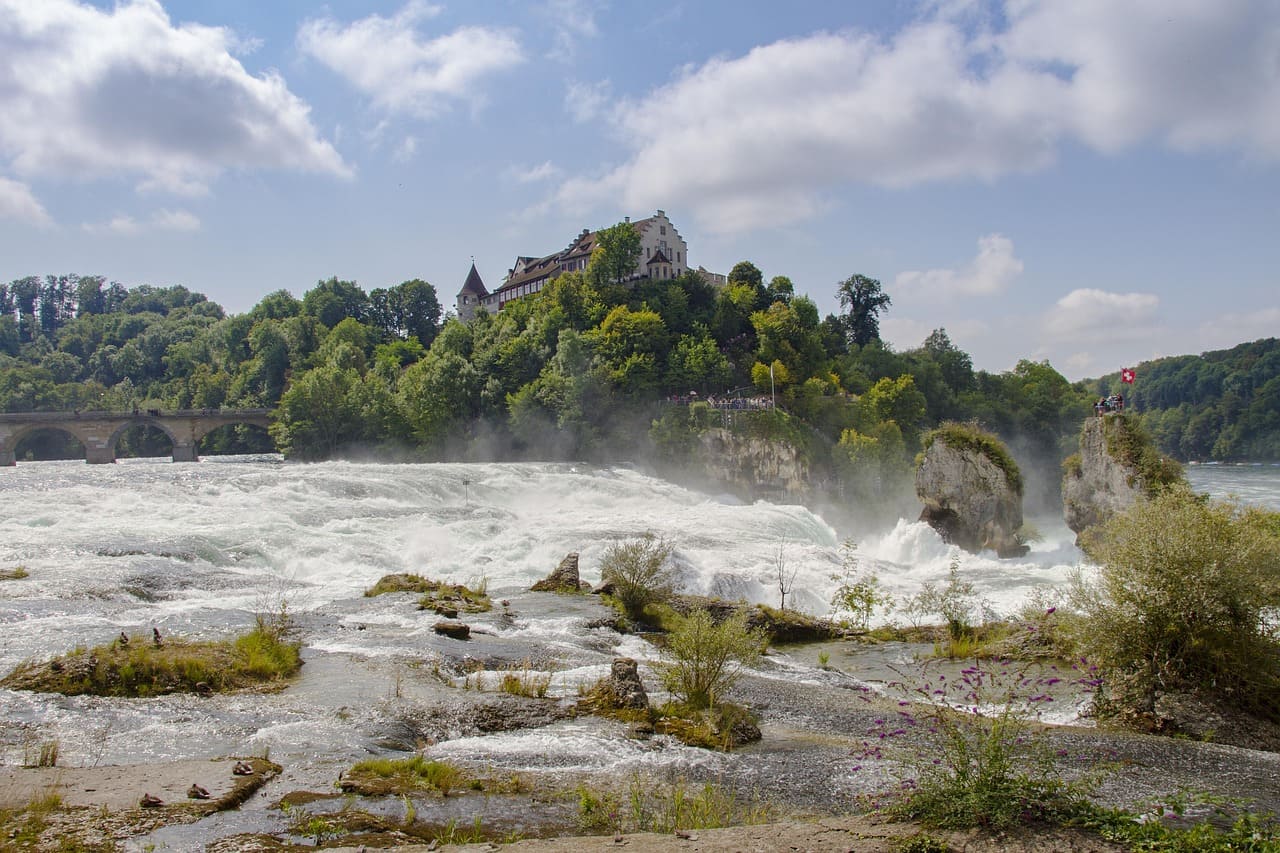
In the canton of Schaffhausen, district hunting.
The municipalities lease 44 districts for eight years each to hunting societies. Around 300 hobby hunters are active, with the gender ratio according to the president of JagdSchweiz at around 20 to 1 in favor of men. Huntable animals include roe deer, sika deer, chamois, brown hares, wild boar, foxes, badgers and various bird species. The canton is 42 percent forested, making it one of the most forested cantons in Switzerland.
Night hunting ban: When one's own decree becomes a problem
The night hunting ban in forests that came into effect in 2025 is central to understanding Schaffhausen's hunting psychology. The idea: wildlife should have peace at least at night and at least in forests. It was introduced at the federal level by the Conference for Forest, Wildlife and Landscape (KWL), an association of cantonal authorities responsible for forests and wildlife. Schaffhausen was represented in it and thus indirectly supported the ban.
Nevertheless, the canton reacted with open rejection. Department head for Hunting and Fishing Patrick Wasem, who privately also works as a hobby hunter, and hunting association president Jonas Keller appeared together and emphasized wanting to present a "united" front. Keller's summary: "What one is allowed to do is becoming less and less, and what one must do is becoming more and more." Wasem nodded.
Psychologically, this episode is revealing on multiple levels. First, it reveals the personal union of administration and recreational hunting:
- The cantonal department head for recreational hunting hunts privately himself. Controllers and controlled merge.
- Second, the joint media work by authorities and hunting association shows that the boundary between state administration and lobbying is fluid.
- Third, the complaint about "being allowed to do less and less" demonstrates a sense of entitlement: recreational hunting sees itself as a right, not as a privilege. Every restriction is experienced as a loss, not as a correction.
Particularly piquant: Schaffhausen already had a cantonal night hunting ban. The new federal ban primarily affects wild boar hunting in forests, which was previously possible at night in Schaffhausen. In 2024 – even before the ban took effect – 478 wild boar were killed. Nevertheless, the canton preemptively announced it would examine an exception provision for wild boar. The defense came before the impacts were even measurable. This is not a factual policy reaction, but a reflex.
Financial incentive: Those who pay want to shoot
A peculiarity of the Schaffhausen system is the financial interconnection: Half of the wildlife damage is paid by the hunting society that leases the territory, the other half comes from the cantonal treasury. Additionally, the canton levies a ten percent fee on the lease payments, so that wildlife damage is "effectively largely borne by the hobby hunters".
Psychologically, this structure creates a perverse incentive: The more wildlife damage occurs, the more the hunting societies have to pay. So they want to shoot as much as possible to preventively avoid damage. The system rewards maximum kills and punishes restraint. The recreational hunters have, as the Schaffhausen AZ aptly put it, "a tangible financial interest in shooting a lot". This is not wildlife management, but an economic incentive system that favors the intensification of recreational hunting.
The Geneva model shows how wildlife management works without financial misaligned incentives: State game wardens act in the public interest, not in their own financial interest. They have no incentive to shoot more than necessary.
Sika deer: A foreigner as hunting attraction
A peculiarity in Schaffhausen is the hunting of sika deer, a deer species from East Asia that is not native to Switzerland. The sika deer is a neozoon that has immigrated from Germany since the 1940s and has established itself in parts of northeastern Switzerland – particularly in the Rafzerfeld and at Südranden. Instead of treating the spread of a non-native species as an ecological problem, sika deer is managed as a huntable species and hunted with a long hunting season (August to January).
Psychologically, sika deer demonstrate how flexibly recreational hunting adapts its justifications. With red deer it's 'regulation', with wild boar 'damage prevention', with sika deer 'neobiota management'. The method is always the same: shooting. That a non-native species is welcomed as an additional hunting attraction, rather than as grounds for ecological debate, reveals the system's priorities.
Male domain: 20 to 1
The president of Jagd Schaffhausen estimates the gender ratio among hobby hunters at 20 to 1 in favour of men. This figure is not a marginal detail, but psychologically central: recreational hunting in Schaffhausen is a pronounced male domain. This means: the hunting societies that exercise authority over 44 districts for eight years form closed, predominantly male networks. Decisions about killing wild animals are made within these networks, not through a democratic or public process.
The gender structure reinforces group identity and makes external criticism more difficult. Hunting culture, hunting horn playing, tracking dog tests: all of these are social bonding instruments that create belonging and sanction deviation. Anyone who expresses doubts within a hunting society risks not only their place in the district, but their social network.
Schaffhausen as permanent hunting canton
Schaffhausen embodies a hunting model that relies on maximum temporal extension and minimal control. The almost year-round hunting, the financial incentives for high kill numbers, the personal union of administration and recreational hunting, as well as the closed male networks of hunting societies form a system that stabilises itself.
The night hunting ban has briefly made these structures visible: a system that defends against any restriction, even if it previously supported the restriction itself. Psychologically, this is consistent with an identity system in which hunting is not understood as a regulated practice, but as a right threatened from outside. The question of whether the canton of Schaffhausen needs professional game wardens instead of 300 hobby hunters is not asked. Not because the answer would be difficult, but because it would call the system into question.
More on this in the dossier: Psychology of hunting
Cantonal psychology analyses:
- Psychology of recreational hunting in Canton Glarus
- Psychology of recreational hunting in Canton Zug
- Psychology of recreational hunting in Canton Basel-Stadt
- Psychology of recreational hunting in Canton Schaffhausen
- Psychology of recreational hunting in Canton Appenzell Ausserrhoden
- Psychology of recreational hunting in Canton Appenzell Innerrhoden
- Psychology of recreational hunting in Canton Neuchâtel
- Psychology of recreational hunting in Canton Thurgau
- Psychology of recreational hunting in Canton Nidwalden
- Psychology of recreational hunting in Canton Uri
- Psychology of recreational hunting in Canton Obwalden
- Psychology of recreational hunting in Canton Schwyz
- Psychology of recreational hunting in Canton Jura
- Psychology of recreational hunting in Canton Basel-Landschaft
- Psychology of recreational hunting in Canton Zurich
- Psychology of recreational hunting in Canton Geneva
- Psychology of recreational hunting in Canton Bern
- Psychology of recreational hunting in Canton Solothurn
- Psychology of recreational hunting in Canton Aargau
- Psychology of recreational hunting in Canton Ticino
- Psychology of recreational hunting in Canton Valais
- Psychology of recreational hunting in Canton Graubünden
- Psychology of recreational hunting in Canton St. Gallen
- Psychology of recreational hunting in Canton Fribourg
- Psychology of recreational hunting in Canton Vaud
- Psychology of recreational hunting in Canton Lucerne
Support our work
With your donation you help protect animals and give their voice a hearing.
Donate now →