
Waterfowl in Switzerland: Winter guests in the line of fire
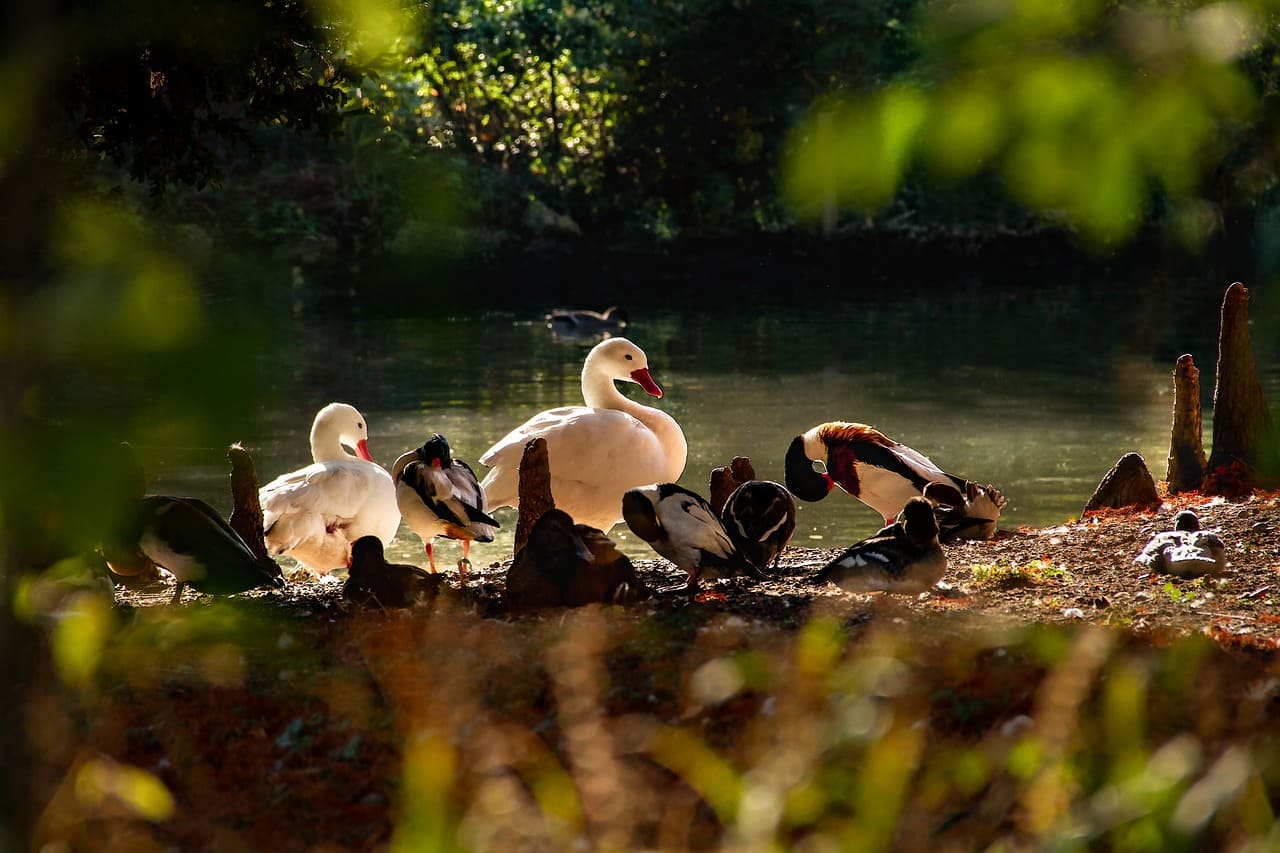
Around half a million waterfowl overwinter annually on Swiss lakes and rivers. Switzerland has particular international significance as an overwintering and resting site, which is why the Federal Council signed the Ramsar Convention for the protection of wetlands in 1974. At the same time, thousands of waterfowl are shot annually in Switzerland. In 2019, 4’731 ducks were killed, along with 142 great crested grebes (71 percent more than the previous year), 423 coots and over 1’100 cormorants. According to the Federal Hunting Act (JSG, Art. 5), 15 wild duck species are huntable. BirdLife Schweiz states: «Not only hunting of hares is ecologically completely unnecessary, but also that of birds.» The common pochard and common eider are listed on the IUCN global Red List as «vulnerable» and «near threatened» respectively, yet were still hunted in Switzerland. The coot is classified as «vulnerable» throughout Europe. Switzerland receives winter guests from half of Europe and shoots at them.
Overview of huntable waterfowl
Mallard (Anas platyrhynchos)
The mallard is the most common and well-known duck species in Switzerland. The drake in breeding plumage is unmistakable: metallic green head, white collar, chestnut breast, grey body. The hen is brown speckled with a blue wing patch. The mallard weighs 850 to 1,400 grams with a body length of 50 to 65 centimetres. It lives on practically all water body types, from mountain lakes through rivers to city parks. The mallard is both a breeding bird and winter visitor in Switzerland. It breeds from March onwards, lays 7 to 13 eggs and raises the ducklings alone. The mallard is by far the most heavily hunted duck species in Switzerland. In 2016, 4,842 mallards were shot, and in 2019 it was part of the 4,685 shot mallards, teal and tufted ducks (Pro Natura, JSG kurz erklärt; BirdLife Schweiz, Jagdstatistik). In the canton of St. Gallen alone, 441 mallards were shot in 2023 (Amt für Natur, Jagd und Fischerei SG, Jagdstatistik 2023).
Teal (Anas crecca)
The teal is the smallest European duck species: only 34 to 38 centimetres long and weighing 250 to 400 grams. The drake has a chestnut head with a broad green eye stripe. The teal breeds in small numbers in Switzerland and is primarily present as a winter visitor and migrant. It prefers shallow, vegetation-rich waters. In 2016, 189 teal were shot in Switzerland (Pro Natura, JSG kurz erklärt). In the canton of St. Gallen, it was only 15 in 2023 (Amt für Natur SG, Jagdstatistik 2023). The teal is one of the three duck species that would have remained huntable even under the (failed) revised hunting law (Tages-Anzeiger, 2019).
Tufted duck (Aythya fuligula)
The tufted duck is a diving duck with striking black-and-white plumage in the drake and a characteristic feather tuft at the back of the head. It weighs 550 to 900 grams and is 40 to 47 centimetres long. In Switzerland, the tufted duck has only established itself as a breeding bird in recent decades and counts several hundred breeding pairs. As a winter visitor, it is significantly more common. The tufted duck dives up to six metres deep to feed on mussels, snails and insect larvae. In 2016, 124 tufted ducks were shot (Pro Natura, JSG kurz erklärt). The Swiss Ornithological Institute Sempach describes the most species-rich breeding areas as 'structurally rich wetlands at or near the larger lakes' and emphasises that only the mallard among Swiss ducks is common and widespread, while all other duck species are rare breeding birds (Vogelwarte Sempach, Brutgebiete und Winterquartiere von Wasservögeln).
Common pochard (Aythya ferina)
The common pochard is a medium-sized diving duck with a rusty-red head and black breast in the drake. It has been listed as 'vulnerable' (VU) on the global IUCN Red List since 2015 and is also considered threatened throughout Europe (BirdLife Schweiz, Rote Liste 2015; BirdLife Schweiz, Europäische Rote Liste). In Switzerland, it is a rare breeding bird but an important winter visitor. Tens of thousands of common pochards overwinter at Lake Constance, and the region hosts internationally significant proportions of the flyway population in mid-winter (Wildtierportal BW, Tafelente). In 2016, 98 common pochards were shot in Switzerland, and in 2018 it was 60 (Pro Natura, JSG kurz erklärt; Tages-Anzeiger, 2019). BirdLife Schweiz criticises: Of the 4,729 ducks shot in 2018, only 2.2 percent belonged to those species that the revised hunting law was supposed to newly protect (BirdLife Schweiz, Jagdstatistik).
Other huntable waterfowl
In addition to ducks, Switzerland also hunts the great crested grebe (Podiceps cristatus), the coot (Fulica atra) and the cormorant (Phalacrocorax carbo) hunted. In 2019, 142 great crested grebes were killed, 71 percent more than the previous year, without protection even being discussed (BirdLife Schweiz, hunting statistics). The Eurasian coot is classified as 'endangered' Europe-wide and is still hunted in Switzerland: 423 kills in 2019 (BirdLife Schweiz, hunting statistics; BirdLife Schweiz, European Red List). The cormorant is shot as an alleged fish predator in the interests of commercial fisheries: 1,116 cormorants in 2016, still 90 in Canton St. Gallen in 2023 (Pro Natura, JSG briefly explained; Office for Nature SG, hunting statistics 2023).
Switzerland as winter quarters: International responsibility
Half a million guests
The Swiss Ornithological Institute Sempach documents: 'Switzerland hosts around half a million waterfowl in winter' (Vogelwarte Sempach, waterfowl counts). Swiss lakes rarely freeze and provide food year-round. This makes Switzerland one of Central Europe's most important wintering areas for duck species that breed in Scandinavia, Russia and Eastern Europe. Tens of thousands of diving and dabbling ducks concentrate on Lake Constance and Lake Geneva.
Ramsar Convention and protected areas
Switzerland signed the Ramsar Convention in 1974 and designated 10 water and migratory bird reserves of international and 25 of national importance (BAFU, water and migratory bird reserves). However, BirdLife Schweiz criticizes: Of the approximately 40 areas that should actually be protected, more than a third are still missing from the federal protection ordinance. Switzerland has not designated a new Ramsar site since 2005 and is 'last in Europe regarding protected areas' (BirdLife Schweiz, wetlands, 2022). Particularly at Lake Constance and Lower Lake Constance, one of Europe's most important waterfowl areas, Switzerland has not designated a single Ramsar site, while Germany and Austria did so long ago.
The contradiction
Switzerland commits internationally to protecting waterfowl and their habitats while simultaneously shooting thousands of winter guests annually. Birds seeking refuge on Swiss lakes are met there by recreational hunters. The hunting of ducks, great crested grebes and coots on wintering waters undermines the international protection strategy and contradicts the spirit of the Ramsar Convention.
More on this: Dossier: Hunting and biodiversity
The hunting: 15 species in the firing line
Legal situation
According to the Federal Hunting Act (JSG, Art. 5), a total of 15 wild duck species are huntable in Switzerland. Added to this are great crested grebe, Eurasian coot and cormorant. Closed seasons vary by canton. In 2020, a revised hunting law was rejected by Swiss voters. The revised law would have reduced the number of huntable duck species to three (mallard, common teal, tufted duck), but BirdLife Schweiz criticized that 98 percent of duck kills would still have been permitted and only 2.2 percent of kills would have fallen on newly protected species (BirdLife Schweiz, hunting statistics; Tages-Anzeiger, 2019).
The scale of the killing
The kill numbers from federal hunting statistics (2016, Pro Natura / JSG briefly explained) show the extent: 4,842 mallards, 189 common teal, 124 tufted ducks, 98 common pochard, 22 gadwall, 2 common goldeneye, 1 Eurasian wigeon, 1 northern shoveler, 2 garganey. Plus 114 great crested grebes, 390 Eurasian coots and 1,116 cormorants. In 2019, the total number of ducks killed rose to 4,731, of which 4,685 were mallards, common teal and tufted ducks and 108 other ducks (BirdLife Schweiz, hunting statistics). The trend was increasing.
Endangered species in the firing line
The scandal of Swiss waterfowl hunting lies in the fact that species listed on Red Lists are also hunted. The Common Pochard has been classified as 'vulnerable' (VU) on the global Red List since 2015. The Common Eider is globally classified as 'near threatened' (NT). The Eurasian Coot is classified as 'vulnerable' Europe-wide (BirdLife Switzerland, European Red List). That Switzerland hunts species that are internationally classified as threatened, while simultaneously having signed the Ramsar Convention, is a contradiction that cannot be justified by any 'reasonable grounds' within the meaning of animal welfare law.
More on this: Animal welfare problem: Wildlife dies agonizing deaths because of recreational hunters
Ecological significance: Waterfowl as ecosystem engineers
Nutrient cycle
Ducks and other waterfowl transport nutrients between water bodies and terrestrial habitats. Their excrement fertilizes shoreline areas and promotes plant growth. Diving ducks such as the Tufted Duck and Common Pochard contribute to the regulation of mussel and snail populations, thus influencing water quality.
Seed dispersal
Dabbling ducks such as the Mallard and Common Teal spread plant seeds through their digestion (endozoochory) and in their plumage (epizoochory) across hundreds of kilometers. This service is irreplaceable for connecting isolated wetlands and maintaining genetic diversity of aquatic plants. Studies have shown that up to ten percent of plant seeds consumed by ducks survive digestion while remaining viable.
Food chain
Waterfowl are central prey animals for predators such as White-tailed Eagle, Peregrine Falcon, Northern Goshawk and Red Fox. The White-tailed Eagle, which occasionally appears as a winter visitor in Switzerland and may possibly re-establish itself in the future, depends on waterfowl as its primary food source. The Eagle Owl also regularly preys on ducks and coots. Those who decimate waterfowl also decimate the food base of predators.
Indicator species
Waterfowl populations are a recognized indicator of the quality of aquatic ecosystems. Switzerland has conducted waterfowl counts for decades (Swiss Ornithological Institute Sempach, waterfowl counts). Declining populations indicate deteriorating water quality, food availability or increasing disturbances. It is paradoxical that the same species that serve as indicators for the health of our waters are simultaneously hunted.
What would need to change
- Immediate removal of all threatened waterfowl species from the hunting catalogue: The Common Pochard (globally VU), the Common Eider (globally NT) and the Eurasian Coot (endangered Europe-wide) may no longer be hunted. Hunting species that are on international Red Lists is incompatible with the Ramsar Convention and animal welfare law.
- Reduction of huntable duck species to zero: Recreational hunting of waterfowl has no reasonable grounds. Ducks cause no damage that would justify shooting them. The meat yield is marginal, the disturbance to winter visitors considerable. All duck species should be removed from the hunting catalogue.
- Expansion of water and migratory bird reserves: Switzerland must include the missing 15 nationally significant waterfowl areas in the protection ordinance and designate cross-border Ramsar areas at Lake Constance and Untersee.
- Hunting-free zones on all wintering waters: Hunting of waterfowl on wintering waters must be ended. Winter visitors that come to Switzerland from half of Europe deserve protection, not shot.
- Ban on lead shot for waterfowl hunting: Lead shot poisons water bodies and kills waterfowl through lead poisoning when they mistake the shot pellets for food. In many European countries, lead shot is banned for waterfowl hunting. Switzerland must follow suit.
Arguments
'The Mallard is common and can be hunted sustainably.' That a species is common does not automatically make killing it sensible. The mallard causes no damage that would justify shooting it. The meat yield from a mallard is minimal. The disturbance of waters by duck hunting affects not only the mallard, but all waterfowl that overwinter on the same waters, including endangered species like the pochard. Every shot at a mallard drives dozens of other birds from their resting place.
«Waterfowl hunting has tradition in Switzerland.» The tradition of waterfowl hunting dates back to a time when ducks were an important food source. Today, duck hunting is a hobby that collides with animal welfare law. The 'reasonable justification' for killing an animal in the 21st century cannot be the recreational pleasure of some recreational hunters.
«Switzerland has established protected areas for waterfowl, hunting takes place outside these areas.» The protected areas are incomplete: More than one third of nationally significant waterfowl areas are missing from the protection ordinance (BirdLife Switzerland, 2022). Waterfowl do not adhere to the boundaries of reserves. They use different waters and are mobile on their overwintering waters. Hunting outside the reserves disturbs the birds and drives them to less suitable, energetically unfavorable waters.
«Duck hunting has no influence on populations.» If duck hunting has no influence on populations, then it also has no purpose. Shooting without effect and without necessity is senseless killing. Animal welfare law requires a reasonable justification for killing an animal, and 'it has no influence' is not a reasonable justification.
«The cormorant eats too many fish and must be regulated.» The cormorant is a natural component of Swiss aquatic fauna. Commercial fishing has suffered in recent decades from various factors, including over-fertilization, nutrient depletion by sewage treatment plants, climate change and invasive species. Making the cormorant a scapegoat deflects from the actual causes. In Geneva, where a hunting ban has been in effect since 1974, cormorants and fish coexist without problems.
Quicklinks
Articles on Wild beim Wild:
- Studies on the impact of recreational hunting on wildlife
- Why recreational hunting fails as population control
- Animal welfare problem: Wild animals die agonizing deaths because of recreational hunters
- Animal cruelty: Fox massacres in Switzerland
Related dossiers
- The rock ptarmigan in Switzerland: Ice age relic between climate crisis, tourism and shotgun blast
- The ibex in Switzerland: Smuggled, saved and again degraded to trophy
- The beaver in Switzerland: Exterminated, reintroduced and newly released for shooting
- The woodcock in Switzerland: Endangered, hunted and politically ignored
- Waterfowl in Switzerland: Winter guests in the line of fire
- Pigeons in Switzerland: Between peace symbol, mass shooting and official starvation
- Corvids in Switzerland: The most intelligent animals in the crosshairs
- The Eurasian jay in Switzerland: Forest gardener in the crosshairs of small game hunting
- The marmot in Switzerland: Ice age relic under climate stress, tourist attraction and mass shooting
- The European rabbit in Switzerland: severely endangered, yet huntable
- The mountain hare in Switzerland: Ice age relic between climate crisis and shotgun blast
- The raccoon in Switzerland: Released for shooting because it has the wrong origin
- The stone marten in Switzerland: Cultural follower between attic and shotgun blast
- The pine marten in Switzerland: Shy forest dweller under hunting pressure
- The badger in Switzerland: Ecosystem engineer in the crosshairs of small game hunting
- The red deer in Switzerland: Exterminated, returned and degraded to shooting object
- The roe deer in Switzerland: Most shot wild animal and victim of misguided hunting policy
- Wild Boar in Switzerland: Why Recreational Hunting Exacerbates the Problem Instead of Solving It
- The Chamois in Switzerland: Between High-Altitude Hunting, Climate Stress and the Myth of Overpopulation
- The Brown Hare in Switzerland: Endangered, Hunted and Politically Ignored
Sources
- Federal Hunting Statistics, FOEN/Wildlife Switzerland: http://www.jagdstatistik.ch
- BirdLife Switzerland: The current hunting statistics and the revised hunting law (birdlife.ch, 2020)
- BirdLife Switzerland (2015): Global Red List 2015, Turtle Dove and Pochard newly globally threatened (birdlife.ch)
- BirdLife Switzerland: New Red List of European birds shows Switzerland's responsibility (birdlife.ch)
- BirdLife Switzerland (2022): Switzerland significantly behind in protection of wetlands and waterfowl reserves (birdlife.ch)
- Pro Natura (2018): The federal hunting and protection law briefly explained (2016 shooting figures for all huntable species)
- Swiss Ornithological Institute Sempach: Waterfowl counts, around half a million winter visitors (vogelwarte.ch)
- Swiss Ornithological Institute Sempach: Breeding areas and winter quarters of waterfowl (vogelwarte.ch)
- Office for Nature, Hunting and Fisheries Canton St. Gallen: Hunting statistics 2023 (574 waterfowl, 441 mallards, 90 cormorants)
- Tages-Anzeiger / Landbote (2019): In the crosshairs of hunters (Pochard, 15 huntable duck species, referendum)
- Schweizer Bauer (2020): Hunting law, vote (only 3 huntable duck species planned)
- FOEN: Water and migratory bird reserves of international and national importance (bafu.admin.ch)
- FOEN: Red Lists, Endangered Species of Switzerland (bafu.admin.ch)
- FOEN / Swiss Ornithological Institute (2021): Red List of Breeding Birds Switzerland
- Ramsar Convention: Convention on Wetlands of International Importance (SR 0.451.46)
- Wildlife Portal Baden-Württemberg: Pochard, Lake Constance hosts 7.7% of the flyway population
- IUCN Red List: Pochard (Aythya ferina), Status VU since 2015; Common Eider (Somateria mollissima), Status NT
- IG Wild beim Wild (2022/2025): Hunting Statistics 2022 (wildbeimwild.com)
- Federal Act on Hunting and the Protection of Wild Mammals and Birds (HPA, SR 922.0)
- Animal Welfare Act (AWA, SR 455)
- Ordinance on Water and Migratory Bird Reserves (WMBRO, SR 922.32)
Our Standards
Switzerland is a winter refuge for half a million waterfowl. Ducks, divers, coots and cormorants come from Scandinavia, Russia, Eastern Europe and the Alpine region to our lakes because they find open water, food and relative peace here. Switzerland has committed itself through the Ramsar Convention to protect these habitats and their inhabitants. It has established water and migratory bird reserves, funded waterfowl counts and positioned itself internationally as a responsible guardian of wetlands. And then it shoots its guests.
Every year in Switzerland, thousands of ducks, hundreds of coots and great crested grebes, and over a thousand cormorants are killed. Among them are species listed as 'vulnerable' on the global Red List. The pochard, whose winter population on Lake Constance is internationally significant, is shot in Switzerland. The coot, classified as 'vulnerable' throughout Europe, is shot in Switzerland. The great crested grebe, whose shooting figures increased by 71 percent in a single year, is shot without its protection even being discussed. This hunting is not wildlife management. There is no problem solved by shooting ducks on winter lakes. There is no prevented damage. There is no 'reasonable cause' within the meaning of the Animal Welfare Act. There is only waterfowl hunting as a recreational activity of a small minority, practiced at the expense of biodiversity and Switzerland's international commitments.
The consequence is clear: All waterfowl must be removed from the hunting catalog in Switzerland. Switzerland must take its responsibility as a wintering area seriously, report the missing protected areas and end duck hunting on wintering waters. This dossier is continuously updated when new figures, studies or political developments require it.
More on the topic of recreational hunting: In our Hunting Dossier we compile fact-checks, analyses and background reports.