
Woodcock Switzerland: Endangered, hunted and ignored
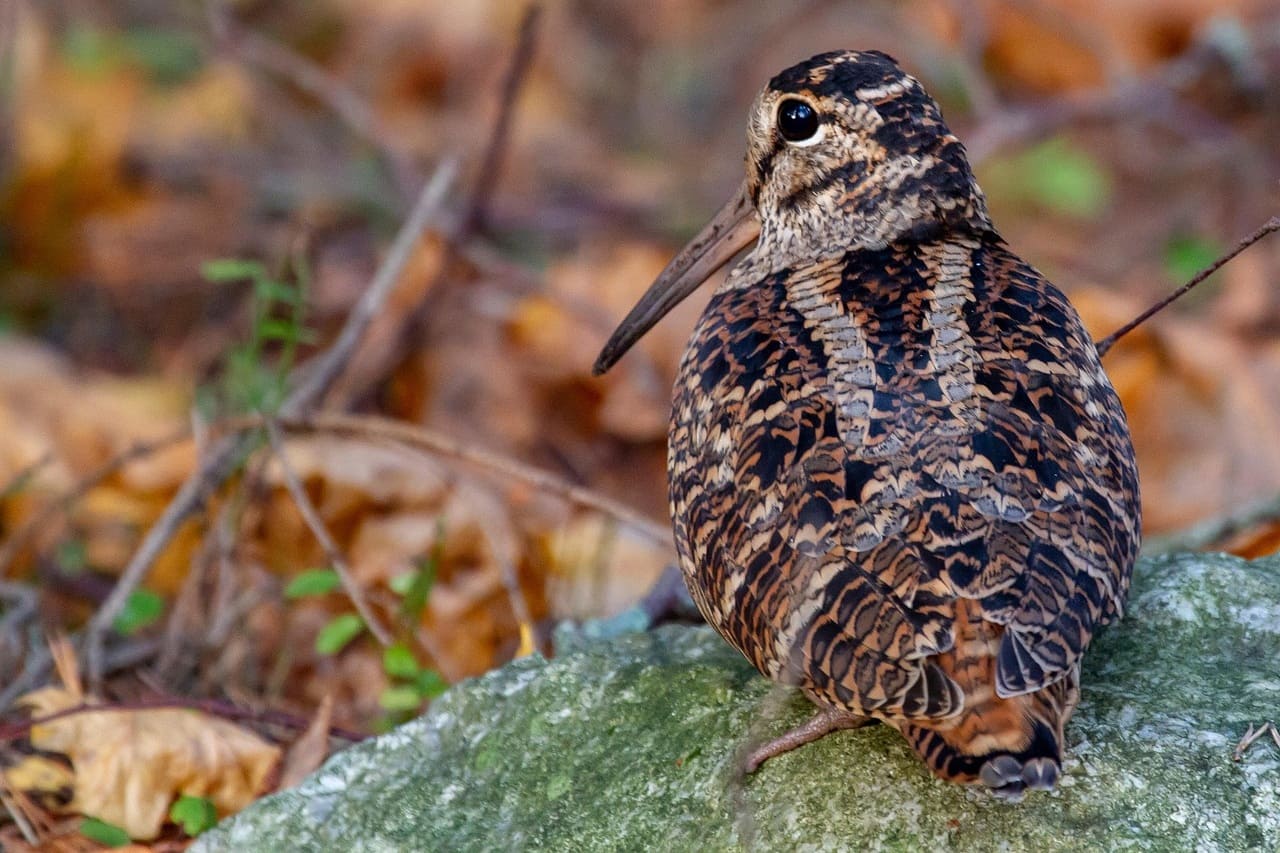
The woodcock is listed on Switzerland's Red List as 'vulnerable' (VU). Its breeding population has declined by more than 30 percent since 1990. It has almost completely disappeared from the Mittelland. The federal government is investing 500,000 francs in a species conservation project to investigate its decline. At the same time, between 1,500 and 2,500 woodcocks are shot annually in Switzerland. A FOEN study (Bohnenstengel et al., 2020) has proven that Swiss breeding birds remain in the country well into the hunting season and that the proportion of native birds in the hunting bag is significantly higher than previously assumed. The Franz Weber Foundation comments: 'Hunting woodcock is purely a sporting and recreational activity. There is no necessity for population regulation, as there are no conflicts between humans and animals.' BirdLife Switzerland compares the situation to drunk driving: 'It's a bit like not banning drunk driving because this cause is not the leading factor in traffic fatalities.'
Profile
The woodcock (Scolopax rusticola) belongs to the snipe family (Scolopacidae) and is thus a wading bird that, contrary to its family's habits, lives not near water bodies but in forests. It is about the size of a domestic pigeon, with a body length of 33 to 38 centimeters and a weight of 250 to 420 grams. Its plumage is a masterpiece of camouflage: a complex pattern of brown, black, gray, and beige tones that makes the woodcock practically invisible on the forest floor. The long, straight bill (6 to 8 centimeters) is its most important tool: with it, it probes the soft, moist forest soil for earthworms, which comprise up to 90 percent of its diet.
Biology and Behavior
The woodcock is a nocturnal solitary bird. During the day, it sits motionless on the forest floor, relying on its camouflage. At dusk and night, it flies to open areas (meadows, forest clearings) to search for food. In spring, males perform spectacular courtship flights (the 'roding'): at evening twilight, they fly above the treetops while emitting their characteristic deep 'quorr' and high-pitched 'puitz' calls. The female breeds alone and lays 4 eggs in a ground depression in the leaf litter. The incubation period is 21 to 24 days. When threatened, the female can clamp a chick between her body and thigh and fly away with it, a unique behavior among birds.
The Largest Field of Vision of All Birds
The woodcock possesses perhaps the most remarkable eye positioning of all birds. Its large, dark brown eyes sit high and to the sides of its head, enabling it with a nearly complete 360-degree field of vision. It can simultaneously see forward, backward, and upward without moving its head (Umweltnetz Schweiz, 2023). This adaptation allows it to detect enemies from any direction while sitting on the ground, probing the soil with its bill for worms. This extraordinary sensory organ, developed over millions of years of evolution, is answered by recreational hunters with a shotgun blast in the evening twilight.
Population and Distribution: A Bird Disappears
Red List Status
The woodcock is classified as 'vulnerable' (VU) on the Red List of breeding birds of Switzerland (BAFU/Schweizerische Vogelwarte, 2021). It is thus the only huntable bird species in Switzerland that is considered 'threatened' in the sense of the Red List (Freiburger Nachrichten, 2024). The Swiss breeding population is estimated at 1,000 to 4,000 singing (i.e., male) individuals (Umweltnetz Schweiz, 2023). Populations have declined by more than 30 percent since 1990. The Swiss Ornithological Institute Sempach states: 'As a breeding bird, the woodcock has almost completely disappeared from Switzerland below 900 meters since 1993–1996' (Vogelwarte Sempach, Atlas).
Distribution in Switzerland
The woodcock is still widely distributed along the northern edge of the Alps and in the Central Alps of Graubünden. It has almost completely disappeared from the Central Plateau. For the Jura, there are indications of a slightly shrunk distribution area (Vogelwarte Sempach, Vogeljagd in der Schweiz, 2024). It prefers moist, open forests with well-developed shrub and herb layers and soft, humus-rich soil. The loss of these habitats through forest densification, desiccation due to climate change, and light pollution are the main causes of its decline.
European Context
Europe-wide, the woodcock population remains stable with 12 to 18 million breeding birds. The species is globally classified as 'Least Concern' (LC). The threat is a specifically Swiss and Western European problem: breeding habitats are deteriorating, and hunting during migration and in wintering areas compounds the habitat degradation. In France, approximately 1 million woodcock are shot annually. Switzerland is part of a migration route where birds travel from northeastern Europe through Central Europe to the Mediterranean region and Atlantic coast. Every shot in Switzerland adds to the cumulative mortality along this migration route.
More on this: Dossier: Hunting and Biodiversity
The Hunting: Recreational Hunting of an Endangered Species
Legal Situation
The woodcock is a huntable species under the Federal Hunting Act (JSG, Art. 5 Para. 1). It is hunted in seven cantons: Ticino, Valais, Vaud, Fribourg, Neuchâtel, Jura and Bern. All German-speaking cantons have abolished woodcock hunting (Freiburger Nachrichten, 2024). Hunting seasons vary by canton, but begin in most cantons in mid-September or mid-October. In Fribourg canton, the hunting season runs from October 20 to December 14. Some cantons impose a limit of two birds per recreational hunter per hunting day (Fondation Franz Weber, 2020).
The Scale of the Killing
The annual hunting bag averaged 1,911 woodcock between 2003 and 2022 (range: 1,062 to 2,508). In 2016, 1,906 woodcock were killed (Pro Natura, JSG kurz erklärt). In 2019, it was 1,819 birds across seven cantons (BirdLife Schweiz, Jagdstatistik). Eighty-five percent of all kills occur in Ticino canton (Umweltnetz Schweiz, 2023). The woodcock is thus the second most heavily hunted wild bird in Switzerland after the mallard, and simultaneously the only endangered species hunted on this scale. The Fondation Franz Weber states: 'Woodcock hunting is purely a sport and recreational activity. There is no necessity for population control' (Fondation Franz Weber, 2020).
The BAFU Study: Swiss Breeding Birds Are Being Shot
The crucial question in woodcock hunting long remained: Are native breeding birds or only migrants from northeastern Europe shot during autumn hunting? The recreational hunting lobby argued that Swiss breeding birds had long since departed when hunting begins. A study commissioned by BAFU (Bohnenstengel et al., 2020; Vogelwarte Sempach/CSCF Neuenburg) has refuted this claim. The study equipped woodcock in the Neuchâtel Jura with satellite transmitters and found: Swiss breeding birds only begin their journey to winter quarters from mid-October onwards. At the beginning of November, well over half are still present in breeding areas. Only by the end of November have most birds migrated (Vogelwarte Sempach, Vogeljagd in der Schweiz, 2024).
Since over 90 percent of all kills occur between mid-October and the end of November, the proportion of native woodcock in the hunting bag is significantly higher than previously assumed. A supplementary isotope analysis revealed that depending on methodology, between 14 and 33 percent of killed woodcock are native. The origin of 19 percent of examined birds remained unclear (Umweltnetz Schweiz, 2023). The Vogelwarte Sempach concludes: 'Hunting pressure on woodcock must be reduced' (Vogelwarte Sempach, 2024).
The Failed JSG Revision: Cosmetics Instead of Protection
The revised hunting law rejected by voters in 2020 would have extended the woodcock's closed season by one month (hunting starting from October 16 instead of mid-September). BirdLife Switzerland criticized: 'This adjustment is merely cosmetic: 96 percent of woodcock can still be hunted even with the new hunting law, including our Swiss breeding birds that remain in the country well into the hunting season' (BirdLife Switzerland, hunting statistics). Fondation Franz Weber calculated: Only 4 percent of kills occur during the period that would have been protected by the extended closed season. The revision was a missed opportunity to finally protect the woodcock.
The grotesque double financing
The FOEN finances species conservation projects for the woodcock with 500,000 francs (one-time) and contributes annually around 200,000 francs to the costs of bird conservation projects. At the same time, it permits hunting of the same species in seven cantons. Consumer magazine Saldo comments: 'Grotesque: The woodcock is a priority species for species conservation. The federal government and cantons finance projects to increase populations, while simultaneously the federal government releases the animals for shooting' (Saldo, 2021).
More on this: Why recreational hunting fails as population control
Ecological significance
Soil caretaker and indicator species
The woodcock is a specialist for moist, structurally rich forests with soft soil. Through its intensive foraging (probing the soil for earthworms and insect larvae), it loosens the forest floor and promotes aeration and drainage. Its presence indicates intact soil conditions, sufficient moisture, and a healthy earthworm population. Where the woodcock disappears, an indicator of forest ecosystem quality disappears.
Food web
The woodcock is prey for goshawk, eagle owl, tawny owl, and fox. Its eggs and chicks are taken by martens, crows, and wild boar. As a link between the soil ecosystem (earthworms, insect larvae) and forest predators, it fulfills an important function in the forest food web.
Cultural history
The woodcock has been a central motif of European hunting culture and literature for centuries. The 'roding', the courtship flight at twilight, has been described by poets and naturalists from Johann Peter Eckermann to Peter Berthold. Hunting woodcock was considered the 'royal discipline' of low hunting. Today it is the symbol of recreational hunting that refuses to acknowledge that times have changed and an endangered species is no longer available as sporting quarry.
What needs to change
- Immediate nationwide protection of the woodcock: The woodcock is listed on the Red List as 'vulnerable' (VU). Its breeding population has declined by over 30 percent since 1990. It has almost disappeared from the lowlands. Recreational hunting is demonstrably an additional mortality factor affecting native breeding birds. The woodcock must be removed from the list of huntable species. What all German-speaking cantons have already implemented must be followed through in the seven remaining cantons and at the federal level.
- Immediate postponement of hunting season until at least December 1: As long as the woodcock remains huntable, the closed season must be extended so that native breeding birds are no longer affected. The FOEN study shows that only at the end of November have most Swiss breeding birds migrated. Extending the closed season until November 15 would spare around 95 percent of Swiss breeding birds (Vogelwarte Sempach, 2024).
- End of the grotesque double financing: The federal government cannot simultaneously finance species conservation for the Eurasian Woodcock and permit its hunting. This is a waste of taxpayers' money and a contradiction that undermines all credibility of biodiversity policy.
- Habitat Enhancement: Moist, open forests with well-developed herb layers and soft soil must be specifically promoted. Drainage of forest floors and darkening through failure to thin forests are the main causes of habitat loss. The FOEN project on habitat preference of the Eurasian Woodcock (Swiss Ornithological Institute Sempach/CSCF) provides the scientific foundation for this.
- International Commitment to Reduce Hunting Along Migration Routes: Switzerland must advocate within the framework of the Bern Convention and the AEWA Agreement (African-Eurasian Waterbird Agreement) for a reduction in cumulative hunting mortality along migration routes. The approximately 1 million Eurasian Woodcocks shot annually in France also affect birds that migrate through Switzerland or breed in Switzerland.
Arguments
«Most Eurasian Woodcocks killed in Switzerland are migrants; hunting does not harm the Swiss breeding population.» The FOEN study (Bohnenstengel et al., 2020) has refuted this claim. Swiss breeding birds remain in the country well into the hunting season: half are still in breeding areas in early November. Depending on methodology, 14 to 33 percent of killed woodcocks are native. For 19 percent, origin is unclear. The Swiss Ornithological Institute Sempach therefore demands a reduction in hunting pressure. That migrants are shot does not make hunting more acceptable: these birds are also hunted along their further migration route in France, Spain and Italy. Every shot in Switzerland adds to cumulative mortality.
«The Eurasian Woodcock is not threatened Europe-wide; shooting it is justifiable.» The European total population is not an argument for hunting a species considered 'vulnerable' in Switzerland. The Red List evaluates national status. Switzerland has an independent obligation to preserve its breeding populations. When a species is nationally threatened, it must not be hunted nationally, regardless of its global status. Anything else is a shirking of responsibility.
«The cantons will adjust hunting seasons; that suffices for protection.» Previous adjustments are cosmetic. The extended closed season in the failed revised hunting law would have prevented only 4 percent of kills. Even Canton Fribourg plans only a 'shift of hunting season to a later time' but explicitly excludes a hunting ban and invokes the 'tradition-rich woodcock hunt' (Freiburger Nachrichten, 2024). As long as hunting remains fundamentally permitted, the Eurasian Woodcock is not protected. Only a complete hunting ban gives the species the security its Red List status demands.
«Recreational hunting of the Eurasian Woodcock has a long tradition.» The tradition of woodcock hunting is a tradition of the upper class that has nothing to do with biodiversity conservation. Woodcock shooting was considered the 'royal discipline' of low hunting. This tradition must not take precedence over a species' survival. Tradition is not an argument for continuing a practice that puts additional pressure on a threatened species. All German-speaking cantons have already abolished hunting of the Eurasian Woodcock and demonstrate that it is possible to do without.
«The federal government invests in species conservation for the Eurasian Woodcock, so the problem is recognized.» The problem is recognized, but the solution is being refused. The federal government invests 500,000 francs in woodcock research while simultaneously releasing 1,500 to 2,500 specimens annually for shooting. This is like repairing a leak in a boat while simultaneously drilling new holes. Species conservation loses all credibility as long as the hunting of the promoted species is not terminated.
Quicklinks
Articles on Wild beim Wild:
- Studies on the impact of recreational hunting on wildlife
- Why recreational hunting fails as population control
- Animal welfare problem: Wildlife dies in agony because of recreational hunters
- Animal cruelty: Fox massacres in Switzerland
Related dossiers
- The rock ptarmigan in Switzerland: Ice Age relic between climate crisis, tourism and gunshot
- The ibex in Switzerland: Smuggled, saved and degraded back to trophy status
- The beaver in Switzerland: Eradicated, reintroduced and newly released for shooting
- The woodcock in Switzerland: Endangered, hunted and politically ignored
- Waterfowl in Switzerland: Winter guests in the line of fire
- Pigeons in Switzerland: Between peace symbol, mass shooting and official starvation
- Corvids in Switzerland: The most intelligent animals in the crosshairs
- The jay in Switzerland: Forest gardener in the crosshairs of small game hunting
- The marmot in Switzerland: Ice Age relic under climate stress, tourist attraction and mass shooting
- The wild rabbit in Switzerland: severely endangered, yet huntable
- The mountain hare in Switzerland: Ice Age relic between climate crisis and gunshot
- The raccoon in Switzerland: Released for shooting because it has the wrong origin
- The stone marten in Switzerland: Cultural follower between attic and gunshot
- The pine marten in Switzerland: Shy forest dweller under hunting pressure
- The badger in Switzerland: Ecosystem engineer in the crosshairs of small game hunting
- The red deer in Switzerland: Eradicated, returned and degraded to shooting target
- The roe deer in Switzerland: most shot game animal and victim of misguided hunting policy
- The wild boar in Switzerland: Why recreational hunting aggravates the problem instead of solving it
- The chamois in Switzerland: Between high hunting, climate stress and the myth of overpopulation
- The brown hare in Switzerland: Endangered, hunted and politically ignored
Sources
- Federal hunting statistics, BAFU/Wildtier Schweiz: http://www.jagdstatistik.ch
- Swiss Ornithological Institute Sempach (2024): Bird hunting in Switzerland, Position paper (vogelwarte.ch)
- Swiss Ornithological Institute Sempach: Habitat preferences and start of migratory behavior in the woodcock, Project (vogelwarte.ch)
- Swiss Ornithological Institute Sempach: Atlas of Swiss breeding birds, Hunting and persecution by humans (vogelwarte.ch)
- Bohnenstengel, T. et al. (2020): BAFU study woodcock, Departure times and origin of shot birds (CSCF/Vogelwarte Sempach, commissioned by BAFU)
- BAFU / Swiss Ornithological Institute (2021): Red List of breeding birds Switzerland (Woodcock: VU)
- BirdLife Schweiz: The current hunting statistics and the revised hunting law (birdlife.ch, 2020)
- BirdLife Schweiz (2023): Hunting of threatened animals, An anomaly persists in the Canton of Vaud (birdlife.ch)
- Pro Natura (2018): The federal hunting and protection law briefly explained (Number shot 2016: 1,906 woodcocks)
- Fondation Franz Weber (2020): The woodcock, Vulnerable species hunted for sport (ffw.ch)
- Freiburger Nachrichten (2024): State Council does not want to ban hunting of the endangered bird (freiburger-nachrichten.ch)
- Umweltnetz Schweiz (2023): The bird with panoramic view (umweltnetz-schweiz.ch)
- Saldo (2021): Threatened birds, released for shooting (saldo.ch)
- Naturschutz.ch (2020): JSG: NO to hunting endangered species (naturschutz.ch)
- NABU NRW: The woodcock, Threat and hunting rights (nabu.de)
- CH-Wildinfo Nr. 1 (2018): BAFU research project woodcock, ARGOS transmitter (wildtier.ch)
- Federal Act on Hunting and the Protection of Wild Mammals and Birds (JSG, SR 922.0)
- Animal Welfare Act (TSchG, SR 455)
- Bern Convention: Convention on the Conservation of European Wildlife and Natural Habitats
Our Mission
The woodcock is one of Switzerland's most enigmatic birds. Nocturnal, perfectly camouflaged, equipped with the largest field of vision of all birds, it lives hidden in our forests and probes the moist soil with its long beak for earthworms. Anyone who sees it flying above the treetops during the evening flight, who hears the deep quorring and the high puitzen in the twilight, experiences one of the last moments of untouched wilderness in Switzerland.
This bird is on the Red List. Its population has declined by over 30 percent. It has disappeared from the Central Plateau. The federal government invests hundreds of thousands in its research and conservation. And yet, every year 1,500 to 2,500 woodcocks are shot, at dusk, with shotguns, tracked by hunting dogs. Among them, demonstrably Swiss breeding birds that should actually be protected. No recreational hunter needs a woodcock. There is no damage it causes. There is no conflict between humans and animals. There is only a tradition that is older than the insight that an endangered species must not be released for shooting. All German-speaking cantons have already implemented this insight. Seven cantons and the federal government are still missing.
The consequence is clear: The woodcock must be protected throughout Switzerland. Hunting an endangered species is incompatible with the Animal Welfare Act, the Red List, and any form of ecological reason. This dossier is continuously updated when new figures, studies, or political developments require it.
More on recreational hunting: In our Hunting Dossier we compile fact checks, analyses, and background reports.