Hunting fact-checked: impacts on wild animals, ecology and society
Hobby hunting is a controversial subject. This dossier sets out what studies say about its consequences for wild animals, ecosystems and society — and where research reaches its limits.

In the debate about hobby hunting, ecological, economic, animal welfare and societal interests all collide. That is precisely why it is important to distinguish between traditions, assertions and what scientific studies, official data and specialist reviews actually show.
This dossier summarises research findings on the direct and indirect consequences of hunting. The focus is on the effects on wild animals: stress, altered spatial and activity behaviour, reproduction, social structures, wounding, selective evolution and the burden caused by lead ammunition. The page also examines the effectiveness of hunting as a means of population and damage control, possible non-lethal alternatives, as well as further questions concerning hunting weapons, violence prevention and hunting motivation.
The evidence is not equally strong in every area, and findings cannot always be transferred from one species, region or hunting method to another. This dossier therefore contextualises the studies wherever possible: what exactly was investigated? For which animals and under what conditions does a result apply? And where — particularly in Switzerland — is robust data still lacking?
The site takes a critical stance towards hobby hunting. Its aim, however, is to substantiate this criticism with verifiable sources and to disclose scientific uncertainties. Alongside hunting, factors such as habitat quality, food availability, climate, disease, natural predators and human disturbance also influence the development of wildlife populations.
The key findings at a glance: hunting disturbance can affect wild animals far beyond the individual kill. Depending on the species and hunting method, studies document changes in stress responses, activity times, spatial use, reproduction and social structures. At the same time, research shows that high kill figures do not automatically lead to smaller populations, less damage or better disease prevention.
Effect 1: animals under constant stress
In the presence of hobby hunters, wild animals switch into a permanently more vigilant behavioural mode. Wildlife biologists have observed this, for example, in moose in Canada . «Humans are perceived as a danger», explains Prof. Ilse Storch, head of the Chair of Wildlife Ecology and Wildlife Management at the Albert-Ludwigs-Universität Freiburg.
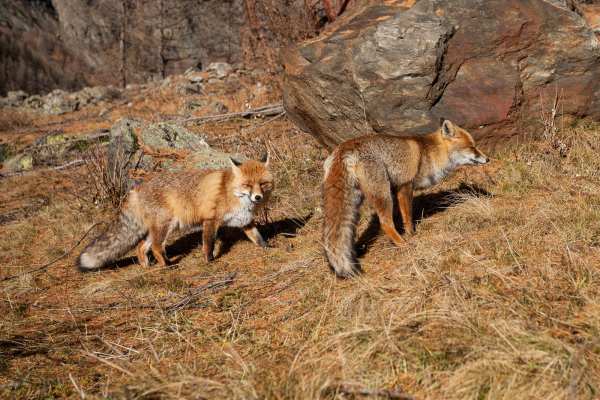
In science this is referred to as a «Landscape of Fear», a landscape of fear in which even animals at the top of the food chain, such as red deer, wild boars or foxes, live. «Wild animals would rather go hungry than actively expose themselves to danger», says Dr Konstantin Börner of the Leibniz Institute for Zoo and Wildlife Research (IZW). In other words: they prefer to stay under cover rather than search for food in the open field.
The physiological consequences are measurable. A study by the University of Veterinary Medicine Hannover (Güldenpfennig et al. 2021, Scientific Reports) measured elevated cortisol levels in all samples taken from wild boars during drive hunts. Santos et al. (2018) showed in red deer in south-western Europe that hunting management factors were the main drivers of stress hormone variation, ahead of environmental conditions and individual characteristics. Pedersen et al. (2024, Wildlife Biology) demonstrated that mountain hares hunted with dogs had a 6.5-fold higher cortisol level than those killed without dogs.
The hunting method plays a decisive role here. Tajchman et al. (2024, BMC Veterinary Research) found no significantly elevated long-term stress levels in hair samples from mouflon, red deer and wild boars that were hunted by quiet stalking without beaters or dogs. The authors conclude that stalking places less strain on the well-being of hoofed game than intensive driven hunts. This underlines the findings on drive hunts and dog chases: the more invasive the method, the more serious the physiological response.
Hobby hunting has made many wild animals shyer and more fearful than they would be in unhunted areas, wildlife ecologist Storch also reports. A systematic review on “Human-induced fear in wildlife” (Grigsby et al. 2023, Biological Conservation) evaluated 81 studies and documented that human-induced fear fundamentally alters activity patterns, physiology, fitness and habitat use in wild animals.
Darimont et al. (2009, PNAS) showed in a meta-analysis that human hobby hunters change wildlife populations faster than any other evolutionary factor ever observed in wild animals.
More on this: Hunting and animal welfare: what hobby hunting does to wild animals
Effect 2: loss of habitat through forced behavioural change
Out of fear of hobby hunters, many wild animals have permanently abandoned their natural habitat. “They avoid open fields and increasingly live in the shelter of the forest,” says biologist Börner. And they are able to judge when it becomes particularly dangerous. In a roe deer population in Europe researchers observed that the retreat into the forest intensifies during the hunting season. “On open fields, activity phases then shift into the less disturbed night, particularly in red deer,” Börner reports.
An extensive meta-analysis of 76 studies (Gaynor et al. 2018) concludes that wild animals significantly increase their nocturnal activity under human influence. The result was consistent across continents, habitats, species and human activities. A follow-up study (Gaynor et al. 2025, Proceedings of the Royal Society B) evaluated spatial use data from protected areas before and during the COVID-19 closures and provides causal evidence that wild animals such as wolves and mountain goats consistently avoid human infrastructure, and that this retreat is reversible when human pressure eases.
Corlatti & Ciuti (2025, Wildlife Biology) show in a recent review that wild animals' responses to humans lie along a continuum from avoidance through tolerance to attraction. In systems where humans act primarily as predators – that is, through hobby hunting – responses shift strongly towards avoidance. In Alpine marmots (Zenth et al. 2025, Wildlife Biology) only hobby hunting, and not recreational use, influenced behavioural tolerance towards human disturbance.
Hobby hunting therefore contributes substantially to wild animals being restricted in their freedom of movement and having less habitat available to them. «Without freedom of movement and genetic exchange, the health of the animals is put at risk,» says Börner.
Effect 3: Absence of winter mortality due to feeding
Hunting law, and not only in Germany, requires wild animals to be fed «in times of hardship» as part of game management, which is why some hobby hunters place feed in the forest in winter. The problem: «Feeding eliminates natural winter mortality,» explains wildlife ecologist Ilse Storch.
For wild animals, winter is normally a natural selection process. The strong survive, the weak die. In this way the population is naturally thinned out once a year. Feeding counteracts this process, as a study from the Czech Republic on population dynamics in wild boars shows. Where maize and waste grain were fed in combination with strong oak and beech mast years, the wild boar population even rose markedly the following year.
The problem: the more animals survive the winter, the more have to be killed the following year so as not to exceed the available spatial capacity. According to the annual report of the Wildlife Information System of the German Länder (WILD) the number of animals killed has risen significantly for roe deer since the 1990s, and has almost doubled for fallow and red deer. More recent DJV association data confirm this trend: wild boar kills rose from around 120’000 in the 1980s to almost 800’000 animals a year in the 2020s. Winter feeding is not the only cause of this, but it is a major factor.
Effect 4: Disrupted reproductive processes
Hobby hunting itself contributes to wild animals reproducing more quickly. Studies clearly show that Wild boars, Red deer and other wild animals increase their reproductive rate under hunting pressure, for instance by reproducing at a younger age. The more heavily they are hunted, the more offspring they produce.
In brown bears, Swedish researchers were able to observe that they alter the length of time they care for their young in response to being hunted. Some extend it in order to remain under protection with their cubs for longer. Other bear mothers shorten the care period in order to reproduce again more quickly and thus counteract the hunting pressure, as Quarks, the science magazine of German broadcaster WDR, reports.
Gosselin et al. (2015, Proceedings of the Royal Society B) documented a further indirect effect: in brown bears in Scandinavia, hunting led to an increased turnover of males in the territories, which triggered sexually selected infanticide (SSI). New dominant males kill the cubs of their predecessors in order to bring the females back into oestrus more quickly. Ninety-five per cent of cub mortality during the mating season was attributable to SSI.
Effect 5: Evolutionary changes through selective hunting
Hobby hunting interferes with evolution. Because hobby hunters systematically remove the largest, strongest and most conspicuous individuals from a population, a selection pressure arises that runs counter to natural forces. The consequence: populations change genetically in a direction that is biologically undesirable.
Coltman et al. (2003, Nature) demonstrated in a 30-year study of bighorn sheep (Ovis canadensis) that the body weight and horn size of the rams declined significantly as a result of trophy hobby hunting. The hobby hunters preferentially shot animals with the largest horns and thus the genetically most “valuable” individuals, before these could maximise their reproductive success. Pigeon et al. (2016) confirmed these findings in a follow-up study.
Darimont et al. (2009, PNAS) showed in a meta-analysis that human hobby hunters change wildlife populations faster than any other evolutionary factor ever observed in wild animals. The rates of phenotypic change in hunted populations were up to 300 per cent higher than under natural selection.
Leclerc et al. (2019, Nature Communications) demonstrated in Scandinavian brown bears that hobby hunters selectively target particular behavioural traits: bolder, less shy bears are killed more frequently. The result: over generations the population becomes shyer and more fearful, which fundamentally alters its behaviour and its use of space.
Lassis et al. (2023, Evolutionary Applications) modelled how protected areas can provide a genetic rescue effect for hunted populations through the dispersal of animals. This effect is, however, undermined by high hunting rates, because immigrating animals are shot before they can reproduce.
More on this: Hobby hunting influences the evolution of brown bears and Study on the «super-hunter»
Effect 6: Wounding and «crippling loss»
Not every shot kills. A considerable proportion of hunted animals are wounded but never found. This so-called «crippling loss» is a systematically underestimated animal welfare problem.
Kuhlmann et al. (2017, Ecological Indicators) developed the term «crippling ratio» as a measure of hunting-related wounding and showed in pink-footed geese that, for every animal killed, up to one further animal was wounded but not retrieved.
Wounding rates are particularly high in bow hunting. Ditchkoff et al. (1998, Proceedings of the Southeastern Association of Fish and Wildlife Agencies) documented in a controlled study at the McAlester Army Ammunition Plant in Oklahoma, involving 80 radio-telemetered white-tailed deer, that 50 per cent of the animals hit by bow hunters were not retrieved. Similar wounding rates (31 to 58 per cent) have been confirmed in studies from Georgia, Indiana, Michigan, New Jersey and Wisconsin. A summary of 24 North American studies arrives at an average wounding rate of 54 per cent (Report on Bowhunting).
The European bowhunting lobby, by contrast, points to a Danish data collection exercise (European Bowhunting Association, 2005), which found a wounding rate of only around 5 per cent for roe deer. An important point of context: this was not a scientific study with independent controls, but a survey based on voluntary self-reporting by bow hunters as part of a «game report». The US figures, on the other hand, come from controlled field studies with radio-collared, independently monitored animals – regardless of whether a hunter even notices or reports a missed shot. Hunters' self-declarations about their own missed shots are not methodologically comparable with independent telemetry. To date, there is no independent European or DACH study on bowhunting wounding rates that reaches the methodological standard of the US telemetry studies.
Gentsch et al. (2018, European Journal of Wildlife Research) examined the cortisol response of wild ungulates to various hunting methods and found that being chased by dogs triggers significantly higher stress levels than hunting from a stand. Events after the shot – such as the time until the follow-up search, the location of the injury and the behaviour of the follow-up search teams – also considerably influenced the level of stress.
Wounded animals that are not found often suffer a slow death from infection, starvation or exhaustion. These animals appear in no kill statistics. The actual number of animals killed by hobby hunting is therefore systematically higher than officially reported.
Effect 7: Lead poisoning from hunting ammunition
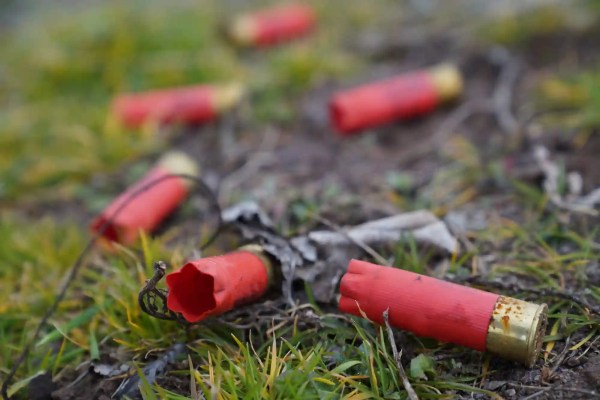
The use of lead-based ammunition by hobby hunters causes widespread environmental contamination affecting wild animals, livestock and humans. In the EU alone, around 44’000 tonnes of lead are released into the environment each year through hobby hunting and shooting sports.
The European Chemicals Agency (ECHA) estimates that at least 135 million birds are at risk each year from directly ingesting lead shot. A further 14 million birds, including birds of prey and scavengers, are affected by the secondary ingestion of lead fragments in their prey animals. Pain et al. (2019, Ambio) documented in a comprehensive review that lead poisoning kills over one million waterbirds annually in Europe and causes sublethal poisoning in a further three million. The international symposium «Lead, a borderless poison» (Gorizia, November 2025) currently puts annual mortality at 2.3 million birds in the EU – a significantly higher estimate that takes new survey methods into account.
Since 15 February 2023, the use of lead shot in wetlands has been banned across the EU. In February 2025, the EU Commission presented a more far-reaching draft regulation on a habitat-wide restriction of lead ammunition (Pain et al. 2025, Ambio). The ECHA also recommends introducing an EU maximum level for lead in game meat, comparable to the limit for meat from farm animals (0.1 mg/kg). Sonne et al. (2023, Eco-Environment & Health) call for a complete phase-out of lead ammunition in line with a One Health approach: the continued use of lead ammunition threatens biodiversity and human health and undermines sustainability goals.
Denmark was the first country in the world to adopt a complete ban on all types of lead ammunition for hobby hunting (from April 2024). In the United Kingdom, England, Scotland and Wales announced a ban on lead ammunition outdoors in 2025. In Switzerland, no such ban exists to date.
Effect 8: orphaned young animals and destroyed social structures
Hobby hunting does not only kill the target individual. It interferes with social structures and leaves young animals orphaned. In species with a strong mother–offspring bond – such as roe deer, red deer, bears, wolves and wild boars – the loss of a parent can mean death for dependent young.
The RSPCA (Knowledgebase) documents: if hobby hunters fail to find and put out of their misery the young of the females they have shot, these animals are left to fend for themselves. Depending on their age, orphaned young starve, die of thirst or freeze to death. In many species, the loss of the mother is a considerable stress factor, and even if orphaned individuals survive the acute phase, changes in physiology and behaviour can permanently impair their development.
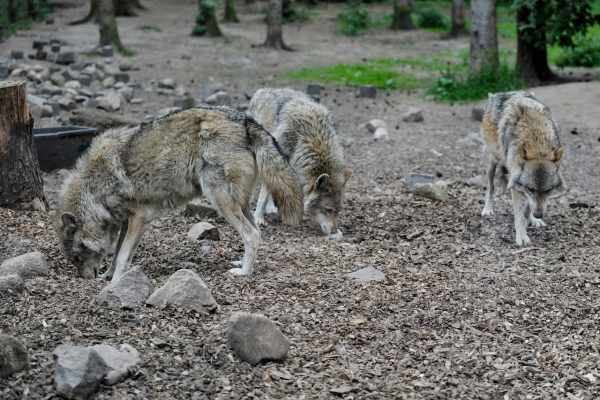
In wolves, Cassidy et al. (2023, Frontiers in Ecology and the Environment) demonstrated, using long-term data sets from several US national parks, that anthropogenic causes of death — particularly legal kills — significantly reduce pack persistence and reproduction in the following year. Killing an alpha animal can destabilise an entire pack.
For brown bears, Frank et al. (2018, Journal of Animal Ecology) documented, on the basis of the Scandinavian population, that surviving bears partly take over the vacated home ranges of shot conspecifics. This spatial reorganisation can have unintended consequences for population dynamics and run counter to management objectives.
Corlatti & Ciuti (2025, Wildlife Biology) summarise in a recent review: the indirect effects of hobby hunting on wildlife populations — from behavioural changes and stress physiology through to the destabilisation of social structures — are often more serious than the direct removals, and are systematically underestimated in management practice.
Long-term studies on European badgers show how long social interventions can continue to have an effect. Following local kills, surviving animals enlarged their home ranges, groups overlapped more strongly and immigration into the affected areas increased. Certain changes in the social structure were still measurable years later. In territorially living species, the removal of individual animals can therefore trigger consequences that go beyond the immediate reduction in numbers. The findings cannot be transferred directly to all game species, but they do document the well-known disturbance effect («perturbation effect») of kills in wildlife ecology.
Woodroffe, R. et al. (2009). Social perturbation and the epidemiology of bovine tuberculosis in cattle. Proceedings of the Royal Society B 276, 2769–2777.
Riordan, P. et al. (2011). Culling-induced changes in badger behaviour, social organisation and the epidemiology of bovine tuberculosis. PLOS ONE 6(12), e28904.
More on this: Study shows: wolf kills often lead to more livestock being killed and A ten-year-old study, still ignored: why stable packs kill fewer livestock
Effect 9: economic ineffectiveness of hunting ‘pest’ species
Hunting so-called «damage species» is of no benefit — not only ecologically, but economically too. That is the finding of a comprehensive study by Jiguet et al. (2026, Biological Conservation), which analysed seven years of official data from 92 French departments.
Between 2015 and 2022, a total of 12’394’885 foxes, stone martens, pine martens, polecats, least weasels, carrion crows, rooks, magpies, jays and starlings were killed in France as “pests”. That amounts to around 1.7 million animals per year. The economic balance sheet is devastating: the research team puts the annual control costs at 103 to 123 million euros, while the officially reported damage amounts to only 8 to 23 million euros per year. Over seven years, the killing costs add up to 791 million euros, the reported damage to 96 million euros. Even in the most conservative model calculation, in which the working time of hobby hunters is unpaid and travel costs are halved, the control costs exceed the damage by a factor of 1.66.
There is no statistical link between the effort put into killing and any reduction in damage. Neither do more kills lead to less damage, nor does damage increase when hunting pressure eases off. In the case of the jay and the starling, a higher number of kills actually correlated with higher spring populations, which the authors explain by compensatory reproduction. Particularly explosive: the 62’278 jays killed alone correspond to a potential loss of 100 to 454 million euros in seed-dispersal services for oak forests. Despite predominantly negative submissions in the public consultation and despite this study, the French government renewed the three-yearly ESOD decree on 21 August 2026 for the period 2026 to 2029; court rulings had previously removed the polecat and, for a time, the pine marten from the list owing to insufficient data, and the pine marten now reappears in fourteen departments. Switzerland regulates the same species under Art. 5 JSG without ever having carried out a comparable effectiveness review.
More on this: Killed in their millions – for nothing: new study exposes the hunters’ tall tales
Publications by animal species
Raccoons
Besides increased reproduction, compensatory immigration can also cancel out the effects of culling: if territories become locally vacant, animals from surrounding, unhunted areas can move in and fill the gaps. A hunting strategy that covers only small areas can therefore produce short-term local effects without permanently lowering population density at the level of the landscape as a whole.
- Culling-induced social perturbation in Eurasian badgers Meles meles and the management of TB in cattle: an analysis of a critical problem in applied ecology
- Robel R.J., Barnes N.A. & Fox L.B. Raccoon populations: Does human disturbance increase mortality? Transactions of the Kansas Academy of Science Vol. 93, No. 1/2 (1990), pp. 22–27
- Asano M. et al. Reproductive characteristics of feral raccoons (Procyon lotor) in Hokkaido/Japan
- Beasley JC, Rhodes OE. Effects of culling on mesopredator population dynamics
- Raccoon roundworm and baylisascariasis: only 50 cases worldwide
Golden jackals
Foxes
- Kistler C et al. Fox management should be based on scientific evidence rather than on assumptions
- Baker PJ et al. Effect of British hunting ban on fox numbers
- Goszczyński J. Population dynamics of the red fox in central Poland
- Kaphegyi T. Studies on the social behaviour of the fox (Vulpes vulpes L). Doctoral thesis
- Ansorge H. et al. (2010 ff.) The German Wildlife Information System (WILD): Population densities and den use of red foxes 2003–2007 in Germany. ResearchGate. Germany-wide monitoring of fox densities and den use.
- Kämmerle J.-L. et al. (2019) Restricted-area culls and red fox abundance: Are effects at the landscape scale? Conservation Science and Practice. Local culls do not reduce fox density at the landscape level.
- Williams N.F. (2025) Causes and Implications of Fox Population Dynamics in Central England. Dissertation, Bournemouth University. Confirms compensatory reproductive effects following hunting: fox populations rapidly offset losses through increased birth rates.
- Ryser-Degiorgis S. et al. (2019) Spatiotemporal spread of sarcoptic mange in the red fox in Switzerland. Parasites & Vectors. Swiss data on the spread of mange, with no link to hunting intensity.
- Pence D.B. & Ueckermann E. (2002) Sarcoptic mange in wildlife. PubMed. Fundamental overview study on mange in wild animals.
- Prentice J. (2012) The perturbation effect in wildlife systems. Dissertation, University of Leeds. Full text. Shows why killing territorial animals tends to promote rather than curb the spread of disease, through increased immigration.
- König A. et al. (2019) Effective long-term control of Echinococcus multilocularis in a mixed rural-urban area in Germany. PMC. Deworming baits push back the fox tapeworm in the long term; hunting is not a suitable means to this end.
- Comte S. et al. (2013) Fox baiting against Echinococcus multilocularis: Contrasted achievements among two medium size cities. SWILD. Compares the effectiveness of baiting programmes in two cities.
- Takahashi K. et al. (2013) Efficacy of anthelmintic baiting of foxes against Echinococcus multilocularis in northern Japan. ScienceDirect. Confirms outside Europe too: baiting programmes work, hunting does not.
- Knauer F. et al. (2010) A statistical analysis of the relationship between red fox and prey species. Wildlife Biology. Statistical relationship between fox density and prey populations.
- N.N. (2024) The impact of Agri-Environment Schemes (AES) and red fox (Vulpes vulpes) on the density of European brown hare (Lepus europaeus) populations in Hungary. bioRxiv. The relationship between landscape measures, fox density and brown hare populations.
- Kujawa D. & Łęcki R. Does Red Fox Vulpes vulpes Affect Bird Species Richness and Abundance in an Agricultural Landscape? ResearchGate. The influence of the fox on bird diversity in farmland.
- Spaar R. et al. (2012) Elemente für Artenförderungsprogramme Vögel Schweiz. Artenförderung Vögel Schweiz. Technical report on effective conservation measures for Swiss breeding birds, including an assessment of the predation factor.
- Korner P., Hohl D. & Horch P. Brood protection is essential but not sufficient for population survival of lapwings Vanellus vanellus in central Switzerland. Wildlife Biology. Habitat quality as the decisive factor for the lapwing, not predator control.
- Jiguet F. et al. (2026) Ecological and economic assessments of native vertebrate pest control in France. Biological Conservation. Between 2015 and 2022, an average of 383’299 red foxes were killed in France each year. The study finds no statistical link between the culling effort and any reduction in officially reported damage. The control costs for all hunted species combined exceed the damage by a factor of eight.
- SWILD – Kistler C. & Bontadina F. (2026) Scientific foundations of fox hunting. Technical report commissioned by the Office for Forest and Wildlife of the Canton of Zug. May 2026.
- Brief summaries of the scientific literature on the red fox
- More on this: Dossier: The fox in Switzerland and Fox hunting without facts: how JagdSchweiz invents problems
Wild boars
- More hunting leads to more wild boars
- Steiner W. Wild boar: evolution through hunting
- Tack J. Wild Boar Population Trends in Europe
- Csanyi S. Wild boar population dynamics & management Hungary
- Croft S. et al. Review of existing models on spatial distribution and density of wild boar
- Novakova P. et al. Effect of diet supply and climatic conditions on population dynamics of the wild boar in Czech republic
- Servanty S. et al. Factors affecting wild boar reproduction under hunting pressure
- Acevedo P. et al. Spatial distribution of wild boar population abundance: Basic information for spatial epidemiology and wildlife management
- Mazzatenta A. (2026) Wild Boar Management and Environmental Degradation: A Matter of Ecophysiology – The Italian Case. Conservation 6(1): 9. Drawing on official Italian data, the study shows that sustained hunting pressure on wild boars triggers a shift from a K to an r strategy: earlier and more frequent litters, higher birth rates, accelerated growth. The management practice intended to reduce populations is in fact driving them up.
- Podgórski T. et al. (2026) Impact of hunting modality on social contacts in wild boar populations across Europe. Journal of Applied Ecology 63(1): e70230. A Europe-wide analysis showing how hunting disturbance alters social contact rates and thus the structure of the sounder – the very mechanism through which the lead sow exerts social control.
- Gortázar C. et al. (2026) Wild boar population control needs more than recreational hunting. European Journal of Wildlife Research 72: 36. Long-term population control by hobby hunting alone cannot offset the growth favoured by expanding woodland areas, advantageous field crops and the disappearance of competition for food. In Spain, the hunting bag rose from 32’000 (1985) to 450’000 animals (2022), despite a declining number of hunters.
- More on this: African swine fever: what the disease means for wild boars and hobby hunting
Moose
Roe deer
A recent study from the south-western Alps shows how strongly hunting pressure can alter the spatial behaviour of other wild animals. During the hunting season, roe deer avoided areas with a high hunting risk. Especially during drive hunts for wild boars, they more frequently chose wolf-rich areas and stayed closer to buildings. The researchers speak of a conflict between different risks: in order to evade hunting, animals may move into areas where other dangers increase. This illustrates that hunting influences the use of habitats and the relationships between prey, predators and humans far beyond the individual kill.
- Corradini, M. et al. (2025). A Game of Risk: Human Activities Shape Roe Deer Spatial Behavior in Presence of Wolves in the Southwestern Alps. Diversity 17(2), 115.
- Bonnot N et al. Habitat use under predation risk: Hunting, roads and human dwellings influence the spatial behaviour of roe deer
- Trembay J-P et al. Ecological impacts of deer overabundance on temperate and boreal forests
- Fred Kurt: Das Reh in der Kulturlandschaft. Ökologie, Sozialverhalten, Jagd und Hege. Kosmos Verlag, Stuttgart 2002, ISBN 3-440-09397-2, p. 83.
Alpine marmots
- Zenth F., Giari C., Morocutti E. et al. (2025) Hunting, but not outdoor recreation, modulates behavioural tolerance to human disturbance in Alpine marmots Marmota marmota. Wildlife Biology 2025: e01397
Corvids and starlings
- Jiguet F. et al. (2026) Ecological and economic assessments of native vertebrate pest control in France. Biological Conservation. The most comprehensive economic and ecological assessment to date of the hunting of carrion crows, rooks, magpies, jays and starlings in France. Over seven years, more than 10.7 million birds of these five species were killed. The shooting regulates neither populations nor damage; in the case of the jay and the starling, a higher number of kills even correlates with higher spring populations.
- Chiron F. & Julliard R. (2013) Assessing the effects of trapping on pest bird species at the country level. Biological Conservation 158: 98–106. Demonstrates that hunting alters the population structure of corvids, but does not reduce overall numbers.
- Jiguet F. & Gantin C. (2025) Fission-fusion dynamics and spring movements in first-year carrion crows challenge the efficiency of culling strategies. Scientific Reports 15: 31068. Shows that up to 96 per cent of the carrion crows shot in spring are young, non-breeding individuals. The breeding population segment that is relevant in regulatory terms is not reached by the hunting at all.
- Jiguet F. (2020) The Fox and the Crow. A need to update pest control strategies. Biological Conservation 248: 108693. Already called in 2020 for a fundamental ecological, economic and ethical reappraisal of the hunting of foxes and corvids.
- Green A.J., Elmberg J. & Lovas-Kiss Á. (2019) Beyond Scatter-Hoarding and Frugivory: European Corvids as Overlooked Vectors for a Broad Range of Plants. Frontiers in Ecology and Evolution 7: 133. Documents the underestimated role of corvids as seed dispersers.
- Hougner C., Colding J. & Söderqvist T. (2006) Economic valuation of a seed dispersal service in the Stockholm National Urban Park, Sweden. Ecological Economics 59: 364–374. Puts the economic value of seed dispersal by jays at between 3’200 and 14’600 euros per breeding pair.
Chamois and ibex
- Coltman D.W. et al. (2003) Undesirable evolutionary consequences of trophy hunting. Nature 426: 655–658 (bighorn sheep; the selection mechanisms described are transferable to ibex subject to trophy hunting)
- Pigeon G. et al. (2016) Intense selective hunting leads to artificial evolution in horn size. Evolutionary Applications 9: 521–530
Note: For chamois and ibex in Switzerland there are as yet no dedicated population studies on hunting effects on stress physiology or behavioural change. This section will be expanded once new data from long-term alpine studies become available.
Brown bears
- van der Walle J. et al. Hunting regulation favors slow life histories in brown bear
- Van de Walle J. et al. The interplay between hunting rate, hunting selectivity, and reproductive strategies shapes population dynamics of a large carnivore
- Leclerc M et al. Hunters select for behavioral traits in a large carnivore
- Gosselin J. et al. (2015) The relative importance of direct and indirect effects of hunting mortality on the population dynamics of brown bears. Proceedings of the Royal Society B 282: 20141840
- Frank S.C. et al. (2018) Sociodemographic factors modulate the spatial response of brown bears to vacancies created by hunting. Journal of Animal Ecology 87: 247–258
- Hobby hunting influences the evolution of brown bears
- More on this: Dossier: The brown bear in Switzerland and 20 years of bears in Switzerland
Wolves
- The big bad wolf is afraid of you
- Wolf: herd protection more effective than killing, study finds
- Wolf Reintroduction Changes Ecosystem in Yellowstone
- Study shows: wolf culls often lead to more livestock kills
- Wolves can save human lives
- Sheep losses influenced more strongly by protective measures and sheep numbers than by wolf population size (Frontiers in Ecology and Evolution 2022)
- High survival rates explain 20 years of rapid wolf expansion in Germany (IZW Berlin)
- Study by the German Federal Agency for Nature Conservation (BfN) on the threat to the wolf population
- Kupferschmid A. Direct, indirect and combined effects of wolves on reforestation and vegetation development (WSL 2016)
- Knauer F., Rauer G., Musil I. Prey composition and killing behaviour of wolves (Vetmeduni Vienna 2016)
- Cassidy K.A. et al. Human-caused mortality triggers pack instability in gray wolves (Frontiers in Ecology and the Environment 2023)
- Targeted removal promotes pack dissolution and lower reproduction, particularly in small populations (Scientific Reports 2024)
- Meta-analysis of anthropogenic causes of death: hunting, delisting and illegal killings alter population dynamics (PMC 2022)
- Fuller T.K. et al. (2003) Sustainability thresholds and the influence of harvesting on population growth
- High kill rates on dispersing animals reduce genetic connectivity and successful settlement (US Forest Service)
- Transboundary effects: killing in neighbouring management areas shows additive effects on survival rates (Journal of Applied Ecology)
- Hobby hunting can indirectly influence movement patterns and thus livestock damage (Wildlife Biology)
- PVA models: hobby hunting, habitat fragmentation and epidemic outbreaks jointly predict persistence (Biological Conservation)
- Treves A. et al. (2026) Removing wolves did not reliably prevent domestic animal losses. Conservation Science and Practice. Comparative evaluation of five field studies from Slovenia, Michigan, Slovakia, Latvia and the Golan Heights: wolf removals did not reliably prevent subsequent livestock damage, and in some cases there were even indications of an increased risk of recurrence in the vicinity of the intervention sites.
- More on this: New study: wolf killings do not reliably prevent livestock losses
- More on this: Dossier: herd protection in Switzerland and Valais wolf record: figures of a massacre
General publications on the effects of hobby hunting on wild animals
- Gaynor K.M. et al. The influence of human disturbance on wildlife nocturnality (meta-analysis, Science 2018)
- Gaynor K.M. et al. (2025) The influence of human presence and footprint on animal space use in protected areas. Proceedings of the Royal Society B
- Corlatti L. & Ciuti S. (2025) Indirect effects of hunting on wildlife. Wildlife Biology 2025: e01691 (review article)
- Grigsby D.M. et al. (2023) Human-induced fear in wildlife: A review. Biological Conservation 286: 110252
- Güldenpfennig J. et al. (2021) An approach to assess stress in response to drive hunts using cortisol levels of wild boar. Scientific Reports 11: 16514
- Santos J.P.V. et al. (2018) The importance of intrinsic traits, environment, and human activities in modulating stress levels in a wild ungulate. Ecological Indicators 89: 706–715
- Tajchman K. et al. (2024) Impact of stalking hunt season on long-term stress in big game. BMC Veterinary Research
- Kuhlmann K. et al. (2017) Crippling ratio: A novel approach to assess hunting-induced wounding of wild animals. Ecological Indicators 80: 242–246
- Ditchkoff S.S. et al. (1998) Wounding Rates of White-Tailed Deer with Traditional Archery Equipment. Proceedings of the Southeastern Association of Fish and Wildlife Agencies 52: 244–248
- European Bowhunting Association (2005) Danish data collection on bowhunting of roe deer, based on voluntary self-reporting by bowhunters; methodologically not comparable with independent telemetry
- Mysterud A. Selective harvesting of large mammals: how often does it result in directional selection?
- Gethöfer F., Siebert U. Current knowledge of the Neozoa Nutria and Muskrat in Europe
- Comte S. et al. Echinococcus multilocularis management by fox culling: An inappropriate paradigm
- Miguel E et al. A systemic approach to assess the potential and risks of wildlife culling for infectious disease control
- Pagh et al. Increased reproductive output of Danish red fox females following an outbreak of canine distemper
- Kupferschmid A. et al. Estimating the influence of browsing damage by wild ungulates on tree regeneration
- Prof. Reichholf: Why hunt? The consequences of hunting for people, animals, plants and landscapes
- Darimont C et al. Human predators outpace other agents of trait change (PNAS 2009)
- Stoykova K. Dealing with «invasive» species: a critical analysis from a biological and legal perspective
- Wildtierschutz Deutschland: General facts about hunting
- Jiguet F., Morin A., Courtines H., Robert A., Fontaine B., Levrel H. & Prince K. (2026) Ecological and economic assessments of native vertebrate pest control in France. Biological Conservation. Analysis of official data on 12.4 million kills across seven hunting seasons in 92 French departments. The control costs (103 to 123 million euros per year) exceed the officially reported damage (8 to 23 million euros per year) by a factor of eight, with no measurable effect on populations or the extent of damage.
Lead ammunition: further sources
- ECHA: Lead in shot, bullets and fishing weights
- BirdLife: Lead ammunition finally banned from wetlands across the EU
- Vulture Conservation Foundation: EU bans the use of lead ammunition in wetlands
- Pain D.J. et al. (2019) Effects of lead from ammunition on birds and other wildlife: A review and update. Ambio 48: 935–953
- Pain D.J. et al. (2025) EU regulation: An unprecedented opportunity to protect wildlife and human health from lead in hunting ammunition. Ambio (most recent overview of the EU legislative process)
- Sonne C. et al. (2023) The environmental threats from lead ammunition. Eco-Environment & Health 2(1): 16–17
- Ellis C.K. et al. (2023) Efforts to ban lead ammunition: a comparison between Europe and the United States. Wildlife Society Bulletin
- Katzner T.E. et al. (2024) Lead poisoning of wildlife from ammunition: a global perspective on regulations and actions. Ambio
- International symposium “Lead, a borderless poison” (Gorizia, November 2025): current estimate of 2.3 million bird deaths annually in the EU caused by lead ammunition
Immunocontraception: humane alternatives to hobby hunting
There is growing public demand for wildlife managers to move away from traditional, lethal control methods and switch to more effective, humane, non-lethal methods. PZP immunocontraception (Porcine Zona Pellucida) and GonaCon vaccines offer scientifically proven alternatives.
- Contraceptives for gulls as a solution to urban problems
- Belgium: contraceptive grains to control the pigeon population
- Thailand introduces a contraception plan to control the elephant population
- Fertility Control for Wildlife: A European Perspective (Massei et al. 2022)
- Wildlife Contraception (Wild Animal Suffering Research)
- New trends in immunocastration and its potential to improve animal welfare (Ahmed et al. 2022)
- US cities deploy birth control technology against rat infestations
- Wild boars to be sterilised in Rome
- Spain: reducing wild boar numbers thanks to vaccination
- Wildlife management in Geneva: contraception instead of killing
- Approval for trials of the immunocontraceptive vaccine “GonaCon” in Italy (Gazzetta Ufficiale 2022)
More on this: Dossier: Geneva and the hunting ban and Dossier: arguments for professional game wardens
Hunting weapons and domestic violence
Hobby hunting brings firearms into private households, and that increases the risk of lethal violence against women. In their study on intimate partner homicide (42 cases before the Cour d’Appel de Poitiers), forensic pathologist Alexia Delbreil and criminologist Jean-Louis Senon found that among femicides committed with firearms, around 71 per cent were carried out with hunting rifles. The reason: these are “weapons of opportunity” that are frequently present in the home. Back in 2003, psychiatrist Jean-Louis Terra had already established that the risk of a woman being killed is five times higher in a household with a firearm – a finding he described to Reporterre in 2021 as still valid.
Publications on the effects of violence on hobby hunters
- Solothurn government defends animal cruelty
- Amygdala and violence (search overview)
- Understanding the link between animal cruelty and family violence: The bioecological systems model
- Childhood without a conscience (Der Spiegel)
- Why some people turn murderously evil (Die Welt)
- Violence as a source of pleasure or displeasure is associated with specific functional connectivity with the nucleus accumbens (Frontiers in Human Neuroscience)
- People who torment animals rarely stop there (PETA)
- Hunting fever
- Serial Killers Have Under-Developed Brains, Says New Study (IBTimes)
- When children torment animals: how parents should react
- Why Men Trophy Hunt: Showing Off and the Psychology of Shame (Psychology Today)
- «Killing can be fun» (NZZ)
- Hunting and Illegal Violence Against Humans and Other Animals
- Understanding hobby hunters better
- Interview: Petra Klages with serial killer Frank Gust (PETA)
- Psychological and sociological differences between hobby hunters and non-hunters
- The Anatomy of Human Destructiveness (Erich Fromm)
- Has he got a screw loose? (Die Zeit)
- The passion of the hunter (Paul Parin)
- Hunting and Illegal Violence Against Humans and Other Animals: Exploring the Relationship (ResearchGate)
- New York State statistics show link: hunters and molesters
- Ohio data confirms hunting/child abuse
- Michigan stats confirm hunting, child abuse
- Preventing domestic violence caused by firearms (Südostschweiz)
- Cazadores deportivos: ¿Mentes criminales?
- Hunting and hunters: psychoanalysis
- A researcher finds a particular pattern in the brains of serial killers (NZZ)
- The brain
- Hobby hunters and their brain pattern
- Dugré J.R., Hopfer C.J. & Winters D.E. (2025) The dark sides of the brain: A systematic review and meta-analysis of functional neuroimaging studies on trait aggression. Aggression and Violent Behavior 81:102035.
- Decety J., Chen C., Harenski C. & Kiehl K.A. (2013) An fMRI study of affective perspective taking in individuals with psychopathy: Imagining another in pain does not evoke empathy. Frontiers in Human Neuroscience 7:489.
- Delbreil A. & Senon J.-L. Homicide conjugal: Profil de l’auteur et facteurs prédictifs de passage à l’acte. À partir de 42 dossiers jugés par les juridictions de la Cour d’Appel de Poitiers. Sudoc. Among femicides committed with firearms, around 71 per cent were carried out with hunting rifles, because these are frequently present in the household as «weapons of opportunity».
- Terra J.-L. (2003) The risk of being killed is five times higher for a woman living in a household with a firearm. In 2021, speaking to Reporterre he confirmed this as still valid.
More on this: What does psychology say about hobby hunters?: Psychology & hunting: analyses of the motives, justifications and social dynamics of hobby hunting from a psychological perspective.
On the psychology of hunting: what the research shows
What drives people to hunt, and what psychological effects does killing animals have on the hunters themselves? This question has been little researched scientifically, yet it is gaining importance in view of societal debates about the legitimacy of hobby hunting. The following summarises empirical findings – without generalisation and without equating hunting with crime or pathology, which would not be scientifically tenable.
Hunting motivation: Studies from North America and northern Europe show that hobby hunters display differing motivational profiles: obtaining food, experiencing nature, social bonding and – among a proportion of respondents – the pleasure of killing itself («harvest motivation»). In survey studies, this latter group shows a greater tolerance of animal suffering and a stronger identification with dominance over nature. These findings come from self-report studies and cannot be generalised to all hunters. (Why Men Trophy Hunt: Showing Off and the Psychology of Shame, Psychology Today; Psychological and sociological differences between hobby hunters and non-hunters)
More on this: The hobby hunter in the 21st century
Cantonal psychology analyses:
- The psychology of hobby hunting in the canton of Glarus
- The psychology of hobby hunting in the canton of Zug
- The psychology of hobby hunting in the canton of Basel-Stadt
- The psychology of hobby hunting in the canton of Schaffhausen
- The psychology of hobby hunting in the canton of Appenzell Outer Rhodes
- The psychology of hobby hunting in the canton of Appenzell Inner Rhodes
- The psychology of hobby hunting in the canton of Neuchatel
- The psychology of hobby hunting in the canton of Thurgau
- The psychology of hobby hunting in the canton of Nidwalden
- The psychology of hobby hunting in the canton of Uri
- The psychology of hobby hunting in the canton of Obwalden
- The psychology of hobby hunting in the canton of Schwyz
- The psychology of hobby hunting in the canton of Jura
- The psychology of hobby hunting in the canton of Basel-Landschaft
- Psychology of hobby hunting in the canton of Zurich
- Psychology of hobby hunting in the canton of Geneva
- Psychology of hobby hunting in the canton of Bern
- Psychology of hobby hunting in the canton of Solothurn
- Psychology of hobby hunting in the canton of Aargau
- Psychology of hobby hunting in the canton of Ticino
- Psychology of hobby hunting in the canton of Valais
- Psychology of hobby hunting in the canton of Grisons
- Psychology of hobby hunting in the canton of St. Gallen
- Psychology of hobby hunting in the canton of Fribourg
- Psychology of hobby hunting in the canton of Vaud
- Psychology of hobby hunting in the canton of Lucerne
Related dossiers
- Hunting in Switzerland: fact check, types of hunting, criticism
- Dossier: The brown bear in Switzerland
- Dossier: The lynx in Switzerland
- Dossier: The wildcat in Switzerland
- Dossier: Herd protection in Switzerland
- Dossier: Geneva and the hunting ban
- Dossier: The case for professional game wardens
- Valais wolf record: the figures behind a massacre
This page is updated on an ongoing basis as new studies and research findings become available.
LET'S STAY IN TOUCH!
We would like to send you the latest news and offers in our newsletter.

All articles are written by IG Wild beim Wild as well as by external co-authors. Research, structuring and editorial processes may be supported by AI-assisted tools.
Support our work
With your donation you help to protect animals and to give their voice a hearing.
Donate now →