
Hunting and Animal Protection: What Practice Does to Wildlife
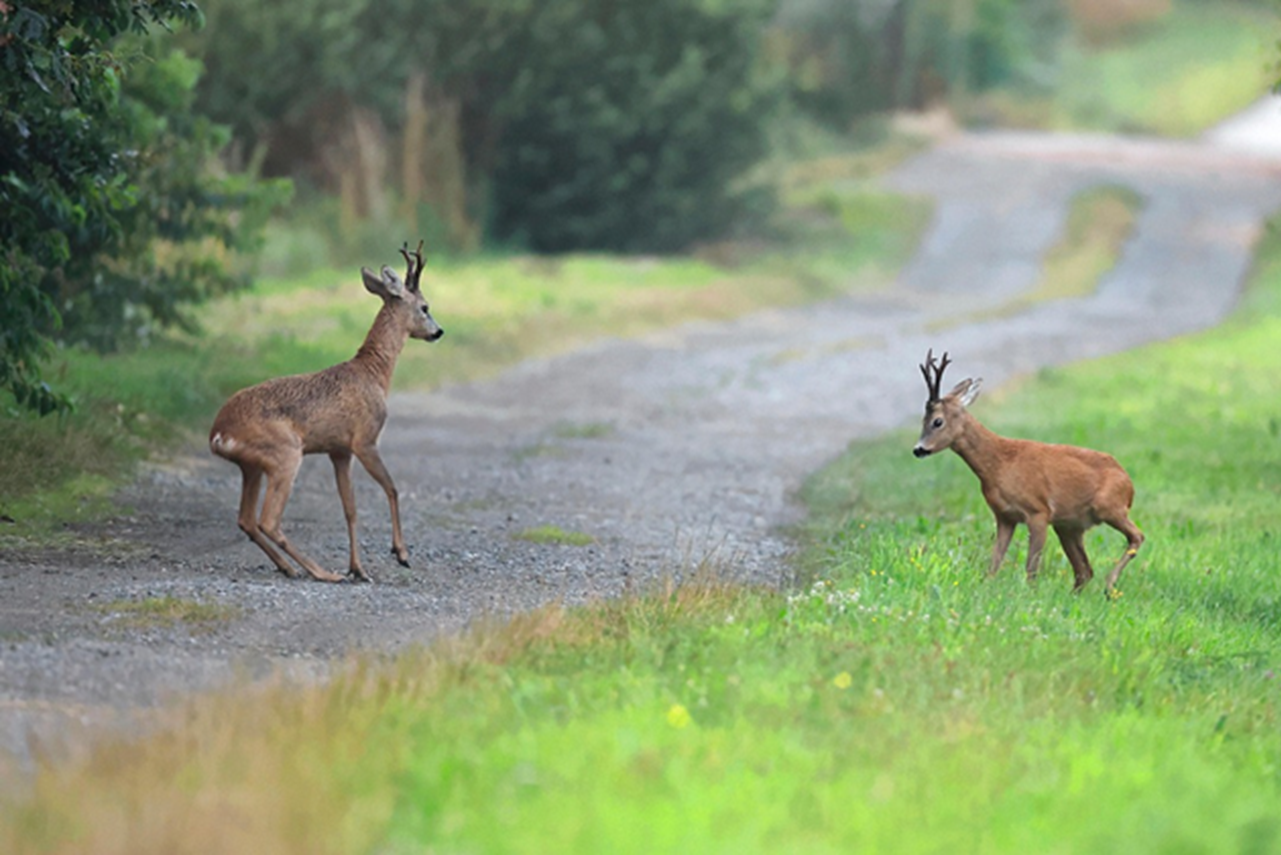
Hunting is often portrayed as a contribution to animal protection. Recreational hunters speak of 'stewardship', of responsibility and of a 'quick death'. But animal protection does not mean that an animal dies as efficiently as possible. Animal protection means avoiding suffering, reducing stress and respecting life. This is precisely where the central conflict lies between the hunting self-image and hunting reality.
Swiss animal protection law demands the protection of the dignity and welfare of animals. The Civil Code states that animals are not objects. Both statements also apply to wildlife. And both statements stand in fundamental contradiction to a system that kills wildlife for recreational activity, tradition and supposed 'regulation' – even though alternatives exist, function demonstrably and are simply not politically prioritised.
What awaits you here
- The 'immediately lethal shot': Ideal and reality: What misses, grazing shots and tracking reveal about the system – and what they mean for the affected animals.
- Stress as a form of suffering: What hunting pressure triggers in the wildlife body: What wildlife research shows about stress hormones, energy consumption and flight reactions under hunting pressure.
- Drive hunts: When stress becomes method: What drive and battue hunts mean for wildlife ecologically and in terms of animal protection law.
- Parent animals and young animals: When a shot destroys a social structure: Why 'population regulation' as an abstraction conceals what actually happens.
- Night hunting and technologisation: When efficiency lowers the threshold: What thermal cameras, night vision optics and silencers mean for the animal protection principle.
- Animal protection law versus hunting practice: The structural contradiction: What Swiss law says – and how far hunting practice deviates from it.
- Alternatives: What works instead of killing: Which non-lethal methods for wildlife regulation exist, are scientifically proven and are politically ignored.
- Arguments: Responses to the most common justifications for hunting practice from an animal welfare perspective.
- Quick links: All relevant articles, studies and dossiers.
The «immediately lethal shot»: Ideal and reality
In hunting's self-presentation, the clean, immediately lethal shot is the standard. In reality, it is an ideal that is regularly missed. Wild animals move, rarely stand perfectly free, lighting conditions are difficult, shooting distances are underestimated, excitement and group pressure lower decision-making quality.
The Graubünden figures are the clearest available documentation: Between 2012 and 2016, 3,836 of 56,403 killed animals were initially only wounded. Wildlife biologist Lukas Walser confirmed to SRF: «This proportion is roughly the same every year.» This means: In a single canton, several hundred wild animals are wounded annually, suffer and are only killed with delay – if at all – in accordance with animal welfare standards. Tracking with hunting dogs is presented as a solution. In truth, it is an admission of the systemic problem: If tracking is necessary, the system has by definition a vulnerability-prone core. Extrapolated to all hunting cantons over several years, tens of thousands of cases arise in which wild animals suffer – documented, structurally conditioned and systematically normalized.
More on this: Hunting season in Switzerland: Traditional ritual, violence zone and stress test and Hunting season in Graubünden: Control and consequences for recreational hunters
Stress as a form of suffering: What hunting pressure triggers in the wild animal body
Animal welfare is not limited to the moment of death. It begins where suffering begins – and suffering in wild animals begins long before the shot. Hunting is initially disturbance for a wild animal, then flight, then loss of orientation.
What wildlife research consistently shows: Hunting stress triggers a stress hormone cascade in the body that mobilizes energy reserves, greatly increases heart rate and respiratory rate and puts muscles into a state of emergency. This condition costs energy that is not arbitrarily available, especially in autumn and winter – in phases when hunting season and winter hunting take place. Studies from Scotland and Scandinavia show significantly higher cortisol levels in hunted red deer populations compared to non-hunted populations. For females with young, stress acceleration is particularly consequential: Milk production breaks down, parent-young bonds are interrupted, young animals lose the protective presence of the mother animal during critical phases. This is animal suffering – even if it does not materialize in a shot.
More on this: Psychology of hunting and Hunting and biodiversity: Does recreational hunting really protect nature?
Drive hunts: When stress becomes method
Drive and battue hunts are the hunting method with the highest structural stress level for wild animals. The principle is based on driving wild animals out of cover – through noise, dog barking, human presence and coordinated movement. The goal is maximum disturbance to enable shots.
What this means for the affected animals is well documented by behavioral biology: Wild animals show panic flight behavior during drive hunts that is energetically extremely costly and frequently leads to injuries. Young animals that do not yet have established flight behavior are separated from family groups. Animals run into unknown terrain, change territories and lose orientation. In Swiss animal welfare legislation, suffering is explicitly defined as a criterion for assessment – animal welfare explicitly includes fear and stress. This does not make drive hunts a gray area, but rather a politically normalized contradiction to the country's own legal situation.
More on this: Ban on drive hunts (model motion) and End recreational violence against animals
Parent animals and young animals: When one shot destroys a social structure
In public communication, there is talk of «population regulation». This sounds technical and neutral. What actually happens when a parent animal is killed is neither technical nor neutral.
In red deer, wild boar and wolves, social structures are complex and learning-based. Young animals learn from older animals how territory is used, which food sources are accessed and how conflicts with humans can be avoided. If a leading female – a red deer hind, a sow, an alpha female wolf – is killed during the leading period, young animals can become orphaned, starve or get into conflict situations because they lack the social learning capital. In the Valais wolf policy 2025/2026, seven young wolves were killed as part of «basic regulation» – animals that never had the chance to learn how their pack deals with livestock farming and cultural landscape. The irony: These very learning processes are crucial for wolf conflicts to decrease in the long term. Those who kill young animals are investing in more conflicts – not fewer.
More on this: Protection of young animals and parent animals (model motion) and Wolf in Switzerland
Night hunting and technologization: When efficiency lowers inhibition thresholds
Night vision optics, thermal cameras, silencers and drones for wildlife search increase hunting efficiency. They also change the ethical field in a direction that is hardly discussed in the public hunting debate: They lower inhibition thresholds.
When hunting becomes technically easier, care does not automatically increase. Often the pressure of expectations increases: Shooting plans should be fulfilled, territory holders expect performance, social recognition in the hunting milieu depends on success. Technologization in this context does not lead to fewer shots, but to more shots under more difficult conditions. Night hunting means that wild animals are disturbed during their main activity phase – in the only time window that still offers them relative protection in populated landscapes. The revised JSV has basically banned night hunting in forests, but simultaneously introduced cantonal exceptions for «damage prevention». These exceptions are – as Graubünden, Bern and Valais show – consistently used. The ban has thus de facto become a regulated permission framework.
More on this: Night hunting and hunting technology and Recreational hunting starts at the desk
Animal welfare law versus hunting practice: The structural contradiction
The Swiss Animal Welfare Act (TSchG) explicitly protects the dignity and welfare of animals. According to Article 3 TSchG, welfare explicitly includes: freedom from pain, freedom from fear and the possibility to show species-appropriate behavior. This applies to all animals – including wild animals that are not kept in custody. The Civil Code has stated since the 2003 revision in Article 641a ZGB that animals are not things.
Both legal principles are factually suspended in hunting policy practice. Stress, fear, flight, pain from missed shots and subsequent suffering from pack destruction are documented and systematically occurring consequences of recreational hunting. They fulfill the criteria of avoidable suffering – and would not be tolerable under animal welfare law in any other context. The hunting law creates an exception that is hardly justifiable factually: A system that regularly produces animal suffering is privileged under animal welfare law because it has been socially normalized. This is a political condition – not a natural one. It can be changed.
More on this: Hunting and human rights and Hunting myths: 12 claims you should critically examine
Alternatives: What works instead of killing
The hunting lobby claims that without recreational hunting, wildlife management would collapse. The Canton of Geneva has disproven this since 1974: professional wildlife management by state gamekeepers, no recreational hunting, highest brown hare density in Switzerland, last grey partridge population in the country, significantly increased biodiversity. What works as alternatives:
- Habitat improvement: Extensive meadows, hedge structures, fallow land and small-scale features naturally promote population balance – without shooting.
- Natural predators: Wolf, lynx and fox regulate wildlife populations more efficiently, cost-effectively and in accordance with animal welfare than recreational hunters. Their extermination over decades is the real cause of many 'overpopulation problems'.
- Non-lethal deterrence: Acoustic and optical systems, fences, scent barriers and adapted land use demonstrably reduce wildlife conflicts in agriculture effectively.
- Targeted professional interventions: State gamekeepers with clearly defined mandates, independent monitoring and scientific supervision can intervene where actually documented, significant and repeated damage occurs – without the blanket programme of comprehensive recreational hunting.
These alternatives are not unused because they don't work. They are not used because the lobby that profits most from maintaining the status quo is simultaneously the one that has the greatest influence on hunting policy, hunting authorities and hunting political narratives.
More on this: Geneva and the hunting ban and Arguments against recreational hunting and for gamekeepers
What needs to change
- Make miss rates transparent and impose sanctions: All cantons must systematically record and publish tracking data, miss rates and consequential suffering. Repeated misses must lead to revocation of hunting licences. Model motion: Template texts for hunting-critical motions
- Ban driven hunts: Driven and battue hunts cause the highest structural stress levels among all hunting methods and are incompatible with animal welfare law. Model motion: Ban on battue and driven hunts
- Consistently extend closed seasons to parent animals and young animals: Leading parent animals and dependent young animals must not be hunted at any time of year. Social structures are not collateral damage, but the foundation of functioning wildlife populations. Model motion: Protection of young animals and parent animals
- Restrict night hunting and technological upgrades: Night vision optics, thermal cameras and silencers lower inhibition thresholds and disturb wildlife during their last rest phase. Cantonal exceptions to the JSV night hunting ban must be handled restrictively and time-limited.
- Professional wildlife management instead of recreational hunting: Where interventions are necessary, state gamekeepers take over with scientific supervision, independent monitoring and clearly defined mandates. Model motion: Hunting ban following the Geneva model
Arguments
'Hunting is animal welfare – without regulation, populations would explode and starve.' The Canton of Geneva has had no recreational hunting for 50 years and records no population explosions, no starvation epidemics and no ecological collapses. Luxembourg has had no fox hunting since 2015 and stable fox populations. Natural regulatory mechanisms – food supply, predators, diseases – function. They were displaced by decades of recreational hunting, not replaced.
'Experienced recreational hunters shoot cleanly and in accordance with animal welfare.' In Graubünden, several hundred animals are only wounded annually – documented over five years by the Office for Hunting and Fishing itself. This is not the failure of individual recreational hunters. It is a structural feature of an activity that involves shots at moving targets under unpredictable conditions. Structural problems are not solved with more training alone – but through system changes.
'Death by hunting is faster and more humane than death by predators.' This statement ignores stress and suffering before death and sets a standard that systematically whitewashes hunting killing. Animal welfare is not 'less bad than the worst'. Animal welfare is the avoidance of suffering wherever possible. And there are documented alternatives that cause no suffering to wildlife.
'Management and care by recreational hunters benefit wildlife.' Those who tend a population in order to then kill it are not providing animal care. This is resource management, not animal welfare service. True animal welfare service lies in habitat improvement, natural predator promotion and conflict-reducing agriculture – all measures that require no recreational hunting.
Quicklinks
Articles on Wild beim Wild:
- High hunting season in Graubünden: Control and consequences for recreational hunters
- Valais wolf balance 2025/2026: Numbers of a massacre
- Fox hunting without facts: How JagdSchweiz invents problems that others have long solved
- Arguments against recreational hunters
- Ban on driven hunts (model motion)
- Protection of young animals and parent animals: consistent closed seasons and quiet zones (model motion)
- Hunting ban following the Geneva model: Replace recreational hunting with professional wildlife management (model motion)
Related dossiers:
- Hunting and wildlife diseases
- Night hunting and high-tech hunting: How thermal cameras, night scopes, drones and digital lures expose the fairy tale of fair hunting
- Hunting Dogs: Deployment, Suffering and Animal Welfare
- Lead Ammunition and Environmental Toxins from Recreational Hunting: How a Toxic Legacy Burdens Birds of Prey, Soils and Humans
- High Hunting in Switzerland: Traditional Ritual, Zone of Violence and Stress Test for Wildlife
- African Swine Fever: How an Animal Disease Becomes Justification for Recreational Hunting
- Hunting Accidents in Switzerland
- Hunting and Animal Welfare: What the Practice Does to Wildlife
- Hunting and Weapons
- Driven Hunt in Switzerland
- Stand Hunting: Waiting, Technology and Risks
- Den Hunting
- Trap Hunting
- Pass Hunting
- Special Hunt in Graubünden
Our Claim
Animal welfare is not a marketing tool for recreational hunting. It is a legal entitlement that applies to all animals, including wildlife, including in forests, including in autumn. Swiss animal welfare law protects the dignity and well-being of animals. The Civil Code establishes that animals are not objects. Both principles are effectively suspended in hunting policy practice because a socially normalized leisure activity receives privileged treatment under animal welfare law.
This dossier documents the structural contradiction between animal welfare law and recreational hunting based on data, studies and legal foundations. The information is continuously updated when new findings, court decisions or political developments require it.
Do you know of specific cases, documented hunting consequences or media reports that show what recreational hunting does to wildlife? Write to us with date, location and source: wildbeimwild.com/kontakt
More on the topic of recreational hunting: In our Hunting Dossier we compile fact-checks, analyses and background reports.