
Hunting and Weapons
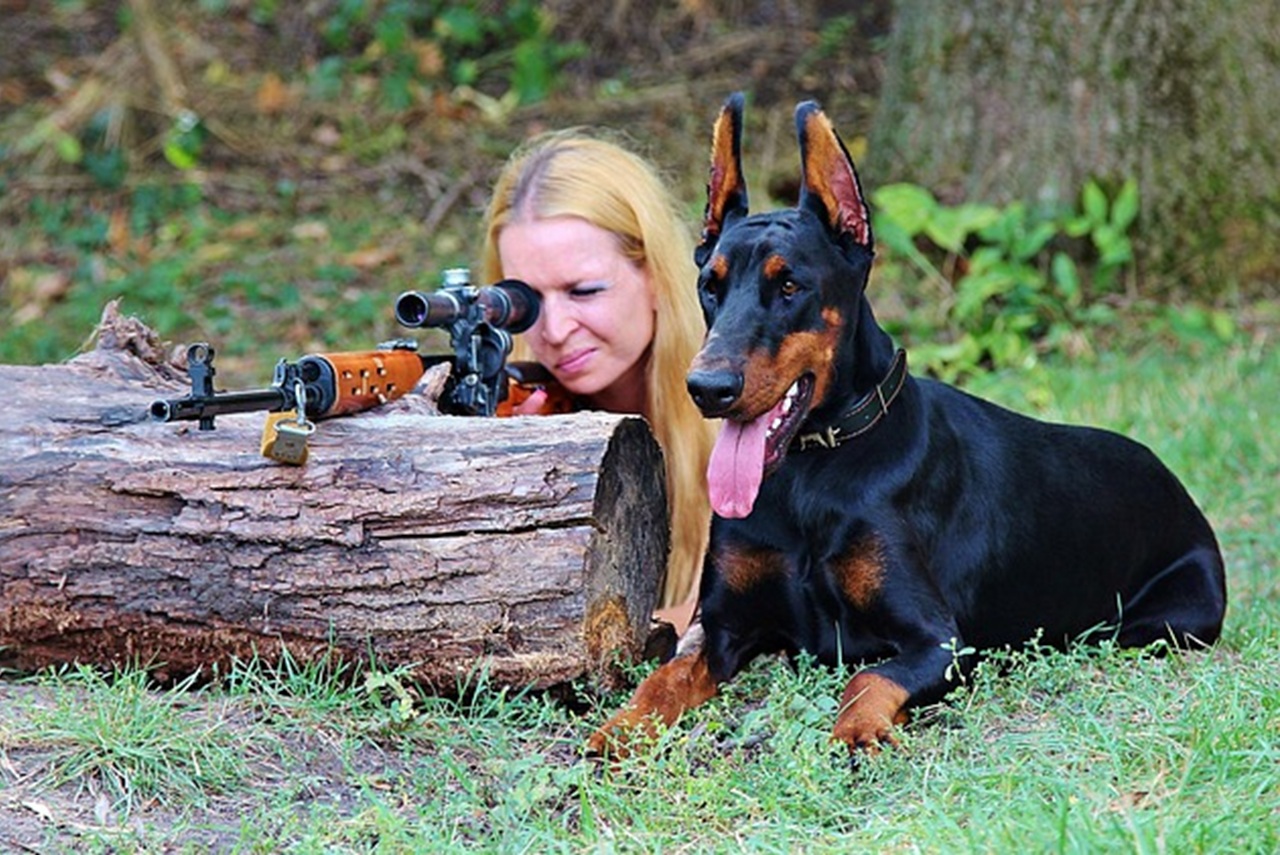
Hunting is hardly conceivable without weapons. This is precisely why hunting is not only a nature issue, but also a weapons issue. In many countries – and also in Switzerland – hunting is one of the central societal justifications for why private individuals may own and use firearms. This connection is often downplayed, although it is highly politically relevant.
According to the Small Arms Survey, Switzerland has between 2.3 and 4.5 million firearms in private ownership – around 45 weapons per 100 inhabitants, placing Switzerland in 3rd place internationally. More than a quarter of all Swiss households have a weapon. In 26 percent of these households, these are private weapons – not military weapons. Hunting weapons are a substantial part of this. Anyone who desires a society in which weapons are as rare and strictly controlled as possible must consider the hunting-weapons complex.
What to expect here
- How many hunting weapons are there in Switzerland – and who really controls them? Numbers, gaps and what the statistics don't show.
- The silencer legalization 2025: A symptomatic step: What the JSV revision means for the political weapons discourse – and why the security argument doesn't hold.
- Hunting weapons and domestic violence: The dark figure in Swiss statistics: What we know, what we don't know – and why this is politically intolerable.
- Weapon ownership, identity and lobby power: Why hunting-weapons connections are so politically stable – and which interests lie behind them.
- Technologization of hunting weapons: When efficiency lowers the inhibition threshold: What modern optics, night technology and shorter barrel lengths mean for weapon culture and security.
- Theft and misuse: What happens with stolen hunting weapons: Data situation and structural gaps in the Swiss firearms registry.
- What consistent firearms policy would mean in the hunting context: Concrete demands that take security seriously.
- Arguments: Responses to the most common objections against a critical examination of the hunting-weapons complex.
- Quick links: All relevant articles, studies and resources.
How many hunting weapons are there – and who really controls them?
In Switzerland, there is no complete, publicly accessible registry of all hunting weapons. The Weapons Act (WG) requires an acquisition permit and a notification obligation for firearms, but numerous old stocks exist that were never registered. Many hunting weapons, particularly older rifles that were acquired before the modern registration regime, are effectively invisible to any state control.
Simultaneously, the revised JSV, which came into force on February 1, 2025, newly permits shorter barrel lengths – from 50 cm to 40 cm – and legalizes sound suppressors for hunting use. The consequence: The arsenal of legally usable hunting weapons is growing, while the registration and control infrastructure has not kept pace. Hunting weapons are not separately reported in Switzerland's police crime statistics. For 2024, no official figure exists on how many crimes were expressly committed by hunters or with hunting weapons. Only the general figures on gun violence are known – hunting rifles invisible within them.
More on this: Hunting accidents in Switzerland: The risk that is rarely honestly discussed and Hunting in Switzerland: Numbers, systems and the end of a narrative
The 2025 sound suppressor legalization: A symptomatic step
As of February 1, 2025, sound suppressors were removed from the list of prohibited hunting aids. The official justification states: hearing protection for hunters and more precise shots for the benefit of wildlife. What this legalization actually means is relevant from a weapons policy perspective.
The sound suppressor makes hunting weapons less perceptible to third parties. This is not problematic per se – but it changes the signaling effect of shots in public space. A suppressed shot is harder to locate, harder to document and harder for uninvolved parties to classify. At the same time: Sound suppressors are now recognized under Art. 28b WG as a 'worthy reason' for weapon acquisition – which generally facilitates access to sound suppressors. What is missing in this context is a public security impact assessment: What effects does sound suppressor legalization have on the monitorability of hunting in protected areas and the traceability of shots for control authorities? These questions were not asked. This is telling.
More on this: Night hunting and hunting technology and Recreational hunting starts at the desk
Hunting weapons and domestic violence: The dark field in Swiss statistics
The figures on the connection between weapon ownership and domestic violence in Switzerland are clear – and alarming. About one in two homicides in connection with domestic violence is committed in Switzerland – and approximately half of these with a firearm. Crimes in which firearms are used end fatally in 45 percent of cases. On average, a woman dies in Switzerland every two weeks from the consequences of domestic violence. In 2024, police registered 21’127 crimes in the area of domestic violence – six percent more than the previous year, 70 percent of victims were women.
What is missing from these statistics: Hunting weapons are not separately reported. To this day, it is not known how many femicides in Switzerland were committed with hunting weapons or how many perpetrators were hunting license holders. This is not a statistical coincidence – it is a political decision against transparency. This finding is clearly present in international studies: The availability of firearms in private households significantly increases the risk of fatal violence, particularly against women in the domestic context. Without differentiated data on hunting weapons, this risk remains in the dark. Authorities and politics are unable to seriously assess to what extent hunting weapons contribute to femicides.
More on this: Protection against domestic gun violence: Hunting weapons, hobby hunters and femicides (Model motion) and Psychology of hunting
Weapon ownership, identity and lobby power
Those who criticize hunting indirectly criticize a system that socially legitimizes and stabilizes weapon ownership. This explains why criticism of recreational hunting is often met with unusual emotionality from the hunting milieu: It's not just about a leisure activity, but about identity, social belonging and tangible property rights.
JagdSchweiz and related associations are actively present in parliamentary work in Bern. Historically, hunting associations have exerted influence on the design of the Weapons Act, the Hunting Ordinance and cantonal enforcement practice. The legalization of sound suppressors, the shortening of minimum barrel length and the expansion of night hunting exceptions in the 2025 JSV are results of this influence – not results of an independent security assessment. Weapons policy that is co-designed by the main beneficiaries of the status quo is structurally interest-driven. This is not an attack on individuals. It is the description of a democratic deficit.
More on this: Hunter lobby in Switzerland: How influence works and Ending recreational violence against animals
Technologization of hunting weapons: When efficiency lowers the inhibition threshold
Modern hunting weapons differ fundamentally from those of twenty years ago. High-quality telescopic sights with rangefinding, thermal cameras for wildlife recognition, ballistic apps for wind correction and more precise ammunition significantly reduce the technical requirements for the shot. What does not grow to the same extent: ethical reflection.
When hunting becomes technically easier, the pressure to kill more often grows – not less. Shooting plans must be fulfilled, territory owners expect performance, social recognition in the hunting milieu depends on results. Technology in this context does not lead to fewer shots under better conditions, but to more shots under conditions in which previous generations would not have shot. At the same time, safety boundaries shift: Long-range shooting seminars that define distance as a learning objective, and sound suppressors that make shots invisible, change the framework for action – without this being socially debated.
More on this: Driven hunts in Switzerland: Traditional ritual, violence zone and stress test and Lead ammunition
Theft and misuse: What happens with stolen hunting weapons
Hunting weapons can be stolen, passed on uncontrolled or used abusively. There is no consolidated publicly accessible statistic on the whereabouts of stolen hunting weapons in Switzerland. The Swiss Weapons Act does know a loss reporting obligation for permit-required weapons – but its consistent implementation and public control is inadequate.
What is known: Hunting weapons are not listed as a category in police crime statistics. Neither the number of stolen hunting weapons nor the number of crimes in which hunting weapons were used is reliably retrievable. In an environment where the legislature simultaneously expands the legal availability of hunting weapons – shorter barrel lengths, sound suppressors – and statistics remain non-transparent, no reliable risk assessment is possible. This is a control failure that should be systematically remedied.
More on this: Recreational hunting and criminality: Suitability controls, reporting obligations and consequences (Model motion) and Independent hunting supervision (Model motion)
What would need to change
- Complete, publicly accessible hunting weapon register: All licensed hunting weapons are recorded, including existing stocks, with periodic verification of whereabouts. Model proposal: Recreational hunting and criminality: Suitability controls, reporting obligations and consequences
- Separate identification requirement in criminal statistics: Hunting weapons are listed as a separate category in police criminal statistics – offences, femicides, thefts, misuse.
- Secure storage obligation with control: Hunting weapons must be stored in certified, locked gun safes – with unannounced, random inspections. Model proposal: Public safety: Minimum distances, exclusion zones, reporting obligation
- Revocation of hunting licence in cases of domestic violence: Anyone convicted of domestic violence, threats or assault automatically loses their hunting licence and weapon possession permit. Model proposal: Protection from domestic gun violence: Hunting weapons, hobby hunters and femicides
- Reversal of silencer legalisation or strict special regulation: If silencers are permitted, a mandatory register, separate licensing requirement and clear justification obligation with security impact assessment are needed.
- Independent hunting weapon commission: A commission independent of the hunting milieu, comprising security experts, animal welfare experts, legal experts and media professionals, monitors hunting weapon law and practice. Model proposal: Independent hunting supervision: External control instead of self-control
- Mandatory safety training for licence renewal: Analogous to driving licences: periodic, independent aptitude testing incorporating current safety standards.
Arguments
«Hobby hunters are responsible, trained weapon users.» In individual cases this may be true. The societal question is broader: When a system normalises weapon ownership for recreational activities, weapon presence in society increases – with demonstrably higher risk of domestic violence, suicide and accidents. Individual responsibility does not replace structural control.
«Silencers are hearing protection – this is a health measure.» Hearing protection is available as ear defenders and in-ear solutions – for a few francs, without weapons law consequences. Silencers don't just protect hearing. They alter the detectability of shots by third parties, the controllability of hunting in sensitive areas and the signal effect of gunshots as warning signals for bystanders. Framing what primarily increases the efficiency and uncontrollability of hunting weapons as a safety measure is misleading.
«A connection between hunting weapons and femicides is not proven.» That's exactly the problem: It's not proven because the data is not collected. Internationally, the connection between household weapon availability and femicide risk is well documented. Switzerland is absent from these statistics not because the risk doesn't exist – but because hunting weapons are invisible in criminal statistics. This is not an all-clear. This is a control failure.
«Weapon control is an attack on hunters.» Seatbelts are not an attack on motorists. Fire safety regulations are not an attack on restaurant owners. Weapon control is a basic requirement for any activity where people come into contact with potentially lethal devices. Anyone framing this requirement as an attack is not defending freedom – but uncontrollability.
Quicklinks
Articles on Wild beim Wild:
- Protection from domestic gun violence: Hunting weapons, hobby hunters and femicides (Model proposal)
- Recreational hunting and criminality: Tightening suitability controls, reporting obligations and consequences (Model proposal)
- Public safety: Minimum distances, exclusion zones, reporting obligation (Model proposal)
- Lead-free hunting: Ban on lead-containing ammunition in the canton (Model proposal)
- Hunting accidents in Switzerland: The risk that is rarely discussed honestly
- Independent hunting supervision: External control instead of self-control (Model proposal)
Related dossiers:
- Hunting and wildlife diseases
- Night hunting and high-tech hunting: How thermal imaging cameras, night vision scopes, drones and digital calls expose the myth of fair chase
- Hunting dogs: Use, suffering and animal welfare
- Lead ammunition and environmental toxins from recreational hunting: How a toxic legacy burdens birds of prey, soils and humans
- High hunting season in Switzerland: Traditional ritual, violence zone and stress test for wildlife
- African swine fever: How an animal disease becomes justification for recreational hunting
- Hunting accidents in Switzerland
- Hunting and animal welfare: What the practice does to wild animals
- Hunting and weapons
- Drive hunting in Switzerland
- Stand hunting: Waiting, technology and risks
- Den hunting
- Trap hunting
- Pass hunting
- Special hunt in Graubünden
Our mission
Hunting is a weapons issue. In Switzerland, hobby hunting normalizes private ownership and use of firearms on a scale that ranks 3rd internationally. At the same time, fundamental data is missing: hunting weapons do not appear as a category in crime statistics, stolen hunting weapons are not recorded in a consolidated manner, the connection between hunting weapons and femicides remains in the dark field. The silencer legalization in 2025 shows that weapons policy in the hunting context is shaped by the lobby, not by independent security experts.
This dossier documents the hunting-weapons complex using numbers, legal foundations and structural gaps. The information is continuously updated when new data, court rulings or political developments require it.
What security gaps around hunting weapons do you know from your region? We are collecting concrete demands, examples and incidents: wildbeimwild.com/kontakt
More on the topic of hobby hunting: In our Hunting dossier we bundle fact-checks, analyses and background reports.