
Night hunting and high-tech: The fairy tale of fair hunting
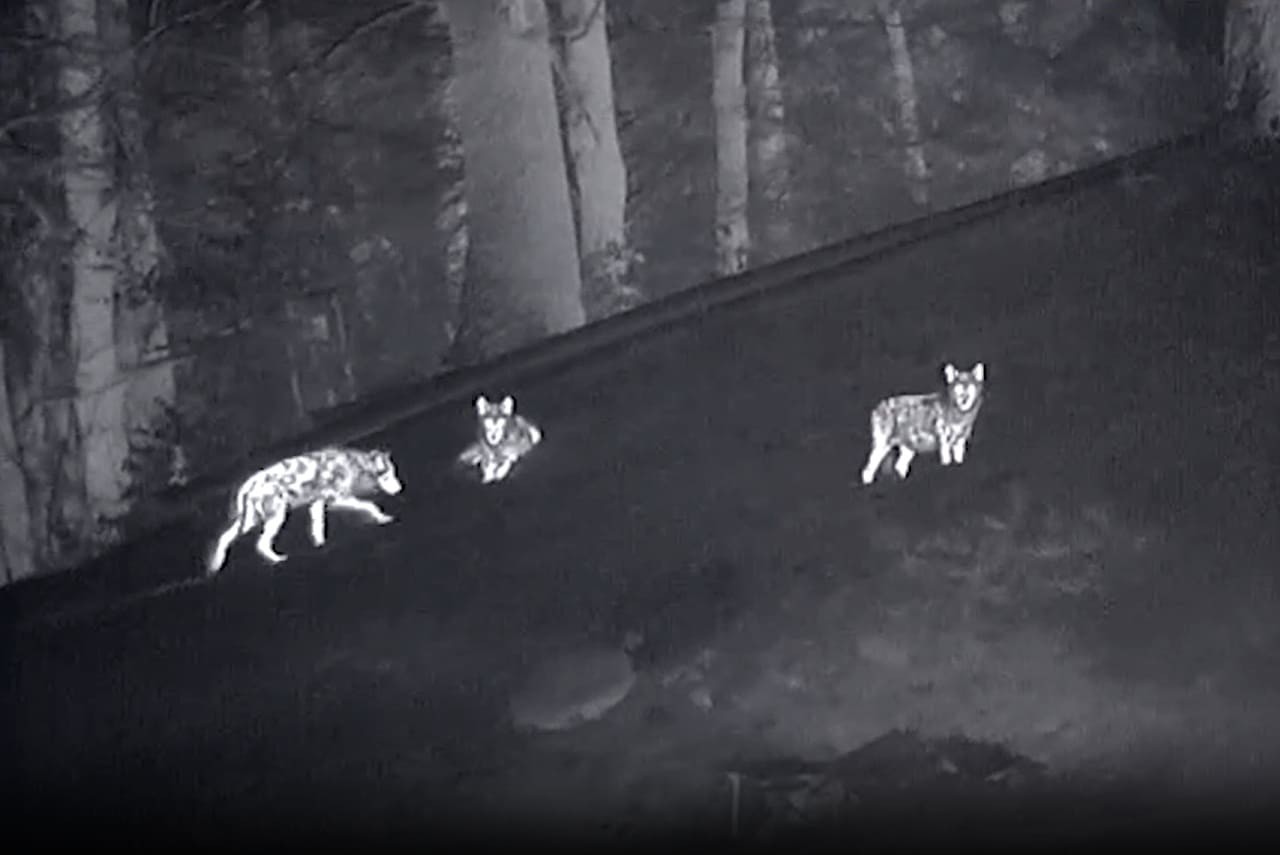
Around 30’000 hobby hunters are active in Switzerland. Many of them now use technologies that just one generation ago were exclusively reserved for the military and law enforcement agencies: thermal imaging cameras that make the body heat of wild animals visible in complete darkness, night vision scopes that enable precise shots without any daylight, drones that track and drive wildlife from the air, and digital lures that exploit instincts that are millions of years old.
What is marketed by the recreational hunting community as 'contemporary hunting practice' and 'efficient wildlife protection' reveals itself upon closer examination as a system of technological overwhelming that deprives wildlife of the only remaining protective zones: the night, the den, the thicket, and the narrative of tradition, connection to nature and 'fair hunting' are definitively refuted.
The Swiss legal situation in this area is a barely controllable patchwork: cantons regulate differently, enforcement is structurally hardly possible, and at the federal level there is no coherent response to the technological armament. This dossier documents the facts, identifies the animal welfare problems and shows why technologically armed recreational hunting is the opposite of fair hunting.
What awaits you here
- Thermal imaging cameras: How wildlife is tracked before dusk, why even the hunters in Valais demanded a ban, and what this reveals about proportionality.
- Night vision devices: Why night shooting is particularly problematic from an animal welfare perspective, what injury patterns arise, and what happens to wounded animals in the darkness.
- Drones: How drones are used as 'aerial drivers', why the canton of Glarus has already reacted, and where the line between fawn rescue and hunting tool lies.
- Digital calls: How recreational hunting exploits evolutionary instincts as traps, which devices are freely available, and why the narrative of 'fair competition' is dismantled.
- The Swiss patchwork: Why 26 cantons produce 26 different regulations, how the parliamentary response at federal level looks, and why enforcement is structurally barely possible.
- The fairy tale of fair hunting: Why high-tech hunting and hunting ethics are an irreconcilable contradiction.
- What would need to change: Six concrete demands for proportionate regulation.
- Arguments: Responses to the most common justifications of recreational hunters.
- Quicklinks: All relevant articles, studies and dossiers at a glance.
Thermal cameras: Driven from the protection of darkness
The thermal camera has evolved from a specialist tool to standard equipment for recreational hunting. 'Such night vision devices have experienced a real boom. Almost every hunting group has one with them. This increases competition among hunters and pressure on wildlife,' says Sven Wirthner from the Valais Department of Hunting, Fishing and Wildlife. The cameras are used to scan hunting areas for animals before dusk; shots are fired at first daylight on deer and stags identified at night. The night, which is evolutionarily the most important protection zone for wildlife, is thus systematically eliminated.
Even within the hunting community, acceptance of this practice is limited. The canton of Valais banned thermal cameras on the initiative of its own hunters – not because a law required it, but because the pressure on wildlife had become too great. 'Animals should also have their chance to escape hunters using their instincts,' is the justification from Valais. It is remarkable: when recreational hunters themselves classify a tool as too effective and therefore unfair, any serious animal welfare discussion should take exactly this as its starting point – and not dismiss it as an isolated opinion.
In the canton of Bern, thermal cameras for observation are legal as long as they are not used directly as aiming aids when shooting. Other cantons have different rules. The result is a technological advantage that de facto creates hunting pressure around the clock and no longer allows wildlife any rest periods. From an animal welfare perspective, chronic hunting pressure is not a marginal problem: persistent stress increases cortisol levels, disrupts reproductive cycles, increases accident risks during escapes, and weakens immune defences.
More on this: Psychology of hunting and Hunting myths: 12 claims you should examine critically
Night vision devices: When the animal no longer has a chance
While thermal imaging cameras serve surveillance purposes, night vision devices and thermal imaging scopes go one step further: they enable direct shooting in complete darkness. The hunting law situation is contradictory in itself. In Germany, thermal imaging scopes as clip-on devices are permitted in several federal states for wild boar hunting; fully integrated thermal imaging scopes, however, remain prohibited. In Switzerland, cantonal regulations determine what is permitted – with the consequence that the same device is legal in canton X and banned in canton Y. In the canton of Appenzell Ausserrhoden, an official fact sheet exists that explicitly lists night vision devices as prohibited aids. Other cantons remain silent.
From an animal welfare perspective, night shooting is particularly problematic. The reliable identification of an animal species is significantly more difficult with thermal imaging devices in darkness than in daylight, making misshots more likely. Even more serious is the situation with animals that are wounded but not immediately killed: the follow-up search can usually only begin the next morning at the earliest. The injured animal spends hours in its death throes, alone, in the dark, without any possibility of help. Wildtierschutz Deutschland states: «Animals that are shot at night often cannot be found during the follow-up search – resulting in agonizing death.» This is not hunting craft. This is organized suffering.
At the federal level, a motion to ban night vision devices for hunting was submitted in the Swiss National Council. It shows that the problem has reached the political agenda. Nevertheless, a coherent federal regulation is still lacking. The recreational hunting lobby argues that night vision devices are essential for «efficient wild boar regulation.» The argument goes in circles: recreational hunting largely creates the problem of wild boar requiring regulation by decimating natural predators, and then demands more technology to solve it.
More on this: Dossier Wild Animals, Mortal Fear and Missing Anesthesia and Animal-Torturing Hunting Methods – Tolerated and Promoted
Drones: The «Driver from the Air»
Drones in hunting are marketed by supporters as useful for fawn rescue from mowing machines. This is legitimate and to be welcomed from an animal welfare perspective. But the use of drones as an active hunting tool is a completely different category. In the canton of Glarus, the government council has determined that drones can be used as «drivers from the air,» «directly disturbing» wildlife, which violates hunting ethics, and has suggested a review of hunting regulations. This is a remarkable admission: the state recognizes that drones in hunting are problematic – but does not act.
Drones enable the systematic tracking, startling and directing of wild animals from the air. For the affected animals, this means another element of total surveillance of their habitat: no thicket offers safety anymore when a drone circles overhead. Especially roe deer and fawns, which instinctively «freeze» when in danger – remaining motionless in tall grass or undergrowth – are particularly exposed by drones. Freezing as an evolutionary protection strategy is specifically exploited and devalued by drone hunting.
The Federal Office of Civil Aviation (FOCA) regulates airspace, but not the hunting use of drones in detail. The German Hunting Association has recommended to its members not to use drones for driving or disturbing wildlife – but this is not a binding restriction. It remains up to the personal responsibility of the recreational hunters not to abuse a technology that gives hunting an overwhelming advantage. The history of hunting technology shows that voluntary restraint cannot be relied upon.
More on this: Dossier Hunting in Switzerland: Fact-Check, Hunting Methods, Criticism and Alternatives to hunting: What really helps without killing animals
Digital decoy calls: Deception as a system
Digital decoy calls imitate with high precision the sounds of prey animals, conspecifics or young animals in distress. They are played through Bluetooth speakers and can attract animals from hundreds of meters away. The fox following a digital mouse squeak has no way of recognizing that it is a trap. The roe buck responding to a distress call from a young deer and supposedly wanting to save his offspring from danger is killed precisely at the moment he acts on a protective instinct. This is not hunting on equal terms. This is the systematic exploitation of instincts that are millions of years old and provide no protection against a loudspeaker.
In Switzerland, the use of sound devices to attract game is banned in many cantons but barely controlled. Digital decoy call devices with hundreds of stored animal voices are freely available in online retail, including voices of protected species. Controlling whether a hobby hunter uses a digital decoy call in the field is practically impossible. What is not controlled, takes place.
Recreational hunters justify digital decoy calls as a 'nature-oriented instrument' because hunters supposedly also used calling instruments in the past. The comparison is flawed: A mouth-blown leaf instrument requires skill, produces limited sound range and is anything but precise. A digital device with GPS speaker and 300 stored animal sounds in HD quality is the opposite of being close to nature. It is the use of consumer technology against animals that have no chance of recognizing the difference.
More on this: Hunting myths: 12 claims you should examine critically and Hobby hunters and their enjoyment of animal cruelty
The Swiss patchwork: Regulation without enforcement
What particularly distinguishes Switzerland in hunting technology is the complete regulatory inconsistency. Cantonal sovereignty over hunting law means that for the same technology, up to 26 different regulations can exist in 26 cantons. Thermal imaging cameras are banned in Canton Valais on the initiative of the hunting community, permitted for observation in Canton Bern, not mentioned at all in other cantons. Night vision devices are explicitly listed as prohibited aids in Appenzell Ausserrhoden, while legislation remains silent in other cantons. Digital decoy calls are partially banned by canton, partially tolerated, partially unregulated.
Enforcement is structurally hardly possible. Game wardens are thinly spread, hunting areas are large and the darkness in which night hunting takes place additionally protects recreational hunters. Controlling whether shooting occurred at night with thermal imaging scopes is hardly possible without real-time evidence gathering at the scene. The consequence is a legal situation that exists on paper but in practice factually tolerates technological armament.
At the federal level, a motion to ban night vision devices for hunting has been submitted. It remains to be seen whether Parliament will act. As long as no federal regulation exists, protection of wild animals from technological overpowering remains at the mercy of the goodwill of individual cantonal associations. This is not a system. This is chance.
More on this: Template texts for hunting-critical initiatives in cantonal parliaments and Dossier Hunting in Switzerland
The fairy tale of fair hunting practices
Recreational hunting justifies itself publicly with tradition, connection to nature and the principle of giving game a fair chance. The concept of 'hunting ethics' is central here: It suggests respectful treatment of wild animals, an ethical stance that distinguishes recreational hunting from mere intent to kill. The technological reality refutes this narrative on all levels.
Thermal imaging cameras allow animals to be tracked before dawn breaks and rob them of the night as a protective refuge. Night vision devices enable shots in complete darkness and turn tracking wounded animals into hours of death throes. Drones drive wildlife from safe hiding places for which there are no evolutionary defense strategies. Digital calls abuse protective instincts and mating reflexes that are hundreds of thousands of years old. Not one of these tools has anything to do with tradition or connection to nature. They all have one thing in common: They maximize human advantage and minimize the wildlife's survival chances to zero.
The canton of Geneva has shown since 1974, Luxembourg since 2015, that wildlife management works without any form of hobby hunting. Those who hunt animals with military technology have forfeited the right to invoke tradition and fair chase.
More on this: Geneva and the hunting ban: 50 years without hobby hunting and Hunting ban Switzerland: Why an end to hobby hunting is overdue
What would need to change
- Federal ban on thermal imaging scopes and night vision devices for hobby hunters: Technological development has overtaken the cantonal patchwork. A federally anchored ban on thermal imaging scopes and night vision devices would create a uniform nationwide foundation and enable enforcement.
- Clear legal definition of drones as prohibited hunting equipment: Drones used for tracking, flushing or driving wildlife must be classified as prohibited aids under hunting law at the federal level.
- Nationwide ban on digital calls: The use of digital sound devices to lure wildlife must be banned throughout Switzerland. Online trade in such devices cannot be prevented, but their use on public and private hunting grounds must be subject to criminal penalties.
- Reporting requirement for night shots and tracking wounded animals: Every night shot must be reported, including the start of tracking wounded animals and its outcome. This would make the actual extent of animals that died and were not found statistically recordable for the first time.
- Mandatory training for the use of new technologies: Anyone wanting to use thermal imaging devices for observation, where permitted, must demonstrate verifiable training in reliable animal identification. This reduces misshots on protected species.
- Transparency requirement for the hunting lobby: Manufacturers and dealers of hunting technology must be required to report sales figures to authorities. Only this way can the spread of new technologies be regulated in a timely manner. Model initiatives: Template texts for hunting-critical initiatives and Parliament.ch: Motion ban on night vision devices for hunting
Arguments
«Thermal imaging devices make hunting safer because misshots are avoided.» The opposite is proven: Determining animal species and sex at temperatures near zero degrees, where thermal signatures are similar, is error-prone. Moreover, the supposed precision tempts shots that would not be attempted in daylight. Wildtierschutz Deutschland documents increasing misshots on protected species using thermal imaging devices.
«Night hunting is necessary for wild boar regulation.» The claim that more kills would permanently reduce wild boar populations is not scientifically tenable. Studies show that wild boars compensate for losses through increased reproduction. The actual cause of wild boar pressure – intensive agriculture, corn monocultures, lack of predators – is not eliminated by night hunting, but concealed.
«Drones save fawn – that's positive.» The use of drones for fawn rescue before mowing machines is expressly to be welcomed. This does not change the fact that the same technology is used as a hunting tool for flushing and driving wildlife. Defending both simultaneously is a double standard that comes at the expense of wild animals.
«Digital lures have been used by hunters before – this is nothing new.» A mouth-blown roe deer call and a Bluetooth speaker with 300 stored HD animal sounds differ so fundamentally that the comparison does not hold. The decisive difference is not the intention, but the effect: Digital lures are so precise and far-reaching that the animal has no possibility of recognizing the imitation. This is not traditional craftsmanship, but technology deployment against a structurally disadvantaged animal.
«Hobby hunting regulates itself – Valais shows it.» Valais shows the opposite: Self-regulation only worked when pressure on wildlife was already so high that the hunters themselves reacted. Relying on voluntary restraint without legal framework is irresponsible from an animal welfare policy perspective.
«Technology is value-neutral – it depends on its use.» Technology is not value-neutral when it creates asymmetric power relationships. Between a wild animal that relies on evolutionary instincts and a hobby hunter with thermal imaging scope, drone and digital lure, there is no longer any competition. There is an execution.
Quicklinks
Posts on Wild beim Wild:
- Animal-torturing hunting methods – tolerated and promoted
- Hobby hunters and their joy in animal cruelty
- Hunting and animal cruelty
- Switzerland hunts, but why actually?
- Initiative demands «Wildlife wardens instead of hunters»
- Zurich: First canton with alcohol ban for hobby hunters
- Model texts for hunting-critical initiatives in cantonal parliaments
Related dossiers:
- Hunting and wildlife diseases
- Night hunting and high-tech hunting: How thermal imaging cameras, night vision devices, drones and digital lures expose the fairy tale of fair hunting
- Hunting dogs: Use, suffering and animal welfare
- Lead ammunition and environmental toxins from hobby hunting: How a toxic legacy burdens birds of prey, soils and humans
- High hunting in Switzerland: Traditional ritual, violence zone and stress test for wildlife
- African swine fever: How an animal disease becomes justification for hobby hunting
- Hunting accidents in Switzerland
- Hunting and animal welfare: What practice does to wild animals
- Hunting and weapons
- Drive hunting in Switzerland
- Stand hunting: Waiting, technology and risks
- Badger hunting
- Trap hunting
- Pass hunting
- Special hunting in Graubünden
Our standard
Wild animals are not targets. The technological armament of hobby hunting is not progress, but a capitulation to the principle of proportionality: What remained for wild animals as their only protection zone – the night, the thicket, instinct – is systematically undermined by thermal imaging cameras, drones and digital lures. The Swiss legal situation is an uncontrollable patchwork that comes at the expense of wild animals. The hobby hunters stage themselves as nature-connected and sporting – but whoever hunts animals with military precision technology has forfeited the right to this narrative. This dossier is continuously updated when new data, legal developments or technical trends require it.
More on the topic of hobby hunting: In our hunting dossier we bundle fact-checks, analyses and background reports.