Cruel Hunting Methods: Tolerated and Promoted
Recreational hunting and recreational hunters are part of our nature conservation problems and place a significant burden on nature. This is also made clear by the fact that hunting law has been shielded from all legislative reforms in the areas of species protection, nature conservation, and animal welfare over recent decades. As a result, hunting law has permanently withdrawn itself from the public interest.

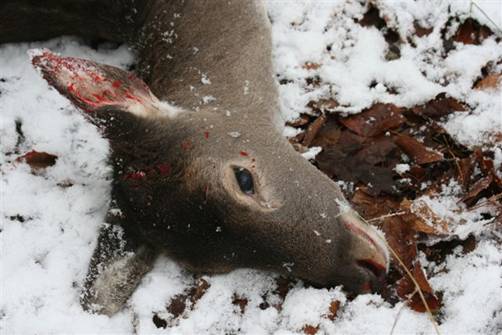
It is unbelievable what animal cruelty is still associated with recreational hunting in German-speaking countries.
Hunting associations, the largest lobbying organisation of the recreational hunting community, tolerate or even propagate many of the animal welfare abuses. The responsible decision-makers are not merely complicit — their authorities are the ones who, in most cases, directly transcribe the demands of lobbyists into laws and regulations. Scientifically sound evidence plays virtually no role to this day; the only concern is to keep the clientele of land, forestry, and nature users content.
Even in conflict situations — such as nature conservation, forest conversion, wildlife diseases, and economic damage — pleasure-driven recreational hunting is no solution. This is demonstrated, among other things, by the development of wild boar and deer populations, which have been increasing for decades despite — or precisely because of — intensive recreational hunting. Nature is a dynamic, self-governing system that is fundamentally capable of self-preservation, yet also vulnerable to disturbance.
Animal cruelty in the ‘routine operations’ of recreational hunting
The following is a list of the animal cruelty tolerated in the ‘routine operations’ of recreational hunting animal cruelty:
- In England, the accuracy of recreational hunters was examined using moving paper silhouettes of a fox. Based on the position of the bullet holes and the calculated penetration depth of the projectiles, it was concluded that under normal field conditions every second fox is merely wounded by a gunshot injury would have been.
- Further facts on the inadequate shooting proficiency of many recreational hunters come from the Veterinary Association for Animal Welfare (TVT): The veterinarians report on studies showing that after driven hunts, two thirds of wild boar exhibit non-immediately fatal shots: in the back, in the abdomen, or in the legs.
- In the case of roe deer, according to the TVT, approx. 60% of female animals showed abdominal shots.
- In recreational hunting for ducks, geese, and corvids, shots are frequently fired with shot into flocks of birds. Numerous animals are merely “peppered” with shot and frequently die unnoticed from their injuries. Studies from Denmark, Sweden, and England indicate that in recreational hunting of waterfowl, up to 7 animals are injured by shot for every 10 animals killed. The IZW (Leibniz Institute for Zoo & Wildlife Research, Berlin) reports, depending on the species, between 20 and 45 percent of adult birds being shot and wounded! This statement is likely to apply to all bird species that appear in flocks.
- The training of hunting dogs using foxes specifically caught for this purpose in earth-dog trial facilities, on hare tracks, or with live ducks rendered unable to fly.
- Coercion and violence in hunting dog training.
- The year-round keeping of hunting dogs in kennels at the recreational hunter’s premises — a form of husbandry that is cruel to animals.
- The keeping of foxes or wild boar for hunting dog training in kennels that do not meet species-appropriate standards.
- The earth hunting, in which fierce hunting dogs engage in bloody battles with foxes and badgers — injurious to both sides; it is practiced — legally — when the heavily pregnant vixen awaits her young in the fox den, or — unlawfully, but tolerated — when the vixen is tied to the den with her pups only a few days or weeks old.
- The killing of male foxes required for rearing during the mating season.
- Fox hunting during the rearing period of young animals. Male and female foxes (vixens) required for rearing are frequently shot during this time.
- The chasing of wild animals by uncontrolled dogs and hunting dogs that attack and tear apart wild animals during a driven or beating hunt.
- The disturbance of wild animals through large-scale group hunts during the winter months.
- The recreational hunting at night using spotlights and night-vision technology.
- The trap hunting with kill traps, in which many animals are severely injured because they are larger or smaller than intended for the trap.
- The Trap hunting with live traps, which regularly takes place during the rearing period of young animals.
- The release of bred pheasants, partridges, and ducks for the purpose of recreational hunting.
- Driven hunts, in which numerous animals are initially only shot at or injured.
- Hare hunting: throughout the entire hunting season, it is accepted that female animals required for offspring are shot. The young animals starve to death.
- Recreational hunting of raccoons during the rearing period of young animals. Raccoon cubs are dependent on their parents for a very long time. Raccoon recreational hunters and hunting associations do not care about this.
- Absent or not immediate tracking of wounded animals.
- Driven hunts targeting roe deer, according to the Veterinary Association for Animal Welfare, roe deer cannot be reliably hit while in motion due to their species-typical bounding leaps.
- Shooting of nursing mother animals occurs repeatedly during driven hunts, affecting above all wild boar or female deer, whose young then starve, freeze to death, or simply waste away.
- Group hunts in winter, particularly during persistently cold temperatures below -10 degrees, when food is inaccessible due to snow cover, or when snow is crusted.
- Suspension of closed seasons, e.g. for recreational hunting of wild boar, without any comprehensible reasonable justification.
- Hunting of parent animals required for rearing, as is legally permitted for certain animal species, for example in Bavaria or Lower Saxony.
Hunting law does not protect wildlife from arbitrary treatment
Even an ostensibly progressive hunting law does not protect wildlife from the arbitrary actions of recreational hunters. Although the law explicitly defines on paper which animal species should have hunting seasons based on a reasonable justification within the meaning of animal welfare legislation and which should not, decision-makers arbitrarily disregard these provisions.
More on this in the dossier: Hunting and Animal Welfare
Natural disaster: recreational hunters
In the disarray in which nature finds itself after decades of stewardship and management by hobby hunters, the proportion of threatened species is greater than in any other country in the world — in Switzerland. The hired killers have been creating an ecological imbalance in the cultivated landscape for decades, with sometimes dramatic consequences (protective forests, disease, agricultural damage, and much more). Over a third of plants, wildlife and fungal species are considered endangered. Switzerland also ranks last in Europe when it comes to designating protected areas for biodiversity. It is precisely these circles of recreational hunters with their lobbying who have been responsible for this through politics, media and legislation for decades. They are the ones who notoriously block contemporary, ethical improvements in animal welfare and sabotage serious animal and species protection. Recreational hunters regularly oppose more national parks in Switzerland, because their concern is not nature, biodiversity, species protection or animal welfare, but rather the pursuit of their perverse, bloody hobby.
Did you know …
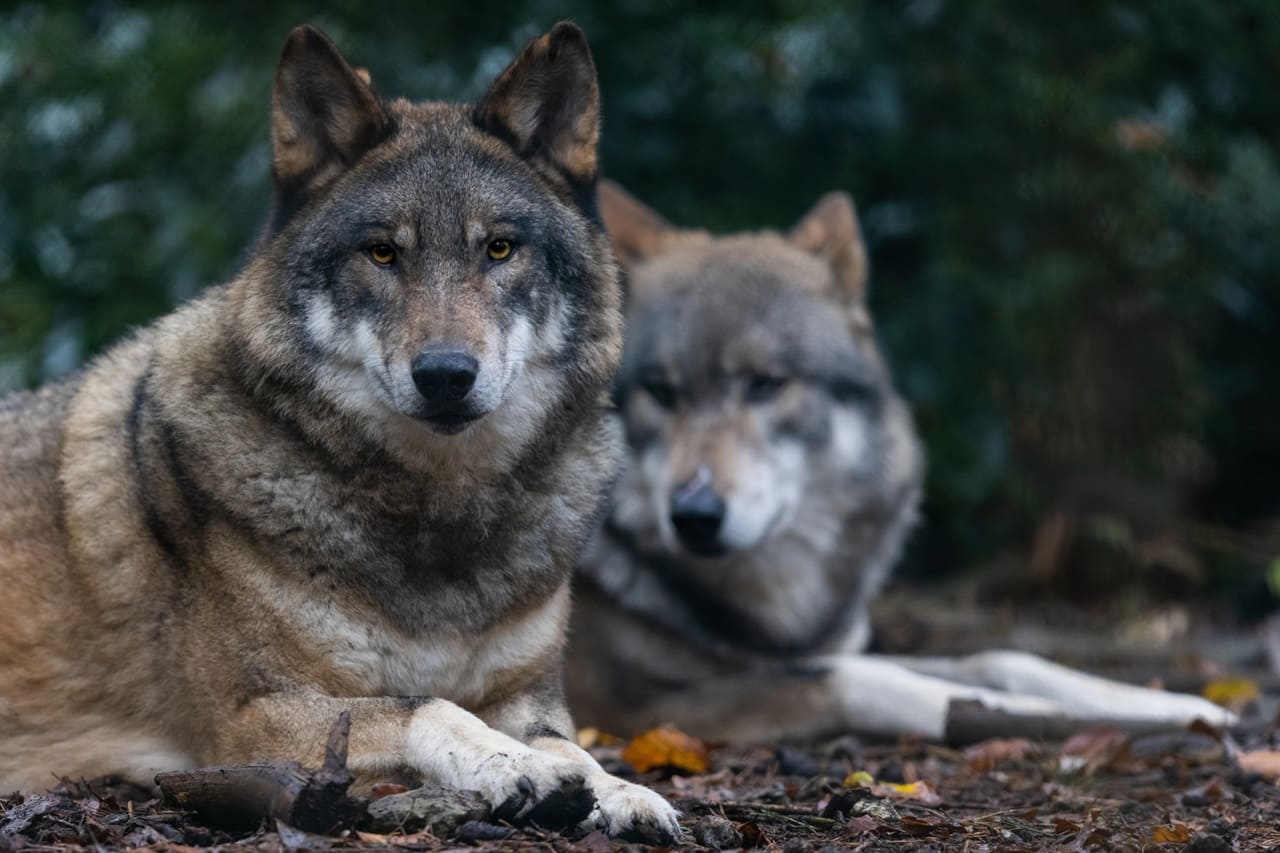
- that in Switzerland innocent young wolves are being liquidated?
- that recreational hunters lie about the assessment of game meat quality and that according to the WHO, processed game meat is carcinogenic like cigarettes, asbestos or arsenic?
- that according to studies, nowhere is the lead contamination of golden eagles and bearded vultures higher than in the Swiss Alps, due to the ammunition used by recreational hunters?
- that the fair chase ethics of recreational hunters are diametrically opposed to animal protection law and are nothing but a mirage?
- that hunting is war, where animal competitors are simply liquidated?
- that there are countless illegal and unmarked hunting stands in our natural landscapes, some so rotten that they pose a danger to children and can cause people to fall to their deaths?
- that year after year countless people are killed or injured by hunters' weapons, in some cases so severely that they end up in wheelchairs or have limbs amputated?
- that in Switzerland approximately 120,000 perfectly healthy roe deer, red deer, foxes, marmots and chamois are killed each year, mostly without purpose?
- that because of recreational hunters it has become nearly impossible today to live in harmony with wildlife or to see wildlife at all?
- that shotgun blasts make hares scream like small children and tear apart the entrails of “shot” roe deer and red deer so that they leave a trail for tracking during their flight?
- that the recreational hunters' claim that cruel wildlife massacres are necessary to regulate animal populations has been scientifically refuted?
- that recreational hunters openly admit that hunting is about the “pleasure of killing” and “the joy of making a kill” as part of a pathological obsession?
- that recreational hunters lack a sixth sense and yet regularly claim they only shoot sick and weak animals, which of course does not hold true in practice?
- that recreational hunters travel abroad for trophy hunting, far removed from any species protection and hunting regulations, and that there are even Swiss recreational hunter travel agencies offering such moronic hunting pursuits?
- that the vast majority are not legitimate professional hunters, but instead pursue hunting as a hobby, sport, and recreational pastime, which is morally questionable and in fact contradicts the Animal Protection Act?
- that 99.07% of civilized people in Switzerland are not recreational hunters, meaning only 0.3% of recreational hunters take pleasure in these bloody activities?
- that these wildlife killers do not hunt on the basis of scientific justifications?
- that protected species do not actually belong under hunting law, because recreational hunters are overwhelmed by the demands of species protection and repeatedly shoot animals listed on the Red List — such as lynx, wolf, hare, grey partridge, quail, etc. — purely for amusement?
- that recreational hunters deliberately decimate certain animal species to eliminate competition for their unnatural behavior (fox, lynx, wolf, birds of prey, etc.)?
- that wildlife dies before the recreational hunter can even fire a single shot, that preventing this is the goal, and that this is likely the central idea behind wildlife stewardship, care, and hunting planning?
- that in wild boar (and fox) populations, normally only the lead sow produces young, but that due to her being shot, all female animals within the group reproduce, and that this is one reason we are experiencing a wild boar surge?
- that grazing animals — deer, roe deer, etc. — originally lived primarily as diurnal animals in fields and meadows, like goats, sheep, and cows, and not in the forest?
- that the wolf is vitally important for the long-term health of wild ungulates, because it hunts sick or weak animals with remarkable precision, for example, and is thereby far superior to recreational hunters?
- that foxes, after being senselessly hunted, usually end up in the rubbish?
- that foxes are hunted today primarily so that there are more hares, etc. for recreational hunters’ frying pans? That the fox, however, feeds on hares in fewer than 10% of cases and would never catch a healthy hare?
- that in animal welfare, one cannot confront recreational hunters with gentleness alone, street festivals, prayer chains, etc. (desperate times call for desperate measures)?
- that recreational hunters, with their hunters' tall tales engage in a disrespectful mockery of living beings?
- that it is frowned upon to shoot big game at feeding stations or during mating season, yet the recreational hunter has no scruples about doing so with the competing predator, the fox?
- that in some cantons recreational hunters go hunting solely for the tender meat of a young animal?
- that recreational hunters shoot pregnant mother cows in front of their young, or shoot only young animals during the rearing season (post-special hunt)?
- that recreational hunters poison the environment, nature, humans and animals with their ammunition?
- that bestiality, barbarism, cruelty, bloodshed and senseless suffering cannot be considered cultural heritage in a civilised society?
- that recreational hunters shoot approximately 10’000 roe deer fawns every year?
- that recreational hunters, during harsh winters, lure starving animals with food only to shoot them in a treacherous and cowardly manner?
- that recreational hunters send aggressive dogs into burrows to eliminate foxes and badgers (earth hunting)?
- that recreational hunters lure peaceful living beings into box traps, where they may suffer for days awaiting their killer, or often subject animals to an agonising death struggle lasting hours (trap hunting)?
- that recreational hunters cowardly ambush peaceful wild animals while they sleep or bask in the sun, killing or wounding them with state-of-the-art precision weapons?
- that recreational hunters support awards, fur markets, prize ceremonies for trophy cults, trophy shows, the fur trade, and so on?
- that recreational hunters place firearms into the hands of underage schoolchildren and practice killing with them?
- that recreational hunters often carry out their cruel acts in remote isolation, which encourages the mistreatment of animals?
- that recreational hunters seriously wound many wild animals, leaving the victims to suffer for hours in extreme pain and fear until a tracking dog finds them and they are shot?
- that recreational hunters (apart from vivisection) inflict the most suffering and abuse on animals, including through the manner of killing?
- that the hunter's so-called love of animals and nature takes no joy in the existence of the beloved creature, but rather aims to possess it body and soul, culminating in making it prey through the act of killing?
- that recreational hunters actively encourage browsing damage through hunting pressure, particularly on predators such as fox, lynx and wolf?
- that recreational hunters are responsible for antisocial, unethical and unchristian behavior open the floodgates?
- that recreational hunters withhold normal, natural animal observations and interactions from the public?
- that there is no larger torture product, contaminated with ammunition residue, than game meat?
- that there is no uniform regulation across Switzerland regarding vision tests, shooting practice, etc. for recreational hunters?
- that there is no psychological character assessment for recreational hunters?
- that there is no alcohol ban for recreational hunters when they shoot at animals with their weapons?
- that recreational hunters intrude into educational institutions in order to push their hunters' tall tales and their culture of violence onto children?
- that a court in Bellinzona recently confirmed that hunting clubs promote practically everything that is cruel, unnecessary and heartless?
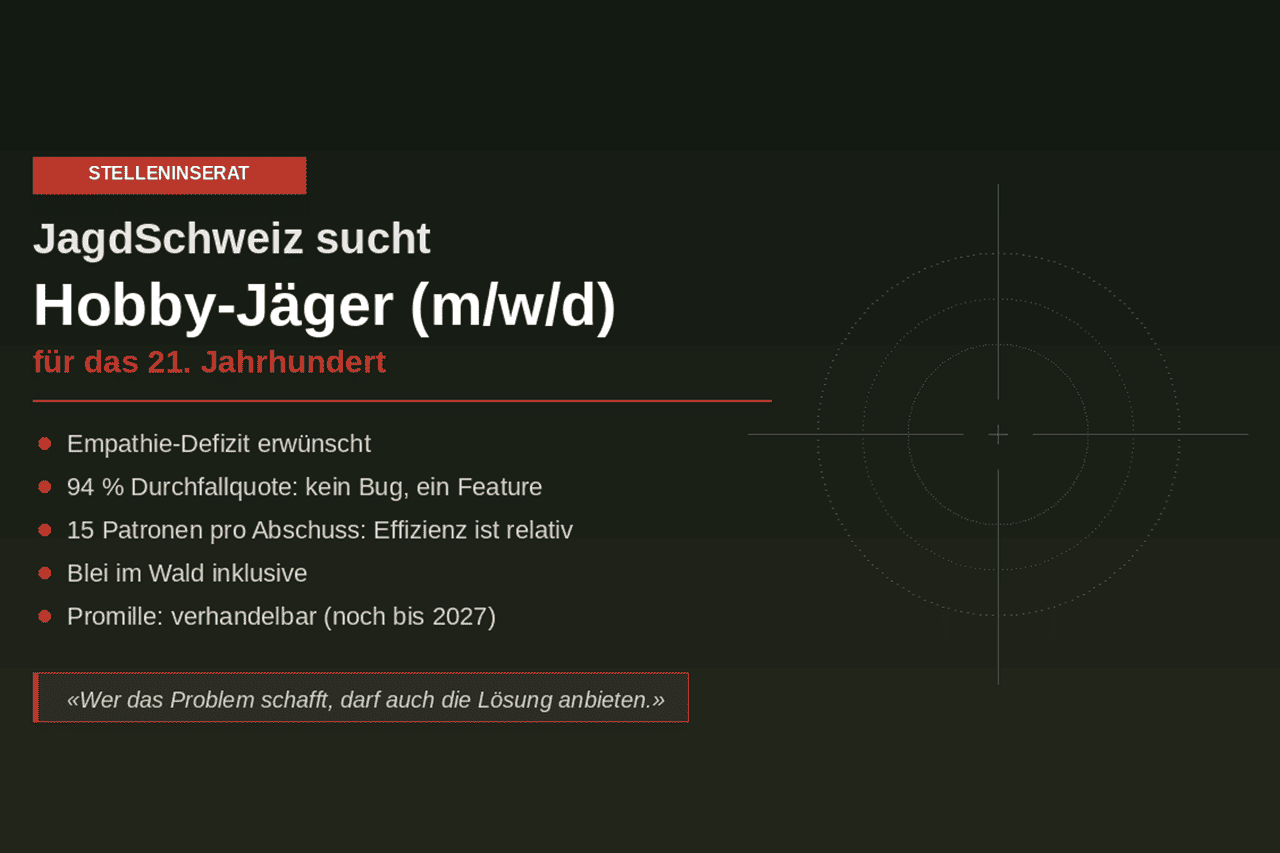
- that the association «Jagd Schweiz» cultivates above all disrespect and a culture of violence — the exact opposite of what a civilized person in our society should aspire to.
- that in the canton of Graubünden alone, more than 1’000 complaints and fines are issued against recreational hunters every year?
Interest Group Wild beim Wild
The IG Wild beim Wild is a non-profit interest group committed to the sustainable and non-violent improvement of the human-animal relationship, with a particular specialization in the legal aspects of wildlife protection. One of our main concerns is to introduce a contemporary and professional wildlife management system in the cultivated landscape, modeled on the Canton of Geneva — without recreational hunters but with upstanding wildlife wardens who truly deserve the title and act in accordance with a code of honor. The monopoly on the use of force belongs in the hands of the state. The IG supports scientific methods of immunocontraception for wild animals.
More on the subject of recreational hunting: In the dossier Psychology of recreational hunting we put research, motives and social consequences into perspective. What the research says about this is shown by Hunting fact-checked: the state of research.
The position of IG Wild beim Wild: IG Wild beim Wild rejects recreational hunting. Our model is the canton of Geneva, which has managed without recreational hunting since 1974: without hunting seasons, without hunting dogs, without driven hunts, without high seats, without the animal cruelty and crime that go hand in hand with hunting season elsewhere. What has worked there for over fifty years disproves every position paper by JagdSchweiz. An association that bases its policy on claims it refutes in its own documents is not a professional organisation, but a factory for misinformation.