
Hunting Ban Switzerland
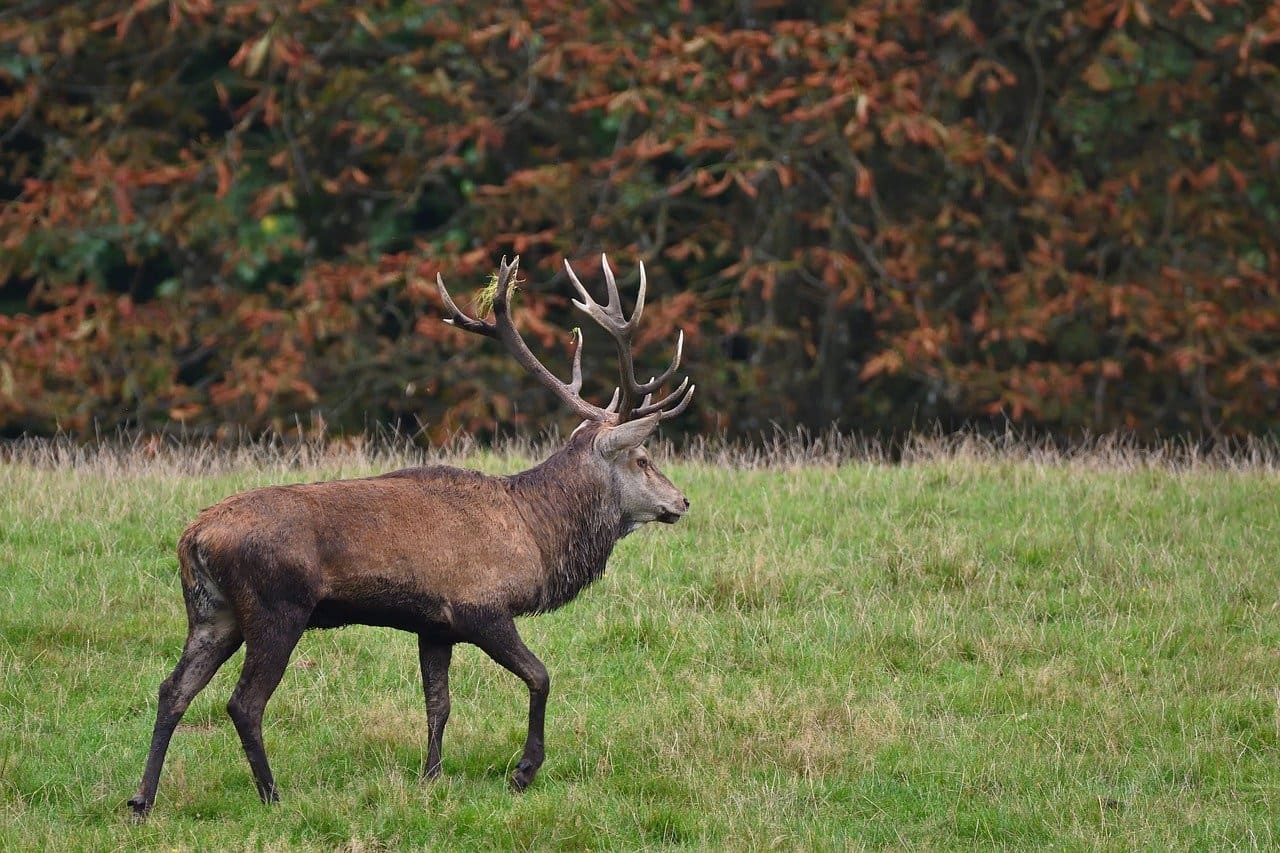
A hunting ban refers to the legal abandonment of recreational hunting by private individuals. In such a system, wildlife is regulated not by hobby hunters, but by state-employed gamekeepers. The canton of Geneva has practiced this model since 1974 and is internationally regarded as a reference model for functioning wildlife management without recreational hunting.
A hunting ban does not mean the end of all wildlife regulation. It means professionalisation, democratisation and ecologisation of dealing with wild animals. The question is not whether, but how wildlife is managed and who is responsible for it.
What awaits you here
- Current situation in Switzerland: Patent hunting, district hunting and why 30,000 hobby hunters decide over public goods.
- The Geneva model – 50 years of evidence: What the canton of Geneva has shown about wildlife management without recreational hunting since 1974.
- Wildlife populations in Geneva 1974–2024: Data overview on roe deer, wild boar, biodiversity and public acceptance.
- Ecological arguments: Self-regulation, predators, compensatory reproduction and the limits of culling.
- Ethical arguments: Sentience, misshots and the question of whether recreational hunting is justifiable.
- Democratic arguments: Wildlife as public goods, transparency and parliamentary control.
- Counter-arguments and their limits: Five central hunting claims and what the evidence says about them.
- The gamekeeper model as alternative: Professional competence, transparency and democratic control instead of private discretion.
- Political dimension: Zurich initiative 2018, referendum 2020 and cantonal pilot projects.
- Hunting ban and biodiversity:Cascade effects of selective removal and the Biodiversity Strategy 2030.
- What would need to change:Concrete political demands.
- Arguments:Responses to the most common counterarguments.
- Quick links:All relevant articles, studies and dossiers.
Current situation in Switzerland
Switzerland has two hunting systems: patent hunting (including Zurich, Bern, Aargau) and district hunting (including Graubünden, Valais). In both systems, the regulation of wildlife populations lies largely in private hands. Around 30,000 recreational hunters are active in Switzerland.
The current Federal Hunting Act (JSG) from 1986, most recently put to a public vote in 2020, regulates hunting and wildlife protection. The 2020 draft law revision was rejected at the ballot box, highlighting the social controversy surrounding this issue. Animal welfare organizations, environmental associations and parts of the scientific community have since called for a more fundamental debate.
Recreational hunting is a deeply rooted harmful tradition in Switzerland, but cultural tradition is no argument against ethical and ecological progress. wildbeimwild.com
More on this: Hunting in Switzerland: Numbers, systems and the end of a narrative and Introduction to hunting criticism
The Geneva model – 50 years of evidence
The canton of Geneva completely abolished recreational hunting in 1974 and replaced it with a state game warden system. Today Geneva is considered one of the most biodiverse cantons in Switzerland, despite high population density and strong urbanization.
After 50 years of state hunting, the assessment shows: Wildlife populations are stable, deer and wild boar populations are professionally regulated, and public acceptance is high. A report by the University of Geneva from the 2000s confirmed that the model is more ecologically sustainable and animal welfare-compliant than classic patent hunting.
Development of wildlife populations in Geneva (1974–2024)
| Indicator | 1974 (before ban) | 2000 | 2024 |
|---|---|---|---|
| Deer (estimated population) | uncontrolled increasing | stable | controlled stable |
| Wild boar damage | high | reduced | low |
| Biodiversity index | medium | high | very high |
| Public acceptance | divided | mostly positive | very high |
More on this: Geneva and the hunting ban and Hunting in the canton of Geneva: Hunting ban, psychology and perception of violence
Arguments for a hunting ban
Ecological arguments
Wildlife regulates itself in intact ecosystems. Predators such as wolves, lynx and foxes fulfill this function naturally and more efficiently than human recreational hunting. Studies show that hunting pressure stresses wildlife, destroys their social structures and increases flight behavior, which can paradoxically lead to higher wildlife damage in agriculture.
Furthermore, recreational hunting is not a reliable method for population regulation: Surprisingly, intensive hunting of some species (e.g. wild boar) can lead to compensatory reproduction, which actually causes populations to increase in the medium term. State-controlled wildlife management with a scientific basis is more targeted.
Ethical arguments
Wildlife are sentient beings. Recreational hunting as a leisure activity can hardly be ethically justified when professional alternatives exist. Zurich Animal Protection states: "Hunting causes considerable suffering to wildlife and is in many cases ecologically unnecessary".
Ethical hunting, a fundamental principle of hunting ethics, demands respectful treatment of wildlife. But the reality of recreational hunting shows structural violations: uncontrolled shooting, misses, lack of follow-up control. A professional game warden system with clear responsibilities is superior in this regard.
Democratic arguments
Recreational hunting in Switzerland is an activity of a small militant minority (approximately 30,000 people among 8.8 million inhabitants), yet it exercises far-reaching decision-making power over public goods – namely wildlife. Wildlife belongs to the general public, not to hobby hunters.
In a democracy, the management of public resources should also be democratically controlled. A state wildlife ranger system creates transparency, accountability and professional quality standards.
More on this: Five reasons why the abolition of recreational hunting is overdue and Hunting myths: 12 claims you should critically examine
Counter-arguments and their limitations
| Argument in favor of hunting | Limitation/Counter-finding |
|---|---|
| «Hunters regulate wildlife populations» | Hobby hunters follow no scientific management plan; Geneva shows it works without them |
| «Hunting finances nature conservation» | Hunting fees are marginal; state nature conservation funding is more efficient |
| «Tradition and cultural heritage» | Cultural tradition does not justify ethically questionable practices |
| «Without hunting, populations explode» | Predators and habitat management regulate more naturally; Geneva data proves this |
| «Meat from hunting is sustainable» | Share of total meat consumption is marginal; argument does not justify a system |
More on this: Why recreational hunting fails as population control and Studies on the impact of hunting on wildlife
The wildlife ranger model as an alternative
The wildlife ranger model provides for state-trained professionals who regulate wildlife populations according to scientific criteria and legal requirements. It combines:
- Professional competence: Training in ecology, animal behavior and wildlife medicine without hunter jargon
- Transparency: Public reporting on culling plans and population data
- Animal welfare compliance: standardized methods, quality assurance, misshot protocol
- Democratic control: Parliamentary oversight instead of private discretion
The SP Zurich rejected the initiative «Wildlife rangers instead of hunters» in 2018 for tactical reasons, but fundamentally supported professionalizing wildlife management. This shows: The political debate is in motion.
More on this: Initiative demands «Wildlife rangers instead of hunters» and Alternatives to hunting: What really helps without killing animals
Political dimension
A national initiative for a hunting ban in Switzerland has so far failed due to federal resistance and the strong lobby of the Swiss Hunting Association (SJV). But societal pressure is growing:
- Animal welfare organizations such as PETA Switzerland, Swiss Animal Protection STS and Animal Rights also demand fundamental reforms.
- The popular initiative «Wildlife rangers instead of hunters» in Canton Zurich (2018) failed, but showed considerable societal interest.
- The rejection of the hunting law revision in 2020 at the polls opened political space for alternative models.
A gradual change – beginning with cantonal pilot projects following the Geneva model – would be more politically realistic than a national popular initiative.
More on this: Hunter lobby in Switzerland: How influence works and Template texts for hunting-critical motions in cantonal parliaments
Hunting ban and biodiversity
Intact wildlife communities are a prerequisite for biodiversity. Recreational hunting selectively intervenes in population structures, favors trophy animals and disturbs age structures as well as social groups. This has negative cascade effects on the entire ecosystem.
The Federal Office for the Environment (FOEN) documents a continuing decline in biodiversity in Switzerland. At the same time, around 100,000 wild animals are killed annually by hunting. A hunting ban would, in combination with predator management (wolf, lynx) and habitat protection, make a substantial contribution to the federal government's Biodiversity Strategy 2030.
More on this: Hunting and Biodiversity: Does Recreational Hunting Really Protect Nature? and Wildlife Corridors and Habitat Connectivity
What Would Need to Change
- Cantonal pilot projects following the Geneva model: At least three cantons should launch pilot projects within five years in which wildlife management is completely taken over by state wildlife ranger structures, scientifically supervised and publicly evaluated. Model motion: Model texts for hunting-critical motions
- Independent evaluation of the hunting system: The federal government must commission an independent, scientific comprehensive evaluation of the Swiss hunting system that systematically compares ecological effectiveness, animal welfare compliance, social costs and alternatives.
- Professionalization of wildlife regulation: Culling may only be carried out by state-employed, wildlife biology-trained specialists with standardized protocols, missed shot documentation and public reporting. Model motion: Independent hunting supervision: External control instead of self-control
- Democratic control over wildlife populations: Wildlife is a public good. Culling plans must be parliamentarily controlled, publicly accessible and scientifically justified, not created autonomously by hunting-affiliated commissions.
- Predator promotion instead of compensatory hunting: Wolf, lynx and fox assume regulatory functions naturally and more efficiently. Coexistence programs and livestock protection must be expanded, not undermined by politically motivated wolf culls.
Arguments
«Without recreational hunting, wildlife populations will explode.» The canton of Geneva has been hunt-free since 1974. In 50 years it shows stable deer and wild boar populations, high biodiversity and social acceptance. The Swiss National Park has been hunt-free since 1914. In neither area have uncontrolled population explosions occurred. Wildlife populations regulate themselves through food supply, climate, social structures and predators.
«Wildlife rangers cannot accomplish what 30’000 hobby hunters accomplish.» Geneva shows that a small team of professional wildlife rangers can efficiently, animal welfare-compliant and transparently manage the wildlife management of an entire canton. It's not about numbers, but about professional competence, clear responsibilities and scientific foundation. Hobby hunters operate without standardized protocols, without missed shot documentation and without public accountability.
«Hunting is tradition and belongs to Swiss culture.» Cultural tradition is not an ethical immunity status. Switzerland has traditionally accepted and abandoned dog fighting, bear baiting and child labor because knowledge and empathy have grown. 0.3 percent of the population practices recreational hunting. 79 percent are critical of it. Social legitimacy is declining, arguments for alternatives are growing.
«A hunting ban is not politically feasible.» The Zurich initiative in 2018 showed considerable social interest. The rejection of the hunting law revision in 2020 at the ballot box opened political space for reforms. Cantonal pilot projects following the Geneva model are more politically realistic than a national initiative and create the evidence base for gradual change.
«Hobby hunters finance nature conservation.» Hunting fees are a fraction of public nature conservation expenditures. A nature conservation system that depends on killing wildlife is not a nature conservation system. Professional wildlife management is financed from tax revenues, is publicly controlled and independent of lobby interests.
Quick links
Articles on Wild beim Wild
- Animal welfare problem: Wildlife dies agonizingly because of hobby hunters
- The hobby hunter in the 21st century
- Why recreational hunting fails as population control
- Studies on the impact of hunting on wildlife
- Initiative demands 'Wildlife rangers instead of hunters'
- Switzerland hunts, but why actually?
- Template texts for hunting-critical initiatives in cantonal parliaments
Related dossiers:
- Introduction to hunting criticism: What recreational hunting really is – and why it has no future
- The hunting license
- Hunting in Switzerland: Numbers, systems and the end of a narrative
- Hunters: Role, power, training and criticism
- Hunting myths: 12 claims you should critically examine
- Hunting and biodiversity: Does hunting really protect nature?
- Wild meat in Switzerland
- Hunting ban Switzerland
- Arguments for professional wildlife rangers
- Hunting and human rights
Our standard
Recreational hunting in Switzerland is not a nature conservation system. It is a historically developed utilization model that operates with responsibility rhetoric where institutional responsibility is structurally absent, especially in patent hunting, which comprises 65 percent of all hunting practitioners. Behavioral research shows that wildlife suffers under hunting pressure. Population ecology shows that culling does not produce stable regulation but triggers compensatory dynamics. The canton of Geneva has shown since 1974 that wildlife diversity, social acceptance and professional regulation do not decrease without militia hunting, but increase.
The consequence is logical: Those who want societal nature conservation must organize it institutionally. This means professional responsibilities, clear goals, transparent control and scientific evaluation. A system change toward wildlife ranger structures is not radicalism, but an adaptation to the state of science and ethics and a requirement of fairness toward those who do not want culling and are nevertheless carried as a burden of the general public by an armed recreational lobby. This dossier is continuously updated when new numbers, studies or political developments require it.
A recreational hunting ban in Switzerland is not a radical utopia, but an evidence-based, democratically legitimized step toward modern wildlife management. Geneva has shown for 50 years that it works. The arguments for professionalization through wildlife rangers are ecologically, ethically and politically compelling.
The question is not whether Switzerland is ready for a hunting ban – but whether it can afford to continue relying on a system that is neither ecologically nor ethically up to date.
More on the topic of recreational hunting: In our hunting dossier we compile fact-checks, analyses and background reports.