Animal welfare problem: Wild animals die in agony
Because of hobby hunters, countless wild animals in our forests suffer due to inaccurate shooting.

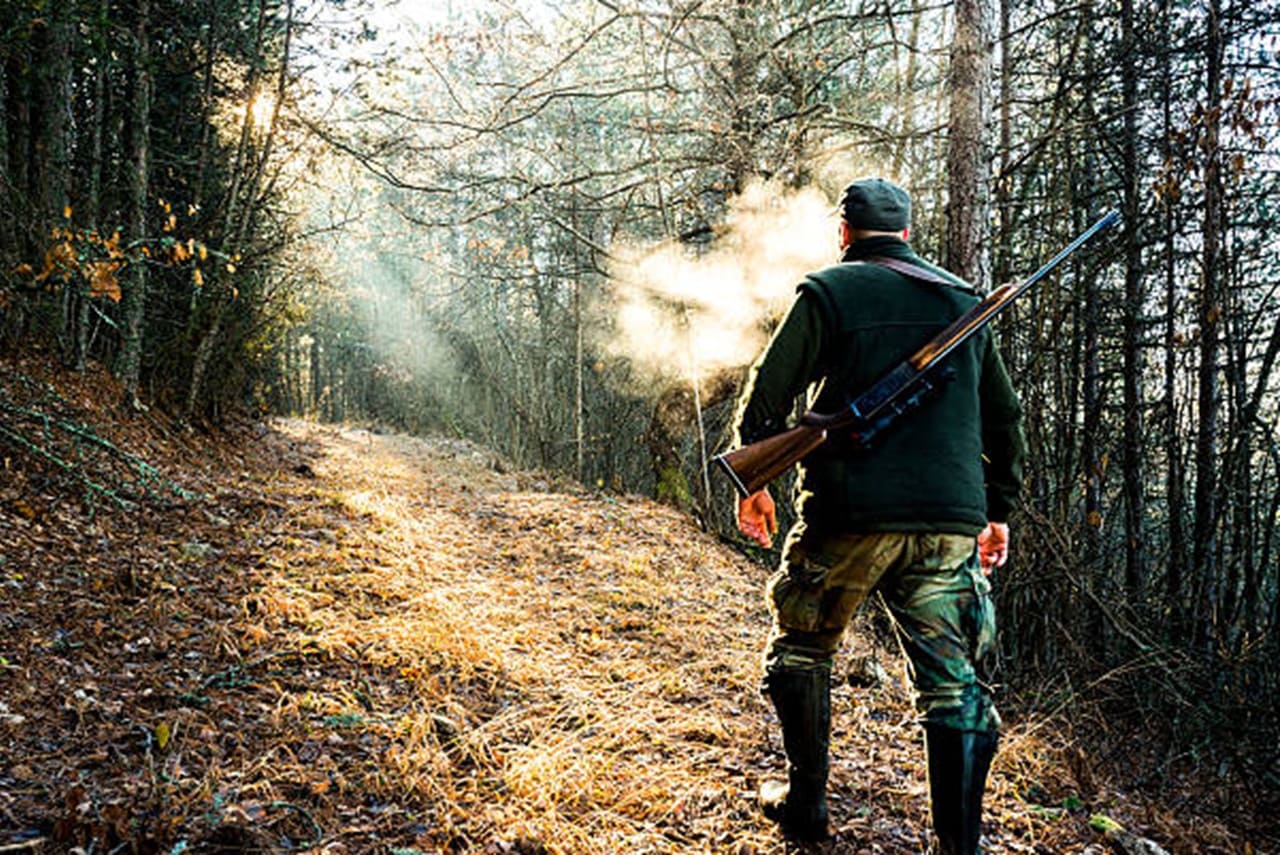
The IG Wild beim Wild points out that the misconception exists that consuming wild animals is more humane than eating meat from factory farming, as many animals experience prolonged suffering after being shot. Recreational hunters (the hunting community) (apart from vivisection) inflict the most suffering and abuse on animals, particularly through the manner of killing. A life in fear and terror of hobby hunters is arguably no better than that on a farm.
Roe deer, which are grazing animals, have become crepuscular and nocturnal because they have been forced into this behaviour by hobby hunters. Roe deer no longer move across open fields as they once did, because they can be shot more easily there. As a result, roe deer prefer to remain under the cover of the forest and forage there (browsing of buds). Ungulates as a whole have changed their behaviour due to the hunting activities of hobby hunters and have also “expanded” their actual habitat. Wild boar, naturally forest dwellers, “ravage” meadows and fields; red deer, naturally inhabitants of open and semi-open landscapes, retreat into the forest; roe deer, which actually prefer forest edges, now wander aimlessly back and forth.
Hunting is often regarded as a way of obtaining game meat from animals that have lived in their natural environment. However, the romanticised image of the hobby hunter as a guardian of nature and sustainable food provider is severely tarnished by the reality of death and animal suffering. While some hobby hunters have perfected their skills and are able to kill animals quickly and painlessly, there are many cases of missed shots and inadequate training.
When hobby hunting is not carried out properly, great animal suffering can result. Even a well-placed shot does not necessarily mean an immediate death for the wild animal. Often the animal is first injured and flees into the forest. It can take hours or even days before the animal finally dies or is put out of its misery by a tracker handler.
As recently became known, every tenth deer in the canton of Graubünden is only wounded rather than killed, according to a statistical survey in 2016. In the canton where, according to the hunting association, hunting training is the best in all of Switzerland.
What has changed since then? Nothing!
A nationwide Swiss statistic on searches for wounded wild animals does not exist. Graubünden is one of the few cantons that keeps records on tracking searches. Other cantons said to do so include Appenzell Ausserrhoden, Freiburg, Glarus, Nidwalden, Ticino, Uri and Vaud.
Experience thus shows that a double-digit percentage of animals shot at are not immediately dead. This may appear to be a relatively small number at first glance, but when one considers that around 40’000 roe deer, among other species, are killed in Switzerland every year, this still means agonising suffering for around 4’000 animals of this species. And these are only the officially recorded figures.
Similar research findings were presented by the University of Veterinary Medicine Hannover. In driven hunts for wild boar and roe deer in Hesse, fewer than one third of the animals shot at were hit fatally. More than two thirds of the hunted animals had, among other injuries, their jaws shot off, their legs shattered, suffered abdominal shots and severe spinal cord injuries or other most brutal wounds.
This is not in accordance with hunting ethics. And certainly not in compliance with animal welfare standards. “No one,” as it states in the Animal Welfare Act:
No one may unjustifiably cause an animal pain, suffering or harm, put it in a state of fear or otherwise disregard its dignity. Mistreatment, neglect or unnecessary overexertion of animals is prohibited.
Animal Welfare Act
Today’s hobby hunting is, at its core, simply and thoroughly criminal. It is just that our legal system has not yet advanced far enough to reflect this in criminal law.
It is important to note that not all hobby hunters who fail to hit an animal properly call a tracking handler — least of all when the animal in question is a fox, badger, or similar species. No hobby hunter wants to appear incompetent. And recreational hunting already has a poor reputation in large parts of the public. And even when they do call for a search, not every tracking effort is successful. There are no reliable data on how many animals actually perish in the forests without their suffering being documented. This is particularly true, for example, in the case of foxes, of which more than 20’000 are shot each year without cause by militant hobby hunters in Switzerland, or pine martens and songbirds such as jays, according to the hunting statistics.
Animal welfare advocates therefore repeatedly call for proper proof of marksmanship from hobby hunters. The annual performance test as a prerequisite for participation in hunts can help verify the skills of hobby hunters and ensure that they are capable of killing animals quickly and painlessly. This can reduce animal suffering. However, much stricter rules are needed, similar to those for a driving test. Today, hobby hunters can repeat the foolproof shooting programme of the mandatory hunting shooting requirement as many times as they like until they pass. And yet, in practice, proof of marksmanship evidently counts for little out in the field. Very few hobby hunters practise shooting regularly at a shooting range throughout the year.
From the canton of Geneva, which has been freed from hobby hunters, it is known that game wardens are far better marksmen.
It is the responsibility of all parties involved to advocate for the responsible treatment of living beings. Wildlife management must, as in the canton of Geneva, be carried out with sufficient expertise, training, and respect for animal life.
It is time to put an end to the unnecessary cruelty to animals in the undergrowth and to ensure that wildlife management is conducted in a manner that is appropriate and compliant with animal welfare standards.
The discussion of ethics in society is indispensable in order to reach a consensus on how we should treat animals. It is important to bear in mind that hunting is not the only option. There are scientific studies and case examples that clearly document the absurdity of hunting many animal species by hobby hunters, or of birth control.
In addition to strict marksmanship, other aspects of the hunting system should also be considered in order to minimise animal suffering. A scientific education for hobby hunters is essential to ensure they possess the necessary skills and knowledge. Mandatory continuing education courses for hobby hunters are the order of the day, as is a comprehensive psychological aptitude assessment every few years.
The environmental impact of hobby hunting should also be taken into account. It is important to ensure that hobby hunting does not lead to overhunting that disrupts the balance of ecosystems, as we can observe today. Cooperation between game wardens, nature conservation organisations and scientists is crucial to ensure that hobby hunting is in line with the goals of nature and animal protection.
Hobby hunting does not mean fewer wild animals, but rather more births. Due to the many losses of young animals, the animals produce more offspring.
What many people do not know is that Swiss hobby hunters shoot more than 10’000 roe deer fawns every year. Roe deer have at the federal level only a minimal closed season from 1 February to 30 April. The same hobby hunter who rescues a roe deer fawn from death by mowing in the morning can shoot a roe deer fawn that same evening. Many hobby hunters do this, also because of the tender meat, according to an appeal by Tarzisius Caviezel in the Graubünden hunting magazine. Roe deer fawns are easier to shoot and more popular among hobby hunters than older animals.
Public opinion on hunting and animal welfare has changed significantly in recent years. More and more people advocate for respectful and animal-welfare-conscious treatment of animals. Adherence to ethical standards and the protection of animal welfare in living animals should therefore be the highest priority for all hobby hunters.
Furthermore, awareness of the responsibility that comes with hunting should also be strengthened. Hobby hunters should be far more conscious of the fact that they hold the lives of animals in their hands and that their actions cause great animal suffering. Wild animals also live in social groups and can become ill as a result of hunting pressure.
Nature conservation organizations and government authorities also play an important role. They should conduct far stricter controls and monitoring of hunting activities to ensure that laws and regulations on animal and nature protection are being observed. Recreational hunting of animal species for fun is a form of cultural barbarism.
In addition, technological solutions such as improved aiming aids and silencers could help increase shooting accuracy and reduce noise levels when firing. Every shot disturbs the entire biotope, which is a particularly serious problem in winter. This would not only reduce animal suffering, but also improve safety for other forest visitors and local residents.
It is also important to raise public awareness of this issue. People should be informed and made aware that hobby hunting is not as romantic and idyllic as it is often portrayed. They should understand that inaccurate shots and animal suffering are not rare occurrences and that urgent measures are needed to minimize this. More on the topic of animal welfare issues.
The hunting industry itself could contribute part of the solution by showing greater openness to criticism and suggestions for improvement. Rather than turning a blind eye to the problems, hobby hunters and hunting associations should work together to abolish the many shabby hunting practices and place animal welfare and respect for living beings at the forefront.
| You can help all animals and our planet with compassion. Choose empathy on your plate and in your glass. Go vegan. |