
High hunting Switzerland: Traditional ritual and stress test
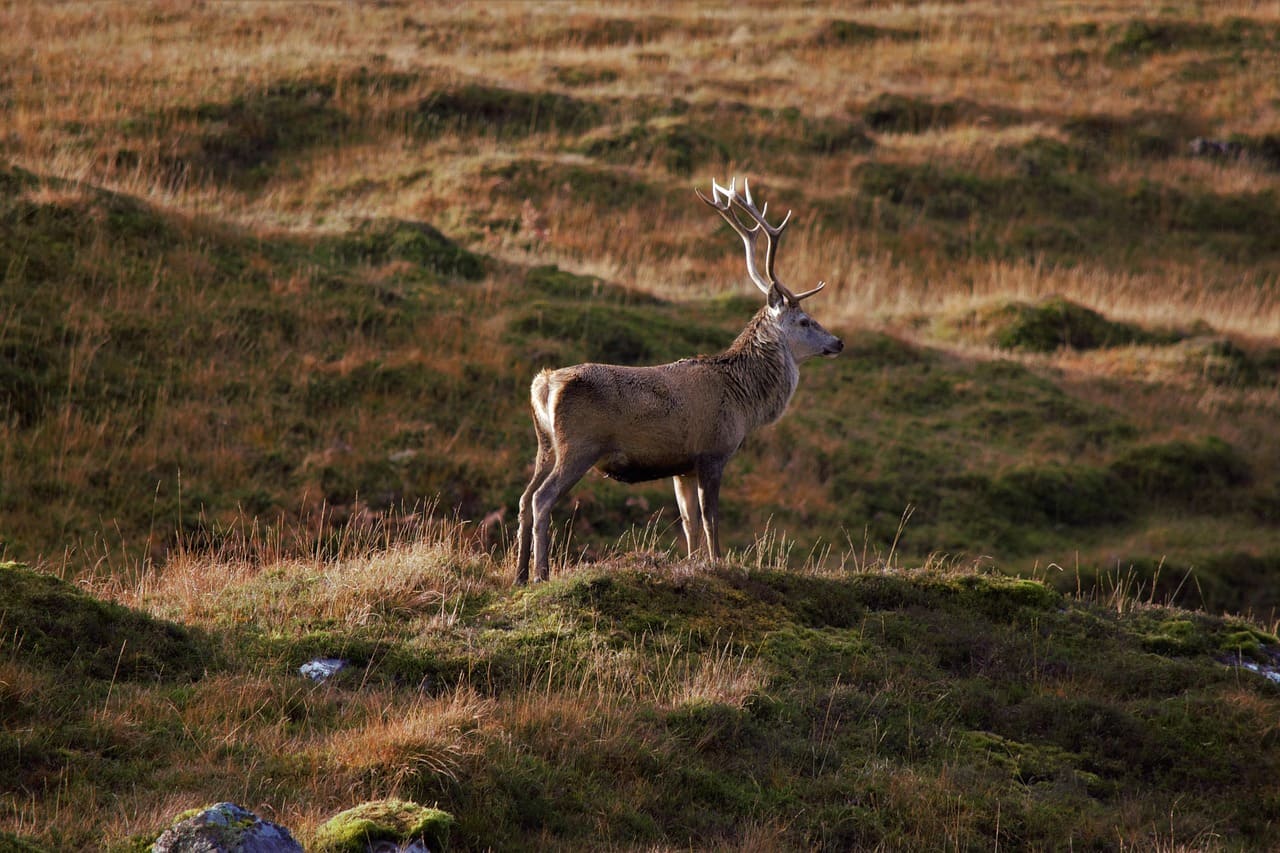
Every autumn, the high hunting season transforms entire regions into temporary shooting zones. For weeks, recreational hunters move through the forests with rifles and shooting quotas, while wildlife, hikers and residents use the same space. Authorities speak of 'population regulation' and 'tradition', yet reports of wounded animals, illegal kills, accidents and reckless behavior are increasing. In Graubünden canton alone, around 10,000 animals are shot annually during high hunting season, 9 percent of kills are illegal, every tenth stag is only wounded. This dossier uses numbers, legal foundations and concrete cases to show why high hunting is not harmless tradition, but a stress test for animal welfare, safety and the credibility of Swiss hunting policy.
What awaits you here
- High hunting system. How high hunting in Switzerland is structured, which wildlife species are affected and what role patent and territory hunting systems play.
- Graubünden flashpoint. Why Graubünden's high hunting exemplifies how a 'traditional event' becomes a danger zone, what official statistics say about missed shots and fines, and why the hunting inspector himself warns of a 'concerning development'.
- Special hunting as permanent solution. What happens when shooting quotas are not met, how special hunting has evolved from an emergency instrument to routine, and why it is particularly problematic from an animal welfare perspective.
- Animal welfare and error rate. Why wildlife dies without anesthesia during high hunting, what tracking statistics show, and how high hunting differs from Swiss animal welfare law.
- High hunting safety risk. When shots are fired near residential areas, warning signs are missing, and public spaces become temporary shooting zones.
- Culture of violence and psychology. What the behavior of recreational hunters during the high hunt reveals about acceptance of violence, group pressure, and self-image.
- Politics and law. How hunting law, enforcement practices, and lobby pressure block reforms and why the National Park provides the counter-example.
- What needs to change. Concrete political demands: professional wildlife management instead of recreational hunting, hunting-free sanctuary zones, prohibition of harmful hunting practices, and predators as natural regulators. Arguments. Answers to the most important justifications for the high hunt.
- Quick links. All relevant articles, studies, and dossiers at a glance.
High hunt: What it is and what it means from an animal perspective
The 'high hunt' historically stems from a noble privilege: It referred to hunting prestigious big game such as red and fallow deer, chamois, and ibex. In Switzerland, the high hunt remains the central hunting period in autumn to this day. Depending on the canton, it encompasses several weeks in September during which deer, roe deer, and chamois are intensively hunted. Hunting seasons, shooting quotas, and hunting areas are determined by the cantons, while practical execution lies largely in the hands of recreational hunters with hunting licenses and sometimes territorial rights.
Officially, the high hunt is supposed to regulate wildlife populations, limit browsing damage in forests, and create 'balance.' From an animal welfare perspective, it primarily means one thing: intense hunting pressure in a short time, flight, stress, mortal fear, and a high risk of missed and wounding shots. Unlike slaughter animals that must be stunned before killing (Art. 21 Para. 1 Animal Welfare Act), wild animals during the high hunt typically die without stunning: while fleeing, wounded, on slopes, sometimes only after long tracking efforts. Art. 178a Para. 1 lit. a of the Animal Welfare Ordinance exempts recreational hunting from the stunning requirement. Switzerland's modern animal welfare understanding thus stands in open contradiction to a practice that stages violence as a seasonal 'natural custom.'
The dimensions are considerable: In hunting year 2023/24, a total of 65,811 ungulates (roe deer, red deer, chamois) were shot throughout Switzerland, plus over 1,200 protected ibex during the high hunt. During the low hunt, another 23,565 animals were killed, including almost 20,000 red foxes. These are not isolated cases, but the balance sheet of a mass system.
More on this: Animal welfare versus hunting practices in Switzerland and Hunting in Switzerland: Fact check, hunting types, criticism
Graubünden high hunt: When tradition becomes a danger zone
Hardly any canton shows the dark sides of the high hunt as clearly as Graubünden. In January 2025, hunting inspector Adrian Arquint warned in the magazine 'Bündner Jäger' of a 'concerning development': During the 2024 hunting season, there were negative incidents in the context of the behavior of individual recreational hunters and sometimes entire hunting groups toward other recreational hunters, non-hunters, wildlife, and wildlife management. Department head Lukas Walser confirmed to SRF that 'significantly more incidents were registered especially around Chur': shots near residential areas, conflicts between recreational hunters, damage to others' hunting stands.
The official numbers paint a structural picture. During the hunting season, around 10,000 red deer, chamois, roe deer and wild boar are killed annually in the canton of Graubünden. Around 9 percent of these kills are unlawful. During the 2022 hunting season, the Office for Hunting and Fisheries reported 790 misshots out of around 9,200 killed animals, a proportion that according to game warden Stefan Rauch is "roughly the same every year." Every tenth deer is merely wounded rather than cleanly killed. In the five years before 2016, recreational hunters paid administrative fines of over 700,000 francs for misshots. In 2014 alone, 1,007 administrative fines were issued and 95 charges were filed with district offices — practically every fifth of the 5,804 active recreational hunters was a delinquent that year.
The consequences for rule violations are minimal: administrative fines of up to 500 francs, in practice a symbolic amount. No hunting license is permanently revoked, no systematic fitness assessment is initiated. The signal is clear: recreational hunting tolerates legal violations as a calculated systemic risk.
More on this: Graubünden hunting season under pressure: Control and consequences for recreational hunters and The blacklist of JagdSchweiz
Special hunts: When animal cruelty becomes routine
The hunting season ends on paper with the last hunting day. In reality, it is extended in many places through special and follow-up hunts. When shooting quotas are not met during the hunting season, cantons order additional hunts in late autumn to "correct populations." The focus is particularly on female deer: hinds and young animals, often in steep terrain, in snow, fog and poor visibility, with correspondingly high risk of misshots.
The numbers prove that special hunting is no longer an exceptional instrument. In the canton of Bern, a total of 1,047 red deer were shot in 2023, one-third of the estimated population. Of these, 133 hinds and young animals fell during the special hunt alone, which took place from November 24 to December 6 in the wildlife areas of the Bernese Oberland. Officially this is called "regulation mandate fulfilled." From an animal welfare perspective, it is a hunting regime that step by step lowers the threshold for how deeply wildlife populations may be interfered with.
In Graubünden, 3,432 red deer and 2,502 roe deer were shot during the 2025 hunting season, a result above the 20-year average. The canton described it as a success. Nevertheless, it called for special hunting in November and December: 1,711 female red deer and their calves, 281 roe deer and 10 chamois were to be additionally killed. For wild boar there are no upper limits at all — they may be hunted year-round.
Particularly problematic is the "contradiction model" of hunting planning: What is forbidden, unethical and punishable during the hunting season in September — namely the shooting of young animals and mothers — is expressly desired during the special hunt just a few weeks later. Pregnant hinds are shot, fetuses suffocate in the womb, calves wander around or starve. Drive hunts in late autumn cause massive stress, high injury risk and flight over great distances, precisely at the time when wild animals need their energy reserves for winter. What is labeled as an aftermath of the hunting season is factually a second hunting program with drastic consequences for animal welfare and winter survival.
More on this: The special hunt in Bern: From emergency to permanent solution and Special hunts and the limits of recreational hunting
Hunting season as security risk: When the forest becomes a firing zone
High hunting does not take place in uninhabited wilderness areas. Hikers, bikers, families and locals use the same paths and slopes where recreational hunters move about with live ammunition. When shots are fired in the immediate vicinity of paths, when warning signs are missing or ignored, public space temporarily becomes a danger zone. The responsibility lies not with walkers, but with a system that permits lethal violence under recreational conditions.
Documented cases from the black list of JagdSchweiz show that recreational hunters regularly shoot at wrong targets: donkeys instead of deer, cats instead of foxes, sheep instead of wild boar. In a militia system with an aging hunting community, performance-oriented shooting quotas and group pressure, the risk of wrong decisions and missed shots increases. In Switzerland, there are human injuries and fatalities caused by the risk group of recreational hunters every year. That precisely this framework is protected as 'preservation of tradition' appears anachronistic from the perspective of public safety thinking.
The Graubünden authorities themselves confirm the problem: Lukas Walser from the Office for Hunting and Fishing admitted to SRF that with some recreational hunters 'personal hunting success moves more into focus and awareness of the surroundings recedes into the background'. Hunting inspector Arquint warned that without 'personal responsibility and sensitivity', 'the credibility of hunting' is at stake.
More on this: Recreational hunting fact-checked: Quick license to kill instead of knowledge and Hunting and weapons: Risks, accidents and the dangers of armed recreational hunters
Animal welfare versus high hunting: Stress, mortal fear and error rate
Swiss animal welfare law (Art. 4 Para. 2 TSchG) requires that no one may unjustifiably inflict pain, suffering or harm on an animal. Art. 26 Para. 1 lit. a TSchG criminalizes animal cruelty. The Foundation for the Animal in Law (TIR) has criticized for years that driven hunts, battue hunts, earth hunts and movement hunts expose wild animals to massive stress and high risk of missed shots. In high hunting these problems accumulate: high hunting pressure in a short time, wild escape movements, long-distance shots in unclear terrain and tracking that happens too late or not at all.
The tracking statistics confirm how little controlled high hunting actually is. In Graubünden, tracking is needed around 1,100 times per year. Of these, only about half are successful. Between 2012 and 2016, 56,403 deer, roe deer, chamois and wild boar were killed in the canton, with up to 1,000 animals classified as missed shots over five years. Studies on grazing shots document hundreds of wild animals with gunshot wounds found as carrion, and that is only the visible tip. Analyses assume that a significant proportion of shot animals are initially only wounded and are only found days later or die somewhere in the terrain.
While slaughter animals in facilities must be restrained and stunned, wild animals in high hunting are killed under maximum stress. They flee in mortal fear, are frequently wounded and often die outside the shooters' field of vision. From an animal ethics perspective, it is difficult to justify why an animal welfare state permits such practices as recreational activity instead of reducing them to the absolutely necessary under professional control.
More on this: Hunting and animal welfare: What the practice does to wild animals
Violence culture high hunting: What recreational hunters' behavior shows
Those who regularly kill animals exercise violence—legally legitimized, but violence nonetheless. The high hunting season is the concentrated form of this culture of violence: groups of recreational hunters seeking to meet kill quotas, spurring each other on, comparing trophies and 'successes,' and operating in a milieu where lies and exaggeration are part of the folklore. The annual report of the Grisons Office for Food Safety and Animal Health documented that up to 30 percent of wildlife carcasses were incorrectly assessed by recreational hunters: an indication that systematic cheating occurs in meat quality evaluation.
When hunting authorities report 'reckless conflicts' among recreational hunters, damage to hunting stands, and an accumulation of fines, this shows that it's not about a few bad apples, but about a structural climate. The high hunting season creates a compression effect: in three weeks, thousands of recreational hunters are simultaneously released into a limited area, under performance pressure, with hunting fever and trophy ambitions. Psychologically, this constellation shifts boundaries. Those who experience violence as leisure content, label it as 'wildlife management,' and constantly see it glorified in kill photos, stories, and hunting magazines become accustomed to a normality of killing.
The high hunting season stands symbolically for the performance narrative of recreational hunting: presence in the field, fulfillment of quotas, status in the group. A psychological analysis describes recreational hunting as an institutionalized form of violence, where the death of wild animals has become the social glue of a scene. The question of whether such a culture should still be socially legitimized in a modern society is long overdue.
More on this: Psychology of Hunting in Canton Grisons and Dossier Psychology of Hunting
Politics and Law: Hunting Law, Lobby and Blockades
The Federal Act on Hunting and the Protection of Wild Mammals and Birds (JSG, SR 922.0) establishes framework conditions: which species are protected, which may be hunted, and what goals hunting should pursue. The concrete implementation—hunting system, hunting seasons, high hunting regulations, and use of special hunts—is the responsibility of the cantons. Officially, these should balance animal welfare, safety, ecology, and societal concerns.
In practice, hunting administrations and political bodies are often heavily influenced by recreational hunters. The institutional proximity between hunting administration, hunters, and agricultural interests complicates independent oversight. Animal welfare demands for hunting-free refuge zones, restrictions on particularly stressful hunting methods, or a shift of responsibilities to professional wildlife management encounter fierce resistance.
The blockade is exemplified in Grisons. In 2019, a popular initiative to abolish special hunting was submitted with over 10,000 signatures. Government Councilor Mario Cavigelli (CVP) had not made public that the Federal Office for the Environment (BAFU) found the initiative did not violate higher law and that alternatives certainly existed. The 120-member Grand Council recommended rejecting the initiative by a 96:1 vote, based on incomplete information. IG Wild beim Wild filed criminal charges. As long as hunting law is primarily understood as an instrument to secure recreational hunting, the high hunting season remains a symbol of political blockade.
An often suppressed counter-evidence lies in the middle of the canton: The Swiss National Park has shown for over a hundred years that ungulate populations fluctuate within natural ranges without recreational hunting, controlled by climate, food, diseases and predators. Anyone seriously wanting to regulate populations must not send more recreational hunters into the forest, but improve habitats and accept predators as natural regulators. In Graubünden itself, the return of the wolf in individual areas has already contributed to reducing the roe deer population and reducing special hunts. The forestry association welcomes this development. The lynx has also demonstrably reduced roe deer populations in regions like Toggenburg, Uri, Bernese Oberland or Solothurn.
More on this: Recreational hunters in Graubünden have failed and Canton of Geneva: The counter-model without recreational hunting
What would need to change
- Reduction of recreational hunting in favor of professional wildlife management: Where populations actually need to be regulated, wildlife wardens with federal professional certificates, clear standards and controls should take precedence over recreational hunters with personal interests. The Canton of Geneva has successfully practiced this model since 1974. Model motion: Wildlife wardens instead of recreational hunters
- Hunting-free refuge zones and longer hunting-free periods: Wildlife needs large-scale retreat areas without hunting pressure so they can display natural behaviors and reduce stress. The high hunting season must no longer serve as legitimation for an almost year-round hunting chain. Model motion: Wildlife corridors and refuge zones
- Ban on particularly harmful hunting forms: Drive hunts and movement hunts in unclear terrain, in snow or in immediate proximity to settlements and paths must be banned. Anyone wanting to reconcile recreational hunting with animal welfare must first end the extreme practices.
- Stricter access barriers and aptitude tests for hunting licenses: The accumulation of fines (over 1,000 annually in Graubünden alone), accidents and incidents shows that the current system does not reliably keep unsuitable persons away. Model motion: Transparent hunting statistics
- Accept predators as natural regulators: Scientific studies show that wolves are the most effective regulators of ungulate populations. The increasing wolf culls counteract this natural solution. Cantons must integrate predators into their wildlife management strategies instead of fighting them.
Arguments
'Without high hunting season, populations explode.' The hunting law formulates population regulation as a goal, yet high populations are often the result of human interventions: feeding, agriculture, culling of predators, hunting-related stress and shifting animals to nocturnal activity. Graubünden itself shows that despite decades of intensive hunting, deer populations have grown from 9,000 to over 15,400. In areas where the wolf has returned, populations are declining naturally. An ecological strategy would first improve habitats and allow natural regulation through predators.
'These are only isolated cases, most recreational hunters are correct.' The Graubünden figures speak against the isolated case narrative: 790 missed shots among 9,200 killed animals in a single hunting season (2022), 9 percent unlawful kills, regulatory fines of over 700,000 francs in five years, annually over 1,000 citations and fines. Recurring reports of accidents, rule violations and special hunts as permanent instruments show structural deficits, not slip-ups.
'High hunting season is lived culture.' Many historical practices, from bear-baiting to bullfighting, are considered unacceptable today, even though they were once regarded as culture. Culture is not a moral free pass. A 'tradition' based on mortal fear, injuries and safety risks must be measured against today's animal welfare and ethical standards.
'Hunting protects the forest, it cannot be done without it.' Animal welfare and nature conservation experts emphasize that recreational hunting can at best be one of several instruments. What matters are forest transformation, protected areas, predators and an agricultural policy that allows natural processes. The Swiss National Park has shown for over a hundred years that ungulate populations fluctuate within natural ranges without recreational hunting. A hunting practice that combats predators and uses Hochjagd as its main tool primarily stabilizes itself.
'Stricter rules endanger the acceptance of the hunting community.' The question is whose acceptance is decisive: that of a shrinking recreational hunting minority (0.3 percent of the Swiss population hold hunting licenses) or that of the general population, which increasingly views wild animals as sentient individuals. Those who want social legitimacy must orient themselves to social standards.
'The Sonderjagd is an emergency instrument.' In Graubünden, the Sonderjagd has been conducted every year since 1989. In the canton of Bern, it has been a firmly planned component of red deer management for years. What takes place for thirty consecutive years is not an emergency, but a system failure that conceals the fact that Hochjagd alone cannot fulfill the politically desired culling numbers.
Quicklinks
Articles on Wild beim Wild:
- Hochjagd in Graubünden: Control and consequences for recreational hunters
- Recreational hunters in Graubünden have failed
- Sonderjagden and the limits of recreational hunting
- Bern's Sonderjagd on red deer: From emergency to permanent solution
- Animal welfare versus hunting practices in Switzerland
- Psychology of hunting in the canton of Graubünden
- The black list of JagdSchweiz
- Switzerland hunts, but why actually still?
- Graubünden: Yes to abolishing the Sonderjagd
- Recreational hunting fact-checked: Quick license to kill instead of knowledge
- Canton of Geneva: The counter-model without recreational hunting
- Hunting season: Background and criticism
Related dossiers:
- Hunting and wildlife diseases
- Night hunting and high-tech hunting: How thermal cameras, night vision scopes, drones and digital decoy calls expose the fairy tale of fair game hunting
- Hunting dogs: Use, suffering and animal welfare
- Lead ammunition and environmental toxins from recreational hunting: How a toxic legacy burdens birds of prey, soils and humans
- Hochjagd in Switzerland: Traditional ritual, violence zone and stress test for wild animals
- African swine fever: How an animal disease becomes justification for recreational hunting
- Hunting accidents in Switzerland
- Hunting and animal welfare: What the practice does to wild animals
- Hunting and weapons
- Driven hunt in Switzerland
- Stand hunting: Waiting, technology and risks
- Den hunting
- Trap hunting
- Pass hunting
- Sonderjagd in Graubünden
Our claim
The Hochjagd is a burning glass for how Switzerland deals with wild animals: as populations to be regulated, as hunting objects and as collateral damage of a leisure culture. This dossier documents why a hunting model based on mortal fear, error rates and Sonderjagden does not fit with an animal welfare state of the 21st century, and what alternatives exist. The dossier is continuously updated when new data, judgments or political developments require it.
More on recreational hunting: In our hunting dossier we bundle fact-checks, analyses and background reports.