What it takes to be a recreational hunter
Anyone wanting to become a recreational hunter naturally needs one thing above all else: a very particular understanding of what "nature", "ethics" and "pet" mean. For anyone toying with the idea of declaring the forest their personal leisure arena, here follows the unofficial guide.
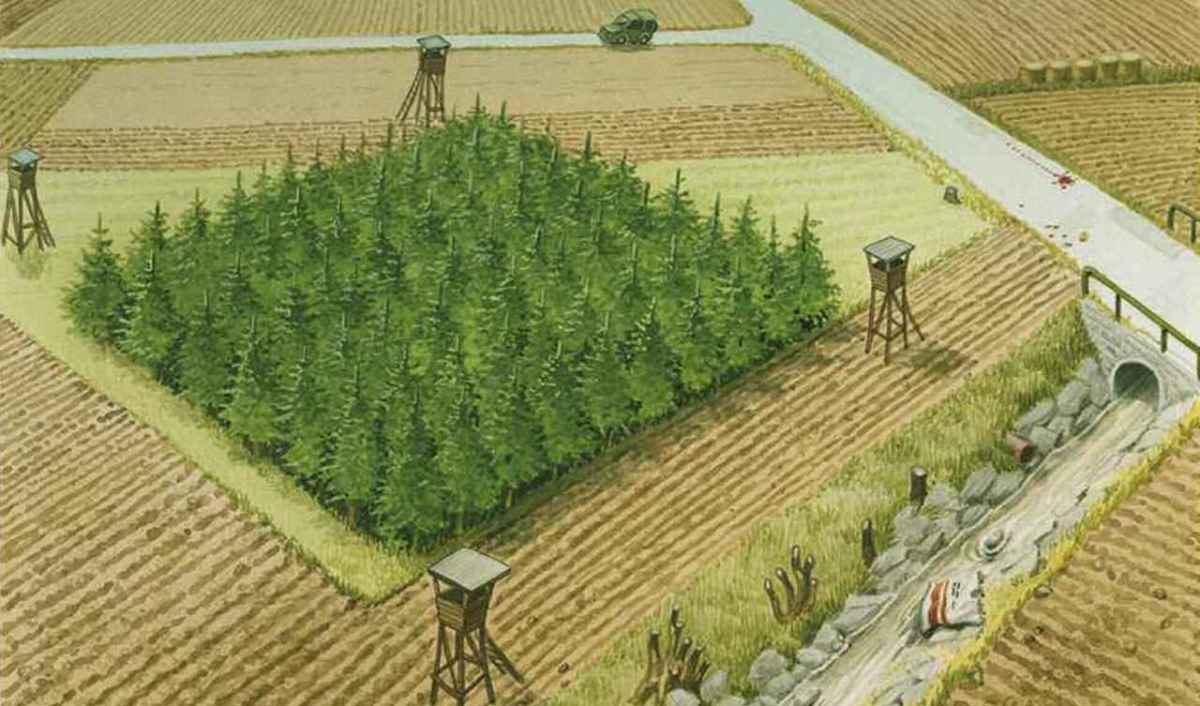
To many, recreational hunting sounds like nature, freedom and tradition.
Behind the romantic narrative of the lone "huntsman" at dawn, however, lies a very particular package of worldview, language and self-dramatisation. Anyone wanting to know what mental contortions, moral tricks and technical gadgets are really required to call oneself a recreational hunter with a clear conscience will find the fitting outline here.
1. Basic emotional training: empathy with a filter function
A good recreational hunter has a heart for animals. But not for all of them, don't worry.
- For the dog on the sofa: yes, absolutely, it gets organic food and its own Instagram profile.
- For the fox, roe deer or red deer in the forest: well, "population management", "preventing wildlife damage", "culling for conservation purposes" — you know the vocabulary.
What matters is the ability to switch empathy on and off with great precision. Anyone who weeps over an injured dog but speaks of "blood trail" instead of blood when it comes to a wounded roe deer is well on the way.
2. Linguistic gymnastics: advanced hunter's jargon
Ordinary language is not enough to be a recreational hunter. What is needed is an entire parallel vocabulary that coats reality in a soothing filter.
Examples:
- Animals don't "die", they are "harvested".
- They're "fighting for their lives"? Wrong. They're "showing good signs".
- You don't "kill", you "tend" and "care for" with a bullet.
- The forest isn't a habitat, it's a "hunting ground".
Anyone who manages to claim, with an entirely straight face, that they shoot animals out of "respect" for them has passed the linguistic test.
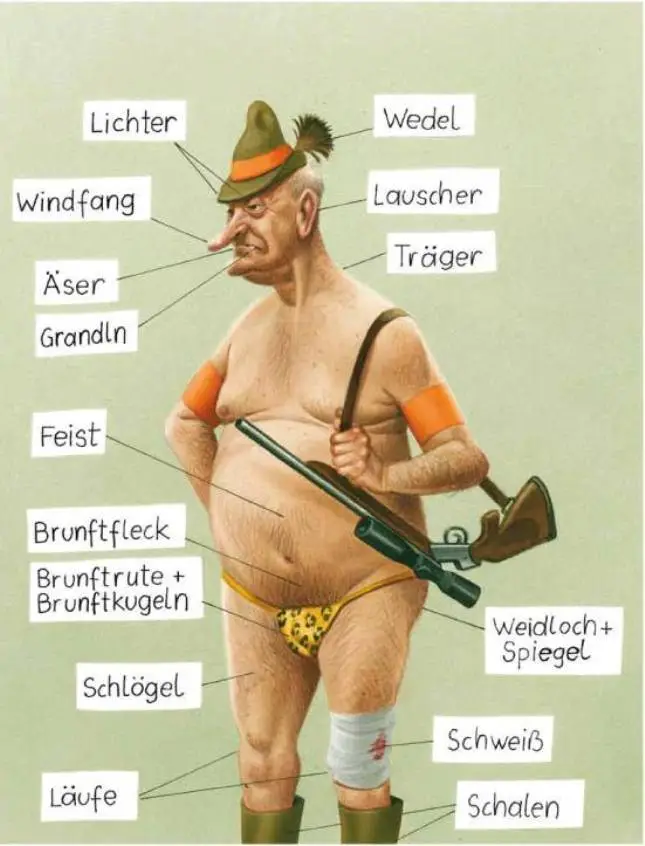
3. Moral acrobatics: learning to live with contradiction
Essential prerequisite: the ability to see contradictions not as a problem, but as an identity feature.
For example:
- On the one hand, defender of nature; on the other, feeding wild animals just to make sure there are enough of them to shoot.
- On the one hand, an “animal lover”; on the other, trophy photos on the wall of creatures that were once alive.
- On the one hand, opposed to “animal suffering”; on the other, experiencing the muzzle flash as a romantic moment.
The better one manages to explain away these contradictions with a meaningful gaze and a glass of red wine by the fireplace, the higher one's hunter level. The recreational hunter and alcohol are like two old pals who each consider the other utterly irreplaceable, even though any sober glance would immediately reveal that both, on their own, are already a problem.
4. Enthusiasm for technology: high-tech versus “fair hunting”
The romantic era of recreational hunting with bow and spear is long gone. The modern recreational hunter works efficiently, because the roe deer should have no chance of missing its appointment.
Useful items include:
- Riflescopes that can do more than many an amateur astronomer's telescope.
- Night vision devices, thermal imaging cameras, calling apps, GPS collars, wildlife cameras.
- Off-road vehicles that look as though you were either heading off to war or at least filming the next off-road advertisement.
And at the end, people like to talk about “fair hunting” and “a deep connection to nature”. Here, “fair” means: one side has everything, the other has fur.
5. Romantic idealisation: campfire tales instead of facts
Anyone who wants to be a recreational hunter must be able to tell a good story. Not the kind of story with numbers, studies, or ecology, but the kind with mist, dawn, and “ancient instincts”.
Typical phrases:
- “Our ancestors already hunted”
- “Man is a predator”
- “I feel a deep connection when I'm sitting on the high seat”
- “Hunting is deep meditation”
The fact that “our ancestors” also did other things nobody is proud of today is politely glossed over. The main thing is that the story sounds like myth, not like recreational shooting.
6. Resilience training: criticism resistance in its purest form
Equally indispensable: a thick skin when it comes to criticism.
- When someone brings up animal welfare: “You don't understand nature.”
- When someone raises ethical questions: “Come out into the forest first.”
- When someone presents facts: “I have 30 years of hunting experience.”
The perfect reaction to uncomfortable questions is a mixture of a mild smile, personal offence, and an appeal to tradition. Anyone who manages to portray themselves simultaneously as a victim ("We are misunderstood") and as an indispensable guardian of nature is ready for the next hunting examination.
7. Self-image: Between heroic saga and victim role
A good recreational hunter likes to see themselves simultaneously as:
- an irreplaceable nature conservationist
- a tragic hero who "must do what has to be done"
- a socially misunderstood genius with a shotgun
Critics are then told that they live in a "Disney world". After all, it's far more realistic to believe that the forest would immediately descend into chaos without armed hobbyist overseers.
8. The relationship to the animal: From trophy to "utilisation"
The view of the animal is crucial.
Variants:
- As a trophy on the wall: "A memento of an experience."
- As a roast on the plate: "Sustainable use of a resource."
- As a living being with its own worth: difficult, gets in the way of taking aim.
It's convenient to sort animals into categories:
- "pests"
- "useful game"
- "huntable game"
- and of course: "one's own pet", which is exempt from all of this.
9. Time management: Selling leisure time as a calling
Being a recreational hunter also means having a talent for re-branding leisure time. What others call a "hobby" is here called "responsibility", "duty" or "service to nature".
- Sitting in the high seat for hours: not a hobby, but “hunter's fair play”.
- Meat from one's own kill: not a luxury product, but “honest food”.
- Collecting weapons: not a passion, but a “tool”.
Anyone who manages to politically, morally and ecologically upgrade their personal pastime has almost passed the examination.
10. Examination question: Would you do the same without a weapon?
To conclude the aptitude test, one more simple question:
Would you sit in the forest with just as much enthusiasm, observe animals, protect habitats, create biotopes, collect rubbish, and gather data for conservation projects, if you weren't allowed to carry a weapon while doing so?
If the honest answer is "No", then congratulations: you already have everything it takes for classic hunting.
Whether that's good for the animals and for nature is another question. But as is well known, recreational hunters are very reluctant to ask themselves that one.
More on the subject of recreational hunting: In the dossier The Role and Criticism of Recreational Hunters we shed light on the training, power and self-image of recreational hunters. What the research says about this is shown by Hunting fact-checked: the state of research.
The position of IG Wild beim Wild: IG Wild beim Wild rejects recreational hunting. Our model is the canton of Geneva, which has managed without recreational hunting since 1974: without hunting seasons, without hunting dogs, without driven hunts, without high seats, without the animal cruelty and crime that go hand in hand with hunting season elsewhere. What has worked there for over fifty years disproves every position paper by JagdSchweiz. An association that bases its policy on claims it refutes in its own documents is not a professional organisation, but a factory for misinformation.

All articles are written by IG Wild beim Wild as well as by external co-authors. Research, structuring and editorial processes may be supported by AI-assisted tools.
Support our work
With your donation you help protect animals and give their voice a hearing.
Donate now →