«Bold» wolves: European study documents 21 cases between 2012 and 2022
A new study shows that wolves which repeatedly approach people are rare in Europe, and that food, dogs and human misbehaviour have often contributed.
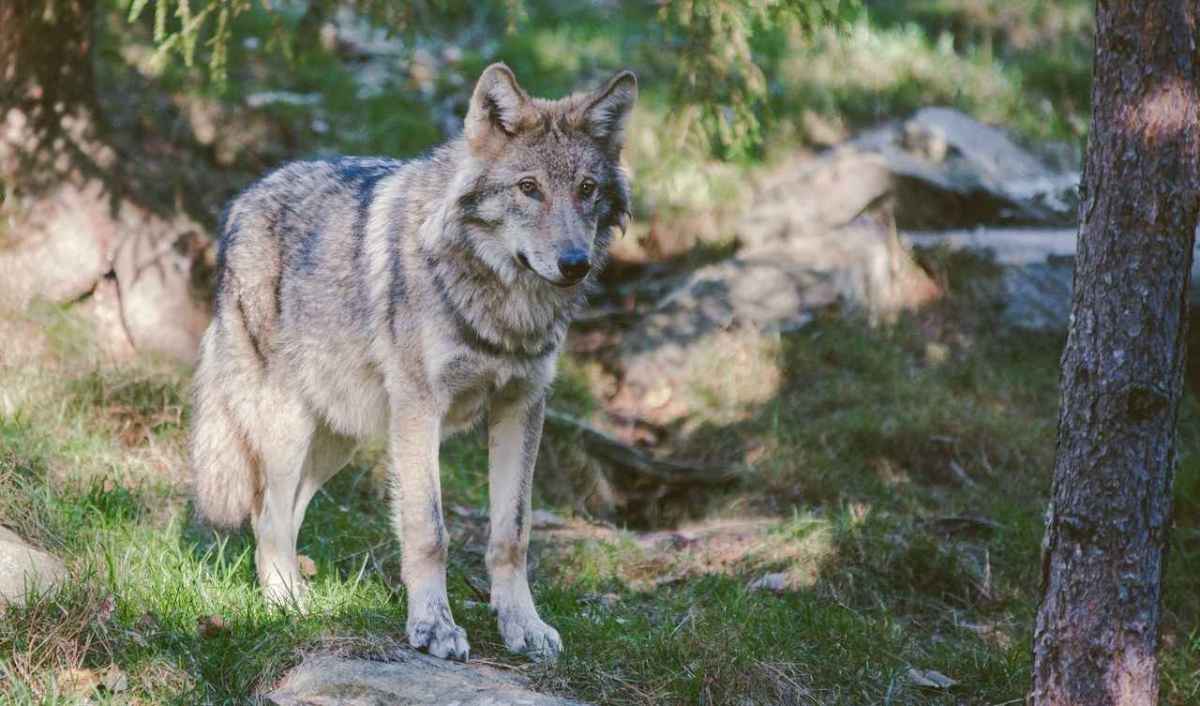
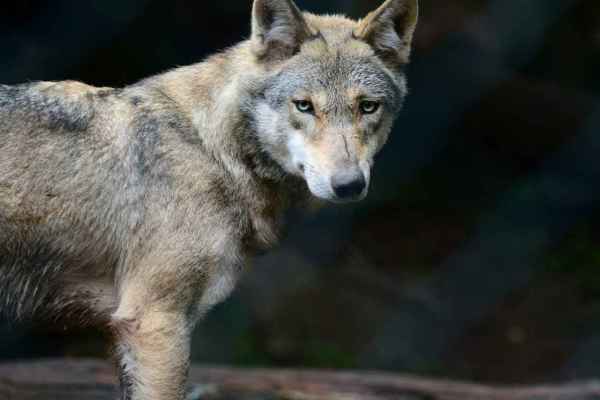
Illustrative image. Photo: Robert Larsson / Unsplash
Wolf Song
Wolves that repeatedly approach people or allow themselves to be observed at close range are rare in Europe. An analysis in the journal «Biological Conservation» documents a total of 21 cases from six countries between 2012 and 2022 that meet the criteria for highly habituated or «bold» wolves, an average of 1.9 per year. This is not a complete count: Europe-wide there are no uniform definitions and no systematic monitoring. What does become clear, however, is that human behaviour played an important role in how such cases arose, for example through waste, animal feed, dogs or direct feeding.
The study by Šárka Frýbová (Mendel University Brno) and experts from the Large Carnivore Initiative for Europe (LCIE), an expert group of the International Union for Conservation of Nature (IUCN), was produced within the EU-funded LIFE WILD WOLF project. It is freely accessible and builds on a technical report from December 2024 that describes the individual cases in detail. The detailed figures in this article come from that preliminary report, which covers 20 cases.
When a wolf counts as «bold»
Until now, there was no uniform definition in Europe of what actually constitutes a conspicuous wolf. The researchers therefore propose two fixed terms. A wolf is considered strongly habituated if it repeatedly lets people come close without moving away; if an adult wolf repeatedly tolerates people at less than 30 metres, that is an indication of this. A wolf is considered bold if it repeatedly approaches people itself to 30 metres or less. Encounters with people in cars or buildings are not assessed in the same way as encounters with recognisable people outdoors.
Repetition is the decisive factor. A wolf that comes close to people once is not yet a bold wolf by this definition. In the experts' assessment, a single encounter does not necessarily call for immediate intervention, but it does call for monitoring appropriate to the situation. The 30 metres is a pragmatic working threshold, not a biological dividing line between harmless and dangerous behaviour. It is based on typical flight distances, which averaged over 100 metres in experiments in Scandinavia, and on the range of deterrent means such as rubber bullets.
Many reports, few cases meeting uniform criteria
For the preliminary report, a total of 371 reports were received for the years 2012 to 2022, including 312 individual close encounters. They were not sufficient to classify a wolf as strongly habituated or bold: repetition was lacking, and many reports described no conspicuous behaviour or were too thinly documented for a reliable assessment. Three quarters of these single encounters were not confirmed by hard evidence such as photos or genetics. For comparison: for the period 2017 to 2022/23, the European wolf population was estimated at around 23,000 animals.
The cases in the report come from Italy, Germany, Greece, Poland, the Czech Republic and the Netherlands. There is no case from Switzerland among them. There has been no documented attack by a free-living wolf on a human here since the species returned, as we set out in the article “Are wolves in Switzerland dangerous to humans? Facts and myths”.
Young wolves, food and dogs
A pattern emerges from the cases. Where the age was known, 14 of 16 cases, or 87 per cent, involved young animals, pups or yearling wolves. Usually a single animal was involved. Food sources such as waste, pet food or kitchen scraps were documented as possible attractants in twelve of the 20 cases, and dogs in eleven; both factors could occur together. Dogs were involved in 14 cases overall. At least two wolves probably came from captivity, and in two others illness or injury impaired their fitness, one of them being barely able to hunt for itself any more.
Some cases show how directly humans can be involved. In the De Hoge Veluwe National Park in the Netherlands, the behaviour of a young female wolf was, according to the report, probably strongly shaped by photographers feeding her in order to get closer. Intervention was only permitted after pressure from the province and the courts, by which time the wolf had already starved to death. The deterrence with paintballs that was being discussed at the time was already a topic on Wild beim Wild. In Obercrinitz in Saxony, a young female wolf repeatedly encountered a dog owner and his male dog; two videos show the wolf and the dog being fed treats. After one of the owners actively deterred the animal, the encounters stopped. On the beach at Lecciona in Tuscany, two wolves disappeared once the waste had been cleared away. All three cases are described in the appendix to the preliminary report.
Earlier analyses had already reached a similar conclusion: in the six known cases between 2002 and 2020 in which non-rabid wolves bit people in Europe, conspicuous behaviour over a longer period had preceded the bite every time, often linked to human food sources.
What the experts recommend
The recommendations focus on prevention and early response: reporting encounters, monitoring systematically and removing attractants such as waste and pet food. In the case of conspicuous behaviour, professionally supervised deterrence measures come into consideration. The appropriate response must be assessed case by case; killing the animal comes at the end of this chain, not at the beginning. In the preliminary report, complete removal of the attractants was documented in only one case, while in others it was only partial or remained unclear.
Comment: A sighting is no proof of problem behaviour
The study provides what the Swiss wolf debate lacks: a sober yardstick. By these criteria, a wolf on the edge of a village is not yet a problem wolf, but first and foremost a wild animal passing through a densely populated landscape. An important warning sign is when an animal repeatedly seeks the proximity of humans, and human-created incentives often contribute to this.
In Saas-Almagell, a wolf was shot dead in a residential area on 6 November, half an hour after it was sighted. The basis was an existing permit for the removal of the pack. It cannot be inferred from this, however, that the animal showed problematic behaviour towards humans; under the proposed criteria, a single sighting in a residential area does not prove this. After a wolf was confirmed in Biberstein, the canton of Aargau informed the public and advised herd protection, as we contrasted in the article “Wolf sighted in Biberstein AG”. Inform, observe and remove attractants: that is the path recommended by the European experts.
Anyone citing a danger to people as justification for a kill must document the specific behaviour of the animal concerned. Under the proposed criteria, a sighting alone is not enough. As the case of the trusting wolf on the Hornisgrinde shows, curiosity is nevertheless quickly reinterpreted as dangerousness. And while wolves are shot after a sighting, dog bites, which injure thousands of people every year, remain an accepted everyday risk. Our counter shows how many wolves have been killed in the current season: Wolf kills Switzerland 2026/27.
Sources
- Frýbová Š., López-Bao J. V., Reinhardt I., Salvatori V. et al.: Strongly habituated and bold wolves: Insights from Europe. Biological Conservation (2027), article 112184 (open access)
- Frýbová Š. et al.: Bold wolf behaviour: definitions and analysis of reported past cases across Europe. Report by LIFE WILD WOLF and LCIE, title page December 2024, suggested citation 2025; case descriptions in Annex III
More on the subject of recreational hunting: In our dossiers on recreational hunting gather fact-checks, analyses and background reports. What the research says about this is shown by Hunting fact-checked: the state of research.
The position of IG Wild beim Wild: IG Wild beim Wild rejects recreational hunting. Our model is the canton of Geneva, which has managed without recreational hunting since 1974: without hunting seasons, without hunting dogs, without driven hunts, without high seats, without the animal cruelty and crime that go hand in hand with hunting season elsewhere. What has worked there for over fifty years disproves every position paper by JagdSchweiz. An association that bases its policy on claims it refutes in its own documents is not a professional organisation, but a factory for misinformation.
Wild animals need a voice
Once a week: research, petitions and background information on recreational hunting. Free of charge and can be unsubscribed from at any time.

All articles are written by IG Wild beim Wild as well as by external co-authors. Research, structuring and editorial processes may be supported by AI-assisted tools.
Support our work
With your donation you help protect animals and give their voice a hearing.
Donate now →