JagdSchweiz argues against itself: An overview of the umbrella association's contradictions
From fox to fireworks: 28 documents by the umbrella association cancel each other out. Vice-President Fabio Regazzi holds three positions across three offices, and Managing Director David Clavadetscher co-authored all of them.
«Lyra in the raised bog»
Anyone who lays JagdSchweiz's position papers side by side will find recurring tensions.
The umbrella association of Swiss recreational hunters refers to the ecological role of predators when it comes to the fox, while its vice-president is pushing a number-based cap on wolf populations in parliament. It describes the self-regulation of wild animals as a reality and yet declares recreational hunting a necessity. It acknowledges the toxic effect of lead but rejects a ban. The dispute with the Ecological Hunting Association of Switzerland is only the most visible consequence. The following overview is based exclusively on documents from jagdschweiz.ch and on publicly documented events.
The wolf as regulator of the fox and as the target of an upper limit
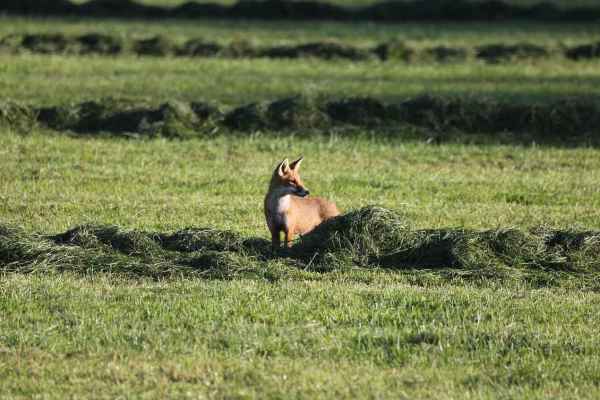
In the position paper on fox hunting of 20 November 2025, JagdSchweiz cites the absence of top predators as one of four reasons for high fox populations. Lynx and wolf would limit mesopredators such as the fox. The association cites the same research here as the Ecological Hunting Association.
Around two weeks later, during the 2025 winter session, Council of States member Fabio Regazzi submitted Motion 25.4464. It calls for a paradigm shift: wolves should be able to be regulated regionally as soon as a predefined threshold is exceeded. The decisive criteria would be number-based, no longer proof of concrete damage. Ten months later, the National Council adopted the motion by 116 votes to 73. According to the commercial register, Regazzi is vice-president of the JagdSchweiz board.
This raises a conflict of interest: the same association that acknowledges the regulating effect of wolves and lynx on foxes is co-led by a vice-president who wants to limit wolf populations regardless of any damage that has occurred. Put bluntly: the symptom is hunted, and so is the cause, and in both cases the recreational hunters remain the proposed solution.
The claim that wolves should be regulated when prey species decline also appears in the wolf position of February 2017. At the same time, the lynx position of July 2013 states that predators must be managed "such that the use of populations, and thus hunting, always remains possible." Just one year earlier, in May 2012, the association had still written that, when it comes to wolf, lynx and bear, the perspective "must not be narrowed down to Switzerland." In 2013, it then demanded lynx compartments that "must in any case be restricted to Swiss sovereign territory."
Signed with the WWF in 2013, voted against the WWF in 2026
The motion contradicts not only the fox paper but also an agreement that JagdSchweiz itself co-signed. In 2013, the association agreed with Pro Natura, WWF Switzerland and the sheep breeders' association, under the moderation of the FOEN, on joint principles for policy towards predators. It states that kills are possible for individual animals causing damage, and for established populations in the event of damage. All parties involved committed to acknowledging and communicating the ecological role of predators.
The link to damage was the core of this compromise. It is precisely this that the Regazzi motion removes. Pro Natura and WWF, the partners at the time, are now fighting the proposal as a «lawnmower method». JagdSchweiz still has the 2013 paper on its website, under the «Positions» section.
Trusted in 2023, declared ineffective in 2025
In May 2023, the board of JagdSchweiz rejected the wolf initiative, which sought to make the wolf a huntable species year-round. The reasoning is remarkable: if the wolf became huntable, recreational hunters would move into the position of responsibility, particularly for paying for wildlife damage. Moreover, they had campaigned for the new hunting act and trusted that it would be implemented sensibly.
Two and a half years later, the vice-president of the same association described the case-by-case system of this act, in his motion, as too slow, too complicated and ineffective. The trust of 2023 did not survive into 2025. And the published justification for rejecting the wolf initiative focused not on the protection status or the ecological role of the wolf, but on the wildlife damage costs borne by recreational hunters.
The reason why the association does not want the wolf to be huntable is already stated in its position on compensation for wildlife damage of February 2013: wildlife damage is described as "the result of a desired species-rich fauna" and is to be paid out of the state budget; a contribution from recreational hunters is only deemed justifiable for huntable species. An association that presents the regulation of wildlife populations as its public mandate refuses to bear responsibility for the consequences thereof. It is equally consistent on the question of who does the shooting: in January 2020, the press release on the Hunting Act advocated for regulation "by the cantonal game wardens." In September 2023, JagdSchweiz stated that recreational hunters could be called in as soon as the capacity of the wildlife wardens was insufficient.
Protecting ground-nesting birds and shooting ground-nesting birds
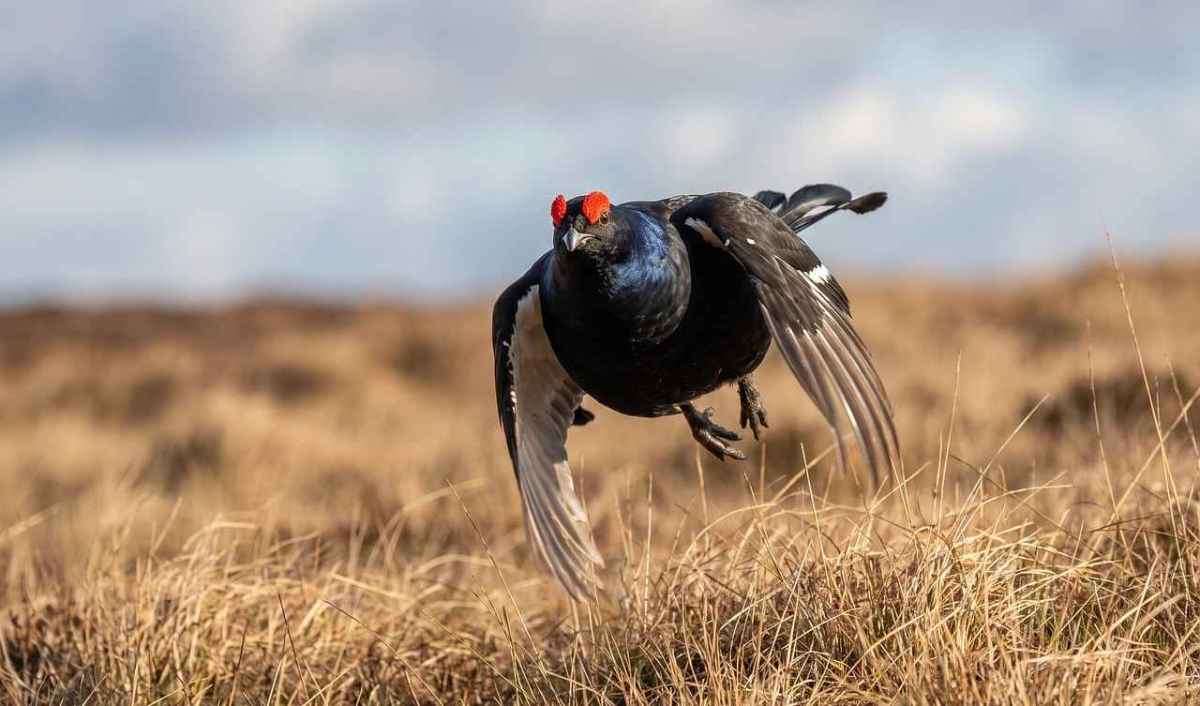
The main justification for fox hunting in the JagdSchweiz paper is the protection of ground-nesting birds such as black grouse and woodcock, as well as the brown hare. The very same association defends hunting these exact species, plus rock ptarmigan and mountain hare. In 2022, it commissioned an expert report from Wildtier Schweiz intended to fend off political pressure for protected status. The core thesis: a species can benefit from being huntable. The same report puts the average annual woodcock kill for the years 2016 to 2020 at 1,773 animals, of which 1,396 in Ticino, while listing the species as «vulnerable» on Switzerland's Red List.
The report also states that the sharp decline of the European hare is largely due to the intensification of agriculture, and that the threat to grouse species is mainly caused by loss of habitat. This is exactly the position of the Ecological Hunting Association. That leaves nothing to justify fox hunting: if habitat is the problem, killing foxes does not solve it. And if black grouse and woodcock need protection, it is first and foremost from the recreational hunters who kill thousands of them every year.
"No endangered species" and an expert report that says the opposite
In February 2021, JagdSchweiz wrote to Federal Councillor Simonetta Sommaruga that "for many decades" no endangered species had been hunted in Switzerland any more. The letter cited the woodcock as an example, in letter as “not endangered”, based on the European Red List. A year later, the association commissioned the report from Wildtier Schweiz, which classifies the species as “vulnerable” under the Swiss Red List. The 2021 letter also concedes that the European hare is “seriously threatened” in the Central Plateau, and that the black grouse population in Valais suffers “up to 50% due to ski tourism”. The fox does not appear in this causal analysis. Four years later, it was declared the main reason for protecting ground-nesting birds.
The same letter calls the demands of nature conservation associations “purely tactical and ideologically motivated” and calls for a “factually grounded culture of discussion”. In May 2023, JagdSchweiz wrote to the Council of States that the biodiversity crisis was “scientifically proven”, that over a third of all species were threatened, and that “swift action” was needed. This was the justification for the counter-proposal to the biodiversity initiative. The initiative itself was opposed in 2024 by a committee headed by the vice-president of JagdSchweiz. More on that below.
Earth hunting: extinct and indispensable at the same time
In January 2022, the JagdSchweiz presidents' conference stated in a position paper that, according to a survey, earth hunting was no longer practised much. In November 2025, the fox paper declared winter earth hunting to be an especially efficient and indispensable method for regionally intensive fox hunting.
The 2022 paper offers even more. It describes the training of earth dogs as "the be-all and end-all of accident prevention", while at the same time admitting that, despite several private initiatives, it has so far not been possible to build a single artificial den training facility in Switzerland. The dogs, which the association insists must be trained, cannot actually be trained in Switzerland. As a final reason for retaining earth hunting, the paper states that a ban would call into question the continued existence of dachshund and terrier breeding. The fox is thus killed in its den so that a dog breed can retain its purpose.
Lead is toxic, yet a ban is deemed unnecessary
The JagdSchweiz's position on lead-free ammunition, dated February 2016 and still valid, begins with the admission that lead residues in killed wild animals can poison and kill golden eagles and bearded vultures. It refers to the study by the Sempach Ornithological Institute and the Grisons Hunting Office. The association recommends that every recreational hunter shoot lead-free ammunition whenever possible. In the same paper, it rejects a general ban on lead ammunition.
Meanwhile, the association's mission statement praises game meat as a healthy, residue-free food that offers a sensible alternative to industrially produced food. The authorities see it differently. The Federal Food Safety and Veterinary Office recommends eating game killed with lead ammunition only rarely, and advises children up to seven years of age, pregnant women, breastfeeding women and women wishing to conceive to avoid game meat altogether, because it cannot be ruled out that the animal was shot with lead. The European Food Safety Authority has stated since 2010 that there is no safe dose for lead. Germany's Federal Institute for Risk Assessment warns that lead fragments spread widely around the bullet path, and puts lead intake in hunters' households at up to ten times that of an ordinary heavy consumer. And the WHO's cancer research agency classifies red meat, which includes roe deer, red deer, chamois and wild boar, as probably carcinogenic, and processed meat such as dried meat as carcinogenic.
So neither the meat nor the advertising for it is residue-free. This is exactly the meat that JagdSchweiz serves at the Game Buffet in the Federal Palace to around a hundred parliamentarians, without a word about the warnings from its own federal authority. The overview Game Meat and Health Risks summarises the state of research. How the European umbrella association FACE plays the same game at EU level has been documented by Wild beim Wild.
Noise stresses wild animals — unless it comes from a rifle
In September 2025, JagdSchweiz supported the fireworks initiative. Noise triggers “stress reactions” in wild animals, roe deer, red deer and chamois flee their refuges, “with a high loss of energy, which is particularly critical during the winter period”, sometimes leading to fatal falls. Birds leave their breeding grounds “often for a long time”. As “advocates for native wild animals”, the association sees itself obliged to point out this disturbance.
What applies to rockets does not apply to rifle shots. The high hunt takes place in exactly those months in which the association describes energy loss as critical, and the 2018 position on silencers justifies noise reduction primarily by the protection of the shooter, the dog, and residents. The 2016 chamois paper states that hunting pressure could be “even the decisive” factor in the collapse of chamois populations. Regarding the Reichmuth postulate, JagdSchweiz stated in 2023 that “recreational use of the forest” causes stress and promotes browsing damage. The disturbance caused by recreational hunting itself is not quantified in any of these papers.
The Mission Statement: Self-Regulation Yes, Hunting Regardless
Mission statement of JagdSchweiz contains a sentence that could be held against the association in the dispute over self-regulation will maintain: wildlife populations regulate themselves, even in cultivated landscapes. The association thereby concedes the central thesis of hunting criticism and adds that this self-regulation would bring damage, accidents, mass die-offs and epidemics with it. It provides no evidence for this. The canton of Geneva has lived without recreational hunting since 1974, without any of these scenarios materialising.
The same mission statement says that hunting often means foregoing kills. The fox paper demands regionally very intensive and prolonged hunting over time. The mission statement declares that Swiss recreational hunters fundamentally reject methods that inflict cruelty on animals. The association defends earth hunting, trap hunting with box traps, and training dogs on live foxes. And while the Ökologischer Jagdverein rejects trophy hunting, JagdSchweiz's mission statement explicitly names trophies as part of hunting.
Animal welfare: rejected in 2016, welcomed in 2023, hollowed out in 2023
In the 2016 consultation on the partial revision of the Hunting Act wrote JagdSchweiz, stating that animal welfare had already been able to bring in its concerns: «we reject new, expanded provisions on this». The position paper on the revision from May 2023 states that enshrining animal welfare in the hunting act is «of great importance to us». The same paper demands that dogs be allowed to «seize and kill» injured game without being liable to prosecution, calls for the legalisation of silencers and «instruments for shooting at night». The mission statement promises the shot that kills instantly and rejects methods that cause cruelty to animals. The position on shotgun shots from 2014 sees no need for revision, because only one of 120 roe deer killed showed gunshot injuries. A figure that the association itself cites as evidence that wounded game does not die «in large numbers».
The code: utilise and conduct follow-up searches, unless you don't
The Hunting Code of JagdSchweiz obliges recreational hunters: «What I kill, I use myself or, as far as possible, ensure it is put to use.» According to the association, around 60 per cent of foxes killed do not even end up being used for fur.
The code also obliges hunters to carry out a timely follow-up search if an animal is not lying where it was shot. In the canton of Zug, six licence hunters have appealed to the Federal Supreme Court to abolish the obligation to conduct follow-up searches and to reclaim the ten-franc bounty per fox tail. No statement from the umbrella association, which promotes the follow-up search as a matter of honour, has been issued.
Welcoming quiet zones, fighting national parks
The mission statement promises that hunters welcome quiet zones and hunting restrictions when they are objectively justified and necessary. Practice looks different. In November 2016, the Parc Adula around the Rheinwaldhorn failed at the ballot box, a project involving investments of 250 to 300 million francs and around 200 jobs for mountain communities threatened by depopulation. Recreational hunters in Grisons and Ticino mobilised against it because hunting was to be prohibited in the core zone. In June 2018, the vote against the Parco Nazionale del Locarnese followed, even though the canton, eight municipalities and the FOEN supported it. Among the prominent opponents was the then National Councillor Fabio Regazzi, already at that time a board member of JagdSchweiz, who fought the hunting ban in the core zone.
Switzerland has had a single national park since 1914. Two attempts to establish a second one have failed, both times with the organised recreational hunting fraternity among the opponents. An association that claims nature conservation as its core business has twice prevented nature from being protected without a shotgun. How the association otherwise understands its “public mandate” is shown by the fact check on the brochure “Hunting protects and benefits”.
Fabio Regazzi: A vice-president against his association’s positions
The association’s contradictions have a name. Fabio Regazzi is a member of the Council of States, president of the Swiss Trade Association and vice-president of JagdSchweiz. In all three roles, he holds positions that mutually exclude one another.
On the wolf: In 2013, JagdSchweiz signed off on damage-based culling as the core of the compromise with WWF and Pro Natura, and stated in 2023 that it trusted in the sensible implementation of the hunting act. In December 2025, Regazzi submitted the motion that abolishes damage-based culling.
On biodiversity: JagdSchweiz wrote in May 2023 that the biodiversity crisis was scientifically proven and required swift action. In 2024, as president of the Trade Association, Regazzi led the national «No» committee against the biodiversity initiative, calling it «unnecessary and excessive regulation».
On fireworks: Since September 2025, JagdSchweiz has supported the fireworks initiative in order to protect wild animals from noise stress. The Trade Association under Regazzi has been fighting the same initiative since January 2024 as «legal micromanagement of human emotions» and also rejected the counter-proposal in November 2025. Regazzi himself is listed as the contact person in the Trade Association’s press release.
On protected areas: His association’s mission statement welcomes quiet zones and hunting restrictions. In 2018, Regazzi opposed the Parco Nazionale del Locarnese because hunting was not to be allowed in the core zone.
Either the vice-president does not know his own association's position papers, or he knows them and deliberately acts against them. Either way, this is no evidence of reliability for a Councillor of States who presents himself in parliament as an expert on hunting matters. Someone who defends fireworks for the trade association on Monday and, as a hunting official, wants to protect wild animals from noise on Tuesday is not playing a double game by accident. An association that tolerates such a person at its helm has chosen to serve interests rather than its own papers.
David Clavadetscher: The man who wrote all the papers
Anyone who lays the position papers side by side keeps encountering the same sender. David Clavadetscher has been managing director of JagdSchweiz for over a decade. His company Sandona GmbH in Zofingen runs the association's office; at the European hunting lobby FACE he serves as treasurer, and since 2025 additionally as justice of the peace in the district of Zofingen. Wild beim Wild published a profile of him in December 2025.
The lynx position from 2013, the positions on shotgun use and wildlife cameras from 2014, the wolf position from 2017, the silencer paper from 2018, the revision paper from 2023, and the fireworks position from 2025 all carry his e-mail address as the contact. He co-signed the letter to Federal Councillor Sommaruga from 2021, and in the 2020 media release on the hunting act he is named as the contact person. The contradictions in this article are therefore not the work of changing boards, but ran through a single desk.
This also applies to the contradictions between paper and public appearance. Regarding the decline of chamois, Clavadetscher told the media that the leisure society bears the main responsibility. The chamois paper, which his office drafted together with the conference of game wardens in 2016, names hunting pressure as a factor that “may even be the decisive one”. In his 2021 letter he demanded a “factually grounded culture of discussion” and accused nature conservation associations of making claims that were “purely tactically and ideologically motivated”. The same letter states that no endangered species were being hunted. His own expert report disproved that a year later.
How the managing director deals with criticism of this contradiction is documented. In the name of JagdSchweiz, he reported the IG Wild beim Wild for defamation. On 17 July 2020, the Bellinzona Criminal Court acquitted the editorial team: the criticised statements were not lies and had no defamatory character.The verdict is final. The civil proceedings in Locarno also ended without result for the association. Whoever fails to reconcile their own papers, yet drags before a court those who notice this, has swapped the roles.
Commentary: An association has the board it elects and the office it pays for. At JagdSchweiz, the office has for years gone along with whatever position its vice-president currently needs, and drafts the next one once the old one no longer fits. A managing director who describes fireworks as stress for wild animals while calling for night vision devices for hunting, who sells the follow-up search as a matter of honour and shotgun hunting as unproblematic, does not document the stance of an association but its absence. That the same man has, since 2025, promised neutrality as a justice of the peace does not make matters any better.
Comment: An association without a line, but with a vice-president in the Council of States
The contradictions follow a pattern. Where science could justify recreational hunting, it is cited. Where the same science would make recreational hunting superfluous, it is ignored. Fox hunting requires the absence of wolves, so wolves must be absent. Ground-nesting birds need protection from the fox, but not from the shotgun. Lead is deadly for eagles, but cannot be banned. Earth hunting is rare, but indispensable. National parks are desirable, as long as one is allowed to hunt in them.
The Ökologischer Jagdverein shows that one can read the same sources honestly. That JagdSchweiz does not do so is not a question of the facts, but of interests. And these interests sit with Fabio Regazzi in the Council of States, in the trade association, and on the board of the association all at once. Whoever seeks consistency finds it in only one place: at the end of every position of JagdSchweiz stands the statement that recreational hunters may shoot. And that its vice-president may hold any position, as long as it serves this goal.
Sources: All documents from JagdSchweiz
All documents originate from jagdschweiz.ch and were archived on 26 September 2026. Papers that exist there only as a webpage without a PDF are stored as an unaltered text archive with source reference.
- JagdSchweiz position on fox hunting, 20 November 2025
- Fact-based assessment of fox hunting, short version, 15 December 2025
- Wildtier Schweiz expert report: Effects of huntability on black grouse, rock ptarmigan, woodcock, and European and mountain hare, 2022
- Position on the future of earth hunting, presidents' conference January 2022
- Position on the use of lead-free ammunition, 19 February 2016
- Joint principles of the associations on predator policy, 1 February 2013 (text archive)
- Position on Predators, 9 May 2012 (Archived text)
- Position on Lynx Management, July 2013
- Position on Regulating Wolf Populations, 6 February 2017
- Position on the Wolf Initiative, 30 May 2023 (Archived text)
- Statement Regarding Wolf Killing by Hunters, 15 September 2023 (Archived text)
- Prevention and Compensation of Wildlife Damage, 15 February 2013 (Archived text)
- Statement on the Partial Revision of the Hunting Act, Consultation, December 2016
- Statement on the Partial Revision of the Hunting Act, Bill Submitted to Parliament, 15 January 2018
- Press Release “The New Hunting Act Benefits Animals, Nature and People”, 13 January 2020
- Letter to Federal Councillor Sommaruga “Use of the Hunting Regale” with Appendix, 24 February 2021
- Revision of the Hunting Act and Hunting Ordinance, 26 May 2023
- Position on the Reichmuth Postulate, 30 May 2023 (Archived text)
- Counter-Proposal to the Biodiversity Initiative, 30 May 2023 (Archived text)
- Position on the Fireworks Initiative, 24 September 2025
- Position Paper on Chamois Management by JagdSchweiz and JFK, December 2016
- Position on the Use of Buckshot, 27 February 2014
- Position on the Use of Wildlife Cameras, 27 February 2014
- Position on the Use of Silencers for Hunting Weapons, 29 March 2018
- Position on International Hunting Tourism, 28 February 2014
- Effects of Wind Turbines on Land Mammals, 17 September 2015 (Archived text)
- Mission Statement of JagdSchweiz (Archived text)
- Hunting Code of JagdSchweiz (Archived text)
More on the subject of recreational hunting: In the dossier The Role and Criticism of Recreational Hunters we shed light on the training, power and self-image of recreational hunters. What the research says about this is shown by Hunting fact-checked: the state of research.
The position of IG Wild beim Wild: IG Wild beim Wild rejects recreational hunting. Our model is the canton of Geneva, which has managed without recreational hunting since 1974: without hunting seasons, without hunting dogs, without driven hunts, without high seats, without the animal cruelty and crime that go hand in hand with hunting season elsewhere. What has worked there for over fifty years disproves every position paper published by JagdSchweiz. An association that bases its policy on claims it contradicts in its own documents is not a professional organisation, but a factory for misinformation.

All articles are written by IG Wild beim Wild as well as by external co-authors. Research, structuring and editorial processes may be supported by AI-assisted tools.
Support our work
With your donation you help protect animals and give their voice a hearing.
Donate now →