Wolf threshold: National Council approves stockpiled kills
Conservation organisations warn that kills based on fixed population figures could tear packs apart and cause more livestock kills.
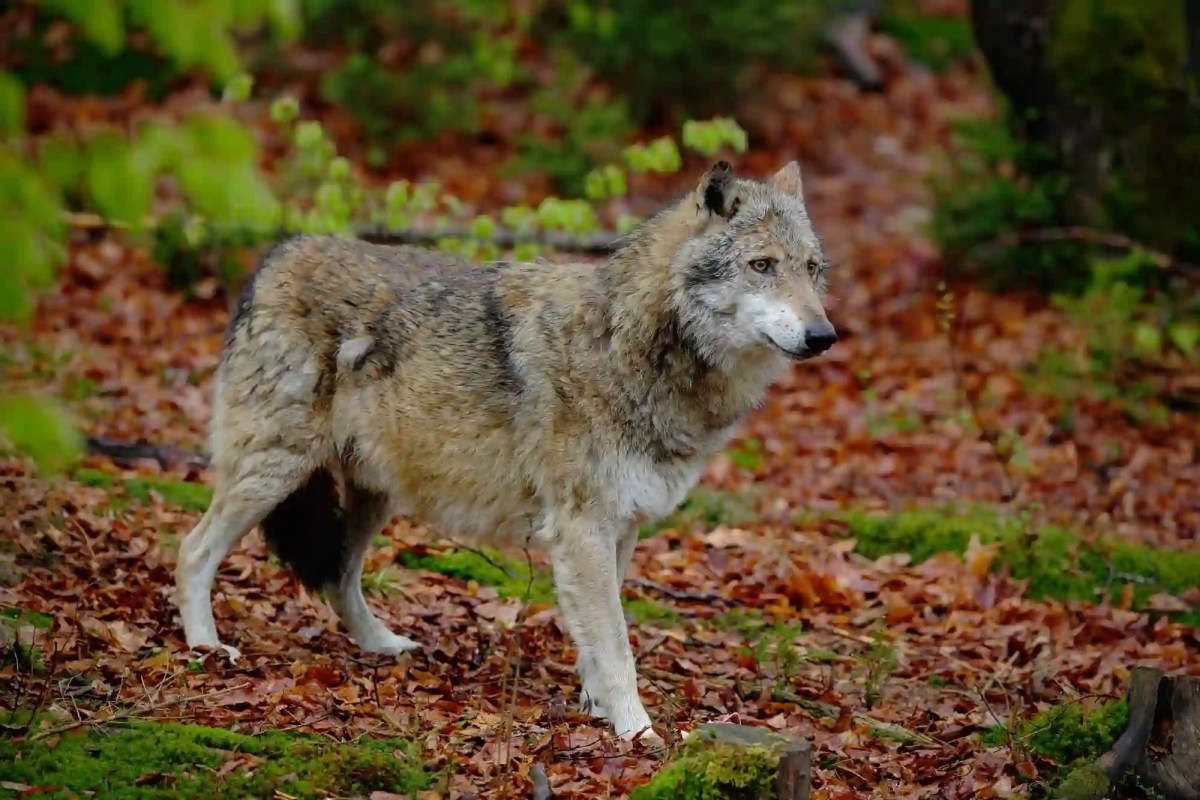
«In Reserve»
On 23 September 2026, the National Council adopted Motion 25.4464 from Centre Party Council of States member Fabio Regazzi (TI) by 116 to 73 votes with 6 abstentions. The Council of States had already approved it in the spring session. This means the Federal Council must now draft a legal basis to allow wolves in a region to be killed as soon as the population exceeds a threshold set jointly with the cantons.
Pro Natura, BirdLife Switzerland, Gruppe Wolf Schweiz and WWF Switzerland criticise the decision in a joint press release as counterproductive and unnecessary. According to the organisations, since the wolf's natural return there have already been over 220 parliamentary interventions concerning this one species, with increasing frequency and radicalism.
What Motion 25.4464 demands
Regazzi justifies his motion with the growth of the wolf population and describes the current system of case-by-case kill permits as too slow, too complicated and ineffective. Motion 25.4464 thus shifts the benchmark: away from proven damage or concrete conflicts, towards a population-based cap. How far the subsequent legislative proposal will still contain conflict-related criteria remains open.
The organisations fear that any reference to threatened or actual conflicts with livestock would be dropped. They describe the model as a «lawn-mower method», oriented towards artificially set population figures. Targeted regulation of packs in conflict areas, while sparing inconspicuous wolves, would thus no longer take place.
Why kills in inconspicuous packs create problems
The central objection is biological: if wolves are shot from packs that have not previously killed livestock, these family groups can break apart. Scattered, inexperienced lone animals are more likely to turn to easily accessible livestock. Kills based on population numbers could therefore create more conflicts rather than fewer. The scientific basis for this is set out in the fact check on the effects of recreational hunting on wild animals.
That current practice already produces errors is shown by the mistaken kills of alpha wolves in Jura, Grisons and Valais.
Proactive regulation already exists
The Hunting and Protection Act (JSG), revised in 2022, already allows proactive regulation today. According to the associations, around a hundred wolves are now being killed each year. WWF Switzerland again put the proportion in the third regulation period from September 2025 to January 2026 at around a third of the Swiss wolf population.
At the same time, enforcement often fails. Gruppe Wolf managing director David Gerke pointed to SRF to Ticino, where twenty wolves were approved for killing but only five were shot. A rigid upper limit does not solve this problem.
Livestock kills falling for the fourth year in a row, according to associations
According to the press release, the number of livestock killed by wolves has fallen in 2026 for the fourth time in a row, and the decline has accelerated. The canton of Grisons recorded only 30 kills by the end of July, compared with over 60 in the same period the previous year. The associations also point out that the federal government has increased funding for herd protection and reaffirmed in May that it remains a central pillar in dealing with the wolf.
The defeated minority of the SP and the Greens on the preliminary National Council committee also argued that the effectiveness of existing instruments must first be assessed. Stronger support for alpine farming would be more effective than an upper limit.
Parliament is not waiting for its own analysis
With the committee postulate 25.3027, parliament itself commissioned an evaluation of the changes to the hunting act. The results are expected in 2027. Without waiting for them, a majority has already decided on the next revision of the law. According to the associations, the constant revisions unsettle alpine farmers as well as the wildlife wardens and hinder the cantons in implementing the current law.
What happens next
Environment Minister Albert Rösti has announced that he will implement the motion through an amendment to the law. The bill will then go through both chambers again. A referendum can be launched against the revision of the hunting act, giving the electorate the final say.
Addendum: what the figures say and what remains open
Nationwide too, the figures call the motion's reasoning into question. In the alpine summer of 2026, according to SRF 183 farm animals were killed, compared with 402 in the same period the previous year. At the same time, around 350 wolves live in Switzerland in more than 40 packs. David Gerke told SRF that regulatory culls could provide local relief, but that the widespread decline was due to herd protection. Even the Federal Office for the Environment (FOEN) wrote in its report from May 2026 that a slowed population growth could only be confirmed with certainty after several further regulation periods.
The distinction between minimum population and upper limit is important. The twelve packs currently in force describe what is at minimum required for the survival of the wolf in Switzerland. They are neither an ecologically justified target population nor a political ceiling. If the minimum value effectively becomes the maximum value, this risks precisely the lawnmower approach that the associations warn against.
The motion itself does not set a value. It remains open how high the threshold should be, whether it applies nationally or regionally, whether it counts packs or individual animals, what the monitoring will look like, and what legal remedies will remain against kill orders. A referendum would set a precedent: in 2020, voters already rejected a revision of the hunting act.
Commentary: Politics by numbers rather than by damage
Motion 25.4464 does not solve a problem that the data confirms. Losses are falling, herd protection is working, regulation already exists. What remains is a political signal for a policy that wants to push the wolf back below population limits. A threshold value effectively turns a protected predator into a species that is reduced according to quota, regardless of whether an individual non-human animal has ever touched a sheep. Anyone who creates facts ahead of their own evaluation shows that this is not about evidence.
More background in the dossier Wolf in Switzerland: Facts, Politics and the Limits of Recreational Hunting as well as in the category Hunting Act.
More on the subject of recreational hunting: The scientific evidence is presented in the overview Studies on the Effects of Recreational Hunting.
The position of IG Wild beim Wild: IG Wild beim Wild rejects recreational hunting. Our model is the canton of Geneva, which has managed without recreational hunting since 1974: without hunting seasons, without hunting dogs, without driven hunts, without high seats, without the animal cruelty and crime that go hand in hand with hunting season elsewhere. What has worked there for over fifty years disproves every position paper by JagdSchweiz. An association that bases its policy on claims it refutes in its own documents is not a professional organisation, but a factory for misinformation.

All articles are written by IG Wild beim Wild as well as by external co-authors. Research, structuring and editorial processes may be supported by AI-assisted tools.
Support our work
With your donation you help protect animals and give their voice a hearing.
Donate now →