Sicily: Court halts recreational hunting across the entire island
The administrative court in Palermo has annulled the 2026/27 hunting calendar because the region's wildlife and hunting plan has been expired since 2018.
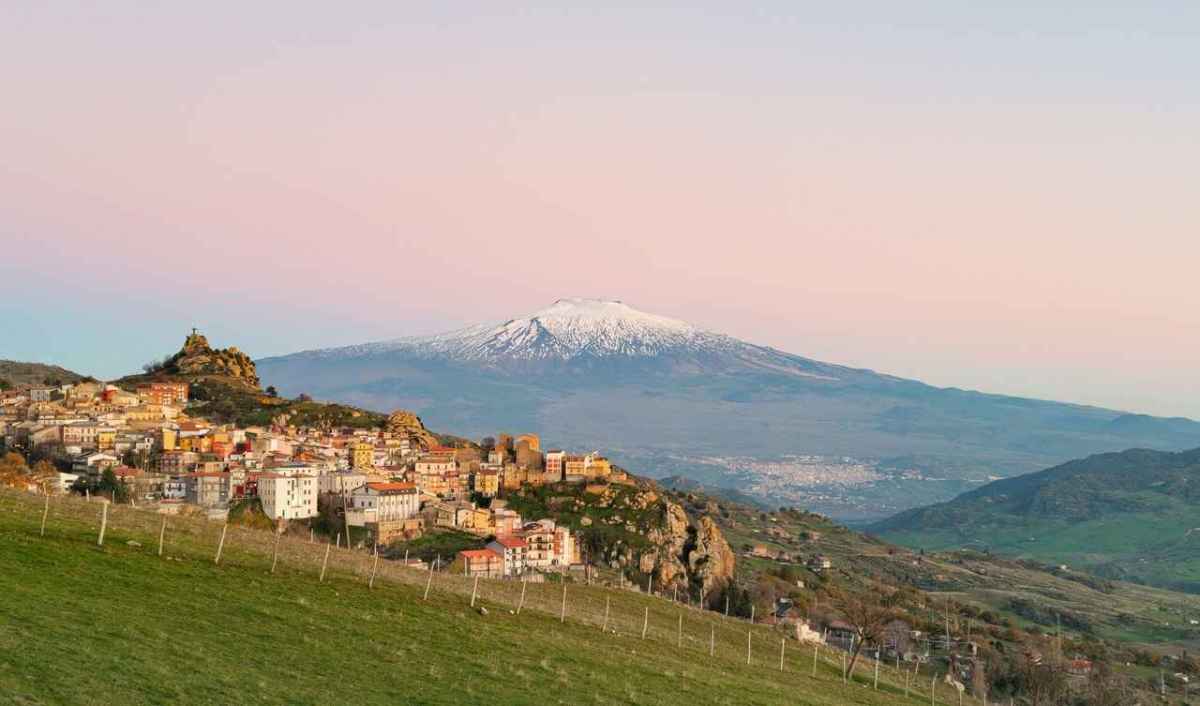
Rural Sicily with Mount Etna. Photo: Giuseppe Famiani / Unsplash
Ceasefire
In Sicily, the guns have fallen silent. In Judgment No. 2953/2026 of 30 October 2026, the third section of the Sicilian Regional Administrative Court (TAR) in Palermo annulled the 2026/27 hunting calendar in its entirety. The reason: the regional wildlife and hunting plan dates from 2013 and has been expired since 2018. The court expressly states that the annulment makes recreational hunting across the whole island effectively impossible, in the middle of the ongoing season.
The case was brought by the Federazione Nazionale Pro Natura and LEAL (Lega Antivivisezionista). The annulled instrument is Decree No. 129/GAB of 21 May 2026, signed by the regional agriculture assessor Luca Sammartino (Lega). The region must also bear the costs of the proceedings, which according to MessinaToday amount to 4,000 euros.
A wildlife and hunting plan from 2013
The core of the judgment is as simple as it is damning. A hunting calendar must be based on the regional wildlife and hunting plan, the "Piano faunistico-venatorio". This contains the scientific basis: populations, distribution and condition of wildlife species. Sicily's last plan applied to the years 2013 to 2018. Although the law requires a review every five years, it was never reassessed.
For the court, this one defect was enough. The first ground of the complaint alone made the entire calendar unlawful, and examining the further objections was unnecessary. The plaintiffs' lawyers, Luca D'Agostino, Aurora Rosaria Loprete and Mariachiara Giovinazzo, speak of a serious failure in the preliminary assessment and a breach of the precautionary principle. The judgment, they say, restores the primacy of environmental and biodiversity protection over recreational hunting, in the spirit of Article 9 of the Italian Constitution.
In other words: for eight years the region permitted killing without currently knowing how the non-human animals being shot are faring.
The back and forth since the summer
The ruling has a history. On 29 July 2026, the TAR had already issued Order No. 481 suspending the calendar as a precaution and set the main hearing for 20 October. Sammartino then appealed and announced on Facebook that he would keep fighting for the rights of Sicily's recreational hunters. WWF Sicily accused him of behaving like the representative of a hunting association, instead of protecting wild animals as a common good.
On 4 September, the Consiglio di Giustizia Amministrativa (CGA) reinstated the calendar with Order No. 296/2026, with one exception: the turtle dove remained protected during the pre-season. Sammartino celebrated this as a vindication of his work. The main proceedings have now certified the opposite.
Recreational hunting lobby calls on the region
The reactions from the hunting community were swift. The recreational hunting portal IoCaccio headlined that in the end it is "always the good hunter" who pays. A recreational hunting association from Reggio Calabria expressed its "solidarity" with Sicily's recreational hunters and suggested an appeal to the CGA. What is cited in support is not the wild animals, but the economic consequences for traders, clubs and villages.
What the association itself concedes is remarkable: an appeal would not automatically reopen recreational hunting, as that would require a separate court order. And a mere administrative extension of the old plan would not suffice, according to its statement. What is needed are new population surveys, environmental assessments and the mandatory consultations. Precisely what the region has failed to do for eight years.
Why the ruling also concerns Switzerland
Sicily lies on one of the most important migration routes between Africa and Europe. Many migratory birds that breed in Central Europe pass over the island in spring and autumn. These include the turtle dove, which in Switzerland is critically endangered and is still shot in the Mediterranean region. Every turtle dove shot on migration may be missing from its breeding site in spring, including in Switzerland. How Europe deals with this species is also shown by a look at Spain, where recreational hunting of the turtle dove has been permitted again since 2025.
The ruling fits into a series of court decisions that are correcting hunting policy across Europe. In France, the Conseil d’État ensured that rock ptarmigan and capercaillie have been strictly protected since September, and in the Hautes-Alpes an administrative court suspended official fox kills. In Italy itself, the C.2984 reform is set to loosen wildlife protection, even though, according to one survey, only 3 per cent of the population want to promote recreational hunting.
Analysis: recreational hunting without a data basis
The Palermo ruling exposes what recreational hunting likes to conceal everywhere: it invokes “wildlife management”, yet gets by for years without up-to-date figures, as long as nobody sues. A region that permits recreational hunters to kill animals for eight years without knowing how many turtle doves, wild rabbits or woodcocks are left is not practising management, but serving a clientele.
That recreational hunters' associations now lament lost revenue rather than the missing data basis says a great deal about their priorities. For Sicily's wild animals, the ruling at least brings a pause until the region catches up on what it neglected for eight years.
More on the subject of recreational hunting: In our dossiers on the criticism of recreational hunting gather fact-checks, analyses and background reports. What the research says about this is shown by Hunting fact-checked: the state of research.
The position of IG Wild beim Wild: IG Wild beim Wild rejects recreational hunting. Our model is the canton of Geneva, which has managed without recreational hunting since 1974: without hunting seasons, without hunting dogs, without driven hunts, without high seats, without the animal cruelty and crime that go hand in hand with hunting season elsewhere. What has worked there for over fifty years disproves every position paper by JagdSchweiz. An association that bases its policy on claims it refutes in its own documents is not a professional organisation, but a factory for misinformation.
Wild animals need a voice
Once a week: research, petitions and background information on recreational hunting. Free of charge and can be unsubscribed from at any time.

All articles are written by IG Wild beim Wild as well as by external co-authors. Research, structuring and editorial processes may be supported by AI-assisted tools.
Support our work
With your donation you help protect animals and give their voice a hearing.
Donate now →