Italy's «Sparatutto» law: how the hunting lobby wants to reshape wildlife protection
While Milan sees protests against the hunting reform C.2984, the victims' association AVC is documenting the human consequences of a practice whose risks the state does not systematically record.
«What Begins at the High Seat»
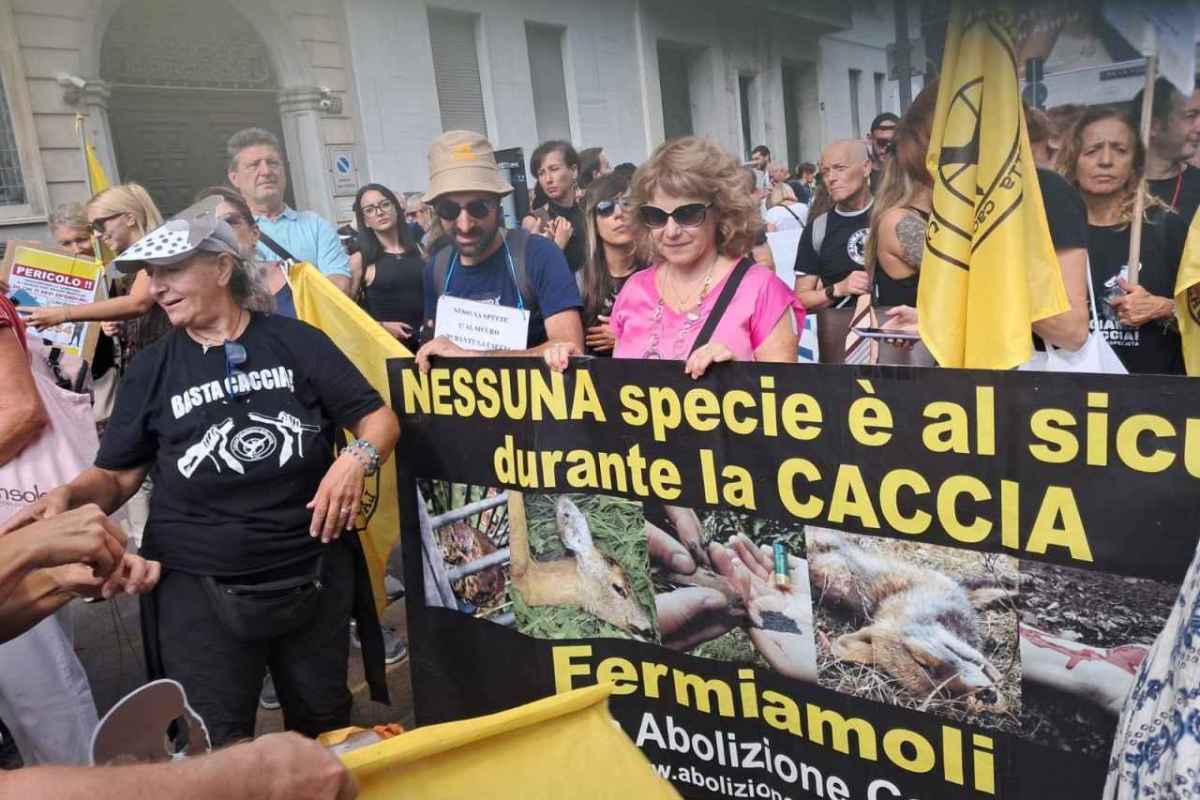
On 19 September, animal welfare organisations demonstrated in Milan against the planned reform of Italian hunting law. Fronte Animalista and AVI called for the nationwide march, supported by numerous other associations. The occasion was the controversial bill S.1552, which was passed by the Senate in June and is now being debated in the Chamber of Deputies as C.2984. It has not yet entered into force.
Critics call the project the «legge sparatutto», or “shoot-at-everything law”. They warn of a shift in the legal foundation: away from protecting wild animals as a public good, towards an expansion of recreational hunting and greater decision-making powers for the regions.
A law from 1992 is being overhauled
Law 157/92 declared wild animals an “inalienable heritage of the state” in 1992 and made the protection of fauna the rule, with killing the exception. Under the Meloni government, this principle is being gradually loosened in favour of hunting interests. The bill C.2984, now being debated in the Chamber of Deputies, could further intensify this course. Wild beim Wild has already documented the planned relaxations in detail.
On 23 June 2026, the Senate passed the bill S.1552 by 80 votes to 56, with two abstentions. The first signatory is Lucio Malan, group leader of the Fratelli d’Italia; the bill is co-sponsored by representatives of the Lega, Forza Italia and the wider centre-right coalition. On 24 June, the text was sent to the Chamber and has since been debated in the Agriculture Committee as Atto Camera C.2984. It can only enter into force once the parliamentary process has been completed.
What the bill provides for
The planned amendments are not technical fine-tuning but aim at a systemic change. Environmental organisations such as WWF and Legambiente warn of the consequences. Among the most contentious points are:
The bill provides for hunting to be extended to state-owned land and previously protected zones, explicitly right up to the beaches, with the concrete implementation left to the regions. Historically banned aids such as night vision devices and silencers could be permitted, which critics believe would make effective controls more difficult. Wood pigeon and wild goose are to become huntable species. Also disputed is an amendment to Article 16, which, according to the hunting victims' association AVC, would make it possible to use private land for hunting and commercial purposes against the will of the owners. Finally, sanctions are envisaged for actions that hinder, disturb or delay the exercise of hunting.
Animal welfare organisations fear that such a penal provision could put pressure on legitimate protest and the defence of private habitats.
From protection to «active management»
The real core of the reform lies in its reinterpretation. The text redefines hunting as an activity that “contributes to the protection of biodiversity and ecosystems”, casting recreational hunters in the role of “bio-regulators”. This would attribute to those who kill wild animals the role of their protectors.
At the same time, scientific oversight is set to lose weight. ISPRA, Italy's leading environmental research institute, would effectively cede influence: under certain conditions, regions could in future deviate from its assessments of hunting calendars. Experts counter that effective wildlife management is based on data and prevention, not on an expansion of killing.
The forgotten victims
What is almost entirely missing from the political debate is the human cost. Here, the Associazione Vittime della Caccia (AVC), the hunting victims' association, provides the country's only ongoing documentation with its Osservatorio Vittime della Caccia, since there is no official national statistic on hunting accidents. That a state seeking to expand recreational hunting does not systematically record its victims is remarkable in itself.
According to the organisation's 19th dossier, which covers the official 2025/26 hunting season including its early openings, AVC recorded 46 people killed or injured by hunting weapons or in connection with hunting activities. Their composition is revealing: 33 of those affected were hunters who shot themselves or one another, while 13 were people who had nothing to do with hunting. The organisation recorded the most cases in Piedmont and Sicily, with seven each, followed by Tuscany with six and Sardinia with five. The data is based on a chronology of publicly documented cases compiled by AVC according to its own criteria, not on a comprehensive official government survey.
A notable contradiction emerges here: the number of recreational hunters in Italy has been declining for years. According to the Ministry of the Interior, there were around 588,000 valid hunting licences in 2024, compared with about 609,500 in 2022 and well over 1.5 million in the 1980s and 1990s. Yet in AVC's view, the social harm is not diminishing. According to the association and other critics, an expansion of hunting periods and hunting areas would increase the risk of further incidents. Just how significant this would be statistically cannot be seriously quantified before the reform takes effect.
Brussels increases pressure on Rome
The reform also touches on European law. In February 2024, the EU Commission launched infringement proceedings INFR(2023)2187 against Italy. The trigger was changes to Italian hunting law that allow regions to intervene in wildlife populations, including in protected areas or outside the usual hunting seasons. The implementation of the REACH requirements on lead ammunition in and near wetlands was also criticised. In November 2024, the Commission escalated the proceedings with a reasoned opinion.
Should Italy pass the reform despite these concerns, financial sanctions could ultimately be imposed, the cost of which would have to be borne by the general public.
Why this concerns Switzerland
One could dismiss all this as an Italian problem. That would be a mistake. For the building blocks of this deregulation are exactly those on the recreational hunting lobby's wish list here as well: the downgrading of the wolf's protection status, the approval of night-vision technology, hunting in areas that were previously protected, and the downplaying of the lead problem. And above all the same narrative, according to which, of all people, recreational hunters are the true conservationists.
In parallel with the hunting reform, the political handling of the wolf is also changing. The European downgrading of its protection status creates leeway that Italy and its regions could use for stronger intervention. However, whether, where and under what legal conditions kills would be permissible remains bound to national and regional procedures.
Italy is currently demonstrating in real time where this path can lead when expertise gives way to ideology and economic interests are placed above species protection. Anyone following the debate in Switzerland about predator, protected areas and the role of science will find the blueprint south of the Alps. The victims documented by AVC are the warning that accompanies it.

All articles are written by IG Wild beim Wild as well as by external co-authors. Research, structuring and editorial processes may be supported by AI-assisted tools.
Support our work
With your donation you help protect animals and give their voice a hearing.
Donate now →