Fireworks initiative on 29 November: what's at stake for wild animals
The people and the cantons will decide on a ban on loud fireworks. For wild animals, what matters most is that protection doesn't stop at the municipal boundary.
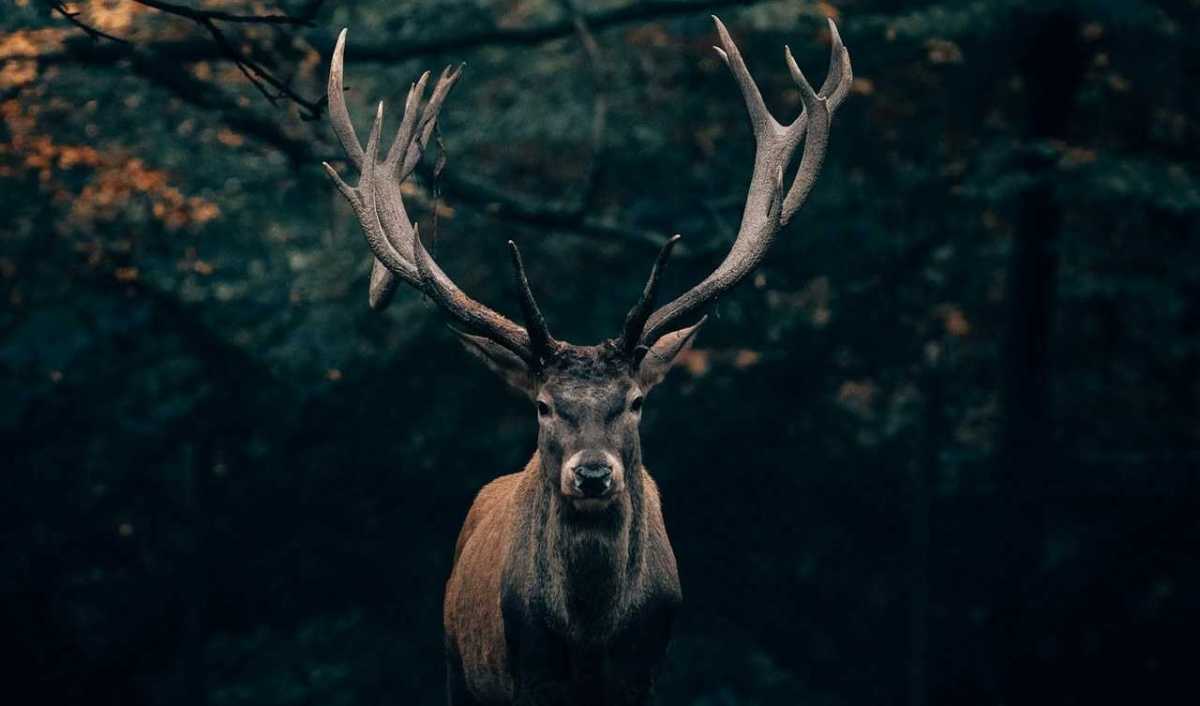
Photo: Philipp Pilz / Unsplash
«For whom the sky burns»
On 29 November 2026, the people and the cantons will vote on the popular initiative «For a restriction on fireworks». The Federal Council has scheduled it together with three other proposals: the additional funding of the old-age and survivors' insurance (AHV) via value-added tax, the initiative on the taxation of married couples, and the amendment to the War Material Act.
The fireworks initiative directly affects wild animals, pets and livestock. It will decide whether noise-generating fireworks are restricted nationwide in future, or whether protection continues to vary from one municipality to the next.
What's on the ballot
The initiative seeks to add a new Article 74a to the Federal Constitution. The sale and use of fireworks that generate noise would be banned. For events of supra-regional significance, the responsible cantonal authority may grant exemptions upon request. According to the Federal Council's dispatch, non-noisy fireworks such as Bengal sticks or fountains could continue to be sold and used. The exact boundaries would be set out in law. If adopted, the implementing provisions must come into force no later than two years after the popular vote. The ban would therefore not yet apply on New Year's Eve 2026.
The initiative was launched by a committee led by Roman Huber from Aargau; the Fireworks Initiative association submitted 137,193 valid signatures. The Federal Council recommends a No. An indirect counter-proposal from parliament, which would have banned firecrackers nationwide, failed on 19 June 2026 in the final vote of the National Council, by 114 votes to 79 with 6 abstentions. Since then, the initiative has gone before the people on its own. We covered the background to this in June.
What fireworks leave behind in the environment
The burden is well documented by official sources. In Switzerland, 1,000 to 2,000 tonnes of fireworks are used every year. Burning them produces 200 to 400 tonnes of fine particulate matter, which settles in soils and waterways. During temperature inversions, the daily PM10 limit can be exceeded. We have compiled the federal government's figures and measurement data here.
For Wild animals the noise adds to this. Flight responses cost energy, and especially in winter it can be difficult to compensate for this additional consumption. A study of 347 wild geese shows just how much fireworks disturb nocturnal rest: on New Year's Eve, they flew up to 16 kilometres further and up to 150 metres higher than usual, with individual animals covering more than 500 kilometres. Further findings can be found in our article Fireworks are a tormenting ordeal for animals.
Why municipal rules are not enough
The main argument against the initiative is that cantons and municipalities can already restrict fireworks. That is true, and some do: Davos has banned New Year's Eve and 1 August fireworks by popular vote. For wild animals, however, this approach is insufficient, for three reasons.
First, firework noise does not stop at municipal boundaries, and neither do wild animals. Local bans can provide some relief for animals, but they do not protect them from fireworks set off in the neighbouring municipality. A roe deer at the forest edge or waterfowl on a lake react the same way to both.
Second, local usage bans do not restrict sales. The initiative therefore also targets the nationwide availability of noise-generating fireworks.
Third, differing local regulations do not create a uniform protection rule. The initiative would establish a legally binding framework applicable across the whole of Switzerland.
The tradition argument is familiar from recreational hunting
Those who campaign against the initiative invoke custom: fireworks, they say, are part of 1 August, New Year's Eve, village festivals. The same pattern is familiar from the debate on recreational hunting There, too, the long history of a practice is meant to prove that it is right.
But tradition only tells us how long something has been done, not whether it is justifiable. Customs have always changed as knowledge about their consequences has grown. A 1 August without bangers is still a 1 August, and light and drone shows show that celebrations without bangs are entirely possible.
Notably, there is disagreement on this issue within the same camp. JagdSchweiz, the umbrella organisation of Swiss recreational hunters, has supported the initiative since September 2025 because of the noise stress it causes wild animals. Its vice-president Fabio Regazzi, however, stands on the opposing side as president of the Swiss Trade Association (Schweizerischer Gewerbeverband). How differently the association weighs firework noise against hunting-related disturbance is something we have examined in detail.
Comment: A Yes for those who cannot vote
Wild animals have no voice at the ballot box. Yet every year they bear the consequences of a celebratory practice decided upon by others. The initiative does not ban festivities. Noise-generating fireworks would in principle be prohibited, though cantons could grant exemptions for events of supra-regional significance. What would be curtailed is private bangers, the costs of which are borne by non-human animals, in the air and on the ground.
IG Wild beim Wild recommends a Yes on the Fireworks Initiative on 29 November. For wild animals, it would bring relief, not a solution: other burdens, above all recreational hunting, remain. Precisely for this reason, every reduction in disturbance counts.
Yes, for wild animals: Join in
Who are you voting Yes for?
Choose the wild animal you are giving your vote to on 29 November.
Thank you.
As a thank-you, we are giving you a song, randomly selected from our songs: . Free to use and copyright-free, including for your own posts and reels.
Would you like to do even more? With a donation, you help make the campaign visible until 29 November.
Who Switzerland is voting Yes for
What the research shows
up to 16 km
further flew wild geese on New Year's Eve than on other nights, and up to 150 metres higher. In the twelve days afterwards they had to eat 10 per cent more.
Kölzsch et al., Conservation Letters 2022 (GPS data from 347 geese)
500 m
At this altitude, weather radar counted the most birds shortly after midnight. Extrapolated, hundreds of thousands took to the air in the Netherlands, for at least 45 minutes.
Shamoun-Baranes et al., Behavioral Ecology 2011 (radar measurements, Netherlands)
7 weeks
That is how long black-necked grebes avoided their customary stretch of lake after the 1992 Thun lake festival. Around 400 coots moved a kilometre away.
360 t
of fine particulate matter are produced in Switzerland every year by the burning of fireworks. It ends up in soils and waters, in the habitat of wild animals.
Support the campaign
Many people do not yet know what is at stake for wild animals on 29 November. IG Wild beim Wild works independently and relies on donations. Every franc helps to keep the campaign visible until the vote.
By bank transfer or QR bill
IG Wild beim Wild, Postfach 120, 6716 Acquarossa
IBAN: CH49 0076 7000 U507 4253 6
Reference: Feuerwerk
Scan only with your banking app ("scan bill" or "QR bill" function), not with your phone camera. The recipient and reference are then already filled in; you choose the amount yourself.

More on the subject of recreational hunting: In our dossiers on recreational hunting gather fact-checks, analyses and background reports. What the research says about this is shown by Hunting fact-checked: the state of research.
The position of IG Wild beim Wild: IG Wild beim Wild rejects recreational hunting. Our model is the canton of Geneva, which has managed without recreational hunting since 1974: without hunting seasons, without hunting dogs, without driven hunts, without high seats, without the animal cruelty and crime that go hand in hand with hunting season elsewhere. What has worked there for over fifty years disproves every position paper by JagdSchweiz. An association that bases its policy on claims it refutes in its own documents is not a professional organisation, but a factory for misinformation.
Wild animals need a voice
Once a week: research, petitions and background information on recreational hunting. Free of charge and can be unsubscribed from at any time.

All articles are written by IG Wild beim Wild as well as by external co-authors. Research, structuring and editorial processes may be supported by AI-assisted tools.
Support our work
With your donation you help protect animals and give their voice a hearing.
Donate now →