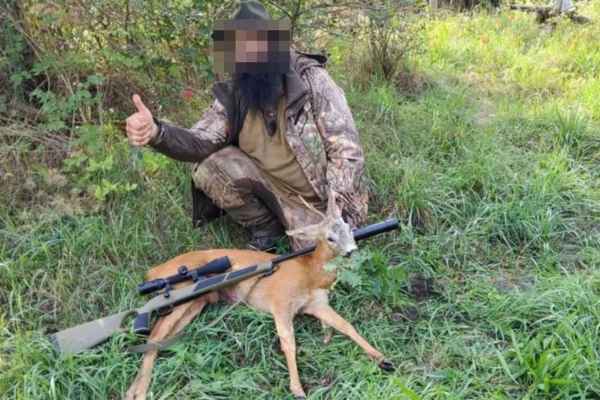
Is recreational hunting a disease? What studies show and what they do not
A handful of studies deal with aggression, empathy towards animals and violence. No diagnosis can be derived from them, but they do give psychology and medicine a task to take up.
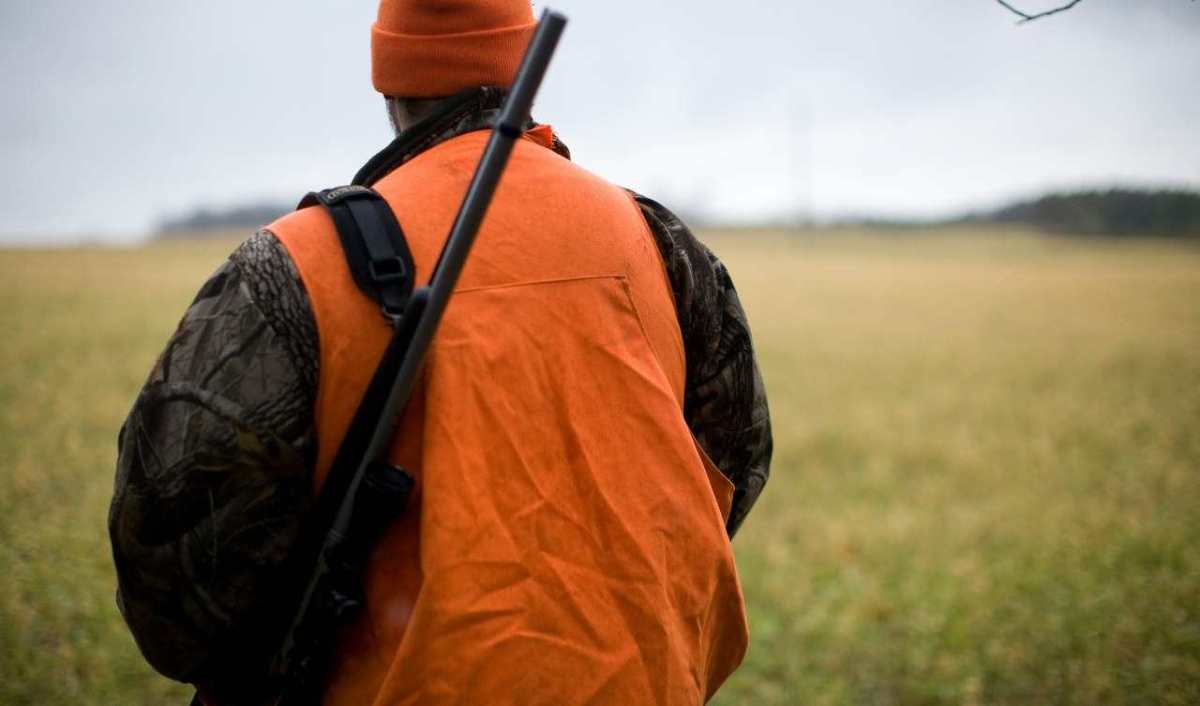
Illustrative image. Photo: Matthew Maaskant / Unsplash
The Hunt for Pleasure
The actor Sir Roger Moore said: “'Hunting for sport' is a disease, a perversion and a danger, and should be recognised as such.” The sentence appears in our collection of “Quotes on hunting”. Recreational hunters themselves talk of “hunting fever”, and the former president of the Grisons hunters' association, Tarzisius Caviezel, even wrote of a “disease” that nobody could cure him of. How much of this is rhetorical exaggeration, and how much can be substantiated? A walk through the studies and their limits.
What has been measured in recreational hunters
In the German-speaking world, there is the doctoral thesis “Psychologisch-soziologische Unterschiede zwischen Hobbyjägern und Nichtjägern” (Psychological and sociological differences between recreational hunters and non-hunters) by Ursula Grohs. She compared recreational hunters with a control group of non-hunters. According to our analysis in the study overview «Hunting Fact-Checked», the recreational hunters in this sample rated themselves as more aggressive and more often preferred resolving conflicts through dominance. No difference emerged in connection with nature. The work relies on self-reporting and has not appeared in any peer-reviewed journal. We are not aware of any replication.
Grohs also reports lower empathy scores towards non-human animals, more pronounced with longer hunting experience. This is a comparison between individuals at a single point in time. Whether recreational hunting desensitises, or whether people with less empathy for animals are more likely to take up hunting and to continue for longer, cannot be decided on this basis. The Italian psychotherapist Patrizia Mattioli interprets the finding as desensitisation, as we explain in the article “What drives people to recreational hunting” reported. Long-term studies that follow the same individuals over several years could help to distinguish selection effects from change effects. We are not aware of any such study.
For a 2002 study, the sociologist Clifton Flynn surveyed US students. Recreational hunters had been around twice as likely as non-hunters to have been violent towards non-human animals. The difference came down to one form of violence: killing wild or stray animals outside of hunting. Recreational hunters had also been more than twice as likely to have damaged or destroyed other people's property. Flynn found no higher rate of fights with other people, and he himself stresses that his results apply only to this sample.
Background: violence research without recreational hunters
All of the following studies examined other groups: combat sports spectators, fighters, prisoners, soldiers, slaughterhouse workers and mice. They say nothing about recreational hunters. They show which questions arise, not what the answers are. Further studies are summarised in our article “What international psychology studies say about recreational hunters”.
The appeal of violence
In 2013, the neuroscientists Eric Porges and Jean Decety had men watch combat sports videos for an fMRI study. They found correlations between the reported enjoyment of the violent scenes and the functional cooperation of certain brain regions with the nucleus accumbens, a core part of the reward system.
The University of Konstanz researches “appetitive aggression”, the appeal of violence itself. The neuropsychologist Thomas Elbert and his team report that child soldiers in Uganda described committing violence as fascinating and addictive. In a survey of 224 former fighters in eastern Congo, this appeal was stronger the more acts of violence a person had committed, and regularly committed violence appeared to intensify it. The researchers themselves draw the link to hunting: they explain the rewarding effect through humankind's evolutionary history as hunters. Elbert's foundational work from 2010 is titled “Fascination violence: on mind and brain of man hunters”. The survey shows correlations, not causes.
Sadism, psychopathy and the amygdala
In 2013, Kavanagh, Signal and Taylor surveyed people for the journal “Personality and Individual Differences” 227 people. Those with higher scores for narcissism, Machiavellianism and subclinical psychopathy, the so-called Dark Triad, held less positive attitudes towards non-human animals and more often reported having abused animals themselves. The psychologist Geoff Beattie uses this framework in his book «Trophy Hunting: A Psychological Perspective» to explain trophy hunting.
Personality research has extended the Dark Triad by a fourth trait: everyday sadism, the enjoyment of inflicting suffering on other living beings. Erin Buckels, Daniel Jones and Delroy Paulhus tested it in 2013 in a laboratory experiment for the journal «Psychological Science». 71 participants were allowed to choose between four unpleasant tasks. One of them consisted of crushing live woodlice in a modified coffee grinder. 26.8 per cent chose to do the killing, and another 26.8 per cent wanted to assist. People with high sadism scores volunteered for the killing more often than others. The machine had been rigged; no woodlouse was harmed.
Brain research on psychopathy leads to the amygdala, the almond-shaped structure that evaluates threats and is involved in compassion. In 2009, Yaling Yang, Adrian Raine and colleagues found in 27 people with psychopathy an amygdala that was 17 to 19 per cent smaller than in 32 comparison subjects. Dustin Pardini and colleagues followed men from their first year of school and examined 56 of them in a scanner at the age of 26: those with a smaller amygdala had been more aggressive since childhood and became violent more often in the three years that followed. In prison inmates with high psychopathy scores, Jean Decety and colleagues found altered neural responses in 2013 when they imagined the pain of others. When imagining their own pain, a different pattern emerged. The neuroscientist James Fallon described a strikingly low activity in the orbital cortex in brain scans of murderers; this region is involved in moral decisions and impulse control and puts a brake on the amygdala, as he explained to the US broadcaster NPR. What this research means for school visits by recreational hunters is addressed in our article «Recreational hunting on the mind».
That repeated fights can change the brain has been shown in animal experiments. In 2015, Dmitry Smagin and colleagues let male mice repeatedly win fights. This changed their aggressive behaviour and neuronal activity markers: In the basolateral amygdala, fewer cells carrying the marker c-Fos were found. After a fight-free period, this measured value returned to normal. What follows from this for the killing of wild animals by humans remains an open question.
Sadism and psychopathy are not distinct medical diagnoses. Psychopathy is assessed using checklists. The ICD-11 recognises sadism only as a sexual disorder, and a 'sadistic personality disorder' appeared in 1987 only in the appendix of the American diagnostic manual DSM-III-R and was dropped again in 1994. A smaller amygdala does not, in itself, prove a cause. We are not aware of any study that has measured sadism or psychopathy scores, or the amygdala, in recreational hunters.
Soldiers and the slaughterhouse: what killing does to those who kill
In 2010, Shira Maguen and colleagues analysed surveys of US soldiers after their deployment in Iraq: those who had killed showed more frequent symptoms of post-traumatic stress disorder, alcohol abuse and anger problems, even when the rest of their combat experience was factored out. Guido van Wingen and colleagues scanned Dutch soldiers before and after their deployment in Afghanistan and afterwards found a stronger amygdala response.
In 2015, Pascal Molenberghs and colleagues had test subjects shoot at enemy soldiers and at civilians in animated videos. When imagining killing civilians, a frontal brain region, the lateral orbitofrontal cortex, was more strongly active, and this was linked to the reported feelings of guilt. What was studied was an imagined act, not actual killing. Whether hunting justifications such as 'conservation management' or 'regulation' have a comparable effect was not investigated.
Jessica Slade and Emma Alleyne analysed 14 studies on slaughterhouse workers. These workers suffer more often from depression and anxiety disorders and more frequently hold attitudes that condone violence. They develop strategies for coping with the killing, both healthy and harmful ones. The review found no link to violent crime, but did find indications of more offences of other kinds.
Hunters' language: 'harvesting' instead of killing
In hunting jargon, wild animals are 'harvested' and populations 'skimmed off', blood becomes 'sweat' and a kill becomes 'removal'. The psychologist Albert Bandura counted euphemistic language among the mechanisms by which people detach their conscience from their own actions. We criticise this language because it pushes the act of killing into the background: anyone who 'harvests' a roe deer like an apple is no longer talking about killing. Whether and how such terms influence feelings of guilt or compassion among recreational hunters remains to be investigated.
Netherlands: a test and its limits
In 2019 the Netherlands introduced the 'E-Screener', a psychological computer test, into its firearms law, after a man with a firearms licence shot six people in 2011. According to the Dutch hunting association, around 20 per cent of recreational hunters failed the test. In July 2022 the Ministry of Justice suspended the E-Screener. Courts and expert assessors had criticised technical problems and an opaque evaluation, and had pointed out that such a far-reaching psychological assessment cannot be fully automated. Since then, the ministry has been working on a procedure that combines questionnaires, reporting systems and assessment by specialists. The details can be found in our article on the E-Screener.
The experience with the Dutch E-Screener underlines how important a robust procedure and expert support are.
Hunting rifles and lethal violence: two separate findings
Two figures are available from France, and they measure different things. The first concerns the weapon used: the forensic pathologist Alexia Delbreil and the criminologist Jean-Louis Senon analysed 42 intimate partner murders from the judicial district of Poitiers. Of the offences committed with firearms, around 71 per cent were carried out with hunting rifles. The second concerns the perpetrators: an investigation for the Amnesty magazine 'La Chronique' counted 168 femicides involving firearms between 2018 and 2022. In 104 cases the perpetrator's profile could be established, and 35 per cent of those perpetrators were recreational hunters.
Both figures come from limited case series and do not yield a risk ratio for recreational hunters as a whole. In Switzerland, no authority records how many perpetrators of firearm homicides hold a hunting licence, as our article «Hunting weapons and violence: what the Swiss data show» notes.
What the studies cannot do
None of this amounts to a diagnosis. The World Health Organization's ICD-11 classification explicitly names gambling disorder and gaming disorder as disorders due to addictive behaviours. There are also residual diagnostic categories. A separate diagnosis for recreational hunting is not listed there. The studies cited come from different groups and do not produce a uniform personality profile of recreational hunters. Moreover, an individual diagnosis cannot be derived from a group finding.
What remains is a gap. In Switzerland, around 30,000 private individuals legally hold hunting weapons. We are not aware of any independent study of their personality profiles, motives and risks. The psychological background is examined in the dossier The psychology of hunting.
Commentary: This Is Not Normal
If a child repeatedly tortures animals, child and adolescent psychiatry regards it as a warning sign. Cruelty to animals is among the possible features of a conduct disorder, and parents, schools and professionals would take notice. When an adult kills wild animals for pleasure and pays to do so, it is called a hobby, and nobody asks questions. The comparison does not yield a diagnosis for adults who hunt. But it shows where the question belongs: how pleasure in killing non-human animals arises and how it relates to other behaviour is not sufficiently clarified by the studies presented here. Legal permission for recreational hunting does not answer this question. In our conviction, killing for pleasure is not normal.
Roger Moore claimed more medically than can be substantiated. His demand nevertheless remains right if read as a mandate: psychology and medicine should examine recreational hunters more closely, including for sadistic and psychopathic traits. The IG Wild beim Wild therefore calls for independent, publicly funded research into the psychology of recreational hunting and a mandatory psychological aptitude test for firearm ownership. Such a procedure must be scientifically validated and professionally supervised, and its error rates must be reviewed.
The petition “No firearm without a psychological aptitude test” can now be signed, as can the petition “Blood alcohol limit for recreational hunters”. We examine the language and rituals of the hunting scene separately in the article «Cult: The Recreational Hunters».
More on the subject of recreational hunting: In the dossier Psychology of recreational hunting we put research, motives and social consequences into perspective. The scientific evidence is presented in the overview Studies on the Effects of Recreational Hunting.
The position of IG Wild beim Wild: IG Wild beim Wild rejects recreational hunting. Our model is the canton of Geneva, which has managed without recreational hunting since 1974: without hunting seasons, without hunting dogs, without driven hunts, without high seats, without the animal cruelty and crime that go hand in hand with hunting season elsewhere. What has worked there for over fifty years disproves every position paper by JagdSchweiz. An association that bases its policy on claims it refutes in its own documents is not a professional organisation, but a factory for misinformation.
Wild animals need a voice
Once a week: research, petitions and background information on recreational hunting. Free of charge and can be unsubscribed from at any time.

All articles are written by IG Wild beim Wild as well as by external co-authors. Research, structuring and editorial processes may be supported by AI-assisted tools.
Support our work
With your donation you help protect animals and give their voice a hearing.
Donate now →