Recreational Hunting on the Mind: Violence, the Brain and Children
When a school class is sent into the forest with a recreational hunter today, it is readily sold as nature education. Children are allowed to handle a rifle, count cartridges, perhaps discuss «wildlife management» and «nature conservation». What hardly anyone addresses: here, minors are being exposed to organised violence. Because hunting is nothing other than the systematic killing of animals — and violence never affects only the victim, but always also the perpetrator and all those who are made to watch.

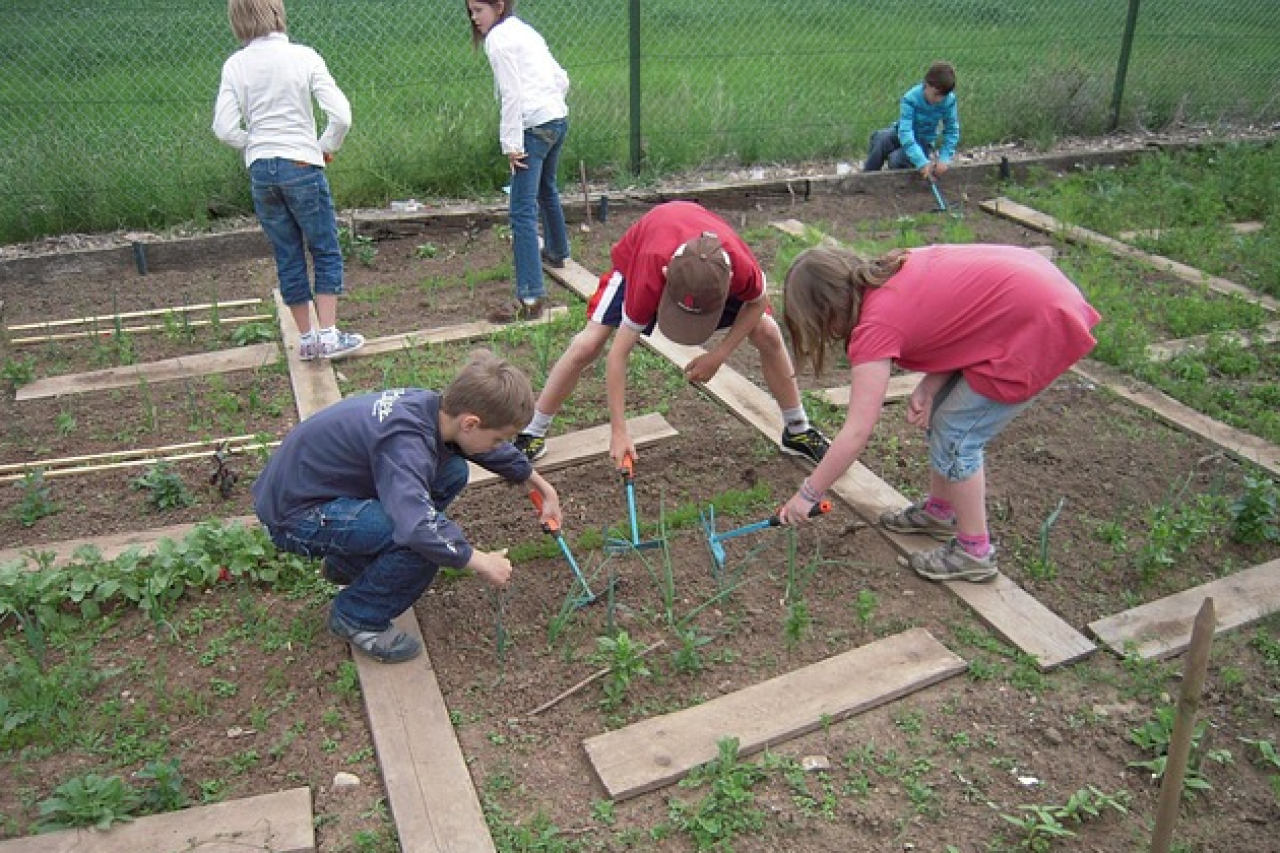
When a school class is sent into the forest with a recreational hunter today, it is readily sold as nature education.
Children are allowed to handle a rifle, count cartridges, perhaps discuss «wildlife management» and «nature conservation». What hardly anyone addresses: here, minors are being exposed to organised violence. Because hunting is nothing other than the systematic killing of animals — and violence never affects only the victim, but always also the perpetrator and all those who are made to watch.
IG Wild beim Wild has been documenting for years how recreational hunting burdens wildlife, landscapes and the social climate. By now, sufficient material from brain research is also available to raise an uncomfortable question: what does this violence do to the minds of those who practise it — and to the minds of the children who are taken along?
What Brain Research Reveals About Violence
At the centre lies an almond-sized region deep within the brain: the amygdala. It evaluates threats, sorts emotions and plays a decisive role in whether we respond to suffering with empathy, revulsion or indifference.
Neuropsychological studies on violent offenders and individuals with pronounced psychopathic personality traits show: their amygdala is frequently reduced in size or functionally impaired. This is associated with increased aggression, reduced fear of consequences, and a diminished emotional response to suffering.
In articles such as «The Brain» and «Recreational Hunters and Their Pattern in the Brain», IG Wild beim Wild addressed these findings years ago: they describe how, at the point where violence is discharged, damage also occurs in the perpetrator's brain that can suppress empathy and disgust.
Importantly, the research primarily examines convicted violent criminals. No serious voice claims that every recreational hunter is automatically a serial killer. However, the mechanisms of emotional desensitisation found in serious violent offenders are the same brain systems that may also be affected by repeated 'legal' violence.
Hunting Fever: A State of Intoxication Rather Than a Nature Idyll
Hunting associations like to speak of 'passion' and 'hunting fever'. Neuroscientifically, this fever can be described as a mixture of tension, adrenaline, dopamine rush and emotional release at the moment of the shot. The reward system activates when the shot lands, the animal collapses and the hunting party offers its congratulations.
It is precisely this combination that is problematic: violence becomes linked with positive emotions. If this pattern is repeated over years, the brain learns that killing is a means of relieving tension and gaining recognition. In their own texts, IG Wild beim Wild demonstrates how closely the self-images of serial killers and recreational hunters sometimes converge: both perceive themselves as part of an ostensibly higher mission, both must morally justify their actions in order to suppress awareness of the suffering caused.
Brain research provides the background context: repeated acts of violence can blunt the emotional response to suffering and erode compassion. Violence therefore changes not only the deer or the fox it strikes, but also the person at the trigger.
When Children Watch: Violence in Schools and Children's Rights
The situation becomes particularly explosive when this violence is brought into schools and kindergartens in the name of 'nature education'. In «Violence in Schools and Recreational Hunters?» and in the campaign «No to lessons by recreational hunters in schools», IG Wild beim Wild warns precisely of this: minors are confronted with weapons, acts of killing, and hunting ideology long before they can grasp the full implications.
The UN Convention on the Rights of the Child guarantees all minors the right to physical and psychological integrity and obliges states to protect them from harmful violence. That this includes witnessing organised animal killings is barely disputable from a child psychology perspective.
When children learn that killing is a normal part of leisure and "nature experience", their inner moral compass shifts:
- Animal suffering appears as a legitimate means of entertainment or as an arena in which adults demonstrate their power.
- Empathy with wildlife is suppressed in favour of hunting romanticism and trophy aesthetics.
- Weapons are presented not as a last resort in self-defence, but as toys and status symbols.
This contradicts every concept of a non-violent upbringing.
Animal cruelty as a risk marker for later violence
Criminological and psychological studies have been warning for years: repeated violence against animals is a serious risk marker for later violence against humans.
A review study from 2022 describes animal abuse as a risk factor and possible consequence of interpersonal violence. Dysfunctional families, personal experiences of abuse, and exposure to animal suffering play a particularly important role in the case of children.
Further studies on childhood behavioural patterns such as animal cruelty, fire-setting, and other behavioural abnormalities show that this combination correlates with later aggression, brutal criminal offences, and even homicide.
This does not mean that every child who once thoughtlessly harms an animal will become a violent offender. But a culture in which violence against animals is systematically legitimised, ritualised, and rewarded with positive emotions works against all those who daily attempt, in schools, families, and counselling centres, to break cycles of violence.
When recreational hunters accustom children to the dismembering of animals, to blood and trophies, this is not simply a «different opinion». It is a direct attack on a pedagogy built on empathy, non-violence, and respect for fellow creatures.
Wildlife under permanent stress: a landscape of fear instead of natural balance
The violence of recreational hunting extends far beyond the individual shot. It permeates the entire landscape. In 'Recreational hunters create a landscape of fear for wildlife' and the research overview 'Studies on the impact of hunting on wildlife and hunters', IG Wild beim Wild compiles research findings that paint a clear picture:
- Under hunting pressure, wildlife alter their activity patterns, become extremely shy and shift their lives into the night.
- They avoid more open, food-rich areas and retreat into dense undergrowth, where it may be safer from bullets but where food is scarcer.
- Heavily hunted populations respond with compensatory reproduction. Wild boar, deer and roe deer breed earlier and more prolifically the more they are shot at. Recreational hunting thus generates the very problem it purports to solve.
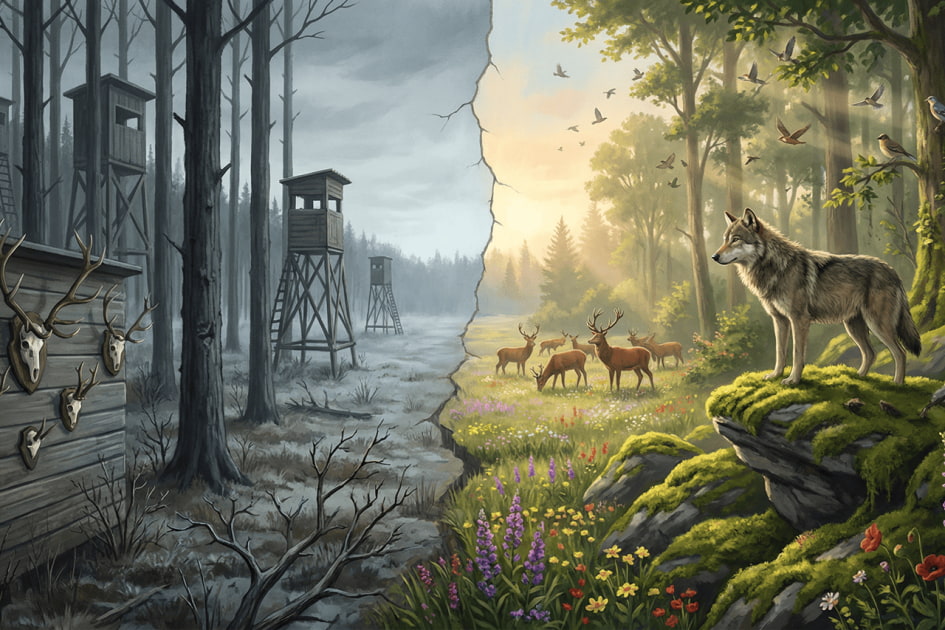
The result is a permanent 'landscape of fear'. Animals do not live in a natural equilibrium, but in a state of exception shaped by gunshots and driven hunts.
From an ethical perspective, the picture is compounded: humans become accustomed to violence and weapons, while animals are subjected to chronic stress and suffering. Recreational hunting thus constitutes a regime of violence that harms both sides.
Why hunting has no place in schools
Against this backdrop, the role of recreational hunters as nature educators becomes clearly questionable. They are not neutral experts, but active participants in a practice of violence that can have neurologically as well as psychologically problematic effects.
Anyone who takes children seriously must therefore state:
- No rifles in the classroom.
- No hunting marketing under the guise of nature education.
- No school projects in which minors are introduced to the killing of animals.
Nature education is important. But it requires living animals, ecological contexts and knowledge of species — not blood, ammunition and trophies. It fosters empathy rather than eroding it.
Violence does not belong in the nursery — nor in the forest as a hobby
Recreational hunting is more than a controversial leisure pursuit. It is organised violence with measurable consequences:
- in the brains of those who kill repeatedly,
- in the experience of children who are conditioned to accept it,
- and in the lives of wildlife forced to exist in a landscape of fear.
Anyone who wants to reduce violence in schools, families, and society must also question hunting culture. The state monopoly on violence requires professional, more transparently supervised wildlife wardens — not private shooting clubs in camouflage.
IG Wild beim Wild therefore demands:
- An end to hunting propaganda in schools.
- Consistent implementation of children's rights in the context of hunting as well.
- A departure from recreational hunting in favour of modern, non-lethal forms of wildlife management.
Because violence does not begin only when one person shoots another. It begins where we declare the suffering of the vulnerable to be normal and raise the next generation no longer to see it.
More on the subject of recreational hunting: In the dossier Psychology of recreational hunting we put research, motives and social consequences into perspective. The scientific evidence is presented in the overview Studies on the Effects of Recreational Hunting.
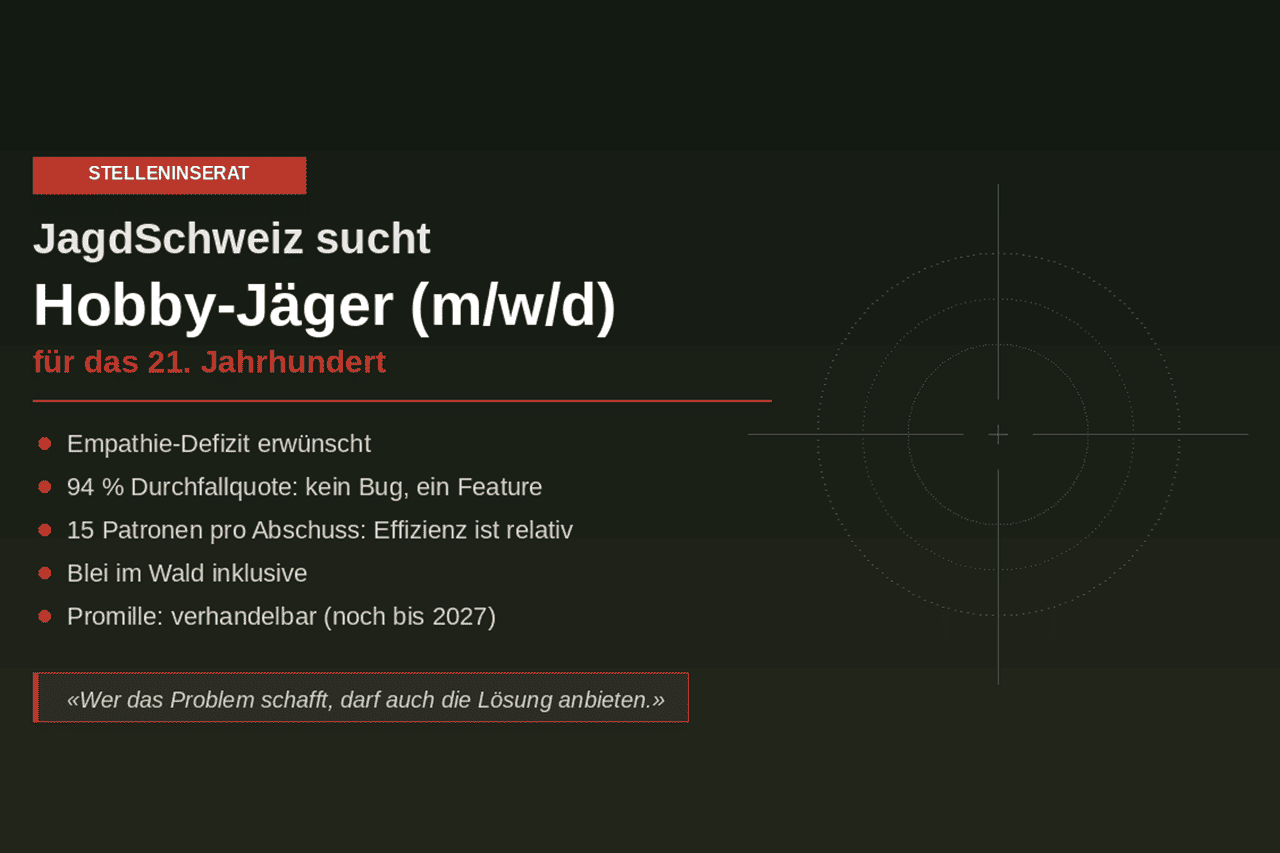
The position of IG Wild beim Wild: IG Wild beim Wild rejects recreational hunting. Our model is the canton of Geneva, which has managed without recreational hunting since 1974: without hunting seasons, without hunting dogs, without driven hunts, without high seats, without the animal cruelty and crime that go hand in hand with hunting season elsewhere. What has worked there for over fifty years disproves every position paper by JagdSchweiz. An association that bases its policy on claims it refutes in its own documents is not a professional organisation, but a factory for misinformation.