
Petition: No firearm without a psychological suitability assessment
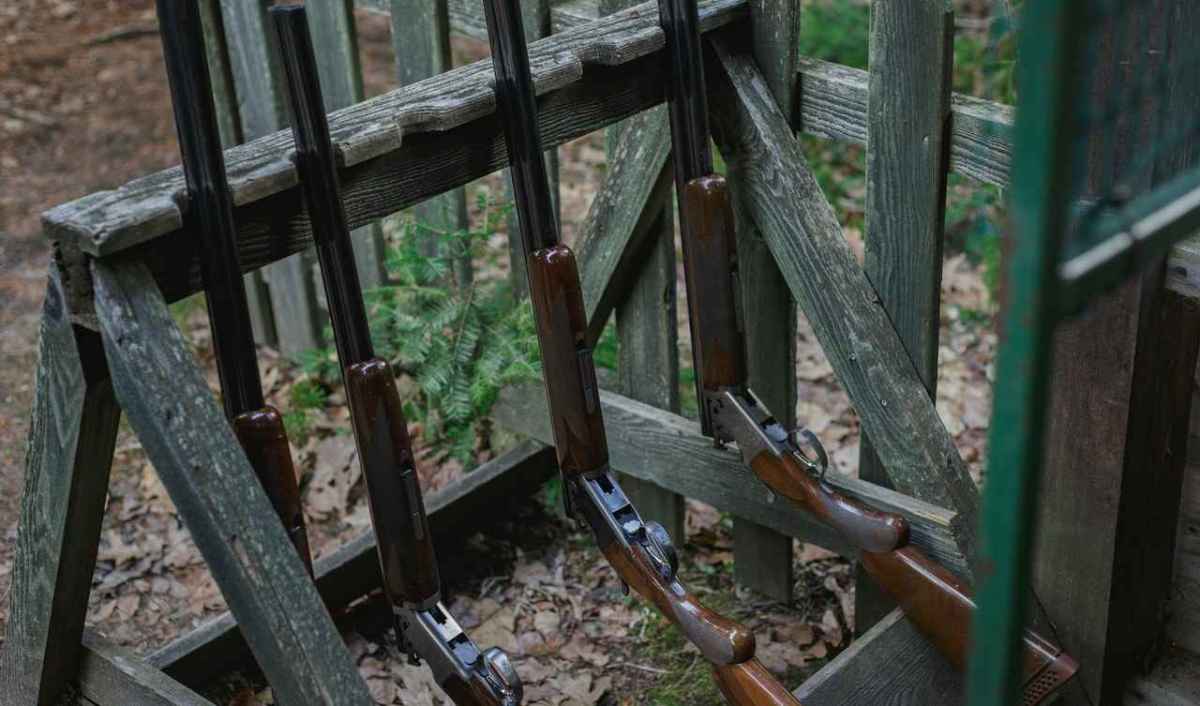
On 9 July 2026, a 56-year-old woman was shot dead on the grounds of a rehabilitation clinic in Faido. The authorities identified the perpetrator as her 59-year-old ex-husband from Leontica, a recreational hunter who legally owned several weapons. In Switzerland, nobody has to prove, either before acquiring a weapon or regularly afterwards, that they are mentally fit to own a lethal weapon. This petition aims to change that.
👉 Even more effective than a signature: Write personally to the members of the Committee for Legal Affairs of the National Council. It can now draw up the bill on the confiscation of weapons in cases of domestic violence.
Our demands
The signatories call on the Federal Assembly to amend the Weapons Act (WG) and the Hunting Act (JSG) so that:
- Suitability is tested before the first shot. Anyone who acquires a firearm or is granted a hunting authorisation for the first time must demonstrate their personal suitability: through a procedure scientifically validated for weapon-related suitability and a personal interview with a qualified, independent professional. This expressly also applies to hunting weapons, which can currently be acquired without a weapon acquisition permit.
- Suitability also applies to existing weapon ownership and is renewed regularly. The obligation to provide proof also applies to people who already own firearms; a statutory transition period will be set for them. After that, the assessment is repeated at least every five years, and at least every two years from the age of 60, supplemented by a medical assessment. Without valid proof, firearms may neither be acquired nor continue to be owned or used, and a hunting authorisation is neither granted nor extended.
- Action is taken immediately when warning signs appear. In the event of a complaint or criminal complaint for domestic violence, in cases of threats, and in conflict-ridden separations, all firearms together with ammunition and silencers are seized as a precaution, the hunting authorisation is suspended and access to borrowed weapons is prevented.
- Seized weapons are returned only after a fresh assessment. Seized weapons may be returned only after a new positive suitability assessment and only if there are no other legal obstacles. The same applies to the reinstatement of a suspended hunting authorisation. The conclusion of criminal proceedings alone is not sufficient.
- Authorities need to know about one another. The police, public prosecutor, cantonal weapons office and hunting authority exchange information on weapons ownership and hunting authorisations in a regulated manner. Crime statistics will in future report hunting weapons separately.
Faido and Leontica: What happened in Ticino
On 9 July 2026, a 56-year-old woman was found with a head gunshot wound on the grounds of a rehabilitation clinic in Faido. She died shortly afterwards. The authorities identified her 59-year-old ex-husband from Leontica as the perpetrator. The following day he blew up a building there, injured several police officers and was himself killed.
According to RSI, citing the Ticino criminal police, the man was a recreational hunter and legally owned several weapons. Because no one outside the clinic heard a bang, the police assumed the weapon used was fitted with a silencer. Whether the weapon used was among his registered weapons and whether he had a special permit for a silencer remained unclear based on the state of the investigation as we have documented it (Femicide in Faido, explosion in Leontica).
The fact that the perpetrator was a recreational hunter was researched by IG Wild beim Wild and published on 14 July 2026. RSI confirmed the information on request as an established fact, based on the press conference of the Ticino criminal police. The research by IG Wild beim Wild thus brought the perpetrator's hunting status and his legal ownership of weapons into the focus of public debate.
The case raises a fundamental question: how is the personal suitability of people who have legal access to lethal weapons assessed?
Not an isolated case
Faido is not an isolated case. In October 2019, a 47-year-old recreational hunter and his wife were found dead in their home in Courfaivre in the canton of Jura. The man had held a hunting licence since 2007 and is said to have killed his wife first and then himself (Recreational hunter tragedy in the canton of Jura). We continue to document further cases in the section Crime & hunting.
The Pedrinate case shows a different kind of risk. In September 2019, a 51-year-old recreational hunter, a border guard by profession, shot dead a 50-year-old hunting companion near Chiasso during a wild boar hunt because he mistook him for a wild boar. In October 2021 he was convicted of negligent homicide and sentenced to two years and ten months, six months of it unsuspended. According to RSI, it was not his first hunting accident (Ticino: border guard shoots chimney sweep, RSI). After the earlier accident, he carried on hunting with a weapon. A regular fitness assessment addresses precisely this problem.
People who are simply spending time in the forest are also at risk. One affected person describes how, in October 2008, he was out with his dog near Tersnaus in the canton of Grisons. When he photographed two recreational hunters, one of them went for him with his rifle, pointed it at him and swung the butt as if to strike. As he fled, he heard a shot. According to his account, the police in Ilanz advised him against filing a complaint, because the recreational hunters would otherwise file a counter-complaint over the photographs (How does one become an opponent of hunting?). Without a complaint, such cases appear in no statistics.
In September 2025, a recreational hunter near Göschenen allegedly aimed his rifle at a hunting warden for several seconds. In October 2026, the Uri district court found him guilty of violence and threats against authorities and officials; the ruling is not yet legally binding (Göschenen: recreational hunter allegedly threatened game warden). In December 2025, near Füllinsdorf, a Hunt Watch activist who was documenting a driven hunt from a public forest path was allegedly threatened by a beater and thrown to the ground. She filed a criminal complaint (Violent assault on activist during driven hunt). Anyone who walks, cycles or picks mushrooms in the forest shares the space with armed people whose suitability nobody checks on a regular basis.
Nobody in Switzerland knows how many such offences are committed by people holding a hunting licence. Neither the police crime statistics nor the cantonal hunting authorities record this connection systematically (Hunting Weapons and Violence: What the Swiss Data Show). The federal study, too, does not know the origin of the weapon used in about half of the cases. The number of unreported cases therefore cannot be quantified.
Even outside acts of violence, recreational hunting is dangerous. Since 2000, more than 75 people in Switzerland have died in connection with recreational hunting, according to the Swiss Council for Accident Prevention (BFU). Statistically, a hunting accident occurs every 29 hours. Accident insurers recognise around 300 hunting accidents every year, and that only among employed persons with compulsory insurance (How many hunting accidents happen in Switzerland?).
The gap in the law
Current firearms law provides for acquisition barriers, in particular where there are indications of a risk of harm to oneself or others. However, the current procedure does not provide for a general requirement to pass a psychological fitness assessment before acquiring a firearm and at regular intervals thereafter. In-depth checks generally begin only once there are already warning signs.
Certain hunting rifles can also be acquired without a weapons acquisition permit. A written contract and a notification to the cantonal weapons office are required, but a psychological fitness assessment is not part of the process (fedpol). Nor does a passed hunting examination replace a psychological fitness assessment.
At the same time, 29,328 people in Switzerland practise recreational hunting (Swiss Hunting Statistics 2025). Their weapons are kept in private households, often for decades and into old age.
What the federal study shows
A study by the University of St. Gallen commissioned by the Federal Office for Gender Equality counted 41 completed homicides with firearms in the domestic sphere between 2015 and 2022, with 50 victims. The perpetrators were almost exclusively men, mostly Swiss nationals over 60. In 61 per cent of cases, the perpetrator subsequently took his own life (FOGE study).
The study also shows the limits of the data: information on the origin and legality of the weapons is missing in around half of the cases. In many files no classic warning signs were found, which does not mean there were none. Interventions triggered by specific incidents alone do not reliably capture cases without recognisable or reported warning signs. IG Wild beim Wild therefore calls for them to be supplemented by regular fitness assessments (Analysis: confiscation of weapons in cases of domestic violence).
What data from France show
What Swiss statistics do not record is shown by research in France. The forensic pathologist Alexia Delbreil and the criminologist Jean-Louis Senon analysed 42 cases of partner homicide heard by the Cour d’Appel de Poitiers. Around 71 per cent of the firearms used were hunting rifles. The researchers describe them as opportunistic weapons that are available in the household. As early as 2003, the psychiatrist Jean-Louis Terra pointed to research findings showing that a woman's risk of being killed is five times higher in a household with a firearm. In 2021 he described the finding as still valid (Studies on the Effects of Recreational Hunting).
Who the perpetrators are is shown by an investigation by the journalists Laurène Daycard and Fanny Marlier for the Amnesty magazine «La Chronique». They counted 168 femicides involving firearms in France between 2018 and 2022 and established the perpetrator's profile in 104 cases: 35 per cent were recreational hunters, 8 per cent of them former hunters (Perpetrator monitoring without a weapons check, Amnesty). In Switzerland, this question is not even asked.
Now is the right time
On 20 October 2026, the Legal Affairs Committee of the Council of States approved the parliamentary initiative by National Councillor Jessica Jaccoud: firearms are to be temporarily confiscated in cases of domestic violence and conflict-ridden separations. This clears the way for the Legal Affairs Committee of the National Council to draft a bill. This petition calls for these case-specific protective measures to be supplemented by a general obligation to undergo a suitability assessment.
As early as 23 September 2026, IG Wild beim Wild asked Councillor of States Marianne Maret and Councillor of States Andrea Gmür-Schönenberger to take access to weapons and hunting weapons into account in the planned framework act against domestic violence. Our research shows what the data gap looks like today: “Perpetrator monitoring without a weapons check”.
Not blanket suspicion, but a minimum standard
Anyone who drives a car from the age of 75 must have their fitness to drive confirmed by a doctor every two years. Anyone who owns a lethal weapon today only has to prove their suitability if concrete indications of danger already exist. This petition is not aimed at individuals, but at a regulatory gap that can cost lives.
Read more: Hunting and weapons dossier · Crime & Hunting section · Template text: Protection from domestic gun violence · Template text for cantonal parliaments: fitness checks for hunting licences · Orange boxes: help in Ticino following Faido and Leontica
Help: Victim support throughout Switzerland, free of charge and available around the clock on 142. In acute danger: police emergency number 117.
Dear Members of the Federal Assembly
Dear Members of the Legal Affairs Committee of the National Council
On 9 July 2026, a 56-year-old woman was shot dead in Faido. The authorities identified the perpetrator as her ex-husband from Leontica, a recreational hunter who legally owned several weapons. The case reveals a gap: weapons law recognises grounds for refusing a permit, but no general obligation to demonstrate psychological fitness before acquiring a weapon and regularly thereafter. Certain hunting rifles can even be acquired without a weapons acquisition permit.
Faido is not an isolated case. In Pedrinate in 2019, a recreational hunter shot a fellow hunter he mistook for a wild boar. He was convicted of negligent homicide in 2021, and it was not his first hunting accident. According to the BFU (Swiss Council for Accident Prevention), more than 75 people have died in Switzerland in connection with recreational hunting since 2000.
A study by the University of St. Gallen, commissioned by the Federal Office for Gender Equality, counted 41 completed homicides involving firearms in a domestic context between 2015 and 2022, with 50 victims. In many case files, no classic warning signs were found. Confiscating weapons only after a complaint has been filed does not reliably catch cases without visible or reported warning signs.
I call on you to use the bill arising from the Jaccoud parliamentary initiative to amend the Weapons Act and the Hunting Act so that:
Anyone who acquires a firearm or obtains a hunting authorisation for the first time must demonstrate their fitness through a scientifically validated procedure and an interview with an independent specialist, including for hunting weapons that do not require a weapons acquisition permit.
The obligation to provide proof also applies to existing weapon owners after a transitional period and is repeated at least every five years, and every two years from the age of 60.
In cases of domestic violence, threats and conflict-ridden separations, all firearms together with ammunition and silencers are to be secured as a precaution, hunting authorisation suspended and access to borrowed weapons prevented.
Confiscated weapons are to be returned only after a renewed, positive suitability assessment.
Police, weapons office and hunting authority exchange information in a regulated manner, and crime statistics report hunting weapons separately.
Yours sincerely
Add your voice now
Your signature counts.