Perpetrator monitoring without a weapons check: the blind spot in the fight against femicides
France has been documenting for years how often hunting rifles are involved in femicides. Switzerland is building a perpetrator monitoring system that fails to capture these very weapons.
On 22 September 2026, the National Council passed several motions against domestic violence at once.
At the heart of the debate was a national perpetrator monitoring system, a mechanism designed to register dangerous violent offenders and keep them under continuous surveillance. The approach is sound. It has just one blind spot, and this blind spot happens to be the deadliest means of all.
A monitoring system is only as sharp as its registers
Perpetrator monitoring lives on data matching. It flags a person as a high-risk offender and links this flag to no-contact orders, reporting obligations and, in serious cases, detention. But what good is the strictest surveillance if nobody checks whether that same person holds a hunting licence and keeps a cabinet full of rifles at home? Whoever monitors perpetrators but ignores their weapons is watching the danger unfold while leaving the tool lying right there.
What France has long documented
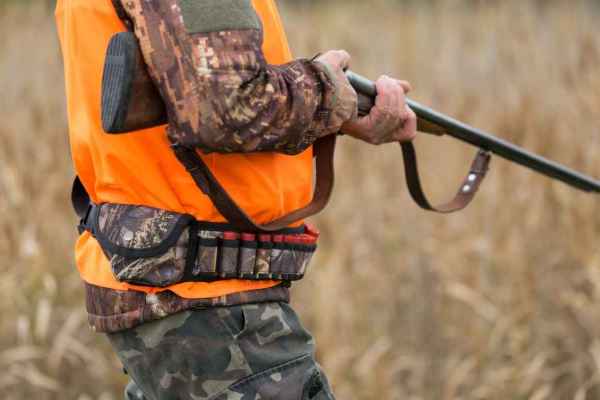
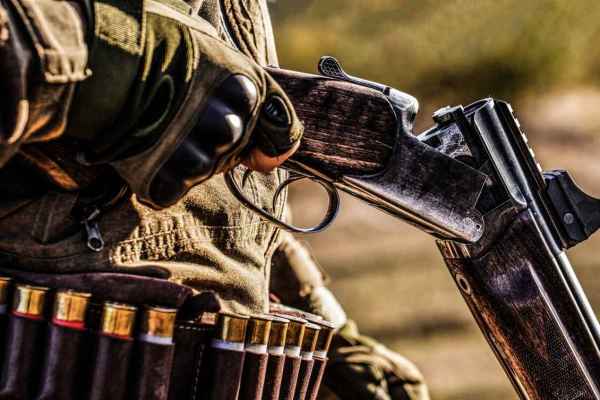
In France, the data situation is clearer than here. Around a third of all femicides there are committed with firearms. And among these firearms, one category dominates: the hunting rifle. Forensic pathologist Alexia Delbreil showed in her dissertation on intimate partner killings (University of Poitiers, 2011) that hunting rifles account for around 71 percent of the firearms used, because they are kept within easy reach at home as "opportunity weapons". The collective "Féminicides par conjoint ou ex-conjoint" counted hunting weapons in roughly one in four femicides overall for 2020 and 2021. Research by journalists Laurène Daycard and Fanny Marlier in the Amnesty magazine "La Chronique" also established the perpetrator profile in 104 of 168 firearm femicides: 35 percent were recreational hunters, 8 percent of whom were former recreational hunters.
Switzerland doesn't even collect the figures
This is where the real problem begins. Switzerland is among the countries with the highest density of private firearms in Europe. Yet to this day, crime statistics do not indicate what role hunting weapons play in domestic homicides. Where France counts, Switzerland looks away. And where no figures are collected, it is easy to claim there is no problem. On top of this, the confiscation of weapons following a report of domestic violence is not carried out systematically, but on a case-by-case basis. Just how thin the Swiss data basis really is, we have shown in «Hunting weapons and violence: what the Swiss data show».
Why it is precisely the recreational hunting lobby that fears the comparison
An automatic cross-check between offender monitoring, the weapons register and hunting licences would be technically simple and politically overdue. The fact that it hasn't happened has a reason: no other group of private weapon owners has such an interest in keeping hunting weapons invisible in the statistics and taboo in the debate. Because as soon as proper counting were to take place, the self-image of recreational hunting as a harmless craft rooted in nature would begin to crumble. This is not about casting general suspicion on all recreational hunters. It is about the plain refusal to even measure a known risk. And in case of doubt, this refusal costs human lives.
What needs to be demanded now
A perpetrator monitoring system worthy of the name must bring together three registers: the list of high-risk offenders, the weapons register and the hunting licence. If a person is recorded as a threat, weapons and hunting authorisation must automatically come under review — and be withdrawn immediately in serious cases. This requires crime statistics that finally list hunting weapons separately.
We have already spelled out precisely these demands in the template text «Protection against domestic firearm violence: hunting weapons, recreational hunters and femicides», which connects directly to the federal debate now under way. The National Council wanted perpetrator monitoring. Now it must actually put it into effect. A monitoring system that blanks out the hunting weapon remains a paper tiger with a telescopic sight. For violence from the high seat rarely stays where it is practised. It travels home too.
More on the subject of recreational hunting: In the dossier Poaching and hunting crime in Switzerland we document cases, legal questions and recurring patterns. What the research says about this is shown by Hunting fact-checked: the state of research.
The position of IG Wild beim Wild: IG Wild beim Wild rejects recreational hunting. Our model is the canton of Geneva, which has managed without recreational hunting since 1974: without hunting seasons, without hunting dogs, without driven hunts, without high seats, without the animal cruelty and crime that go hand in hand with hunting season elsewhere. What has worked there for over fifty years disproves every position paper by JagdSchweiz. An association that bases its policy on claims it refutes in its own documents is not a professional organisation, but a factory for misinformation.

All articles are written by IG Wild beim Wild as well as by external co-authors. Research, structuring and editorial processes may be supported by AI-assisted tools.
Support our work
With your donation you help protect animals and give their voice a hearing.
Donate now →