300 Francs for a Female Wolf: How Swiss Justice Trivialises Poaching
Norway sends ten wolf poachers to prison, France demands over 30,000 euros for a lynx that was beaten to death. In Valais, a shot female wolf costs 300 francs, and the hunting licence remains.
«What Valais Shot»
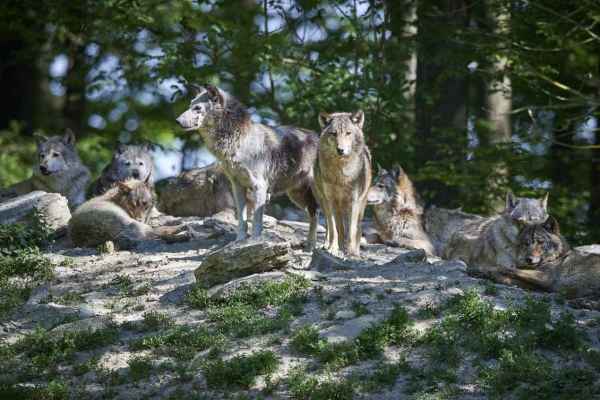
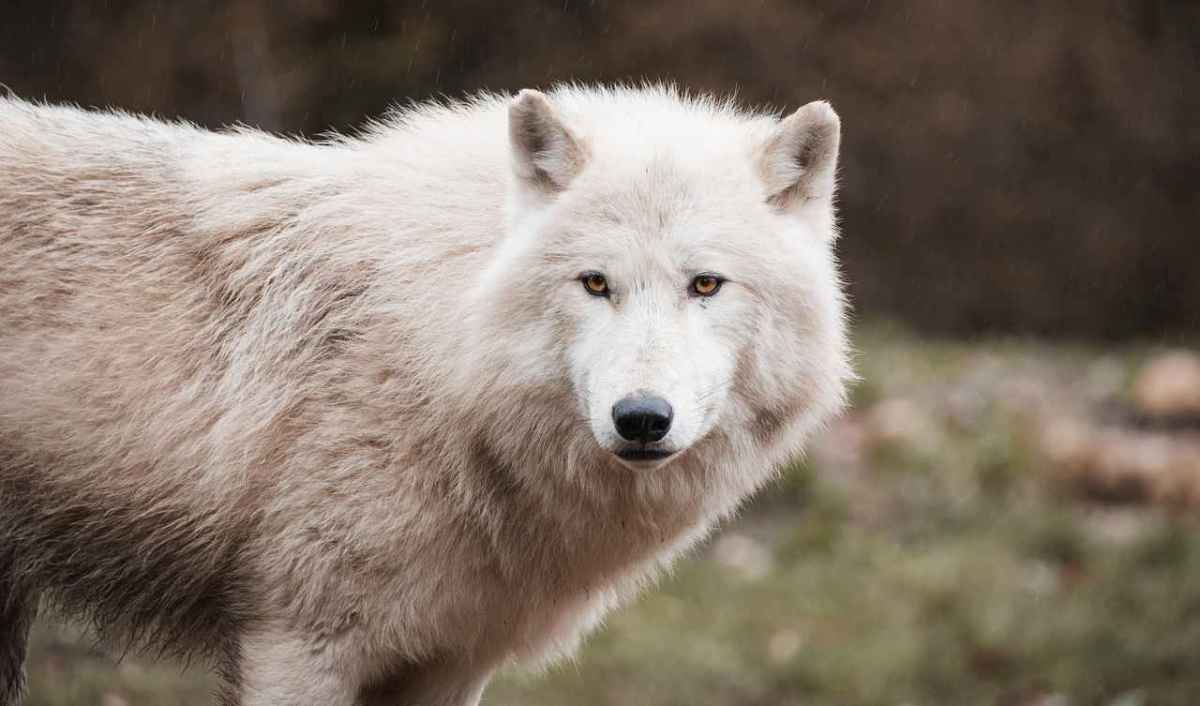
In Herbriggen in the Mattertal valley, a recreational hunter shot a female wolf.
He claims to have mistaken her for a fox. According to the «Walliser Bote», the Upper Valais public prosecutor fined him 300 francs. For comparison: in the same canton, a discarded cigarette butt now costs 80 francs. In the eyes of the Valais judiciary, a strictly protected female wolf is thus worth barely four cigarette butts.
What a Predator Costs Elsewhere
On 10 September 2026, the Norwegian district court Romerike og Glåmdal convicted ten men from Eidskog who had poached a pair of wolves in January 2025. All ten must go to prison, unconditionally. The two shooters received 18 and 17 months respectively as well as a lifelong hunting ban, seven others received six to ten months and a five-year hunting ban. Even the man who had merely transported wildlife cameras must serve 90 days in custody. Three were additionally convicted for attempting to kill a lynx. The lynx survived, yet punishment was imposed nonetheless. The basis is the offence of serious environmental crime, punishable by up to six years in prison. The special authority Økokrim had monitored telephones and confiscated over a hundred weapons; the trial lasted 25 days. The verdict is not yet legally binding.
In France, the court in Strasbourg sentenced a 62-year-old woman, who had beaten a young lynx to death in Alsace, to three months' suspended imprisonment and over 30,000 euros in compensation to animal welfare organisations. She too claimed a case of mistaken identity, saying she had taken the lynx for a cat. The court believed her only to a limited extent. We covered the case in «Lynx beaten to death in Alsace: France punishes harshly, Switzerland stays almost silent» documented. In Austria, a recreational hunter paid a fine of over 11,000 euros for illegally killing a lynx, plus more than 12,000 euros in damages.
And in Switzerland? 300 francs.
The pattern behind the pittance
Herbriggen is no one-off slip, but the norm.
In Poschiavo, a recreational hunter shot a wolf on the first day of the high hunt in 2025. The summary penalty order of June 2026 imposed a fine and compensation for the value of the animal. The amount of the fine remained secret, and he kept his hunting licence. In the Surselva, a game warden shot three lynxes in a single night, claiming he had mistaken them for wolves. The sanction: a fine in the four-figure range, the amount of which the public prosecutor will not disclose. In Goms, a Valais recreational hunter shot a female wolf during a nocturnal wait hunt for foxes in January 2024. The explanation at the time was that he had mistaken it for a fox — word for word the same explanation given in Herbriggen. In the Gruyère district, a female lynx was found in 2025 with gunshot wounds; the perpetrator has still not been identified to this day.
Of the 13 wolves that, according to KORA and Gruppe Wolf Schweiz, have demonstrably been poached since 1999, seven occurred in Valais. In 2020, researchers at the University of Bern spoke of a "systemic problem" and a "culture of silence" in connection with lynx poaching in Valais. In the case of Staldenried, the federal government had to take the canton of Valais to court just to have a disputed wolf kill reviewed at all.
How the discount works
The federal hunting act threatens a maximum of one year's imprisonment for the intentional killing of protected species. That is one-sixth of the Norwegian sentencing range. Anyone who acts negligently receives only a fine of at most 10,000 francs. This is precisely where the structural flaw lies.
In practice, whether intent or negligence applies is decided by a single sentence: "I mistook it." The only witness is the shooter. The killed wild animal cannot testify. With this sentence, an offence becomes a minor infraction, a possible prison sentence becomes a fine, and in Valais that fine becomes 300 francs — that is, three percent of what would be possible. It is settled by summary penalty order: in writing, without a public hearing, without a court. As in Poschiavo and the Surselva, the amount is often not even disclosed. The licence remains.
How firmly the system counts on this discount is shown by the «wolf fund» of the SVP Schwyz: there, a party collects money to relieve recreational hunters of the cost of a mistaken kill. The penalty has become so predictable that it can be pre-financed.
Commentary: Mistaken identity is not a mitigating factor, but a confession
A fox weighs six to eight kilograms, a female wolf several times that. Whoever mistakes one for the other has fired without knowing what they were shooting at. That is not an excuse but the very core of the charge. The first rule when handling a firearm is that one must clearly identify the target before pulling the trigger. Whoever breaks that rule and thereby kills a strictly protected wild animal has proven that they should not be carrying a rifle. In Norway, the consequence is a lifetime hunting ban. In Valais, the same man is allowed to take aim at foxes again next season.
300 francs is not a penalty. It is a fee. And a fee does not deter, it sets a price. The message to every recreational hunter who finds the wolf in their way is: shoot, say «fox», pay 300 francs. A judiciary that rules this way is not protecting the protected species, it is protecting the shooter.
Oslo and Strasbourg show that it can be done differently. Norway punishes planning, aiding, and attempted acts, not just the fatal shot itself. France strips the excuse of "mistaken identity" of its effect and puts a five-figure value on a lynx. Both countries treat offences against predators for what they are: environmental crime. Switzerland treats them like illegal parking.
What needs to change
First: mandatory revocation of the hunting licence for every killing of a protected species, even in cases of negligence. Whoever fails to identify their target no longer hunts. Second: the negligent killing of protected predators must be upgraded in the hunting act from a minor offence to a criminal offence, with minimum sanctions that deserve the name. Third: penalty orders in such cases must be actively published, with the amount and the reasoning. A judiciary that no one sees is a judiciary no one controls. Fourth: Switzerland needs specialised public prosecutors for environmental and wildlife crime, modelled on Økokrim. Fifth: where wolves live, nocturnal fox wait hunting has no place. It is in any case scientifically unjustifiable and provides the excuse of mistaken identity into the bargain.
Valais wants to become the first canton to allow the lynx to be killed. Anyone wishing to prevent the same canton that settled the killing of a female wolf for 300 francs from also having jurisdiction over lynx can sign the petition “No lynx kills in Valais”. We continuously document further incidents in the Valais Ticker 2026/27 and in the dossier Poaching and hunting crime in Switzerland.
More on the subject of recreational hunting: In the dossier Poaching and hunting crime in Switzerland we document cases, legal questions and recurring patterns. What the research says about this is shown by Hunting fact-checked: the state of research.
The position of IG Wild beim Wild: IG Wild beim Wild rejects recreational hunting. Our model is the canton of Geneva, which has managed without recreational hunting since 1974: without hunting seasons, without hunting dogs, without driven hunts, without high seats, without the animal cruelty and crime that go hand in hand with hunting season elsewhere. What has worked there for over fifty years disproves every position paper by JagdSchweiz. An association that bases its policy on claims it refutes in its own documents is not a professional organisation, but a factory for misinformation.

All articles are written by IG Wild beim Wild as well as by external co-authors. Research, structuring and editorial processes may be supported by AI-assisted tools.
Support our work
With your donation you help protect animals and give their voice a hearing.
Donate now →