Red deer flown across the border by helicopter: Ticino recreational hunter fined in Piedmont
Killed in the Ossola Valley, flown out over a bird protection area, stopped at the border: the provincial police fined a Swiss recreational hunter — and the Swiss helicopter company along with him.
The case can be told in a few sentences, yet it says everything about the self-image held by part of the recreational hunting community.
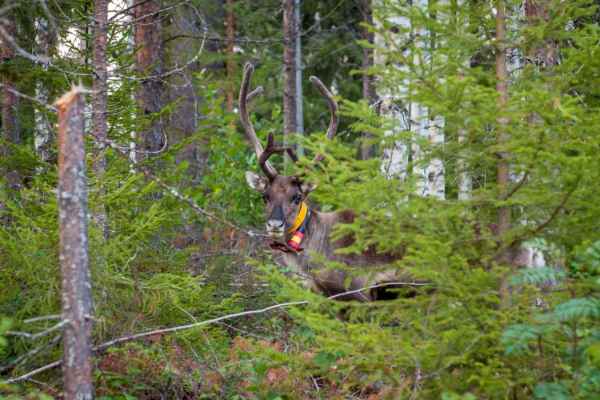
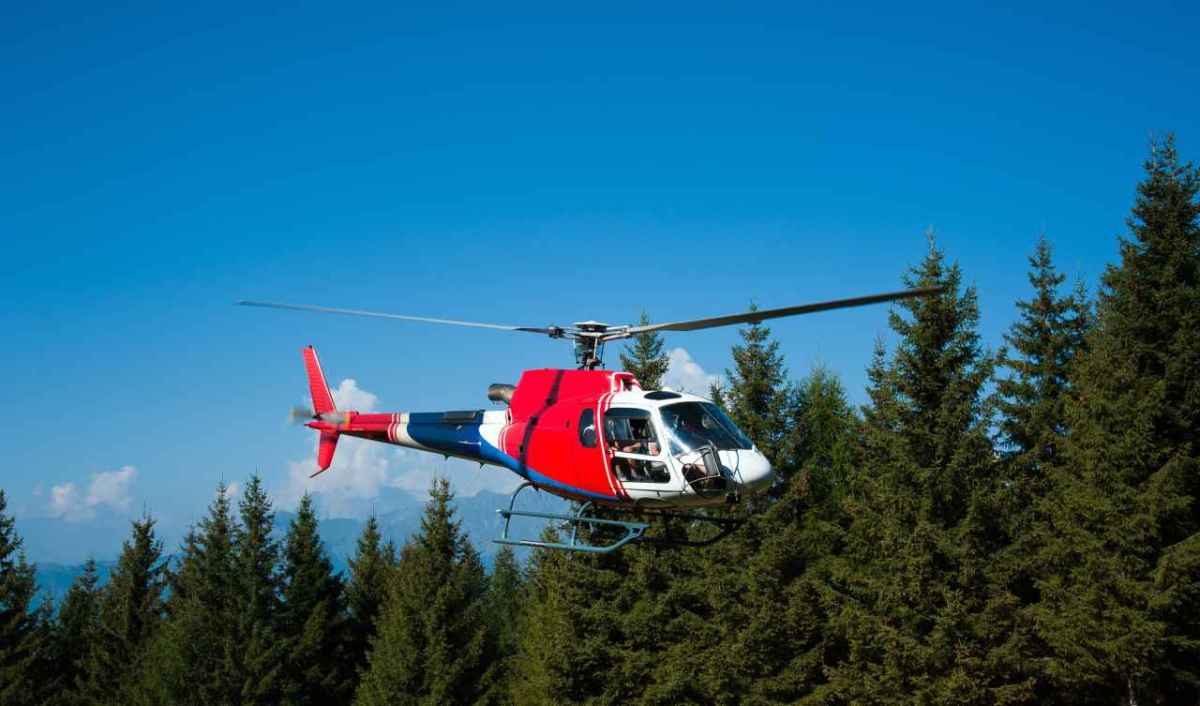
In the municipal area of Montecrestese in the Ossola Valley, in the province of Verbano-Cusio-Ossola, a Swiss recreational hunter shot a crowned stag at the start of the Italian selective hunt. For the recovery, he did not order a mule track or a cable car, but a helicopter from a Swiss company. Not only the dead animal was flown out, but the shooter himself as well — across the border into Switzerland.
The Polizia Provinciale of the VCO stopped the operation and confiscated the stag. Two points were flagged: the flight over a Zona di Protezione Speciale, i.e. a European bird protection area, as well as the regulations governing the use of aircraft for recovering killed wild animals. The fine against the recreational hunter amounts to over 5,000 euros. A sanction of comparable size also hit the Swiss aviation company, which, according to the provincial police, carried out the flights without the necessary permit.
A second case on the same weekend
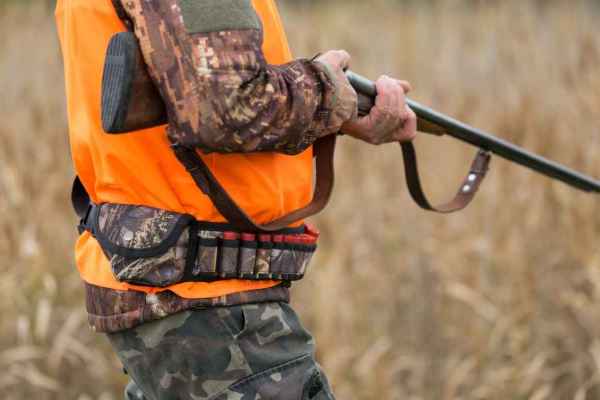
The stag was not the only case checked. High above Macugnaga, the provincial police stopped two further recreational hunters. One of the two did not even hold a licence valid for the provincial territory. After the shot, one of the men went to the downed animal, established that the young chamois buck did not match the animal cleared for shooting, and left it lying there. The animal was only recovered later by the police, using a blood-tracking dog. The chamois and the weapon were confiscated, and the licensed recreational hunter had his selective kill permit for the current season withdrawn. Together with the stag case, the fines add up to over 10,000 euros. Recreational hunters and companions who failed to wear the required high-visibility clothing were also sanctioned.
An animal that, after being shot, is identified as "wrong" and simply left lying there: this is not an operational mishap, but the normal outcome of a practice that describes itself as precise and selective. How robust this self-image really is, is also shown by our dossier on the high hunt in Switzerland.
Why a crowned stag of all things
A crowned stag is no ordinary red deer. It is the animal most prized in recreational hunting, because its antlers make the most impressive piece for the wall. Precisely such animals are the reason why someone is willing to purchase a foreign kill licence, climb into rugged terrain, and pay for a helicopter for the recovery. The effort does not pay off through the meat, but through the trophy. What this logic does to wildlife populations is something we have examined in Trophy hunting: Myth and reality.
There is also a point the reporting overlooks: anyone who can only bring an animal out of the terrain by aircraft has shot it in a place where prompt, clean processing of the carcass is simply not possible. What this means for the quality of the so-called game meat is shown in our dossier on game meat in Switzerland.
The helicopter as a matter of course
It is remarkable how normal reaching for a helicopter has apparently become. In the canton of Ticino, its use is even explicitly regulated in one area: the Regolamento sulla caccia selettiva allo stambecco bans helicopters for reaching the hunting zone, but allows them, with the permission of a game warden or the Ufficio caccia e pesca, for the recovery of male ibex aged four years or older. This provision does not apply to the Ticino high hunt. The case in the Ossola Valley shows what happens when habit replaces permission.
What is known about the man's origin — and what is not
Here, the verifiable facts quickly run out. Neither La Stampa nor La Prealpina, Eco Risveglio, Ossolanews, VCONews, Ossola24, nor the Swiss news agency reports name the recreational hunter, his place of residence, or his canton. The helicopter company also remains unnamed, as does the landing site in Switzerland. All reports trace back to the same statement from the provincial police.
Only the geography is clear: the municipal area of Montecrestese borders directly, via the Valle Cravariola, on the canton of Ticino, on the area of Campo Vallemaggia. A connection between the recreational hunter or the aviation company and southern Ticino therefore seems plausible. It is not confirmed, however, and we treat it as what it is: a working hypothesis, not a fact.
Update of 15 September 2026: It is a Ticino
The working hypothesis has been confirmed. Speaking to tio.ch, the commander of the Polizia Provinciale of the VCO, Riccardo Maccagno, stated that the man is a Ticino recreational hunter, authorised to hunt in the canton of Ticino and additionally licensed in the province of Verbano-Cusio-Ossola. The helicopter also belongs to a Ticino-based company. For data protection reasons, the authority is not disclosing his name. The dead animal was dropped off near Cimalmotto, a hamlet of the municipality of Campo in Vallemaggia — exactly where the geography suggested it would be.
Maccagno also specifies the violations. The recreational hunter failed to make the reports required prior to recovery once the permit had been granted, and he himself boarded the helicopter, which is prohibited for hunters in Italy. The helicopter company carried out operations over the protected area that are not permitted there. The fines amount to over 5,000 euros each.
This places the case entirely within Ticino's responsibility: a Ticino licence holder, a Ticino flight company, a landing site within the canton. The question now on the table is whether the Ufficio della caccia e della pesca will draw any consequences for the licence.
What we want to know
IG Wild beim Wild made enquiries with the Polizia Provinciale of Verbano-Cusio-Ossola. Not for personal data, but for the name of the sanctioned helicopter company, the specific regulations violated along with the exact fine amounts, and whether further administrative or criminal investigations are underway. We are also asking the Ufficio della caccia e della pesca of the canton of Ticino whether the incident is known there and whether it is being reviewed in relation to the licence. Because a fine in Italy does not answer the decisive question: the Italian fine is an administrative sanction and therefore stops at the border. What remains open, above all, is whether Swiss oversight of the flight company involved is even aware of the incident, and whether it regards flights without foreign authorisation as an issue. Updates to this article will follow once answers are available.
Do you notice a suspicious case, whether in Switzerland or in a neighbouring border region? Report it to us. How systematically such incidents remain below the threshold of public awareness is shown by our collection on the subject of poaching and the analysis The psychology of recreational hunting in the canton of Ticino
Sources
- tio.ch, «Cervo ucciso e portato via dall’Italia in volo: è un affare tutto ticinese», Paolo Contangelo, 15.09.2026
- Polizia Provinciale VCO, reproduced in Ossolanews.it and VCONews.it, «Caccia agli ungulati, oltre 10mila euro di sanzioni tra Montecrestese e Macugnaga», 14.09.2026
- Eco Risveglio, «Primi giorni di caccia e prime sanzioni della Polizia provinciale», 14.09.2026
- La Stampa, Verbano-Cusio-Ossola, 14.09.2026
- La Prealpina, «Cervo abbattuto e trasportato in elicottero, sanzionato cacciatore svizzero»
- Ansa, reproduced by Watson.ch, 15.09.2026
- Repubblica e Cantone Ticino, Regolamento sulla caccia selettiva allo stambecco of 25.10.2017, Art. 10
More on the subject of recreational hunting: In the dossier Poaching and hunting crime in Switzerland we document cases, legal questions and recurring patterns. What the research says about this is shown by Hunting fact-checked: the state of research.
The position of IG Wild beim Wild: IG Wild beim Wild rejects recreational hunting. Our model is the canton of Geneva, which has managed without recreational hunting since 1974: without hunting seasons, without hunting dogs, without driven hunts, without high seats, without the animal cruelty and crime that go hand in hand with hunting season elsewhere. What has worked there for over fifty years disproves every position paper by JagdSchweiz. An association that bases its policy on claims it refutes in its own documents is not a professional organisation, but a factory for misinformation.

All articles are written by IG Wild beim Wild as well as by external co-authors. Research, structuring and editorial processes may be supported by AI-assisted tools.
Support our work
With your donation you help protect animals and give their voice a hearing.
Donate now →