Wolf kills chamois in Luthern: natural predation in the Napf region
The canton of Lucerne is informing livestock keepers; its forest-wildlife strategy provides no dedicated measures for predators.
«Four Pups»
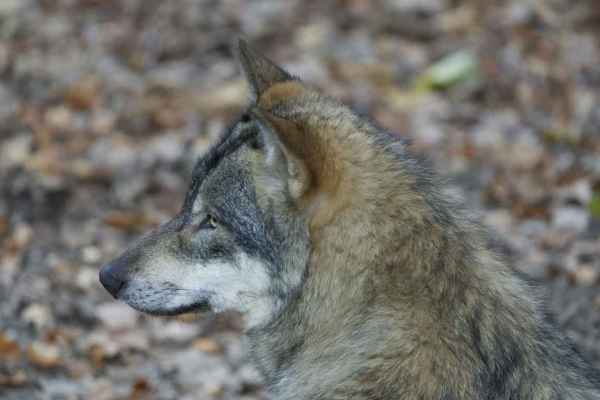
On Sunday, 4 October 2026, a hunting party in Luthern reported a chamois kill, which the cantonal wildlife wardens attribute to a wolf.
Samples were sent for analysis. The canton informed livestock keepers by text message about protective measures. The incident also raises another question: what role should natural predation play in a region where browsing damage from wild animals is hampering forest regeneration?
Claudio Schorta of the cantonal specialist office confirmed to the «Luzerner Zeitung» that a wolf had killed a male chamois. The result of the sample analysis is still pending. In the text message to livestock keepers in the region, the canton recommended reviewing protective measures and keeping livestock stabled at night.
No packs confirmed, but repeated lone wolves
«To date, neither wolf pairs nor packs have been confirmed in the canton of Lucerne,» states the Department of Agriculture and Forestry. What has been repeatedly documented are lone male wolves, including wolves on long-distance journeys. The first confirmed sighting dates back to 2009, and since then the canton has listed around a dozen genetically identified wolves. In 2026, there have been three so far: in February, the radio-collared wolf M637 passed through the canton; on 3 April, droppings from the wolf M638 were found in Rickenbach; and on 22 July, the wolf M728 killed a sheep in Zell.
The canton explains the pattern: young wolves between 10 and 22 months old leave their parents' territory in search of a mate and can cover up to 50 kilometres a day. The appearance of a wolf must therefore be expected «at any time and anywhere.»
A wild animal kill is not livestock damage
A wolf that preys on a chamois is behaving exactly as its diet dictates. A food analysis by the KORA foundation based on 698 faecal samples from 250 wolves from 2017 to 2024 found that wild animals made up 88.3 per cent of their diet. The largest shares were red deer (32 per cent), roe deer (25.4 per cent) and chamois (23.4 per cent), while domestic sheep accounted for 6.7 per cent. This is a statement about the composition of the diet, not about the number of non-human animals actually killed. It does, however, show where the wolf predominantly finds its food.
A wild animal that has been killed is therefore not livestock damage but natural predation. Nevertheless, herd protection information remains useful. The case in Zell underscores the need for action: according to the assessment of cantonal game warden Daniel Schmid, the sheep affected were not adequately protected. However, such information only answers the question of how livestock can be protected. What ecological role the wolf can play in a region with browsing damage problems deserves just as much attention.
Politically, the wolf is currently being discussed primarily as a population problem. The National Council only recently approved a motion for a threshold value for the wolf population (Wolf threshold: National Council approves stockpiled kills). In a canton without a confirmed pair or pack, this question barely arises.
Of all places, at the Napf
The location of the kill is revealing. Luthern lies at the foot of the Napf, and the canton explicitly names Pilatus and Napf as areas where certain tree species are failing due to browsing damage caused by wild animals. The new «Forest-Wildlife-Habitat» strategy of the Department of Construction, Environment and Economic Affairs describes the impact of wild animals on forest regeneration as a «central challenge» for adapting forests to climate change. For the Napf region, it provides for, among other things, hunting ground commissions.
The strategy addresses forest, hunting, habitat, disturbance and cooperation. Despite organised recreational hunting, significant problems with forest regeneration persist in parts of the canton. The strategy itself states that intervention in the young age class and the proportion of female ungulates are crucial for effective regulation. How the Lucerne recreational hunters are responding to these requirements is shown in the article Lucerne shakes up hunting traditions, but recreational hunters draw the line.
The strategy addresses predators in a separate section. Their influence on the forest-wildlife balance is currently "negligibly small", with the wolf present through non-territorial individuals but "barely noticeable at present". Should a pack form near the cantonal border, its significance could grow. Because the framework conditions are set by federal law, the strategy foresees no measures of its own in this regard. Nevertheless, the role of natural predation should be explicitly included in forest-wildlife planning, precisely because the canton itself anticipates growing significance.
What wolves can do for the forest
Wolves can influence ungulate populations and the spatial use of their habitats. This can, in turn, change browsing pressure. At Calanda, the Swiss Federal Institute for Forest, Snow and Landscape Research (WSL) examined developments before, during and after pack formation starting in 2012. In the pack's core zone, browsing intensity declined markedly in summer, and regeneration increased. In winter habitats with frequent wolf presence, however, browsing increased. The author, Andrea Kupferschmid, concludes that the equation "wolf equals fewer ungulates equals less browsing" is not a general rule in the small-scale Swiss landscape, which is strongly shaped by forestry, recreational hunting and protected areas (translated).
How much the forest benefits from predators therefore depends on local conditions. For Luthern, no such effect has yet been demonstrated. A single chamois kill reflects natural predation, not an already measurable reduction in pressure on young forest growth. How the debate on forest and wildlife often misplaces the wolf is shown in the article More wolves, more forest damage? Parliament is mistaking the culprit.
Herd protection and ecological role belong together
A single chamois kill does not solve the browsing problem on the Napf. But it is a reminder that natural predation is part of native wildlife. Lucerne must protect livestock. Equally, the canton should explicitly take into account the possible role of predators in the interplay between forest and wildlife, rather than excluding it until a pack has formed. Herd protection and the recognition of ecological functions are not a contradiction. What an intact predator system can achieve is shown in the article No forest without the wolf: What predators mean for Switzerland.
Sources:Luzerner Zeitung, “Luthern: Wolf kills a wild animal on Sunday”, 4 October 2026 (published identically in the «Bote der Urschweiz»); Bote der Urschweiz, “Wolf strikes in Zell”, 22 July 2026; Canton of Lucerne, Office for Agriculture and Forestry, “The wolf in the Canton of Lucerne” and “Forest and wild animals” (accessed 6 October 2026); Canton of Lucerne, BUWD, “Forest-Wildlife-Habitat” Strategy, 2026; KORA, fact sheet “What do wolves eat in Switzerland?”, October 2025; Andrea D. Kupferschmid (WSL), “Local trophic cascading impact of wolves on tree regeneration in summer and winter areas of ungulates”, 6th Symposium for Research in Protected Areas, 2017.
More articles: Dossier: Forest-Wildlife Conflict: What the Browsing-Damage Narrative Conceals
More on the subject of recreational hunting: In our dossiers on recreational hunting gather fact-checks, analyses and background reports. The scientific evidence is presented in the overview Studies on the Effects of Recreational Hunting.
The position of IG Wild beim Wild: IG Wild beim Wild rejects recreational hunting. Our model is the canton of Geneva, which has managed without recreational hunting since 1974: without hunting seasons, without hunting dogs, without driven hunts, without high seats, without the animal cruelty and crime that go hand in hand with hunting season elsewhere. What has worked there for over fifty years disproves every position paper by JagdSchweiz. An association that bases its policy on claims it refutes in its own documents is not a professional organisation, but a factory for misinformation.

All articles are written by IG Wild beim Wild as well as by external co-authors. Research, structuring and editorial processes may be supported by AI-assisted tools.
Support our work
With your donation you help protect animals and give their voice a hearing.
Donate now →