Bearded vulture record: lead from recreational hunting remains dangerous
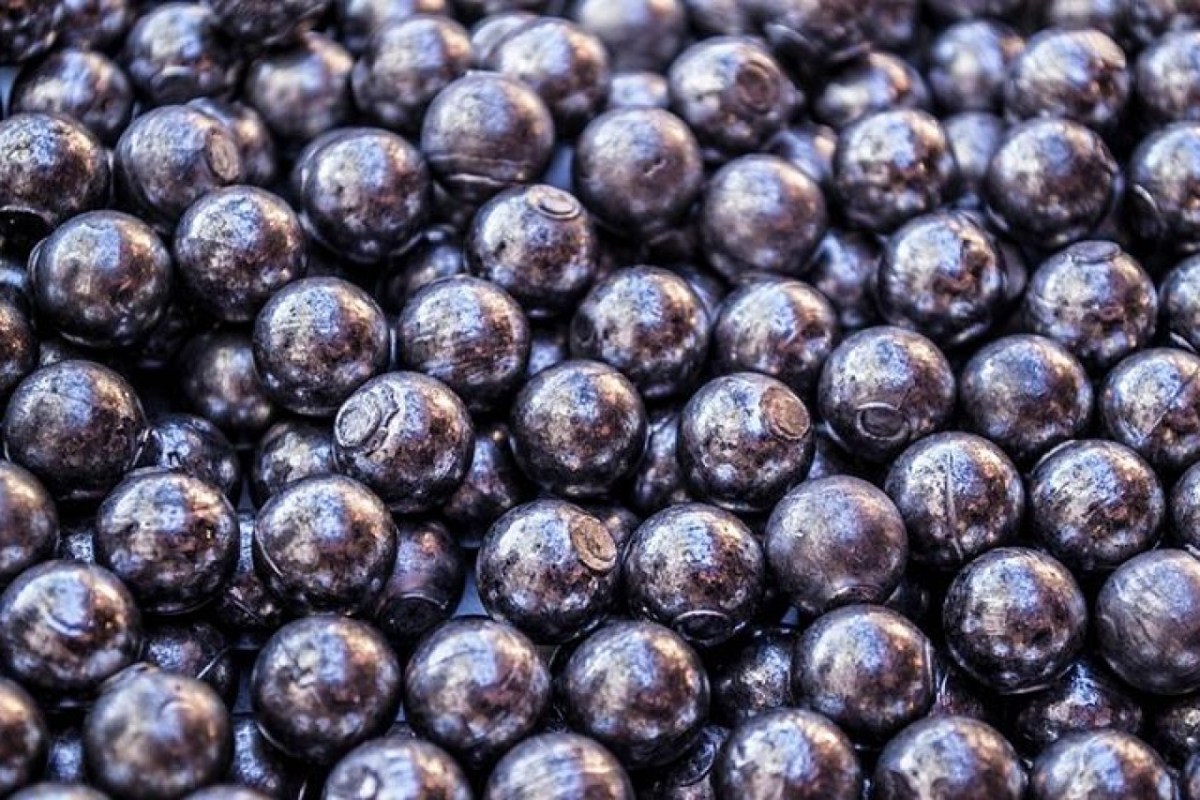
30 young bearded vultures fledged in the Swiss Alps in 2026, more than ever before. Yet this success story has a blind spot: lead from recreational hunting ammunition can still end up in the food of these scavengers. The federal government and the cantons are leaving the gaps open until 2030 and, in some cases, beyond. Valais has even watered down its announced lead ban.
A record year in the Alps
The Pro Bartgeier foundation reported a record year, according to Keystone-SDA on 1 October 2026: 30 young bearded vultures fledged in Switzerland. 29 wild broods were registered across the country. The main hotspots were Grisons with 18 and Valais with 7 young birds, with others fledging in different regions. In the international Alpine project involving France, Italy and Austria, experts counted 72 wild broods. Since the reintroduction programme began in 1991, 299 young vultures have fledged in Switzerland, around 80 per cent of them from wild broods.
This is a success story for species conservation. In the early 20th century, the bearded vulture was wiped out across the Alpine region after being wrongly persecuted as a «lamb thief». Daniel Hegglin, managing director of Pro Bartgeier, nonetheless warns: «The risks of inbreeding are unfortunately increasing.» For a population descended from just a few founder animals, every avoidable death matters. One such avoidable danger does not feature in the success story: lead.
Why lead is so dangerous for bearded vultures
The bearded vulture feeds mainly on bones and carrion. This means it also eats what is left behind in the terrain after recreational hunting: gralloch, animals that were not retrieved, or animals that died after a missed shot. Lead bullets can shatter into numerous fragments on impact, which then spread through the tissue.
Pro Bartgeier points out that bearded vultures have particularly acidic gastric juices and that food remains in the stomach for a long time. In the strongly acidic stomach, lead can dissolve, be absorbed by the body and enter the bloodstream. According to the foundation, eight bearded vultures with lead poisoning were found in the Alpine region (as of their 2022 publication). One of them was Ikarus, a released young bird that was found lethargic and severely weakened by lead poisoning six months after its release.
A European study (Green, Pain and Krone, 2022, Science of the Total Environment) modelled the consequences for ten European birds of prey species. According to this, the populations of adult birds of these species are, on average, 6 per cent smaller due to lead poisoning from ammunition than they would be without this burden.
Federal government: ban with deferral until 2030
Since 1 February 2025, the federal hunting ordinance has banned «lead-containing bullet ammunition from calibre 6 mm upwards» (Art. 2 para. 1 lit. n JSV). However, a transitional provision defers the ban: «Until 31 December 2029, lead-containing bullet ammunition for calibres from 6 mm upwards remains permitted.» Lead shot is banned nationwide only «for waterfowl hunting» (Art. 2 para. 1 lit. l JSV). Federal law currently contains neither a general ban on lead shot nor a phase-out deadline for lead-containing bullet ammunition under 6 mm.
Grisons: ban for hoofed game, not for small game hunting
In Article 5 of its hunting regulations (as of 1 August 2026), Grisons bans «carrying and using lead-containing bullet ammunition when practising high, special and ibex hunting». This specific ban does not apply to small game hunting. Lead-free shot is only mandatory for recreational hunters hunting waterfowl (Art. 90).
Article 14 is revealing: killed small game and parts thereof «that could be contaminated with traces of lead» must be disposed of in such a way that they are «not accessible to birds of prey and predatory game». With this disposal obligation, the ordinance acknowledges the risk that lead-containing residues pose to birds of prey and predatory game.
Valais: the announced lead ban was watered down
In June 2021, Valais announced a ban on lead-containing ammunition, becoming the second canton after Grisons to do so. According to Keystone-SDA, recreational hunters were to switch by 2025, while game wardens were required to shoot lead-free as early as 2022. The implementing regulation to the hunting act provided for a five-year transition period for lead-containing rifle ammunition.
This deadline never expired. With an amendment dated 18 June 2025, in force since 1 July 2025, the Council of State rewrote the rule. Since then, Article 30 only bans «lead-containing bullet ammunition from calibre 6 millimetres upwards». And the new transitional provision states that the deadline for lead-containing rifle ammunition is «extended based on the revised federal hunting ordinance»: «The ban comes into force on 1 January 2030.»
Valais has thus aligned its own, more far-reaching ban with the weaker federal rule. For wait hunting of small predators, Article 30 expressly permits calibres from .22 Hornet to 5.6×52, i.e. below the 6-millimetre threshold. Lead shot is only banned in Valais for the killing of waterfowl.
The loophole at a glance
This means lead remains permitted in large parts of recreational hunting practice: in shot outside waterfowl hunting, in bullet ammunition below 6 millimetres and, outside Grisons, in larger calibres until the end of 2029. Particularly in fox hunting in autumn and winter, lead-containing ammunition can thus continue to be used. Animals that are not recovered, animals that are shot and later die, and gut piles left behind in the terrain can contain lead fragments that are ingested by bearded vultures, golden eagles and other scavengers.
The EU is also only making slow progress
In June 2026, the EU's REACH Committee approved a watered-down proposal to restrict lead in ammunition: a seven-year transition period is planned for lead shot, while bullet ammunition was removed from the proposal. The restriction has since been under review by the European Parliament and the Council and has not yet come into force (as of the end of September 2026).
Lead also ends up on the plate
Lead is not only a problem for scavengers. The Federal Food Safety and Veterinary Office (FSVO) recommends "eating game shot with lead ammunition only rarely" and states: "Children up to seven years of age, pregnant women, breastfeeding mothers and women wishing to conceive should, as a precaution, avoid game meat, since it is not always possible to determine which ammunition was used to kill an animal."
Our assessment
The record number of bearded vultures is the result of decades of conservation work, not of recreational hunting. The legal situation, by contrast, shows just how hesitant politicians and associations are when it comes to their own ammunition. In 2021, Valais announced a lead ban, only to postpone it to 2030 and water it down four years later. The EU compromise follows the central demands of the hunting associations: longer deadlines for shot, no rule at all for bullets.
Lead-free alternatives have been on the market for years. There is no objective reason to wait until 2030 or to exempt shot and small calibres. The IG Wild beim Wild therefore demands:
- a Switzerland-wide ban on lead-containing ammunition for all calibres, bullets as well as shot, with no transition period until 2030;
- in Grisons, the extension of the ban to low hunting; in Valais, a return to the comprehensive ban announced in 2021;
- systematic lead testing of bearded vultures, golden eagles and other scavengers found dead, with public reporting of the results.
A bearded vulture that dies from lead in a recreational hunter's ammunition is not simply an isolated case for a population facing a growing risk of inbreeding. It is an avoidable loss.
The song on this topic: «Lead in the Wind»
What the figures show in sober terms, our song «Lead in the Wind» tells in another way: the traces that lead-containing ammunition leaves behind in animals and in the environment.
You can find more songs on our songs page.
Continue reading on Wild beim Wild
- Lead ammunition: the toxic legacy of recreational hunting (dossier)
- Lead in recreational hunting: poison, lobby and Switzerland
- EU postpones ban on lead ammunition by seven years
- Game meat and health risks: what studies show
- Bearded vulture Lepontino II: Rescued, recovered, free again
Sources
- Keystone-SDA via bluewin: This year, 30 bearded vultures fledged in Switzerland, 1 October 2026
- Pro Bartgeier Foundation: Study shows: hunting without lead is important, 30 September 2022
- Green, R. E., Pain, D. J., Krone, O. (2022): The impact of lead poisoning from ammunition sources on raptor populations in Europe. Science of the Total Environment, Vol. 823
- Federal Government: Hunting Ordinance (JSV, SR 922.01), Art. 2 para. 1 lit. l and n as well as transitional provision on the amendment of 13 December 2024 (AS 2025 12)
- Canton of Grisons: Hunting operations regulations (BR 740.025), Art. 5, 14 and 90, as at 1 August 2026
- Canton of Valais: Implementing regulation to the hunting act (SGS 922.100), Art. 30, Art. 64 para. 3 and Art. T4-1 para. 2 (amendment of 18 June 2025, AGS 2025-066), as at 1 July 2026
- Keystone-SDA via swissinfo: Lead-based ammunition to be banned in Valais, 24 June 2021
- FACE: Member States approve revised restriction on lead in gunshot, June 2026
- FSVO: Lead in game meat
More on the subject of recreational hunting: In our dossiers on recreational hunting gather fact-checks, analyses and background reports. The scientific evidence is presented in the overview Studies on the Effects of Recreational Hunting.
The position of IG Wild beim Wild: IG Wild beim Wild rejects recreational hunting. Our model is the canton of Geneva, which has managed without recreational hunting since 1974: without hunting seasons, without hunting dogs, without driven hunts, without high seats, without the animal cruelty and crime that go hand in hand with hunting season elsewhere. What has worked there for over fifty years disproves every position paper by JagdSchweiz. An association that bases its policy on claims it refutes in its own documents is not a professional organisation, but a factory for misinformation.

All articles are written by IG Wild beim Wild as well as by external co-authors. Research, structuring and editorial processes may be supported by AI-assisted tools.
Support our work
With your donation you help protect animals and give their voice a hearing.
Donate now →