Valais permitted to kill young wolves: Three packs still await total removal
Five of the eleven Valais wolf packs are, wholly or partly, up for removal. How the applications are justified remains publicly unclear.
“Scapegoat machine”
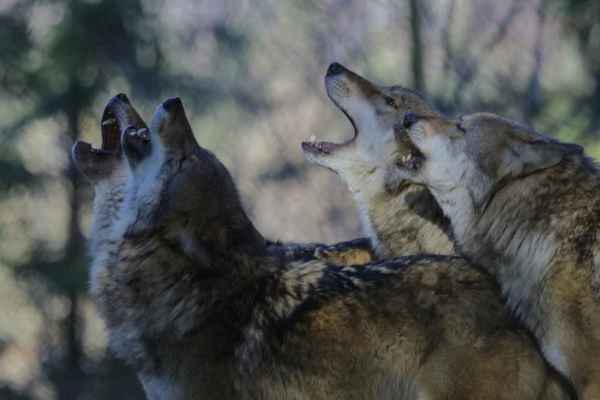
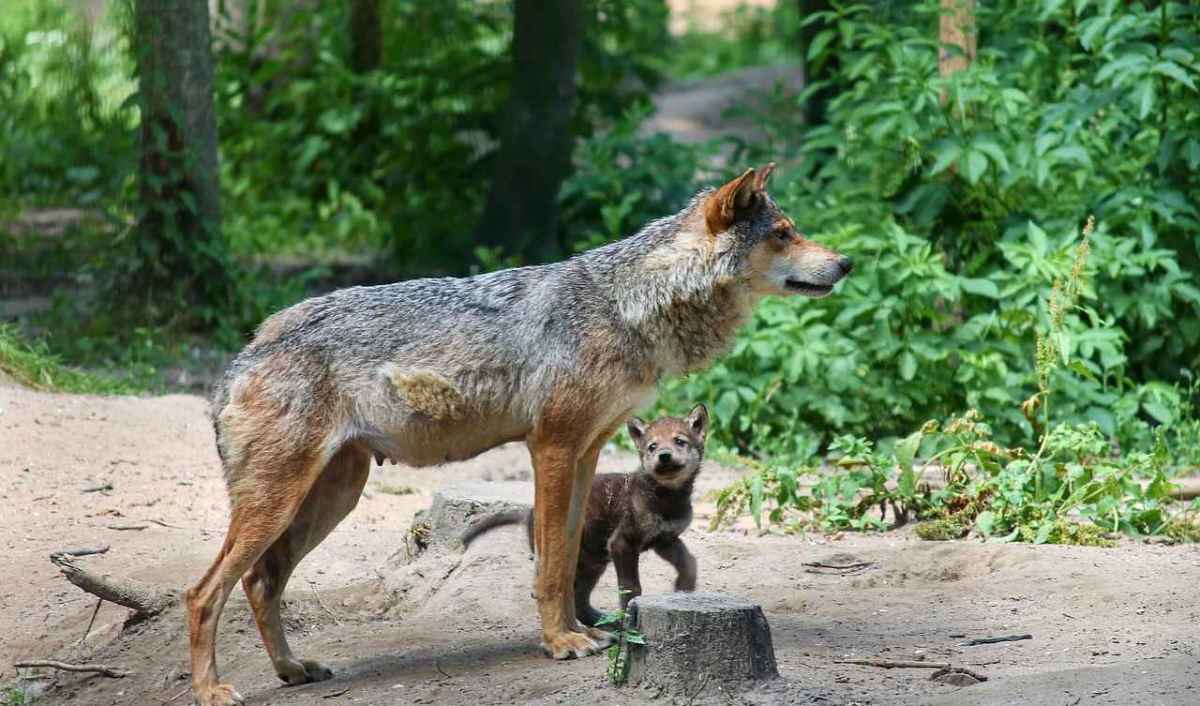
The Federal Office for the Environment has allowed the canton of Valais to have up to two-thirds of the young animals born in 2026 killed from two wolf packs.
At the same time, three applications for the complete removal of further packs are pending. With this, the canton intends to wholly or partly eliminate five of its currently eleven wolf packs.
What the Federal Government approved on 14 September
According to a press release from the canton of Valais dated 18 September 2026, the Federal Office for the Environment has approved two applications for so-called proactive regulation. The packs affected are Nendaz-Isérables and Les Toules. In both packs, up to two-thirds of the young wolves born this year may be killed. The orders have been in effect since 18 September 2026 and run until 31 January 2027.
The canton submitted its applications on 28 August 2026 — five in total. The legal basis is the revised Hunting Ordinance (JSV), which since 1 February 2025 has allowed kills before a specific instance of damage occurs. The canton justifies the interventions as a means of reducing conflicts in areas with livestock kills.
Three packs are to disappear entirely
The three remaining applications have so far attracted less attention. For the packs Nanz, Augstbord and Réchy-Anniviers Valais is requesting complete removal, meaning the killing of all animals. The Federal Office for the Environment has not yet decided on these applications; they remain pending.
The maths are simple: as of 17 September 2026, the canton counts eleven packs on its territory. Five of them are wholly or partly up for removal. If all applications are approved, three family groups will disappear entirely, and two more will lose the majority of their offspring.
The justification remains invisible
It is not publicly clear what exactly the applications are based on. The media release does not state the number of kills per pack, provide any information on herd protection on the alps concerned, or cite genetic evidence linking the damage to a specific pack. Yet this is precisely the question against which the proportionality of an intervention must be measured.
Across Switzerland, livestock kills fell markedly during the 2026 alpine summer. SRF reported 183 livestock killed, compared with 402 in the same period the previous year. David Gerke, managing director of Gruppe Wolf Schweiz, told SRF that regulatory kills could provide local relief but were not responsible for the large-scale decline. What mattered was herd protection. Valais in particular, which shot a large share of its wolf population, continued to record more kills than other cantons — especially where herd protection was patchy.
The Valais backstory
Trust in Valais's wolf policy has been damaged. Wild beim Wild has documented how a female wolf, cleared for a kill as a «lone wolf», was shot dead and later turned out to be a mother animal: Valais: "Lone wolf" was a mother animal, report concealed. The record of the last regulation period can be found in the Valais wolf report 2025/2026.
What a total removal means
A wolf pack is a family. If it is removed entirely, a territory remains that will sooner or later be occupied by new, often young and inexperienced animals. Whether this reduces conflicts with livestock farming or creates new ones depends largely on whether the herds on the alps concerned are protected. Without effective herd protection, a total kill merely shifts the problem instead of solving it.
Open questions for the canton and the FOEN
- How many livestock kills were individually attributed to the Nanz, Augstbord and Réchy-Anniviers packs, and over what time periods?
- How many incidents occurred despite properly implemented herd protection?
- What herd protection measures were in place on the alps concerned, and how was their implementation monitored?
- What genetic evidence links the damage to which pack?
- By what criteria does the FOEN distinguish between regulating a pack and removing it entirely, and by when will a decision be made?
As long as these questions remain unanswered, it cannot be assessed whether the requested total culls are proportionate. Wild beim Wild will report on the decisions of the FOEN. Background on Swiss wolf policy in Wolf in Switzerland dossier.
Sources: Canton of Valais, press release dated 18.09.2026; watson.ch/Keystone-SDA, 18.09.2026; SRF: Did the controversial wolf culls actually achieve something after all?
More on the subject of recreational hunting: In our dossiers on recreational hunting gather fact-checks, analyses and background reports. What the research says about this is shown by Hunting fact-checked: the state of research.
The position of IG Wild beim Wild: IG Wild beim Wild rejects recreational hunting. Our model is the canton of Geneva, which has managed without recreational hunting since 1974: without hunting seasons, without hunting dogs, without driven hunts, without high seats, without the animal cruelty and crime that go hand in hand with hunting season elsewhere. What has worked there for over fifty years disproves every position paper by JagdSchweiz. An association that bases its policy on claims it refutes in its own documents is not a professional organisation, but a factory for misinformation.

All articles are written by IG Wild beim Wild as well as by external co-authors. Research, structuring and editorial processes may be supported by AI-assisted tools.
Support our work
With your donation you help protect animals and give their voice a hearing.
Donate now →