Thurgau wants to ban barbed wire fences
The Grand Council passed a motion without a single dissenting vote; the government must now present an amendment to the cantonal hunting act.
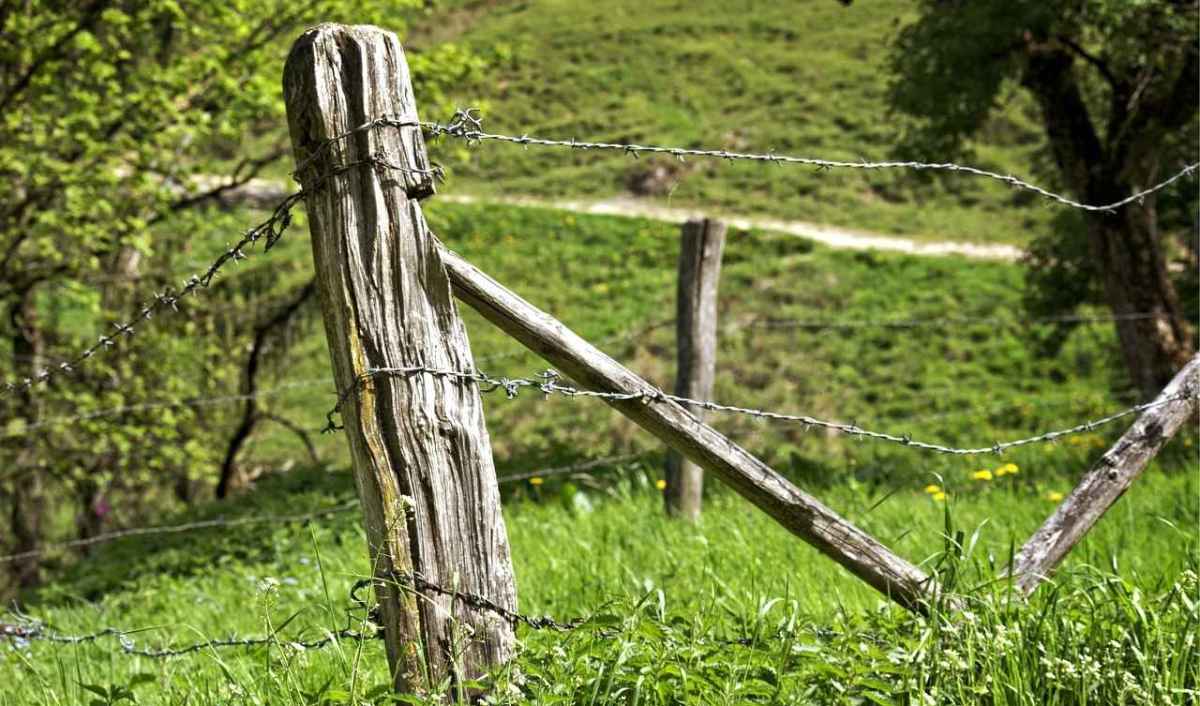
On Monday, 28 September 2026, the Thurgau Grand Council unanimously passed a motion calling for a legal ban on barbed wire fences.
It was submitted by politicians from the SVP, Mitte and Green parties. The aim is to remove a dangerous and avoidable trap for wild animals from the landscape.
Barbed wire fences are in some cases lethal traps in which wild animals become entangled and die an agonising death, the motion states. In Thurgau, many such fences are still in place, some of them rusted, including in forests and along forest edges. According to Keystone-SDA, no one in the council disputed that a ban would drastically reduce the risk of injury to both non-human animals and people.
Two-year deadline for dismantling
According to the motion, farmers and land managers would be required to remove existing barbed wire fences within two years. The deadline would only begin to run once the new legal regulation takes effect. Exceptions are planned for police and military purposes, as well as for the protection of sensitive or hazardous individual objects.
The Thurgau government had recommended adopting the motion. It considers it sensible to supplement the cantonal hunting act with a barbed wire ban and regards the deadline as realistic. It must now draft a legislative bill, the exact wording of which the Grand Council will decide on again.
According to the motion's sponsors, the cantons of St. Gallen, Zurich and Grisons already have such a ban in place.
Grazing nets also to face conditions
The motion is not limited to barbed wire. Flexible grazing nets should only be put up shortly before grazing begins, checked regularly and taken down again promptly. The motion's sponsors are calling for a deadline of eight days, while the government would prefer a maximum of five working days.
Wild beim Wild has been documenting exactly this problem for years. As early as 2015, a lynx died an agonising death in a pasture net in Valais, as can be read in the article «Pasture nets are death traps». A petition for a ban on the sale of dangerous pasture nets refers to estimates suggesting that thousands of wild animals die in fences in Switzerland every year.
St. Gallen shows: a ban alone is not enough
How difficult implementation is can be seen in the neighbouring canton. In St. Gallen, the ban goes back to the popular initiative «Stop animal suffering – against fences as death traps for wild animals», which was jointly launched by Pro Natura, WWF and the St. Gallen recreational hunters. Wild beim Wild reported in 2019 on the launch of the campaign against fences as death traps. In the end, a counter-proposal prevailed, and the initiative was withdrawn.
Since 1 October 2021, new regulations for fences in the habitat of wild animals have been in force in St. Gallen. Barbed wire is banned outside the summer grazing area; fences that are no longer permitted had to be removed by 30 September 2025. Within the summer grazing area, barbed wire remains permitted only as a replacement for existing fences on cattle pastures that were already fenced this way, and must be taken down outside the summer grazing period. Flexible pasture nets may be put up no earlier than eight days before grazing begins and must be removed no later than eight days after the last day of grazing. Violations can be punished with fines of up to CHF 20,000.
Nevertheless, Peter Weigelt, president of the St. Gallen recreational hunters, criticised in early 2026, speaking to Keystone-SDA, that there were still «hundreds, if not thousands of kilometres» of barbed wire strung up across the canton.
At the canton of St. Gallen, where reports of unauthorised fences are collected, the situation has since improved considerably. Nevertheless, more than a dozen people responsible had to be reported to the public prosecutor last year – not only for barbed wire, but also for pasture nets that remained standing long after the livestock had been removed. In low-lying areas, barbed wire has practically disappeared; reports now come mainly from mountain regions. There, too, the obligation to remove the wire after the summer grazing period was not observed everywhere.
Context
The unanimous vote in Thurgau is an overdue step. Fences are not the only obstacle for wild animals, as the consequences of steel walls and barbed wire at borders show, but one of the most avoidable.
What will be decisive is whether Thurgau learns from St. Gallen's experience: with effective controls, clear responsibilities and noticeable consequences. And with an honest discussion about who actually presents themselves as protectors of wild animals. It is commendable that recreational hunters campaign against fences as death traps. But this commitment only becomes credible once the avoidable deaths caused by recreational hunting itself are also up for debate.
More on the subject of recreational hunting: In our dossiers on recreational hunting gather fact-checks, analyses and background reports. What the research says about this is shown by Hunting fact-checked: the state of research.
The position of IG Wild beim Wild: IG Wild beim Wild rejects recreational hunting. Our model is the canton of Geneva, which has managed without recreational hunting since 1974: without hunting seasons, without hunting dogs, without driven hunts, without high seats, without the animal cruelty and crime that go hand in hand with hunting season elsewhere. What has worked there for over fifty years disproves every position paper by JagdSchweiz. An association that bases its policy on claims it refutes in its own documents is not a professional organisation, but a factory for misinformation.

All articles are written by IG Wild beim Wild as well as by external co-authors. Research, structuring and editorial processes may be supported by AI-assisted tools.
Support our work
With your donation you help protect animals and give their voice a hearing.
Donate now →