Wolf attack at Wildpark Johannismühle: enclosure, not wilderness
A captive wolf seriously injures a child; three children were in the polar wolf enclosure during watering. The case belongs in the debate on animal keeping, not in the wolf debate.
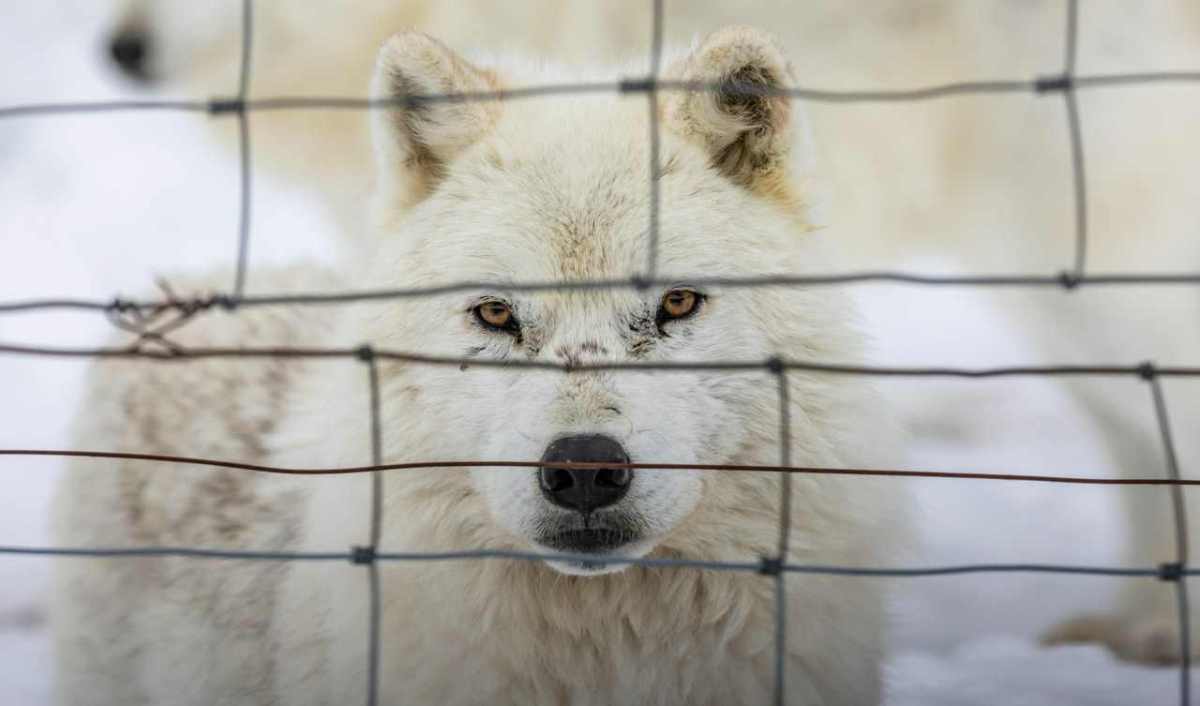
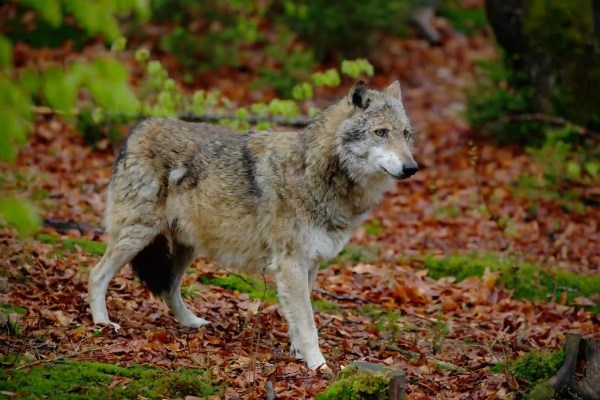
Polar wolf in an enclosure. Stock image. Photo: Eva Blue / Unsplash
«In the Pack»
On the morning of Wednesday, 28 October 2026, a wolf at Wildpark Johannismühle near Baruth/Mark, about 45 kilometres south of Berlin, seriously injured an eight-year-old girl.
According to the Tagesspiegel, the police were alerted at around 9.30 a.m., and a rescue helicopter flew the child to hospital. Whether one wolf or several bit her remains unclear. The park was not yet open to the public. A children's 'animal-keeper day' had been booked.
What the district authority says
After the Press release from the district of Teltow-Fläming, the attack took place in the polar wolf enclosure while the animals were being given water. Besides the girl, two other children and a keeper were in the enclosure. According to the district, the keeper's quick action prevented the other two girls from being injured as well. Emergency pastoral care looked after four people, including three children.
The police are examining the exact circumstances under which the children were in the enclosure and whether negligence was involved. The lower nature conservation authority and the veterinary office will receive the police report. The veterinary office intends to carry out an animal welfare inspection of the park promptly. The park remains closed until further notice; it can only reopen once the authorities have given clearance. The polar wolf enclosure remains 'secured in accordance with the regular safety precautions', so the wolves are still there. According to the district, no expert assessment of the health and behaviour of the wolves involved is yet available.
The operator stated, according to dpa: «We are cooperating fully with all authorities.» He will not comment on the sequence of events while investigations are ongoing. By the morning of 29 October there was still no new information on either the child's condition or the whereabouts of the wolves.
Earlier deficiencies, changes of operator, escapes
The park has existed for 30 years and, according to the district authority, has had several changes of operator and management. Deficiencies identified in earlier on-site inspections were «ultimately rectified». The district authority does not say what those deficiencies were. The inspection of 23 July 2025 found no safety-relevant defects in the fences; the fact that the fences are checked every morning before opening is based on information given by the park at the time, not on any verification by the authority. On 19 March 2026, one section of the park was inspected without any animal welfare objections. The park keeps its wolves on the basis of a permit under Section 42 of the Federal Nature Conservation Act and a licence under Section 11 of the Animal Welfare Act for exhibiting animals. The operating permit requires daily checks of the predator enclosures for weak points.
The park is no stranger to Wild beim Wild: in 2016, two lions escaped from their enclosure there. In January 2017, a wild wolf killed a fallow deer on the grounds; according to the Berliner Zeitung, the park announced at the time that it would secure the outer fence with electricity.
Enclosure instead of wilderness
The case says something about the keeping of wolves, not about the behaviour of free-living wolves. From Wild beim Wild's perspective, what matters is that captive wolves encounter people every day during feeding and watering, and in a confined space can neither avoid them nor escape. The dossier «Wolf in Switzerland: dangerous to humans?» shows that problematic approach behaviour in free-living wolves almost always stems from habituation and conditioning through feeding, in other words precisely the conditions that are everyday reality in an enclosure. Anyone who takes children into a wolf enclosure during care routines creates a situation that does not exist in the wild. The questions are therefore directed at the operators and the supervisory authority: who approved the programme, what rules applied in the enclosure, and what were the earlier deficiencies?
Even the German recreational hunting portal jaegermagazin.de heads one section "Captive wolf, not a wild animal from the wild". Immediately afterwards, however, it says: "As long as the predators occur at such high population densities, there is also a constant danger of a wolf attack in the wild." In this way, an accident in captivity is rhetorically shifted into the debate about free-living wolves.
Why this concerns Switzerland
In Switzerland, the regulation of wolves is repeatedly justified by an alleged danger to people. Wild beim Wild has documented how often such "wolf attacks" are never proven. An accident in a German enclosure is no evidence for the kills in Grisons or in Valais. Rather, it shows what risks arise when predators are kept in captivity for public programmes, as the fatal tiger attack at Zurich Zoo also demonstrated. What zoos actually deliver with their conservation promise is shown by the analysis "Zoos' Conservation Promise".
The position of IG Wild beim Wild
Predators belong neither on show in an enclosure nor in the crosshairs of recreational hunting. IG Wild beim Wild rejects recreational hunting; the canton of Geneva has shown since 1974 that wildlife management works without private hunting.
Wild animals need a voice
Once a week: research, petitions and background information on recreational hunting. Free of charge and can be unsubscribed from at any time.

All articles are written by IG Wild beim Wild as well as by external co-authors. Research, structuring and editorial processes may be supported by AI-assisted tools.
Support our work
With your donation you help protect animals and give their voice a hearing.
Donate now →