Zurich Zoo: Tiger Kills Zookeeper
Part of PETA's motto is that animals are not here to entertain us or to be exploited in any other form. The organization campaigns against speciesism — a worldview that classifies humans as superior to all other living beings.


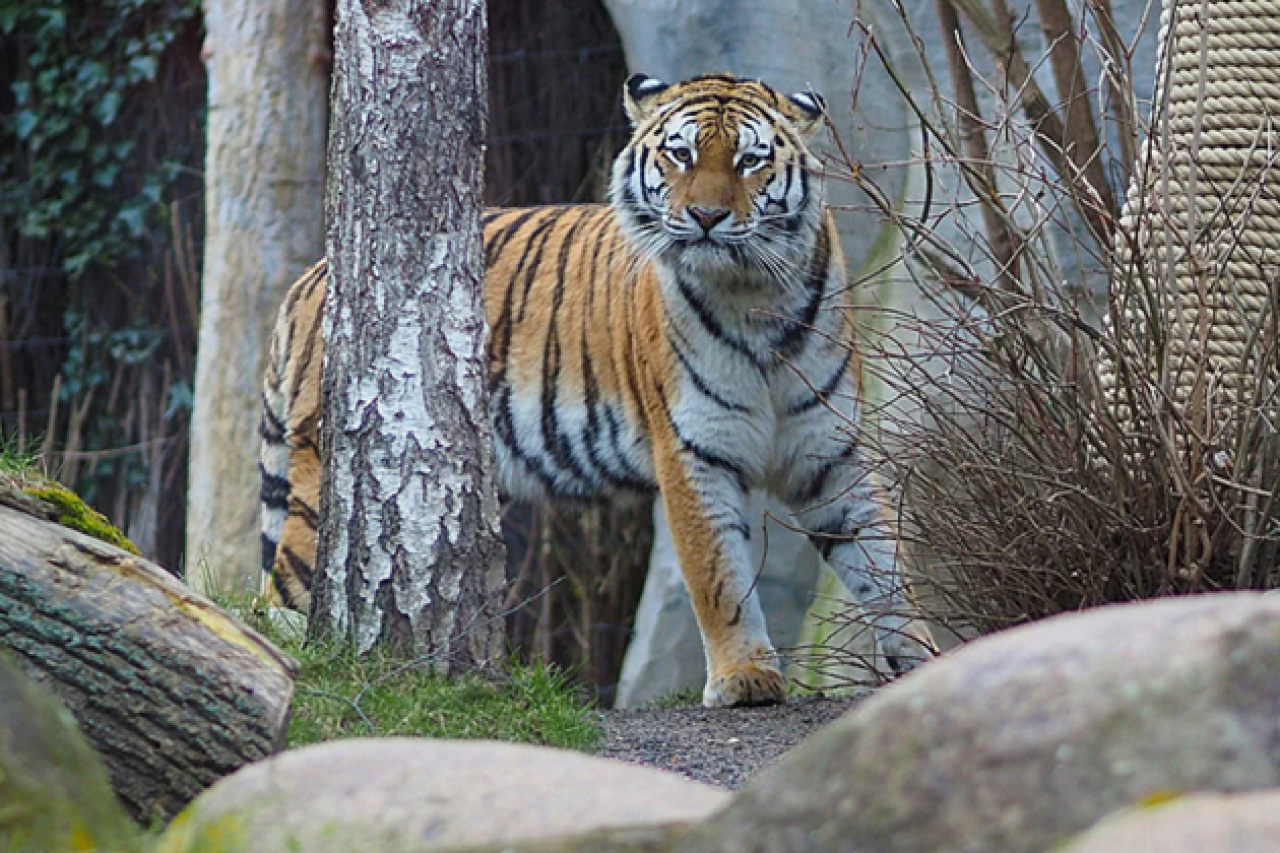
Following the fatal attack by a Siberian tigress on a zookeeper at Zurich Zoo, PETA is calling for an end to the keeping of big cats in zoological facilities, in order to protect zoo staff and animals. The tragic incident occurred on Saturday midday, 4 July 2020.
Why the zookeeper and the tigress Irina were in the enclosure at Zurich Zoo at the same time is now the subject of an investigation. The animal rights organization points to around a dozen cases in recent years in German-speaking countries where big cats have seriously or fatally injured zoo staff or escaped from their enclosures. Due to the species-inappropriate keeping in far too small spaces, tigers and lions also suffer from behavioral disorders. Reintroduction into the wild is therefore not possible. PETA criticizes the fact that animals are kept in zoos purely for display purposes and is calling for an immediate ban on breeding and imports so that such keeping can be phased out in the medium term. The organization extends its condolences to the relatives of the zookeeper who was killed.
"Tragedies like this can only be prevented in the future if dangerous animals such as tigers, lions, or leopards are no longer locked in tiny enclosures," said Peter Höffken, specialist advisor at PETA. "Big cats, but also large bears or elephants, pose a permanent danger to visitors and zoo staff. And they suffer considerably from being kept in captivity. Animals have no place in zoos."
Accidents and escapes involving big cats are not uncommon
Time and again, incidents occur in zoos to accidents and escapes involving big cats, sometimes with fatal consequences. Most recently, in October 2018, a 19-year-old keeper at the Köthen Animal Park was seriously injured by two tigers while feeding them too close to the enclosure. In September 2017, a keeper at the Chemnitz Animal Park was bitten in the face by a female leopard after a sliding door to the outdoor enclosure had been left open. In 2013, a tiger killed a keeper at the Allwetterzoo in Münster; the previous year, a female keeper at Cologne Zoo was also killed by a tiger.
Furthermore, due to the species-inappropriate conditions in far too small zoo enclosures, big cats seize every opportunity to escape their confinement. Since the beginning of 2012, big cats have escaped from their enclosures at various facilities on at least seven occasions, most recently in 2017 when a lynx escaped from Zoom Erlebniswelt in Gelsenkirchen. In 2016, two lions broke out of both Leipzig Zoo and Wildpark Johannismühle. At Leipzig, one of the animals was shot during its escape attempt. A snow leopard at Wuppertal Zoo also managed to escape its enclosure in 2016. In 2012 and 2014, a total of three cheetah escapes occurred at Salzburg Zoo. Since the beginning of 2012, cheetahs have broken out of their enclosures on three further occasions at Cologne Zoo and Nuremberg's Tiergarten. Escapes or attacks by large bears, great apes, and elephants have also repeatedly led to tragedies in recent years.
Siberian Tigers in the Wild
With a shoulder height of over 100 cm and a length of around two metres, Siberian tigers are the largest tiger subspecies. Only around 500 of these animals still live in the wild in the border region of Russia, China, and North Korea. Female animals claim a territory of several hundred square kilometres, while male territories can reach up to 1’500 square kilometres.
Tigress Allowed to Live On
The Zurich Zoo has decided that the tragic incident, in which a female keeper was fatally injured by a tigress, will have no consequences for the tigress.
The behaviour of the tigress Irina was natural, Zurich Zoo states in a press release stated. The incident was tragic and Zoo Zurich is deeply affected. "Nevertheless, Zoo Zurich emphasizes that the Amur tigress is a wild animal. A person in her enclosure is, to her, an intruder in her territory. In her reaction, she followed exclusively her natural instincts," the zoo writes in a press release.
The most recent tiger attack at Zoo Zurich raises questions. As Samuel Furrer, head of the wildlife unit at the Swiss Animal Protection organization, told the "NZZ am Sonntag," Zoo Zurich has had no direct contact between keepers and big cats for decades. When a person enters the enclosure, the tiger is in the stall. The airlocks are monitored by video. Why the animal and the keeper were in the enclosure at the same time on Saturday remains inexplicable. The tiger cannot be blamed. It showed a normal reaction.