Caught in the middle of a driven hunt: JagdBaselland rejects hunting map
A woman out walking would like a central overview of driven hunts. JagdBaselland declines; JagdSchweiz refers the matter to the cantons.
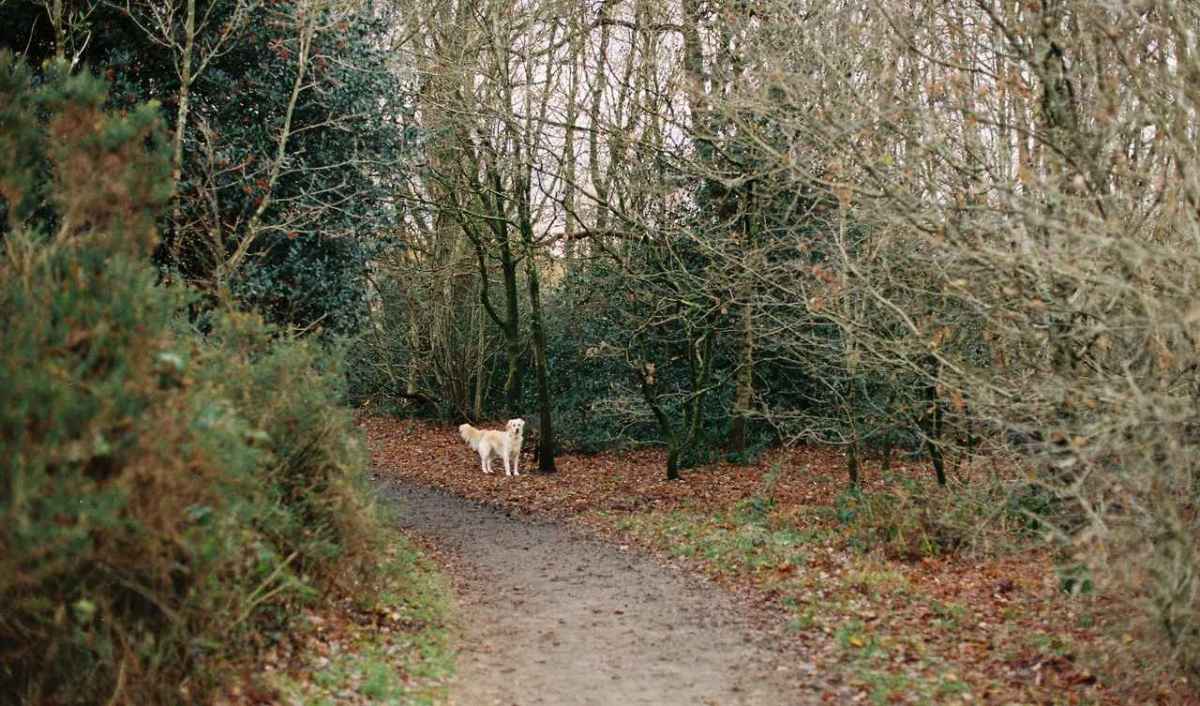
Symbolic image. Photo: T (@tanyabarrow) / Unsplash
The Others Should Watch Out
A reader from the canton of Basel-Landschaft regularly walks in the forest with her dog and, by her own account, has already found herself in the middle of an ongoing driven hunt several times. At the end of December 2024 she therefore asked JagdSchweiz and JagdBaselland whether ongoing hunts could be published in one central place. The replies from both associations are available to the editorial team: JagdBaselland considers such an overview “neither expedient nor practicable”, while JagdSchweiz refers the matter to the cantons. In a later message to the editorial team, the reader reports that she again got caught in the middle of driven hunts.
What the reader wanted
The woman, whose name is known to the editorial team, often walks on narrow paths and in doing so ends up in municipalities other than the one she started from. With so many paths in the forest, it is impossible to put up signs at every access point. She usually only notices that hunting is taking place from the behaviour of her dog. She tries to find out online beforehand, but this is difficult because she crosses several municipal areas on a single walk.
On 30 December 2024 she wrote to the two associations. A few days earlier, by her account, she had stumbled into a recreational hunt in nearby Alsace, in which mainly Swiss recreational hunters had taken part. Her proposal: a central publication of current hunts, just as there is a map for alpine pastures with livestock guardian dogs. It is not a pleasant feeling to suddenly realise, in the middle of a walk, that you are standing in the midst of a hunt. She also does not want to have to watch non-human animals being shot, and would therefore like to be able to avoid the hunting areas.
JagdBaselland: “neither expedient nor practicable”
Daniel Wenk replied on behalf of JagdBaselland on 2 January 2025. He signed as a board member of the association responsible for communication, and at the same time as district forester of the Liestal civic community. Wenk states that all forest visitors have a right of access under Article 699 of the Civil Code. This, he says, is a major challenge for forest management, "and hunting is part of forest management".
Signage on site is meant to alert people so that they can "either bypass an area or pass through it as quickly as possible". Areas are cordoned off only in very rare cases. Safety comes first, Wenk writes, and concludes: "So you do not need to worry that something will happen to you if you enter an area where a noisy hunt is taking place."
On the subject of the map, he writes that hunting parties are obliged to announce the dates of the noisy hunt, and that these dates can be fixed in advance. In which areas hunting takes place, however, is often decided at short notice, sometimes only on the day of the hunt. A drive generally lasts between one and roughly two and a half hours, after which the party moves to another area. A map modelled on the one for livestock guardian dogs would therefore be "neither expedient nor practicable".
JagdSchweiz refers to the cantons
The umbrella organisation replied on 7 January 2025 with just a few lines. Managing director David Clavadetscher wrote that hunting in Switzerland is regulated at cantonal level and recommended that the reader contact the cantonal hunting authority. He attached a link to a list of addresses. He did not address the proposal for a central overview.
What Basel-Landschaft law requires
The noisy hunt, as the cruel driven hunt is officially known in Basel-Landschaft, is permitted from 1 October to 31 December. Section 35 of the cantonal Wildlife and Hunting Act requires that the hunting days be notified to the municipalities concerned and that the main access routes to the hunting areas be signposted on hunting days. Section 21 of the ordinance specifies further: the hunting parties inform the municipalities, the municipalities announce the hunting days publicly, and the main access routes are marked "clearly recognisable with warning signs".
This gives rise to the two gaps the reader describes. First, each municipality publishes on its own. Neither the law nor the ordinance requires a canton-wide overview, and the canton has 86 municipalities. Anyone who crosses several municipal areas on a walk has to piece the dates together one by one. Second, the signposting requirement applies only to the main access points. Anyone who enters the hunting ground via a narrow path or from the neighbouring municipality may not pass a single warning sign. For hunts across the national border, such as those in Alsace, the Basel-Landschaft rules do not apply in any case.
For livestock guardian dogs, there is a map
The reader's comparison is essentially correct. The Federal Office for the Environment maintains the geodata set «Alpine pastures with livestock guardian dogs», accessible via the federal map portal and in the SchweizMobil hiking map. Walkers can see before setting off which alpine pastures have livestock guardian dogs in use, and can adjust their route accordingly. Even this map is not accurate to the day, since herds and dogs change pasture sectors over the course of the summer. Yet the example shows that a central overview provides orientation even when conditions on the ground change.
Zurich: the same question, decision pending
The request is not an isolated case. In the canton of Zurich, a citizen has asked for the reported dates and perimeters of driven hunts. The hunting administration does not intend to decide on the matter until mid-December at the earliest, by which time most of the driven-hunt season will be over. That it can be done differently is shown by the municipality of Geroldswil, which announces its hunts with date, time and area. The details are in the article Driven-hunt dates: Zurich wants to wait until December to decide.
Comment: Anyone who shoots in the forest should say when and where
JagdBaselland justifies the rejection by pointing to short-notice changes in the areas actually hunted. Yet that does not explain why the hunting days known in advance could not be published centrally together with the hunting grounds concerned. Nobody is asking for the exact location of each drive down to the minute. Anyone who knows that hunting is taking place in the neighbouring ground will go for a walk elsewhere that day. Such an overview would take up the reader's concern at its core.
The claim that there is "nothing to worry about" is an assurance that no association can give. In Harkebrügge in Lower Saxony, a woman was hit in the face by a pellet in her own garden during a driven hunt; the recreational hunter was convicted in August 2026 (Pellet in the garden). In the district of Aurich, shotgun pellets hit walkers (When recreational hunters shoot, walkers become targets). Why the Driven hunt is considered so accident-prone, and what is known about Hunting Accidents in Switzerland, has been documented by Wild beim Wild. And what the "disciplined behaviour" looks like in practice in Basel-Landschaft was shown in December 2025 by the assault on a Hunt Watch activist during a driven hunt in Füllinsdorf.
The classification as "forest management" also deserves to be challenged. In Basel-Landschaft, hunting societies, that is, clubs that lease their ground from the municipality, do the hunting. This is a leisure pastime with firearms in a space that everyone is entitled to enter. Anyone who sends dogs and beaters into it owes other forest visitors the information, not the other way round. That the umbrella association fobs a citizen off with a list of addresses, and the cantonal association tells her she should simply pass through the area quickly, shows whose interests count in this system.
What you can do
Write directly to the members of the Basel-Landschaft Landrat and demand that hunting days and the affected hunting grounds be published in one place across the whole canton before any shooting takes place. In the experience of IG Wild beim Wild, personal emails to politicians achieve more than petition lists. You will find the addresses of the cantonal parliaments and a template letter on the page End fox hunting. Have you yourself been caught up in a driven hunt, in the Basel region or elsewhere? Write to us.
More on the subject of recreational hunting: In the dossier The Role and Criticism of Recreational Hunters we shed light on the training, power and self-image of recreational hunters. What the research says about this is shown by Hunting fact-checked: the state of research.
The position of IG Wild beim Wild: IG Wild beim Wild rejects recreational hunting. Our model is the canton of Geneva, which has managed without recreational hunting since 1974: without hunting seasons, without hunting dogs, without driven hunts, without high seats, without the animal cruelty and crime that go hand in hand with hunting season elsewhere. What has worked there for over fifty years disproves every position paper by JagdSchweiz. An association that bases its policy on claims it refutes in its own documents is not a professional organisation, but a factory for misinformation.
Wild animals need a voice
Once a week: research, petitions and background information on recreational hunting. Free of charge and can be unsubscribed from at any time.

All articles are written by IG Wild beim Wild as well as by external co-authors. Research, structuring and editorial processes may be supported by AI-assisted tools.
Support our work
With your donation you help protect animals and give their voice a hearing.
Donate now →