Shotgun pellet in the garden: trial of recreational hunter after driven hunt accident
During a driven hunt, a shotgun pellet hit a woman in her own garden; now the 73-year-old recreational hunter stands trial.
During a driven hunt in the district of Cloppenburg, a woman was hit by a shotgun pellet in her own garden and seriously injured.
A year and a half later, the 73-year-old recreational hunter stands trial. A case that shows what happens when shots are fired in a shared space.
In Harkebrügge, a village in the municipality of Barssel in the district of Cloppenburg, Lower Saxony, a shotgun pellet struck a 59-year-old woman on her own property on 7 December 2024. She was hit below the left eye, seriously injured and taken to hospital. According to the court, following an extensive operation she is unable to work and still suffers from the after-effects to this day.
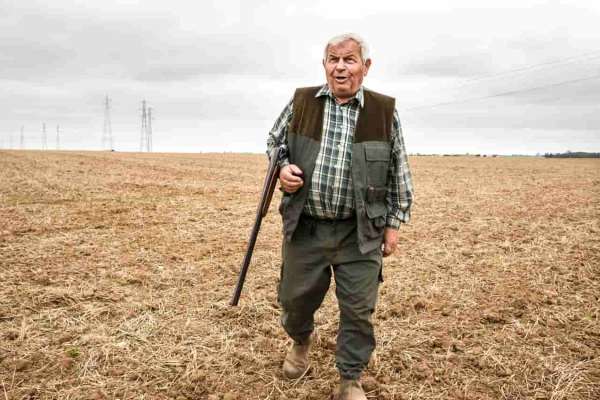
A year and a half later, since 1 August 2026, the alleged hunting accident is being examined before the Cloppenburg district court. The defendant is a 73-year-old recreational hunter. The charge: negligent bodily harm. As a participant in a driven hunt, he is said to have failed to make sufficiently sure before firing that no one was in danger.
Penalty order, appeal, hearing
The Oldenburg public prosecutor had applied for a penalty order, which the district court issued: a six-month suspended prison sentence, a three-year probation period, plus a payment of 8’000 euros. The recreational hunter lodged an appeal against this penalty order. That is the only reason a public hearing is taking place at all. Ten witnesses were summoned at the outset, including the shooting victim herself. When a verdict will be reached remains open.
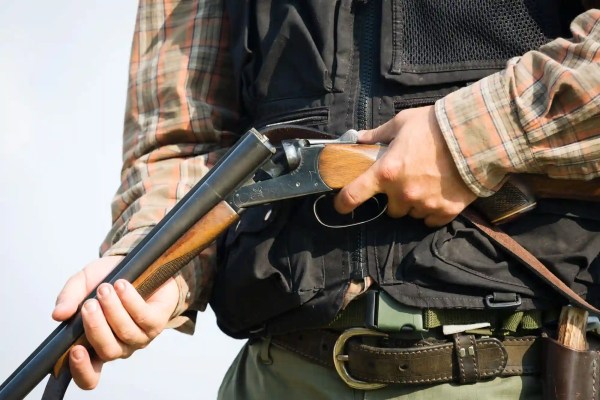
A detail on the margins that reveals much about how such cases are handled in the media: the original reporting alternates between a «bullet» and a «pellet». In fact, driven hunts targeting small game are shot with shot, meaning a load of many small lead pellets that spread out in a fan shape after the shot. It is precisely this spread that makes the driven hunt so unpredictable in inhabited areas: a single pellet from the cluster is enough to seriously injure a person in their own garden.
Addendum of 5 August 2026: Verdict delivered
On 4 August 2026 the Cloppenburg district court delivered its verdict. The 73-year-old recreational hunter was sentenced to six months’ imprisonment for negligent bodily harm, suspended for three years’ probation. In addition, the pensioner must pay 3’000 euros to the state treasury, compensate the victim for all material and immaterial damages and bear the costs of the proceedings. After extensive deliberation, the court considered it proven that the defendant, as the responsible hunt leader, fired a double-barrelled shotgun at a low-flying snipe in the direction of the neighbouring property and struck the woman on her left cheek. «It was you,» the judge emphasised. Several operations were needed to remove the bullet.
The truly disturbing part, however, played out away from the sentence itself. The woman, who appeared as a joint plaintiff, had not even noticed the shot. It was only her daughter who said to her in the garden: «You’re bleeding.» When hunters came running, the defendant accused her of not having been «appropriately and recognisably dressed for a driven hunt» and dismissed the incident with the words «These things can happen.» In court she spoke of «contempt and arrogance.» No one had apologised, no one had accepted responsibility: «Nobody wanted to admit it was them.» There had been «a kind of code of honour» not to incriminate the defendant. The court expressly emphasised the relevance of this subsequent conduct in determining the sentence.
It is precisely this reflex that is the real pattern. Not the shot alone, but the closed ranks afterwards: the silence, the shifting of blame onto the victim, the collective «These things can happen.» Since the incident in December 2024 the woman has suffered from post-traumatic stress disorder and is unable to work.
The convicted man continues to deny his guilt: «I am completely innocent.» His defence is examining an appeal before the small criminal chamber of the Oldenburg Regional Court. The verdict is therefore not yet legally binding. The sentence remains what it is: probation and a financial penalty for a neighbour severely injured in her own garden. It confirms what this article has stated from the outset. As long as recreational hunting continues in its present form, the sober assessment remains the same.
Why this is not a specifically German problem
Switzerland is affected by the same fundamental danger. Hunting accidents in Switzerland are not a marginal phenomenon but a structural risk that arises from a simple fact: recreational hunting means firearms in public spaces. Hiking trails, forest roads, gardens and the edges of settlements are part of everyday life, and that is where shots are fired.
This becomes particularly clear in the case of the driven hunt. Driven hunts and drive hunts are considered the most accident-prone form of hunting of all. Several marksmen fire simultaneously at fleeing, fast-moving targets, often in poor visibility, under time pressure and group expectation. Ricochets, misidentifications and rebounds are not rare exceptions but symptoms inherent to the system. In its report on grazing shots and follow-up searches, the Swiss animal welfare organisation identified precisely this combination — shooting at moving targets, insufficient shooting practice, stress and group pressure — as the cause of an elevated error rate.
That bystanders are also hit is documented. At the end of November 2024, just a few days before the incident in Harkebrügge, a 64-year-old recreational hunter in Oulens-sous-Echallens in the canton of Vaud was fatally struck by a colleague's shot when a group tried to drive wild boars out of a thicket. In Carinthia in October 2025, a 16-year-old beater was hit, struck in the upper body by shot.
A high-risk group by design
The Harkebrügge case fits into a larger picture. From the perspective of the IG Wild beim Wild, recreational hunters are a structural high-risk group, and in two respects.
First, through negligence, as in the Harkebrügge case: the thoughtless shot, the failure to make sure, the underestimated field of fire. The statistics on fatal hunting accidents shows that the number of accidents rises sharply from middle age onwards. The largest age group among recreational hunters today is 65 plus, the very group in which declining eyesight, slowed reaction times and lapses in concentration statistically increase. The defendant is 73.
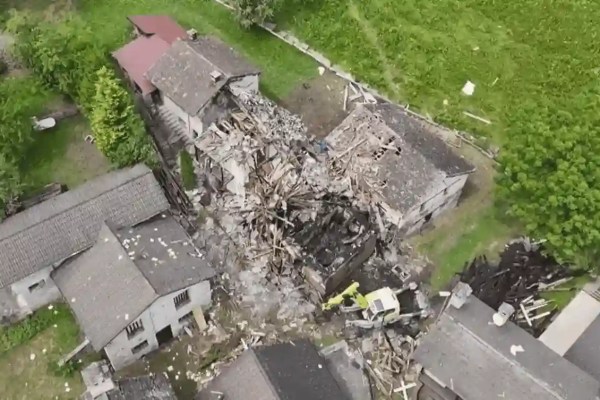
Secondly, through deliberate violence. Only in July 2026 the case of Faido and Leontica in Ticino showed how deadly the combination of weapon access, hunting routine and personal crisis can become: a 59-year-old recreational hunter shot dead his ex-wife and then blew up a house, injuring several police officers in the process. A femicide is not a hunting accident; these are two different dimensions of risk. But they share the same starting point: the normality of lethal firearms in private leisure hands, largely removed from any continuous oversight.
That is precisely the crux of the matter. Whether negligence or intent, whether a shotgun pellet in the garden or a targeted shot: wherever people operate lethal weapons out of a love of killing in a densely used landscape, uninvolved bystanders inevitably end up in the line of fire. This is not the regrettable isolated case it is regularly portrayed as, but the foreseeable result of a system.
What is needed
In the view of IG Wild beim Wild, recreational hunters should be required to undergo annual medical-psychological aptitude assessments, following the Dutch model, as well as a binding upper age limit. The endangerment of uninvolved third parties, whether a neighbour in her garden, a walker on the forest path or a beater in the line, disappears from every official statistic, because no independent obligation to report hunting injuries exists at either federal or cantonal level. Professional, strictly controlled wildlife wardens could reduce safety risks and improve the protection of both humans and non-human animals at the same time.
As long as recreational hunting continues in its current form, the sobering balance remains the same. In Harkebrügge it has now been argued in court, with a verdict that once again confirms the structural dimension.
More on the topic of recreational hunting: In our dossier on hunting we bring together fact checks, analyses and background reports. How recreational hunters endanger people, what unreported figures exist and why independent wildlife wardens would be the better solution is shown by our statistics on fatal hunting accidents.
More on the subject of recreational hunting: In the dossier Poaching and hunting crime in Switzerland we document cases, legal questions and recurring patterns. The scientific evidence is presented in the overview Studies on the Effects of Recreational Hunting.
The position of IG Wild beim Wild: IG Wild beim Wild rejects recreational hunting. Our model is the canton of Geneva, which has managed without recreational hunting since 1974: without hunting seasons, without hunting dogs, without driven hunts, without high seats, without the animal cruelty and crime that go hand in hand with hunting season elsewhere. What has worked there for over fifty years disproves every position paper by JagdSchweiz. An association that bases its policy on claims it refutes in its own documents is not a professional organisation, but a factory for misinformation.
Support our work
With your donation you help protect animals and give their voice a hearing.
Donate now →