Winter session: Council of States decides on wolf population cap and night hunting
Six items on wolf, herd protection, night hunting and animal welfare are scheduled in the Council of States. What they demand and how the committee decided.

Federal Palace in Bern. Photo: Claudio Schwarz / Unsplash
«In Reserve»
From 30 November to 18 December 2026, the Federal Parliament meets for its winter session. In the Curia Vista business database, six parliamentary proposals on wolf, hunting and animal welfare carry the status «Scheduled in the Council of States» (as of 24 November 2026). The Council of States' Environment Committee (ENVE-S) adopted its recommendations on five of them at the end of October.
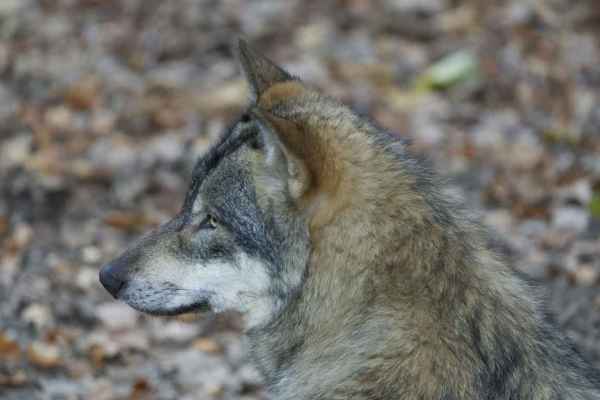
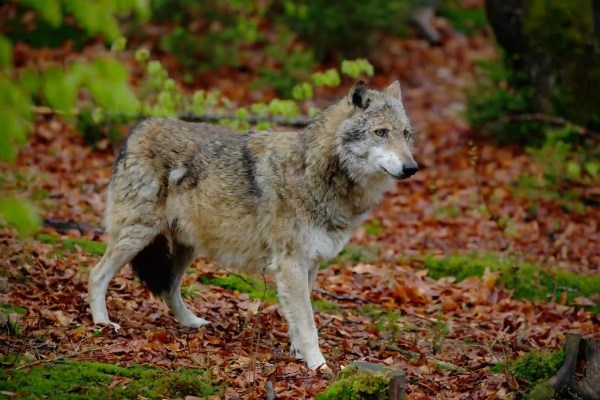
Wolf population cap: Motion 25.4472
The motion by National Councillor Alex Farinelli (FDP, TI) calls for a legal basis to shoot individual wolves or entire packs as soon as the population reaches a number agreed with the cantons. The Federal Council recommends acceptance, and the National Council has already adopted it. ENVE-S approved it by 8 votes to 2. It wants to thereby «give added weight» to the identically worded Motion 25.4464 by Councillor of States Fabio Regazzi, which both chambers have already adopted. What it demands is set out in our article «Wolf threshold value: National Council approves kills in advance».
Ticino cantonal initiative: 26.307
The canton of Ticino demands the same thing in the form of a cantonal initiative: wolves should be released for shooting as soon as a nationally and cantonally defined maximum population is reached. ENVE-S recommends, by 5 votes to 4 with 1 abstention, that the initiative not be given effect. The proposal, it argues, is already covered by the adopted Motion 25.4464.
Deterrence with firearms: Motion 23.3828
The motion, submitted to the National Council by Fabio Regazzi in 2023 and taken over by Benjamin Roduit (Mitte, VS) after Regazzi moved to the Council of States, calls for a legal basis for deterrence measures against wolves on alpine pastures and grazing land. Expressly named are driven hunts by herd patrols and firearms with non-lethal ammunition for herd protection staff. The National Council adopted it on 19 June 2025 by 95 votes to 87, and ENVE-S approved it by 6 votes to 4.
The Federal Council rejects the motion. Weapons for non-lethal ammunition could at any time also fire live ammunition. Apart from exceptions such as the police and the military, the Weapons Act prohibits carrying such weapons in public spaces; the cantonal hunting police already hold a permit. Rubber shot, moreover, is effective only at less than 25 metres, according to the Federal Council's opinion. What the wildlife wardens are already permitted to do today is set out in our article “Wildlife wardens are already allowed to deter animals today”.
Night hunting in forests: Motion 26.4710
By 10 votes to 1, the ENVI-S (the Council of States' Committee for the Environment, Spatial Planning and Energy) has submitted a motion of its own: “Night hunting rules remain a matter for the cantons”. It targets Article 3ter of the Hunting Ordinance, which has been in force since 1 February 2025. It reads: “Hunting in forests is prohibited at night; wait hunting is excepted.” The cantons may provide for exceptions to prevent damage caused by wildlife. According to the committee, the ban was introduced at the request of several cantons and the Conference for Forests, Wildlife and Landscape (KWL). The KWL had justified it in its response to the hunting ordinance with the sentence: “The night belongs to wildlife.” The committee says it does not reject the ban in principle but wishes to leave the decision to the cantons. An opinion from the Federal Council is not yet listed in Curia Vista.
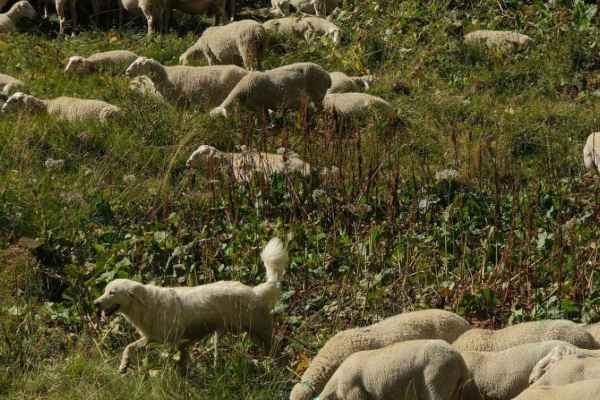
Livestock guardian dogs: Motion 25.4541
Council of States member Marianne Maret (Centre, VS) wants to change the suitability test for livestock guardian dogs: the dogs would be assessed under real conditions directly on their own alp. The Federal Council rejects this, arguing that livestock guardian dogs must be tested against objective criteria and be deployable throughout Switzerland. The ENVI-S recommends acceptance by 9 votes to 0 with 2 abstentions.
Protection of life in the Animal Welfare Act: Motion 26.4117
Council of States member Daniel Jositsch (SP, ZH) demands that the Animal Welfare Act explicitly enshrine the principle that the lives of animals are also protected. The Federal Council recommends rejection. It argues that the Act protects animal dignity and that the legislator decided against an explicit protection of life. What the motion would mean for wild animals and recreational hunting is set out in our article “Jositsch motion: the lives of animals to be written into the Animal Welfare Act”.
Commentary: Plenty of zeal for loosening rules, little for protecting
The mandate for a wolf cap was issued long ago with Motion 25.4464. Even so, the Council of States is to adopt it a second time, while in the current regulation period at least 58 wolves were killed. The ban on night hunting in forests has been in force for barely two years and is already set to be scrapped, even though it was introduced at the request of several cantons. It would remove an existing protective provision for wild animals in forests, and in precisely those hours that have so far given them respite from recreational hunting.
Of the six items of business, only the Jositsch motion explicitly aims at protecting animal life. And it is precisely this one that the Federal Council rejects. Anyone wishing to write to their members of the Council of States before the debate will find the addresses at parlament.ch.
Do you have a tip, a source or a correction for this article? Write to us.
Seen something yourself?
A driven hunt next to a hiking trail, a shot fired near houses, a trap in the forest or an injured wild animal: report it to the Recreational Hunter Radar. We check every tip-off and treat your details confidentially.
More on the subject of recreational hunting: The scientific evidence is presented in the overview Studies on the Effects of Recreational Hunting.
The position of IG Wild beim Wild: IG Wild beim Wild rejects recreational hunting. Our model is the canton of Geneva, which has managed without recreational hunting since 1974: without hunting seasons, without hunting dogs, without driven hunts, without high seats, without the animal cruelty and crime that go hand in hand with hunting season elsewhere. What has worked there for over fifty years disproves every position paper by JagdSchweiz. An association that bases its policy on claims it refutes in its own documents is not a professional organisation, but a factory for misinformation.
Wild animals need a voice
Investigations, petitions and background on recreational hunting. As a thank-you, you will immediately receive our free guide «Recreational hunting on your doorstep: what you can do».
Support our work
With your donation you help protect animals and give their voice a hearing.
Donate now →