Garden in the snow: why road salt harms hedgehogs, dogs and soil
Tierschutz Austria advises keeping paths salt-free in snowy weather. What helps paws, soil and wild animals in the garden right now.

Snowy path between beech hedges. Photo: Alinson Torres / Unsplash
The night belongs to the hedgehog
As soon as the first snow falls, a sack of salt is ready in front of many front doors. In a press release of 26 November 2026, the organisation Tierschutz Austria advises against it: road salt injures the paws of hedgehogs, dogs and cats and harms soil and plants. Salt-free paths and a few simple measures in the garden help wild animals through the cold weeks.
What road salt does
The salt does not stay on the path. It seeps away with the meltwater, and repeated applications can lead to elevated salt levels in the soil over a longer period, as the German Federal Environment Agency notes. Plants then absorb water and nutrients less effectively, and direct contact risks chemical burns. In non-human animals, the salt can inflame the paws.
Dogs' and cats' paws can be rinsed after a walk. Hedgehogs, foxes and other wild animals have nobody to do that for them. A second problem arises at the roadside: in winter, roe deer and red deer like to lick leftover salt at the roadside and are often seen too late in the dark, as a leaflet from the Aargau cantonal police warns. More on this in the article Wildlife crossings: caution during the clock change.
In Switzerland, sodium chloride, i.e. ordinary road salt, is among the substances that de-icing agents may contain under the Chemicals Risk Reduction Ordinance (FOEN). In Germany there is no uniform nationwide regulation; many municipalities ban or restrict its use on pavements (Federal Environment Agency). Permitted, however, does not mean necessary.
Shovel instead of salt
The most effective measure is to clear the snow quickly with a shovel or broom before it is trodden down. If it stays slippery afterwards, grit-type materials such as sand, gravel chippings or granules help. The chippings can be swept up after the snow has melted and reused at the next snowfall. Cleared snow contaminated with road salt does not belong on green spaces or around trees, because the meltwater carries the salt into the soil (Federal Environment Agency).
Even grit is not entirely harmless. Grit, sand and road salt act on dogs' paws “like sandpaper”, according to a winter guide on the website of the Vetsuisse Faculty of the University of Zurich. It recommends routes that have been neither salted nor gritted, a regular look at the paws and, at home, a foot bath in lukewarm water. If a dog licks the salt off its paws, the guide says this can trigger diarrhoea or vomiting. For your own front yard, that means: shovel first and spread grit only where it really stays slippery.
What helps wild animals in a snowy garden
For the garden, Tierschutz Austria lists a number of simple measures:
- Create small snow-free patches under hedges and along the edges of beds so that birds and other wild animals can get at food.
- Leave seed heads, berries and windfall fruit in place.
- Leave deadwood, piles of stones and compost undisturbed, because insects, amphibians and small animals overwinter there. How such structures come about is shown in the article Deadwood, Benjes hedge, stone piles.
- Offer fresh water in shallow dishes every day.
- Keep gaps in fences clear of snow so that the routes between gardens stay open.
- Feed birds when there is a continuous snow cover and keep the feeding station clean. What helps and what harms is explained in the article Feeding birds correctly.
Hedgehogs in the snow: when help is needed
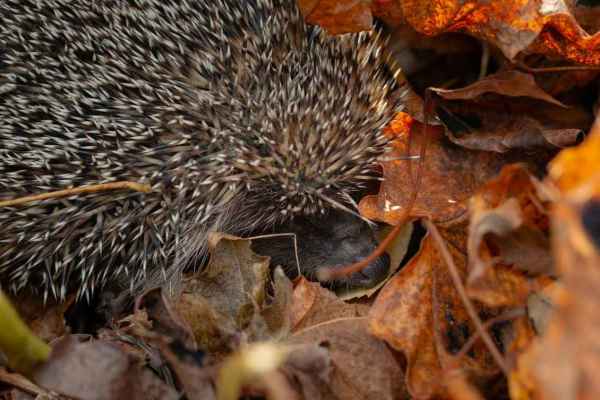
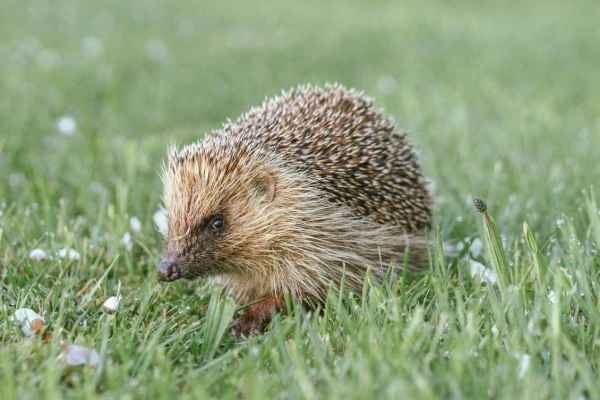
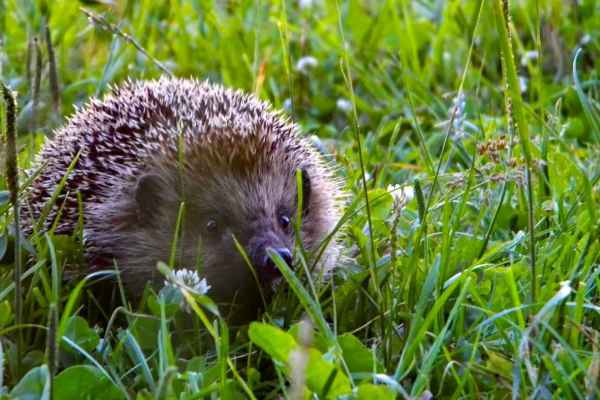
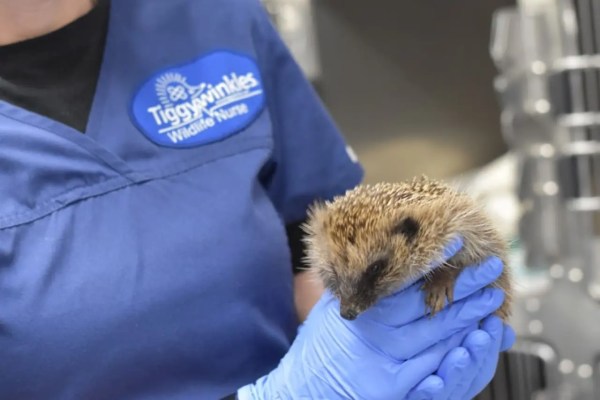
A hedgehog out and about by day in snow needs attention. Tierschutz Austria advises against feeding such hedgehogs permanently yourself. According to the organisation, young hedgehogs that are “smaller than a pepper” belong in expert hands, because they usually lack the weight for hibernation.
For hibernation, a young hedgehog needs at least 500 grams according to the Hedgehog Centre Zurich, while an adult hedgehog needs well over a kilogram. If a hedgehog weighs considerably less or appears ill, injured or weakened, a hedgehog rescue centre should assess the situation. According to the hedgehog centre, supplementary feeding is only intended in exceptional cases, for a limited time and with cat food. More on this in the article Hedgehogs in hibernation: why the leaves can stay in the garden.
All articles on the topic are collected on the page Wildlife-friendly garden: all the tips at a glance.
Do you have a tip, a source or a correction for this article? Write to us.
Seen something yourself?
A driven hunt next to a hiking trail, a shot fired near houses, a trap in the forest or an injured wild animal: report it to the Recreational Hunter Radar. We check every tip-off and treat your details confidentially.
More on the subject of recreational hunting: In our dossiers on recreational hunting gather fact-checks, analyses and background reports. What the research says about this is shown by Hunting fact-checked: the state of research.
The position of IG Wild beim Wild: IG Wild beim Wild rejects recreational hunting. Our model is the canton of Geneva, which has managed without recreational hunting since 1974: without hunting seasons, without hunting dogs, without driven hunts, without high seats, without the animal cruelty and crime that go hand in hand with hunting season elsewhere. What has worked there for over fifty years disproves every position paper by JagdSchweiz. An association that bases its policy on claims it refutes in its own documents is not a professional organisation, but a factory for misinformation.
Wild animals need a voice
Investigations, petitions and background on recreational hunting. As a thank-you, you will immediately receive our free guide «Recreational hunting on your doorstep: what you can do».
Support our work
With your donation you help protect animals and give their voice a hearing.
Donate now →