Robotic lawnmowers kill hedgehogs: German cities ban night-time operation, Bern and St. Gallen wave it away
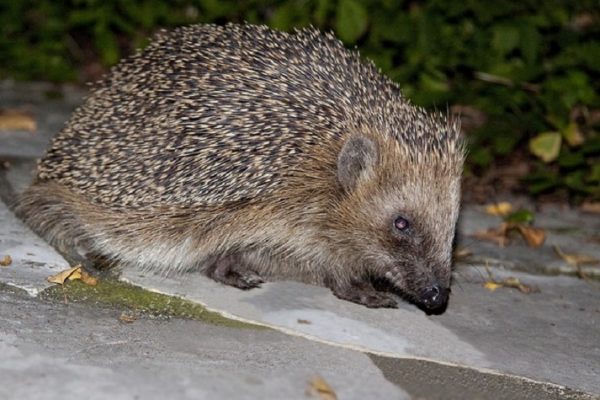
In autumn, hedgehogs feed on lawns at night to build up reserves for hibernation. Hardly any robotic lawnmower recognises them before touching them. Cologne has taken action; the Swiss cities have not.
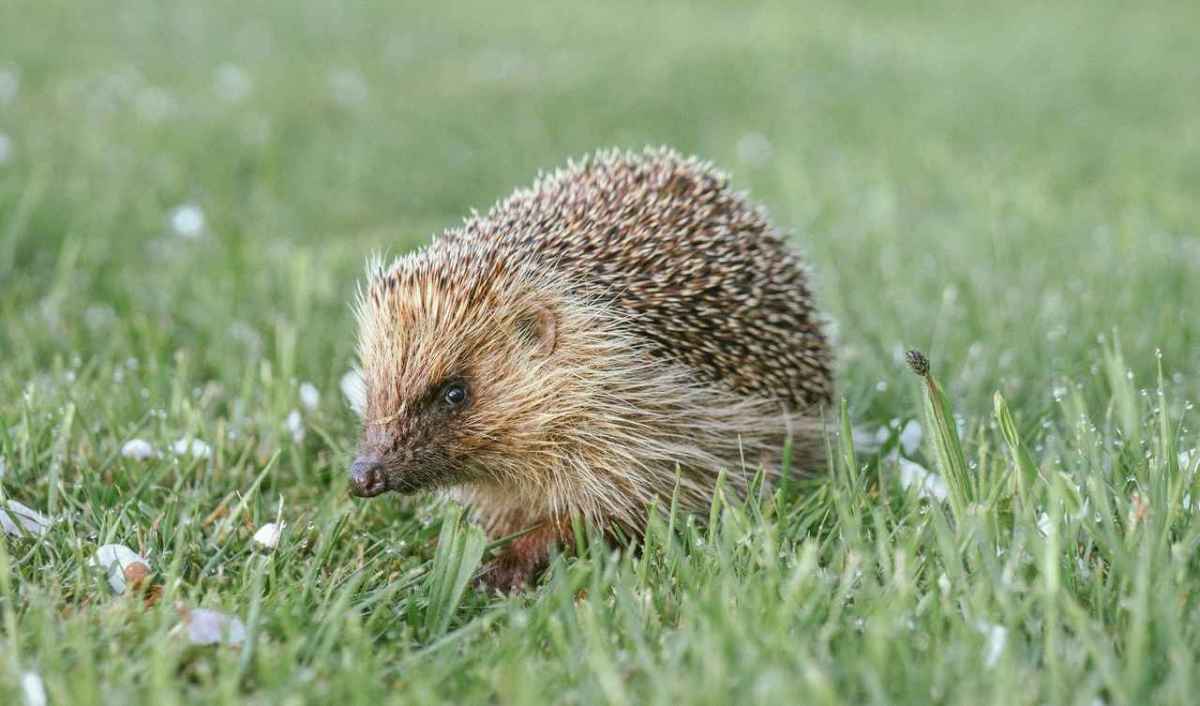
Photo: Charles van der Essen / Unsplash
The night belongs to the hedgehog
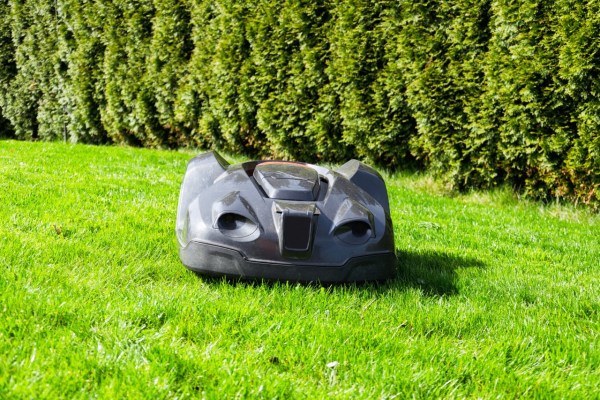
Every autumn the same picture repeats itself in hedgehog rescue centres: severed legs, slashed snouts, scalped heads. The culprits are silent, run at night and are found in more and more gardens. As a rule, robotic lawnmowers only recognise hedgehogs once they have touched them; depending on the model, it may end with a bump or with severe cuts. In Germany, cities such as Cologne have therefore banned night-time operation. In Switzerland, the same demands have so far met with resistance from city governments: in Bern, the municipal executive is recommending that a motion be rejected, while in St. Gallen the city council points to a lack of powers. Yet the hedgehog is on the Red List here, and Pro Natura has named it Animal of the Year 2026.
Why the hedgehog cannot survive the robotic lawnmower
Hedgehogs do not reliably flee from a robotic lawnmower. Many freeze, curl up or simply stay where they are, a protective behaviour that is useless against rotating blades. The Leibniz Institute for Zoo and Wildlife Research (Leibniz-IZW) in Berlin analysed 370 reported cases of cut injuries in hedgehogs over 16 months, caused by electric garden tools, primarily robotic lawnmowers. Almost half of the animals found (47 per cent) did not survive; they died in care or had to be put down. Many had suffered for days beforehand. How many hedgehogs die undiscovered in the undergrowth is unknown; the number of unreported cases is thought to be high.
That technology has so far failed to solve the problem is shown by the research of Sophie Lund Rasmussen of the University of Oxford. Her team tested 19 commercially available models in collision tests with dead hedgehogs. With a single exception, every device had to physically touch the hedgehog in order to detect it at all, and some did not recognise it even then. Some models caused severe injuries, others were harmless after bumping into it; the smaller the hedgehog, the greater the risk. Body height was the decisive factor, so juveniles in autumn are the most at risk. These trials led to a standardised safety test using 3D-printed hedgehog dummies. The Leibniz-IZW calls for such crash tests to become mandatory across Europe, with the results clearly displayed on the devices so that buyers know which model injures hedgehogs. To date, this remains voluntary.
That Robotic lawnmowers endanger hedgehogs, Wild beim Wild already documented in 2021, and 2018 likewise. Further studies have since been published, and politicians are responding. At least outside Switzerland, with concrete rules.
Cologne led the way
On 1 October 2024, the lower nature conservation authority of the City of Cologne issued a general order: robotic lawnmowers may no longer be operated at dusk and at night. Daytime use remains permitted. The reasoning is simple: the hedgehog is a specially protected species, it is on the move precisely when the devices quietly make their rounds, and it does not flee. Göttingen, Leipzig, Düsseldorf and Mainz have followed, Hamburg regulates operating times by general order, and in numerous other cities from Magdeburg to Karlsruhe, motions are pending in the councils. The pattern is mostly the same: a ban from 30 minutes before sunset until 30 minutes after sunrise, with a fine for violations.
Bern: “relevant, but not dominant”
In Switzerland, city councillor Tobias Sennhauser (Tier im Fokus) submitted a motion with the same demand to the Bern city council in December 2025: a night-time curfew for robotic lawnmowers across the whole city, from 30 minutes before sunset until 30 minutes after sunrise. The association Pro Igel supports the initiative; hedgehog rescue centres are reporting more and more animals with the typical pattern of injuries.
The Response of the municipal council of May 2026 is negative. The hedgehog population in Zurich has fallen by 40 per cent in 25 years, while figures for Bern are lacking. The city hardly uses robotic mowers on municipal land anyway. On private land, the robotic mower is a «relevant but not dominant risk factor»; what matters is the interplay with a lack of habitat structure, pesticides and a shortage of food. Whether the city would even be responsible is unclear, and the effort would be disproportionate. The municipal council asks the city council to reject the motion and, at most, to accept it as a non-binding postulate. The answer does not mention that Cologne solved the same question with an order from its nature conservation authority.
St. Gallen: The hedgehog is not in the ordinance
In St. Gallen, city parliamentarians Cornelia Federer and Veronika Meyer (Greens) submitted the interpellation «Night rest for robotic mowers». The hedgehog rescue centres of eastern Switzerland explicitly welcomed the idea; the Frauenfeld centre reports that most injuries are so severe that the animals have to be euthanised. The city council's response in August 2026: the city cannot impose a night-time ban because the canton of St. Gallen has not expressly placed the hedgehog under protection in its nature conservation ordinance. Instead, it relies on raising awareness.
Federal law obliges the cantons to ensure adequate protection of the hedgehog. According to the city council, the canton of St. Gallen lacks the express protected status on which a municipal ban could be based. This raises the question of whether the canton must amend its ordinance, and who will demand it. The debate is also under way in Basel: Igelhilfe Baselbiet reports amputated legs and scalped heads, and considers a night-time ban to be only a first step, because young hedgehogs are also out and about during the day in autumn.
The industry has recognised the problem
Even the manufacturers no longer dispute that the danger is real. Segway Navimow, which describes itself as the world's largest supplier of wire-free robotic lawnmowers, is once again promoting its «Animal Friendly Mode» in a press release this autumn. The mode automatically stops mowing from dusk until morning, and the company has entered into a one-year partnership with the Igelhilfe Schulzendorf near Berlin, including product tests at the care station. According to the manufacturer, the new flagship model is meant to detect small animals using a camera, laser scanner and heat sensor. Husqvarna, for its part, funds part of Rasmussen's research at Oxford. The industry therefore knows very well what its devices do.
The point is this: a mode that you can switch on is not a solution. Pro Igel demands that such a hedgehog function be permanently built in. And a new flagship model does nothing about the many older devices that continue to run at night. That is why we need a rule, not an appeal.
What to do now in autumn
Particular care is needed in autumn. Hedgehogs must eat enough to build up fat reserves before hibernation, and young from late litters are still light and therefore also forage during the day. A ban on night-time operation reduces the risk but does not eliminate it. Anyone who owns a robotic lawnmower can do four things straight away:
- Let the robot run only in full daylight, never at dusk and never at night. The night belongs to the hedgehog.
- Do a check before every mowing session, especially under shrubs, along hedges and in long grass. This applies equally to string trimmers and brush cutters: according to the experience of the Igelzentrum Zürich, it actually receives more hedgehogs with string-trimmer injuries than with suspected robot injuries.
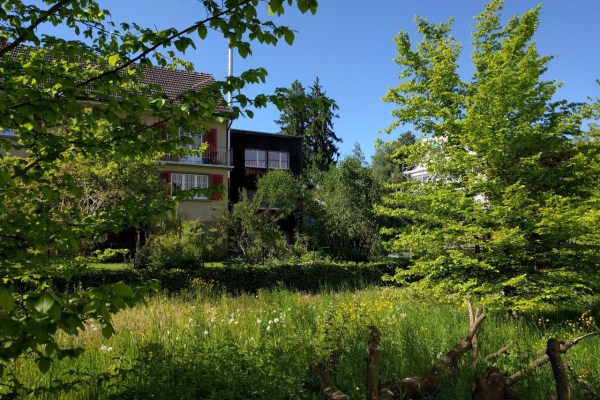
- Leave a wild corner standing and mark it as an off-limits zone. Uncut grass and a pile of leaves or branches provide food and winter shelter.
- Leave leaves where they lie and never push a pitchfork into compost, leaf or branch piles; a hedgehog may already be sleeping there.
If you find an injured hedgehog, take it to the nearest hedgehog station or to a vet. Further tips can be found in our article Gardening Season: Tips for protecting wild animals.
Commentary: The Wrong Culprits
The International Union for Conservation of Nature (IUCN) classified the Western European hedgehog as "potentially endangered" for the first time in October 2024, with estimated declines of 16 to 33 per cent over ten years depending on the country, and by half in Bavaria and Flanders. The causes it names are consistently man-made: intensive agriculture, roads, urban sprawl. Added to these are pesticides, insect decline and, indeed, garden machinery. Predators such as the fox or badger, which have always been part of the hedgehog's life, are not mentioned by the IUCN. Anyone who Fox hunting with the protection of small animals is looking for the culprit in the wrong place. What the hedgehog does not survive is a garden mowed by a machine at night, and a policy that deems this disproportionate because a legal basis would then be needed. The Bern response is a lesson in evasion, the St. Gallen one a lesson in passing the buck.
Cologne has shown that an administration can regulate this in a single order. Bern and St. Gallen have shown that they either do not want to or are not allowed to, and for the hedgehog both amount to the same thing. For the hedgehogs in Swiss gardens, that leaves only the good sense of individual garden owners. And the pressure on the cantons to finally protect the hedgehog where it lives: in built-up areas.
More on the subject of recreational hunting: In our dossiers on recreational hunting gather fact-checks, analyses and background reports. What the research says about this is shown by Hunting fact-checked: the state of research.
The position of IG Wild beim Wild: IG Wild beim Wild rejects recreational hunting. Our model is the canton of Geneva, which has managed without recreational hunting since 1974: without hunting seasons, without hunting dogs, without driven hunts, without high seats, without the animal cruelty and crime that go hand in hand with hunting season elsewhere. What has worked there for over fifty years disproves every position paper by JagdSchweiz. An association that bases its policy on claims it refutes in its own documents is not a professional organisation, but a factory for misinformation.
Wild animals need a voice
Once a week: research, petitions and background information on recreational hunting. Free of charge and can be unsubscribed from at any time.

All articles are written by IG Wild beim Wild as well as by external co-authors. Research, structuring and editorial processes may be supported by AI-assisted tools.
Support our work
With your donation you help protect animals and give their voice a hearing.
Donate now →