Feeding birds correctly
Food for our garden birds becomes scarce in winter. Many animal lovers would therefore like to feed the birds. This can genuinely help the animals, but only if done correctly.

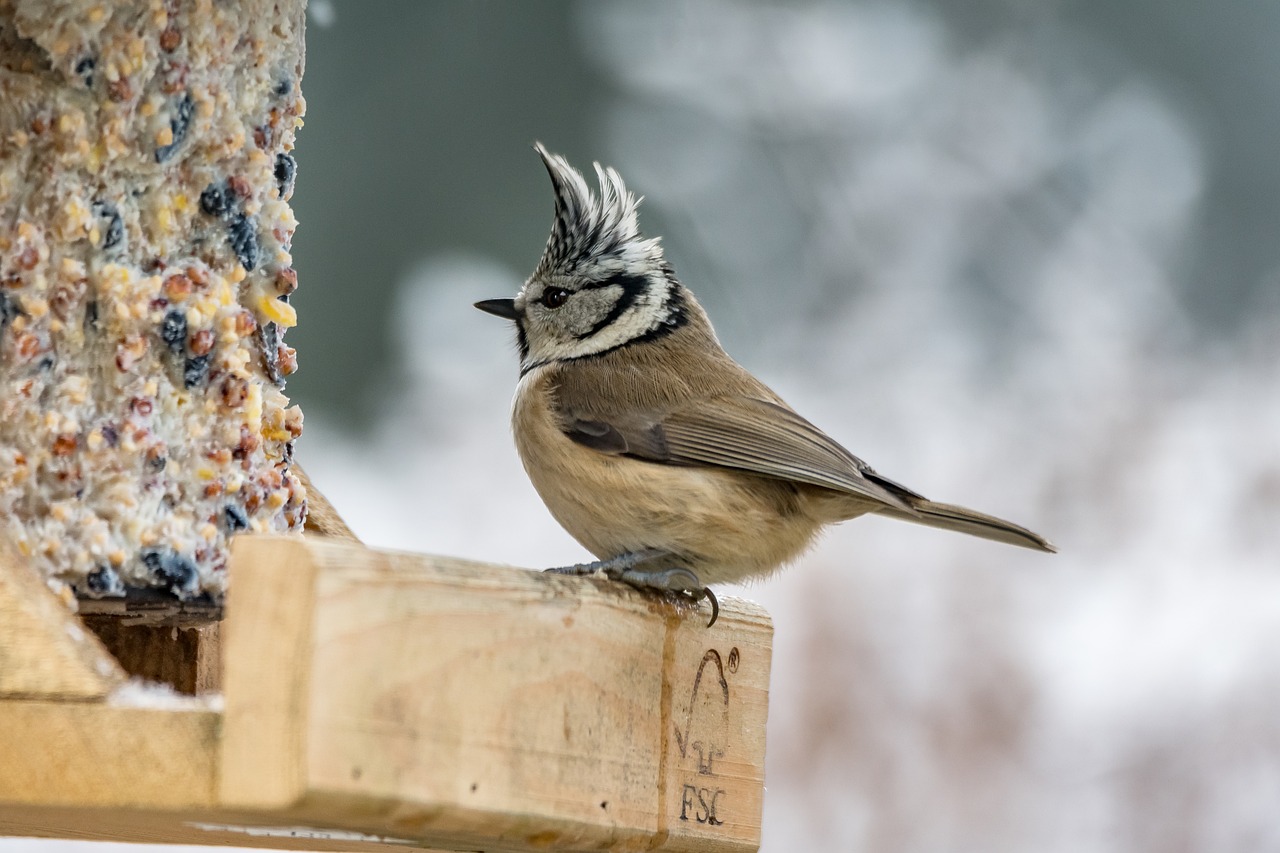
Starlings and other migratory birds undertake a risky journey south in order to access winter food sources there. Left behind are the resident birds, which attempt to find sufficient winter food locally. Long, cold winters can prove fatal for them, with the threat of starvation looming.
It is therefore no surprise that many people want to help these birds with winter feeding. Done correctly, it genuinely benefits the birds being fed. People themselves are rewarded with a lively spectacle at the feeding stations.
Natural food sources are best

The best approach is to offer birds natural food sources: if the hedge is planted with native woody plants and the fruits and nuts are left on the shrubs, these provide the birds with resting places, shelter and food. Leaving some apples and other fruit on the trees enriches the food supply. Likewise, the dead flower and fruit heads of herbs should not be cut back until spring.
Not only the seeds of evening primrose, chicory and other plants serve as winter food for birds, but also the insects and spiders overwintering on the plants. Improving the structural diversity of the garden benefits all birds year-round, whereas winter feeding only produces a selective, time-shifted form of food competition.
Once you start, you must continue
Additional winter food can be offered when natural food sources dry up due to a continuous snow cover or prolonged frost. Anyone who decides to provide this supplementary feeding must continue without interruption from that point until spring!
Birds quickly become accustomed to the new food source and experience difficulties if it disappears during winter. How long one continues feeding into spring is left to individual discretion.

No fatty food from March onwards
It is important, however, to stop putting out fatty food (fat balls for tits) from March onwards. By this time, blue tits and other early breeders already have their first young, for whom the rich diet is not beneficial. Fat is only suitable for adult birds in winter as a substitute for insect food!
The best time is in the morning

The optimal feeding time is early morning. After surviving a cold night, birds' energy requirements are at their highest in the morning. These warm-blooded animals require a great deal of energy to maintain their body temperature of approximately 40 degrees.
In a single frosty night, a small bird the size of a tit can burn up to 20% of its body weight. Since natural water sources such as puddles are frozen over, birds need not only food but also an extra supply of water. From an energy perspective, it is important that birds are not disturbed while foraging or resting. Repeated flight from hunting domestic cats or dogs causes enormous energy deficits for birds, especially in winter.
Food must not become wet or soiled with droppings
Suitable bird feeders or silos can be purchased from specialist retailers or built at home using instructions found online. The feeders must be designed and positioned in such a way that the food cannot under any circumstances become wet from rain or soiled with droppings. Wet food spoils quickly and freezes over.
Food soiled with droppings can lead to the spread of dangerous intestinal infections. Some bird species (blackbirds, green woodpeckers…) can be offered food on a surface (a board) directly on the ground; appropriate hygiene must be observed there as well.
Frequent changes of location and repeated cleaning of the feeding surface with soft soap are necessary. Needless to say, these feeding stations must also be cat-proof!
The right food
Specialist retailers offer a wide range of ready-made food for winter feeding. Recipes for individual feed mixtures can be found online.
Insectivores (robins, tits, blackbirds, wrens…) with pointed, slender beaks require soft food (raisins, fruit, bran, oat flakes, also with added suet).
Seed eaters (finches, sparrows, buntings…) with thick, sturdy beaks take seed mixtures consisting of sunflowers, hemp, nuts and other oil-rich seeds.
More on the subject of recreational hunting: In our dossiers on recreational hunting gather fact-checks, analyses and background reports. The scientific evidence is presented in the overview Studies on the Effects of Recreational Hunting.
The position of IG Wild beim Wild: IG Wild beim Wild rejects recreational hunting. Our model is the canton of Geneva, which has managed without recreational hunting since 1974: without hunting seasons, without hunting dogs, without driven hunts, without high seats, without the animal cruelty and crime that go hand in hand with hunting season elsewhere. What has worked there for over fifty years disproves every position paper by JagdSchweiz. An association that bases its policy on claims it refutes in its own documents is not a professional organisation, but a factory for misinformation.