Wolf population cap: Federal Council follows Regazzi
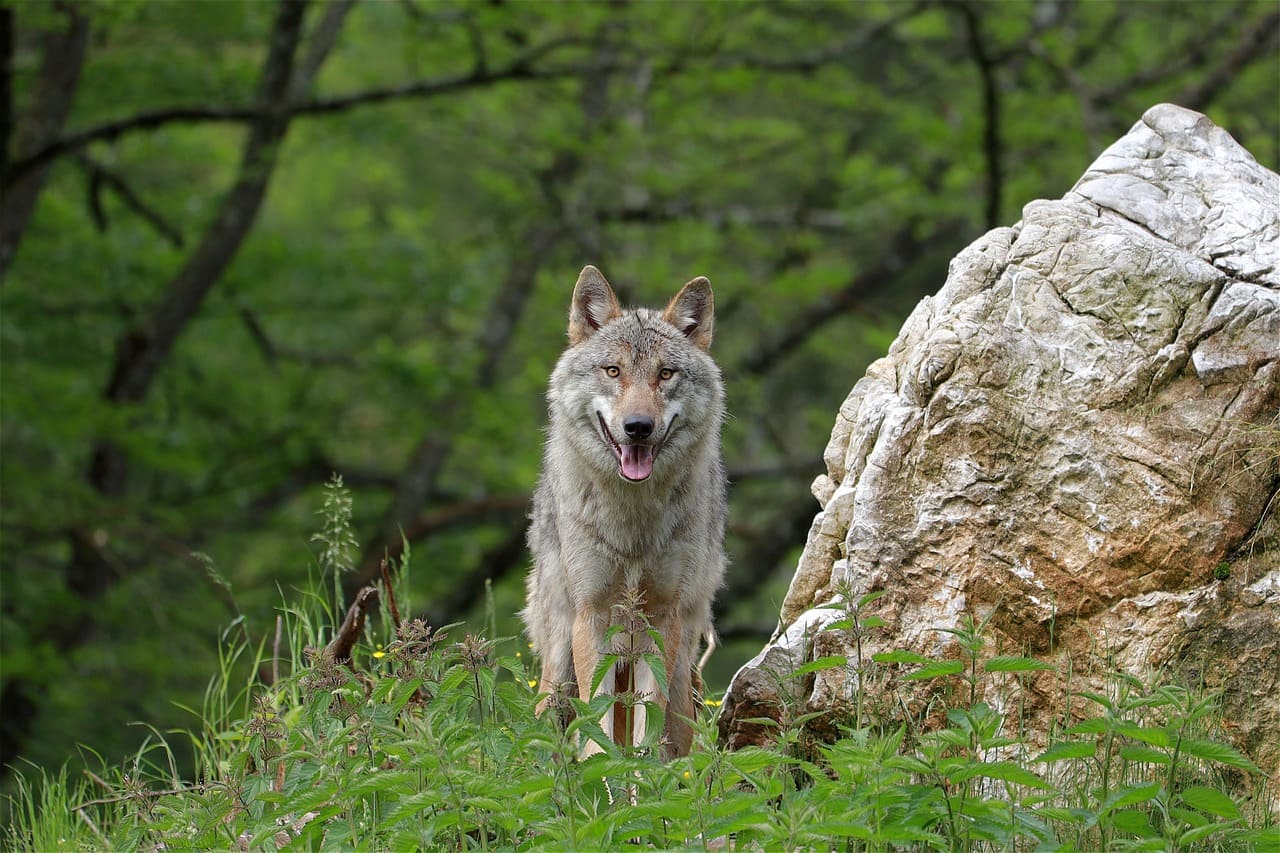
The Federal Council supports a motion by Fabio Regazzi that aims to establish a fixed population cap for wolf populations in Switzerland. What sounds technocratic – 'limits on wolf population development' – means in practice: once a politically defined number is reached, wolves are no longer regulated due to concrete problems, but because there are 'too many' of them.

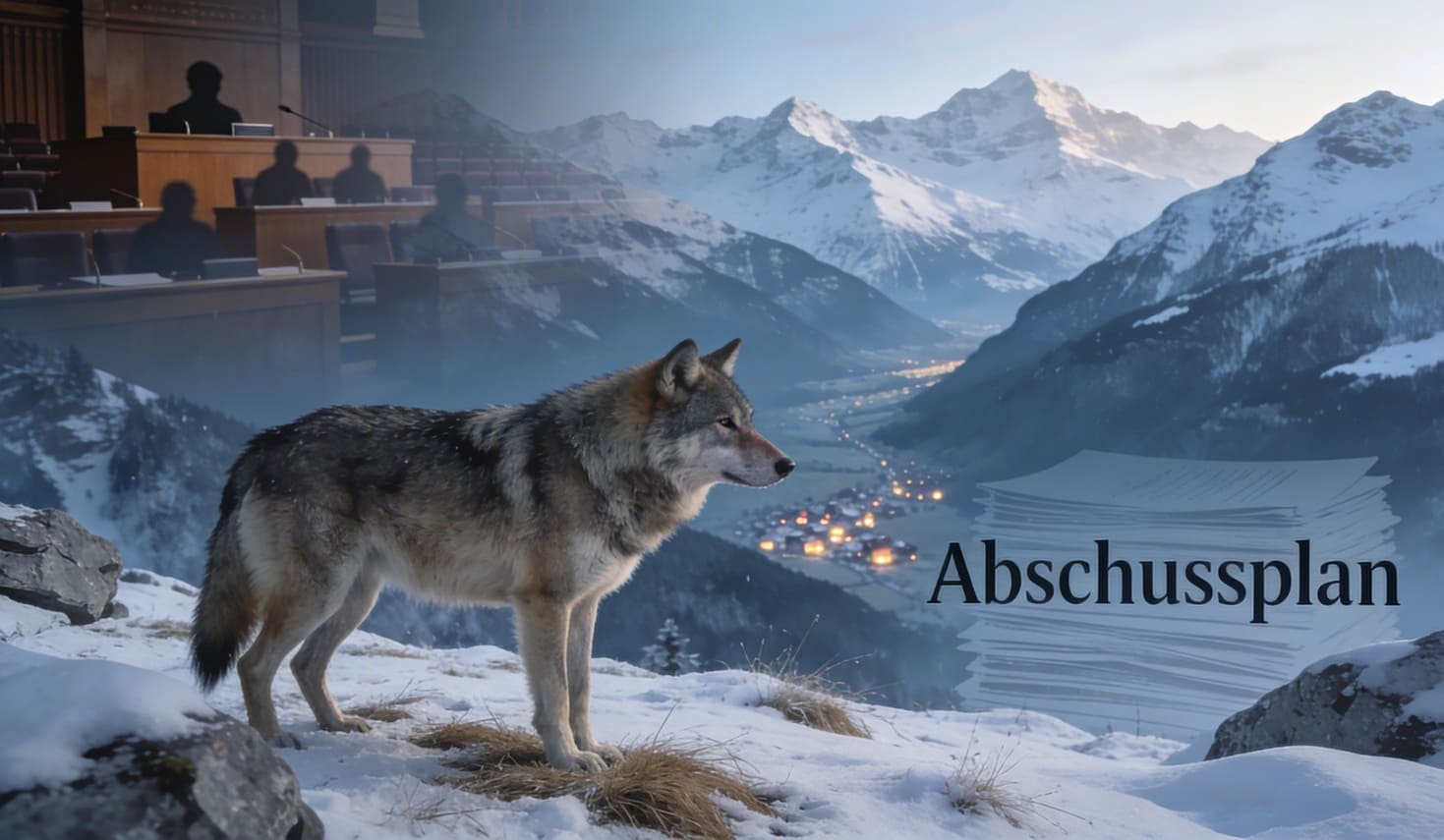
Switzerland would thereby take another step away from a scientifically justified protection concept toward symbolic population management of a strictly protected pack animal.
Fabio Regazzi's motion (The Centre/TI) demands that the federal government and cantons establish target values for wolf populations in Switzerland or individual regions, a population cap above which 'surplus' animals are removed.
Key points: Politically defined upper limits for the number of wolves and packs per region. Regulation should be possible as soon as these threshold values are exceeded, regardless of concrete damage events. Based on the ibex model: Populations are reduced at regular intervals 'according to plan'.
With this, Regazzi shifts the logic of wolf policy: away from the question of whether livestock protection failed in individual cases, whether kills are documented or whether an animal is conspicuous, toward the simple assertion that there are 'too many' wolves.
Federal Council as amplifier, not corrective
Instead of curbing this politicized population ceiling, the Federal Council recommends accepting the motion. In its statement, it refers to the growing wolf population, around 180 animals and about 17 packs, and pressure from cantons and agriculture.
Remarkable is what is missing from the argumentation: No reference to the fact that Switzerland is obligated under international law to protect large predators. No serious engagement with the question of how a politically defined 'ideal number' for a migrating, genetically exchange-dependent pack animal should be seriously determined at all. No admission that part of the conflicts are self-inflicted, through inadequate livestock protection, incorrect feeding of wild animals and recreational hunting that constantly puts ecosystems under stress.
The Federal Council thereby legitimizes the narrative that the wolf is primarily a quantity problem, not a management and conflict culture problem.
From protected species to population target: The paradigm shift
Previously the principle was: The wolf is protected, regulation is possible in exceptional cases, such as with repeated kills occurring despite livestock protection or with clearly defined 'conspicuous' animals.
With an upper limit, this relationship is reversed: Regulation becomes the normal case as soon as the political number is reached. Protection is factually reduced to what remains after the culls.
Experiences from Norway and Sweden show where this leads: Mini-populations that are barely genetically viable, highly controversial hunting quotas, ongoing lawsuits and court decisions that stop wolf culls.
Instead of learning from these mistakes, Switzerland now adopts the logic, not the lessons.
Scientific doubts and practical problems
Even from a wildlife biology perspective, the upper limit idea is questionable: Population growth naturally flattens over time because habitats become occupied and prey populations have limiting effects. Culls can trigger compensatory effects: wolves reproduce faster, new animals migrate in, pack structures become destabilized.
Biologist Simon Aeschbacher points out that the current population trend of wolves in Switzerland cannot simply be explained by culls; natural factors play a major role.
The Wolf Group Switzerland (GWS) also criticizes the political upper limit as practically and legally hardly implementable: Already today, many authorized culls are not carried out because the animals are not found or because the legal hurdles are higher than political rhetoric suggests.
Distraction from the real problem: livestock protection and recreational hunting
The upper limit debate shifts focus away from the actual control mechanisms: comprehensive, professional livestock protection with clear standards and controls; reduction of disturbances by recreational hunting, leisure activities and tourism in sensitive areas; clear rules against feeding wild animals and against practices that make prey animals unnecessarily vulnerable to attacks.
Instead of consistently completing these homework assignments, the wolf is made a scapegoat and its number declared a supposedly objective control variable.
More background on the wolf's role in the ecosystem and the politics of «proactive regulation» can be found in our dossier «Wolf in Switzerland: Facts, Politics and the Limits of Hunting» on wildbeimwild.com.
What the upper limit means politically
The Regazzi motion does not come in a vacuum: The National Council has already spoken out for the creation of «wolf-free zones», but the Council of States has rejected the corresponding motion and only demanded an examination of such areas.
The upper limit is therefore part of a gradual normalization of wolf culls in Switzerland. A signal to cantons that political pressure pays off: whoever shouts loud enough gets shooting quotas. And a precedent for other species: what is possible today with wolves can be demanded tomorrow for lynx, beavers or other wildlife.
Switzerland thereby risks squandering its reputation as a country of precautionary nature and species protection precisely with a flagship species of European biodiversity.
An upper limit is not a solution, but a symptom
A politically defined upper limit for wolves solves not a single real conflict area: it improves no fence, replaces no missing livestock guardian dog, defuses no tensions between recreational hunters, agriculture and tourism.
But it creates a new problem: A protected wild animal becomes a negotiable quantity that can be trimmed according to mood.
If Switzerland takes seriously its claim to make science and animal welfare the benchmark of its environmental policy, it needs not fewer wolves, but less symbolic politics and an honest debate about how much wilderness we actually want to allow in a densely used country.
- Fabio Regazzi and Switzerland's quick-shot wolf politics
- Quick-shot politics: How Fabio Regazzi shifts the wildlife debate from evidence-based to interest-based terrain
- Dispute over the goosander: Fabio Regazzi demands culls, conservationists warn against hasty shots
- Ticino hunting association FCTI celebrates 30 years of mischief
- Recreational hunters in Ticino shoot nursing red deer hinds
- National Councilor Fabio Regazzi from the problem association "JagdSchweiz"
- Hunting president agitates with the Federal Council
- Ticino hunting president wants to profit at others' expense
- Hunters don't want ptarmigan protected
- The Ticino wolf agitator
- The wildlife killers
- Ticino: Chamois population in popular hiking area collapsed
- Success: JagdSchweiz association loses
- Locarnese National Park is not coming
- Hit dogs bark
Support our work
With your donation you help protect animals and give voice to their concerns.
Donate now →