Hedgehogs in hibernation: why the leaves can stay in the garden
In autumn, hedgehogs settle into winter quarters beneath leaves, brushwood and hedges. Clearing away such hiding places now can destroy nests that are vital to their survival.

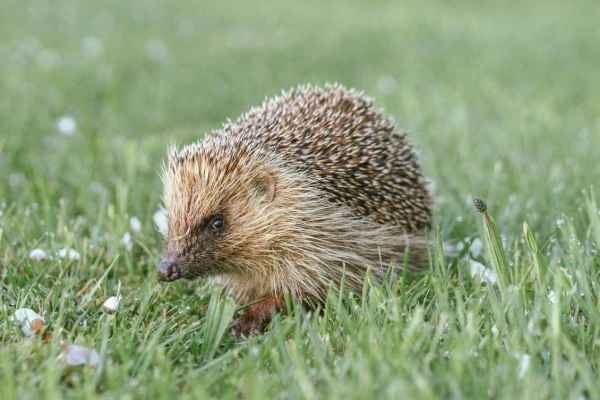
Photo: K8 / Unsplash
Now, in autumn, many people tidy up their gardens: leaves are raked together and carted away, piles of branches disappear, beds are stripped bare. Barbara Trentini, who runs a hedgehog rescue centre, calls it a mania for tidiness. For hedgehogs, this is precisely the critical time. From around November to March they hibernate, earlier or later depending on the weather, and late-born young hedgehogs are sometimes still out and about in November. Their nests are mostly found exactly where tidying takes place: under leaves, in piles of branches and brushwood, in the compost heap or beneath dense hedges.
What happens during hibernation
Hibernation is the hedgehog's survival strategy for the season when food is scarce. It sharply reduces its metabolism: according to Swiss Animal Protection STS, its body temperature drops from around 37 to about 5 degrees, and its heart beats only 8 to 20 times a minute. In this way it gets through the cold months on its fat reserves. Waking up now and then is normal, and the hedgehog usually stays in its nest when it does. But if it is disturbed or its winter quarters are destroyed, it uses up reserves that it will then lack by spring.
Tidiness costs hedgehogs their winter quarters
For a hedgehog, a pile of leaves is not just a bed but also a larder. Beetles, woodlice, worms and caterpillars overwinter beneath the leaves, and the hedgehog lives off them in spring. Anyone who clears the garden bare takes away both. We have explained why leaf blowers do particular harm in this respect in Leaf blowers drive hedgehogs from their homes.
What to do in the garden now
- Leave leaves where they lie under hedges, shrubs and on beds. They also protect the soil from frost.
- Create a pile of leaves or branches in a quiet corner and leave it undisturbed over the winter, ideally permanently.
- Do not turn over compost heaps and piles of leaves in winter, and never stick a fork into them.
- Do not burn piles of branches and brushwood. If they have to be removed, move them by hand beforehand, layer by layer.
- Secure light wells and ponds with an exit aid, such as a board with cross battens.
We cover further hazards such as robotic lawnmowers, netting and slug pellets in our dossier «Wild Animals Fact-Checked».
When a hedgehog needs help
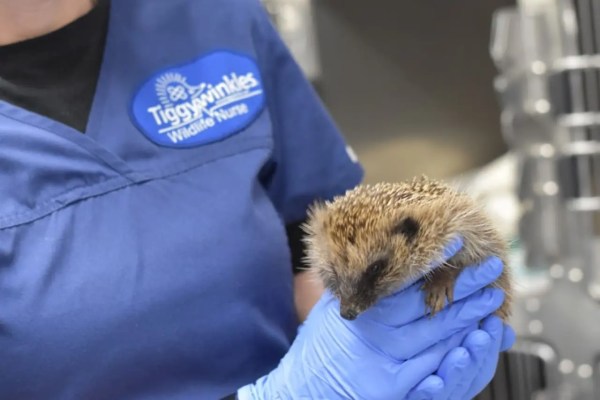
In November a young hedgehog should weigh at least about 500 grams, while adult hedgehogs should weigh well over a kilogram (Igelzentrum Zürich). If the weight is clearly below this, or if an animal looks ill, injured or weak, staggers or stays lying down, a hedgehog rescue centre should assess the situation. Healthy hedgehogs need neither supplementary feeding nor overwintering in human care. Keeping a hedgehog yourself for more than a few days is permitted only with a licence.
Feeding should only take place after consulting a hedgehog rescue centre, using cat food and never milk, as hedgehogs cannot tolerate lactose. And if you find a sleeping hedgehog, let it sleep.
Comment: The courage to be untidy
A garden with leaves under the hedge and a pile of branches in the corner is not neglected; it is inhabited. The hedgehog is on the Red List and is Animal of the Year 2026. Its greatest enemies are not the fox or the badger, which have always been part of its life, but roads, garden machinery and gardens that leave no room for it. Against all of this, something simple helps in winter: leave things as they are.
More on the subject of recreational hunting: In our dossiers on recreational hunting gather fact-checks, analyses and background reports. What the research says about this is shown by Hunting fact-checked: the state of research.
The position of IG Wild beim Wild: IG Wild beim Wild rejects recreational hunting. Our model is the canton of Geneva, which has managed without recreational hunting since 1974: without hunting seasons, without hunting dogs, without driven hunts, without high seats, without the animal cruelty and crime that go hand in hand with hunting season elsewhere. What has worked there for over fifty years disproves every position paper by JagdSchweiz. An association that bases its policy on claims it refutes in its own documents is not a professional organisation, but a factory for misinformation.
Wild animals need a voice
Once a week: research, petitions and background information on recreational hunting. Free of charge and can be unsubscribed from at any time.

All articles are written by IG Wild beim Wild as well as by external co-authors. Research, structuring and editorial processes may be supported by AI-assisted tools.
Support our work
With your donation you help protect animals and give their voice a hearing.
Donate now →