European Parliament wants to open up the Birds and Habitats Directives: motion from the circle around the hunting intergroup
On 25 November, the European Parliament demanded a revision of the EU's two most important nature conservation laws and relaxed the rules on when the killing of protected animals counts as unintentional.

Photo: Lukas S / Unsplash
The Green Network
On 25 November in Strasbourg, the European Parliament demanded that the EU Commission revise the Birds Directive and the Habitats Directive. Two of the three applicants sit on the 'Biodiversity, Hunting, Countryside' intergroup. Its secretariat is run by the European umbrella organisation of recreational hunters, FACE. On the same day, Parliament relaxed the rules on when the killing of strictly protected non-human animals in construction and infrastructure projects counts as unintentional.
Two votes on the same day
The vote concerned Parliament's position on the regulation on faster environmental assessments, part of the EU Commission's Omnibus VIII simplification package. According to Agence Europe, the plenary adopted the report by Swedish Renew MEP Emma Ytterell by 367 votes to 268, with 25 abstentions. Environmental assessments are in future to last no more than 300 days, with a possible extension of 60 days.
The more consequential decision came beforehand. By 357 votes to 284, with 21 abstentions, Parliament adopted Amendment 103. It inserts a new Article 15b: the Commission is to carry out a comprehensive review of the 1979 Birds Directive and the 1992 Habitats Directive and, within twelve months of the regulation entering into force, present a legislative proposal for their revision. According to Agence Europe, the motion was backed by the European People's Party (EPP), the European Conservatives and Reformists (ECR) and the Patriots for Europe.
The EPP thereby broke a compromise that its own shadow rapporteur had negotiated with the Social Democrats and Liberals. At the EPP's request, the vote had been postponed by a day. According to dpa, the Social Democrats, a large part of the Renew group, the Greens and the Left voted against the overall text. The majority was backed, among others, by AfD MEPs.
Who tabled the amendment
According to Brussels Signal, Amendment 103 was tabled by Beatrice Timgren of the Sweden Democrats on behalf of the ECR, together with Sander Smit and Jessika van Leeuwen of the Dutch Farmer–Citizen Movement (BBB), which belongs to the EPP Group. Timgren and Smit, but not van Leeuwen, appear on the official membership list of the Intergroup «Biodiversity, Hunting, Countryside». Carlo Fidanza (Fratelli d’Italia) and Barbara Bonte (Vlaams Belang) are also members, and both publicly celebrated the outcome as a breakthrough.
The Intergroup is no ordinary platform. It was founded in 1985, and FACE says it has run its secretariat ever since, since 2004 together with the landowners' association ELO. It has 106 members. It is chaired by Juan Ignacio Zoido (EPP, Spain). Its vice-president is Pietro Fiocchi (Fratelli d’Italia), scion of the ammunition manufacturer Fiocchi Munizioni in Lecco, in whose holding company he holds 2.39 per cent, according to L’Espresso. Members from the German-speaking world include Norbert Lins (CDU) and Alexander Bernhuber (ÖVP). In 2024, Lins told Table.Media that beavers, cormorants, bears, rooks and geese were “on the way to becoming a plague”.
What this documents is the personal proximity, not that FACE drafted the amendment. No statement from the association on the vote was available by the time of going to press.
The run-up: FACE and the stress test
Since May, the Commission has been putting the two directives through a “stress test”. We reported in September that FACE has the annexes in its sights above all, that is, the lists that determine the protection status of individual species, described in detail.
On 29 September, FACE and ELO hosted an event on the stress test in Parliament; the host was Intergroup president Zoido, and Environment Commissioner Jessika Roswall was in the room. According to the FACE report, Intergroup vice-president Christine Singer (Freie Wähler, Renew) demanded that protection status must not be permanent, naming otters, beavers and rooks. The report expressly lists changes to the annexes among the possible outcomes of the stress test. The following day, the FACE General Assembly discussed what the stress test might mean for bird hunting and for predators. In a position paper FACE calls for predator populations to be moved from the strict protection of Annex IV to Annex V, where they can be hunted.
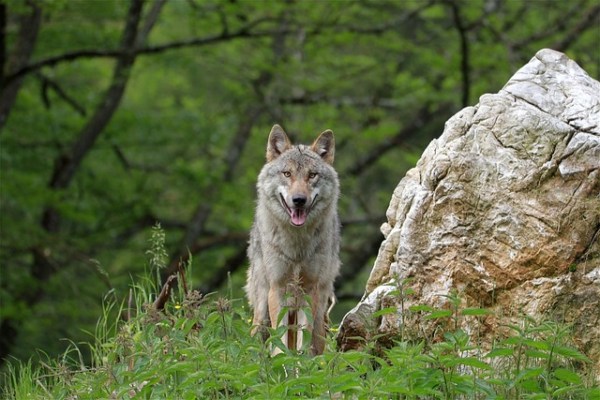
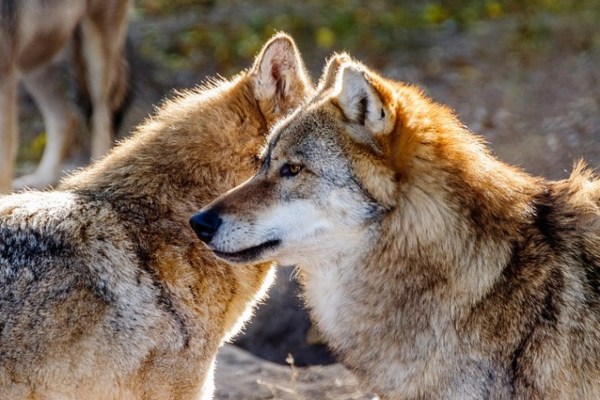
Formally, Amendment 103 targets the effect of the directives on plans and projects. But once the two laws are opened up, annexes and exemption rules also come up for negotiation. How that plays out is shown by the downgrading of the wolf's protection status: first in the Bern Convention, then in the Habitats Directive, both after criticism from WWF and without any new scientific basis.
What has already been changed in species protection
The second incision concerns Article 8 of the regulation. Anyone who kills or disturbs protected non-human animals, or destroys nests and eggs, during the construction, renovation, operation or dismantling of a project is, in the Parliament's view, no longer acting “deliberately”, provided mitigation measures are foreseen, the best available technology has been examined and cumulative effects have been assessed, and the state of the population does not deteriorate. A derogation under the Habitats Directive would then no longer be required. Social Democrats and Renew also backed this compromise.
This shifts the yardstick from the individual animal to the population. This is precisely what the European Court of Justice had ruled out on 4 March 2021 in the case of Skydda Skogen: the prohibitions apply to every single animal, regardless of the conservation status of the species. The marine conservation organisation OceanCare warns that whales, dolphins, the Mediterranean monk seal and the loggerhead turtle would also be less well protected as a result, for instance from noise caused by port expansion, seismic surveys of the seabed or pipelines. How effective genuine protection measures are is shown by the Bay of Biscay: a one-month fishing closure reduced the number of dolphins killed as bycatch in 2025 by around 60 per cent, according to the assessment by the French Ministry of the Environment and the Pelagis Observatory. We have reported on the dolphin deaths off France.
The member states go no less far on this point. According to the Parliament's Scientific Service, their negotiating mandate of 30 September extends the clause to fire protection, forestry, infrastructure and watercourse maintenance, to plants, and to nests and eggs. With Amendments 115 and 116, Parliament also wants to exempt certain agricultural and forestry projects, livestock farming and flood protection schemes, as well as interventions in rivers and waterways, from environmental impact assessment or its preliminary screening, as the alliance Hands Off Nature and Brussels Signal report.
Science and several governments against
The stress test drew around 8,500 submissions, roughly eight times as many as comparable environmental consultations. According to the alliance of BirdLife, ClientEarth, the European Environmental Bureau and WWF, the preliminary results point to shortcomings in enforcement, funding and oversight, not to any need for changes to the law. The Commission's own fitness check in 2016 had already concluded that the directives are fit for purpose.
In November, more than 1,200 researchers called on Commission President Ursula von der Leyen, in an open letter , not to touch the directives. The signatories include experts from the Swiss Ornithological Institute, the Swiss Federal Institute for Forest, Snow and Landscape Research (WSL), Agroscope, the Universities of Zurich and Bern, and BirdLife Switzerland. The #HandsOffNature petition has gathered more than 1.25 million signatures. At the beginning of November, the environment ministers of France, Germany, Hungary, Luxembourg and Spain warned the Commission in writing against a premature revision.
The Commission has nevertheless included a review of the directives in its 2027 work programme . Legislative or other measures could follow in the third quarter of 2027.
What happens next
Negotiations between Parliament and Council are due to begin under the Irish presidency, with a provisional agreement expected in early 2027. The Social Democrats want to have the revision clause struck out again. Parliament cannot force a revision in any case, as the right of initiative lies with the Commission. But the decision of 25 November gives the Commission the political backing it needs to open the directives up.
What this means for Switzerland
JagdSchweiz is a member of FACE. The wolf shows how decisions at European level play out in Switzerland: Switzerland itself had already applied in 2022 for the downgrading of its protection status under the Bern Convention, and in 2024 it backed the EU's proposal.
Migratory birds that pass through Switzerland are directly affected. Within EU territory, only the Birds Directive protects them. It is also the yardstick by which the Commission measures the Italian “Sparatutto” law , which seeks to extend hunting seasons and make it easier to capture decoy birds. If the directive is loosened, the Commission loses its most important lever against such laws.
There is also the electricity agreement: in it, Switzerland guarantees a level of environmental protection in the electricity sector that is equivalent to that of the EU. If the standard drops in Brussels, so does the bar against which Switzerland will be measured.
Context
The applicant, Timgren, speaks of a political breakthrough that tackles the causes of slow permitting. The EPP is selling the revision as red-tape reduction. Yet a construction project will not be approved any faster because a wolf or a cormorant is less protected. The Commission itself found that procedures fail above all because of a lack of staff, a lack of expertise and scarce resources. Anyone who puts the annexes of the nature directives up for negotiation under this banner is not pursuing administrative reform but delivering to the hunting lobby what it has been campaigning for over the years. That it is members of an intergroup whose secretariat is run by a hunting association, and whose vice-president holds a stake in an ammunition factory, who are proposing the opening-up is no coincidence that should be overlooked.
Sources
- Agence Europe, 25 November 2026: European Parliament adopts controversial position on speeding-up environmental assessments
- Brussels Signal, 26 November 2026: EPP sides with the Right to reopen EU nature laws
- dpa, 25 November 2026: EU Parliament backs loosening of environmental requirements
- OceanCare, 25 November 2026: EU Parliament votes for weaker protection of whales, dolphins and sea turtles
- European Parliament, Research Service: Omnibus VIII: Speeding up environmental assessments
- European Parliament: List of members of the Intergroup on Biodiversity, Hunting and Countryside
- FACE, 1 October 2026: The Stress Test of the Nature Directives
- Hands Off Nature / EEB, 25 November 2026: Weber’s EPP continues its crusade against nature
- BirdLife, 4 November 2026: 2027 work programme and resistance from Member States
- CJEU, judgment of 4 March 2021, joined cases C-473/19 and C-474/19
Do you have a tip, a source or a correction for this article? Write to us.
Seen something yourself?
A driven hunt next to a hiking trail, a shot fired near houses, a trap in the forest or an injured wild animal: report it to the Recreational Hunter Radar. We check every tip-off and treat your details confidentially.
More on the subject of recreational hunting: The scientific evidence is presented in the overview Studies on the Effects of Recreational Hunting.
The position of IG Wild beim Wild: IG Wild beim Wild rejects recreational hunting. Our model is the canton of Geneva, which has managed without recreational hunting since 1974: without hunting seasons, without hunting dogs, without driven hunts, without high seats, without the animal cruelty and crime that go hand in hand with hunting season elsewhere. What has worked there for over fifty years disproves every position paper by JagdSchweiz. An association that bases its policy on claims it refutes in its own documents is not a professional organisation, but a factory for misinformation.
Wild animals need a voice
Investigations, petitions and background on recreational hunting. As a thank-you, you will immediately receive our free guide «Recreational hunting on your doorstep: what you can do».
Support our work
With your donation you help protect animals and give their voice a hearing.
Donate now →