Carinthia: Conibear traps against otters despite Council of Europe rebuke
Since 1 November, all permitted capture methods against otters have once again been allowed in Carinthia, including the controversial Conibear kill trap. The state does not intend to abolish it until 2027. The Council of Europe meets in December.

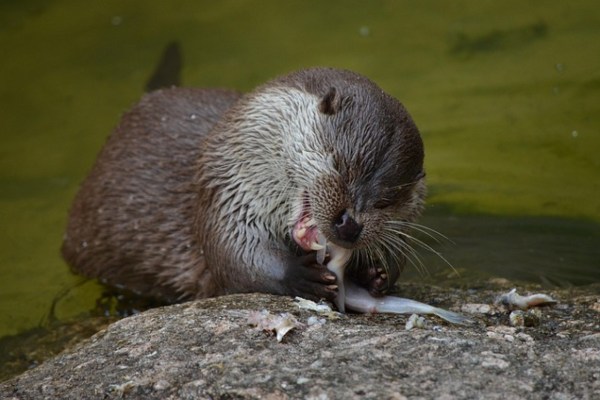
Symbolic image. Photo: Andreas Schantl / Unsplash
Back in the Flow
In Carinthia, the winter period of the otter ordinance began on 1 November. Until the end of February, otters may once again be caught and killed with “all permitted capture methods”, which include the controversial Conibear traps. The state is sticking to the rule even though the Council of Europe has treated it as an open case since December 2025.
What the ordinance permits
The basis is the Carinthian Ordinance LGBl. No. 94/2024 of 10 December 2024. It permits the killing of a maximum of 55 otters per year. Only specially trained hunting protection officers and recreational hunters who have completed a corresponding instruction course may catch and kill them.
For males, young otters and females that are neither leading cubs nor pregnant, the closed season is lifted all year round. Young animals may therefore be killed throughout the year. Only females leading cubs or visibly pregnant are protected, and even then only from 1 March to 31 October. During this period, only live traps are permitted, and these must be checked twice a day.
From November to February, the protection for mothers and pregnant females lapses, and all permitted capture methods are allowed. According to the ordinance, Conibear traps may only be set underwater and with a side length of 30 centimetres. The trap snaps shut as soon as an animal swims through. The state speaks of instant killing; animal welfare campaigners, according to ORF Kärnten, on the other hand, maintain that animals hit in the wrong place are crushed and die an agonising death.
Abolition not until 2027
The ordinance expires on 13 December 2026. On 30 October, the responsible department of Deputy Governor Martin Gruber (ÖVP) confirmed to 5min.at that the traps would be set up "at least until December". "A change to the hunting act is planned for next year, with the intention of no longer using the Conibear trap." Until mid-December, the trap thus remains legally in use.
What the Bern Convention decided
Following a complaint from Tierschutz Austria in 2022, the Standing Committee of the Bern Convention, at its 45th meeting in December 2025, elevated the case to an open file ("Open File") over concerns relating to Articles 8 and 9 of the Convention. According to the list of decisions, the Committee recalls that Conibear traps are among the means prohibited under Appendix IV, and calls on Carinthia to withdraw or amend the ordinance. Austria and Carinthia had to report on progress by the autumn meeting of the Bureau in September 2026.
The decision was less severe than initially expected. Tierschutz Austria itself concedes that the final text was "watered down". Martin Gruber had already stated in December 2025 that withdrawing the ordinance was "absolutely out of the question".
It is also worth putting this in context: in the same decision, the Committee notes that Austria's report under Article 17 of the Habitats Directive classifies the conservation status of the otter in the Alpine region as "favourable, with an increasing trend", and welcomes this development. It notes that the growth occurred despite the removals since 2018. As recently as April 2025, the Bureau of the Convention had described the status as unfavourable and demanded a year-round ban on Conibear traps, which Wild beim Wild reported reported on. However, a favourable conservation status does not change the fact that the Convention classes the trapping method itself as a prohibited means.
Hundreds of otters killed
Figures for how many otters have been killed in Carinthia vary. According to ORF, the province cites 247 animals for 2019 to 2024, while Tierschutz Austria says 226. According to the WWF report of May 2026, 258 otters in Carinthia and 565 across Austria have been killed with official authorisation since 2020.
WWF describes Conibear traps as prohibited under European law and not permitted in the other Austrian federal states. Tierschutz Austria also points to the ban in Germany and to Burgenland, which manages without killing and relies on advice and protective measures at fish ponds.
There has also been movement on the legal front: in August 2026, in the case of the Upper Austrian otter ordinance, the Administrative Court ruled that environmental organisations may file requests for review against such ordinances (WWF).
Why this also matters for Switzerland
The Bern Convention also applies to Switzerland. How seriously contracting states take the decisions of the Council of Europe is evident not only in Carinthia, but also in Swiss wolf practice. How pressure on the otter builds up can also be seen in Bavaria. Further analyses can be found in the section Hunting Act and under Wild animals.
The Standing Committee of the Bern Convention meets from 7 to 11 December 2026 for its 46th meeting (Council of Europe), just days before the Carinthian ordinance expires. Until then, otters in Carinthia continue to die in Conibear traps.
More on the subject of recreational hunting: The scientific evidence is presented in the overview Studies on the Effects of Recreational Hunting.
The position of IG Wild beim Wild: IG Wild beim Wild rejects recreational hunting. Our model is the canton of Geneva, which has managed without recreational hunting since 1974: without hunting seasons, without hunting dogs, without driven hunts, without high seats, without the animal cruelty and crime that go hand in hand with hunting season elsewhere. What has worked there for over fifty years disproves every position paper by JagdSchweiz. An association that bases its policy on claims it refutes in its own documents is not a professional organisation, but a factory for misinformation.
Wild animals need a voice
Once a week: research, petitions and background information on recreational hunting. Free of charge and can be unsubscribed from at any time.

All articles are written by IG Wild beim Wild as well as by external co-authors. Research, structuring and editorial processes may be supported by AI-assisted tools.
Support our work
With your donation you help protect animals and give their voice a hearing.
Donate now →