15 assurances to the Council of Europe: what wolf management practice makes of them
In Strasbourg, the FOEN promises a closed season for packs, review by the Confederation and herd protection before any kill. Practice and the revision of the hunting act tell a different story.
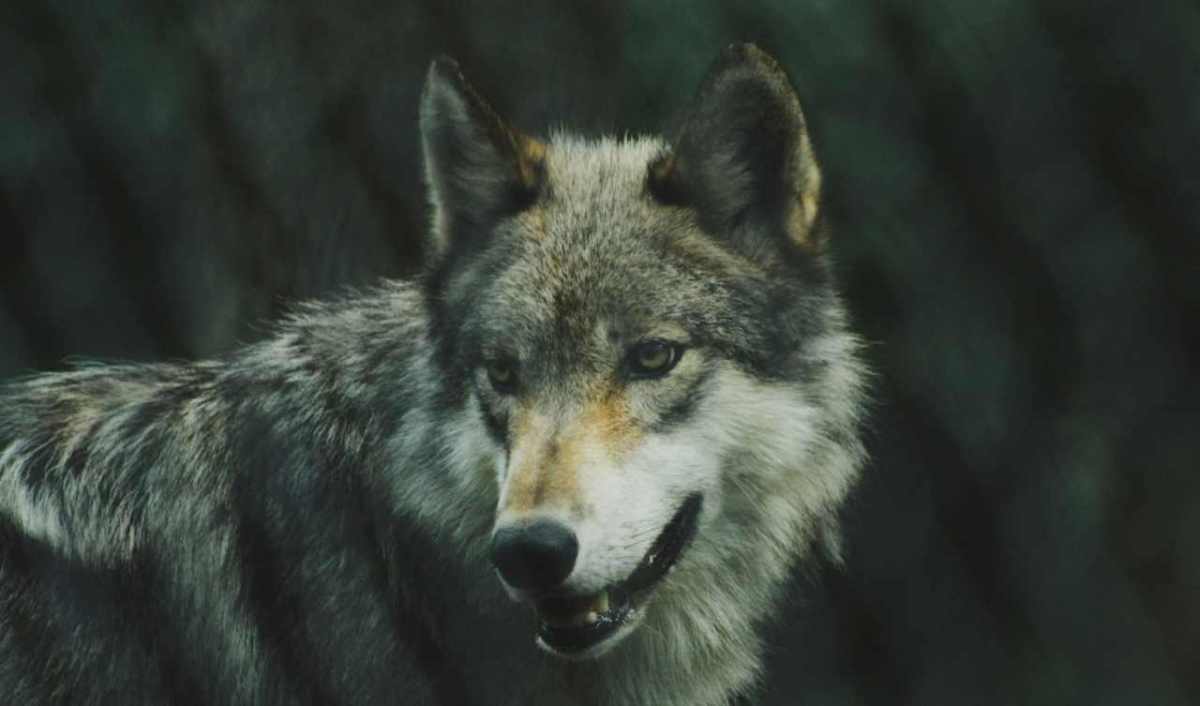
Photo: Michael LaRosa / Unsplash
Who Controls Whom
In proceedings before the Bern Convention, the Federal Office for the Environment (FOEN) set out in writing to the Council of Europe the rules under which Switzerland kills wolves. Wild beim Wild has compared these assurances point by point with the practice of the cantons, the FOEN's own figures and the ongoing revision of the hunting act. The result: there are points of failure in 15 assurances, and in several of them clear contradictions. From 7 to 11 December 2026, the Standing Committee of the Bern Convention will take up the file again.
The basis
The document bears the number T-PVS/Files(2025)2023-3_gov and was published in Strasbourg on 18 November 2025, «établi par l’Office fédéral de l’environnement OFEV» (PDF, 12 pages). It combines an update from November 2025 (pp. 2 to 4) with the report from summer 2025 (pp. 5 to 12). The page numbers below refer to this PDF. We have also taken into account the most recent government report, T-PVS/Files(2026)2023-3_gov_rev of 17 September 2026 (PDF, 7 pages), likewise signed by FOEN Director Katrin Schneeberger and cited as the «Report 2026». On the background to the proceedings: Wolf regulation: what the FOEN assures the Council of Europe in writing.
As a cross-check we use, among other sources, the FOEN's «Rapport sur les régulations de loups 2025-2026» of 18 May 2026, referred to below as the «FOEN Report 2025/26».
For each point we distinguish between the following: a contradiction is documented. A tension means that practice is hard to reconcile with the assurance, but a breach has not been proven. Cannot be verified means that the assurance cannot be checked from the outside because the documents are missing.
Closed season and federal review
1. Packs are protected from February to August
The FOEN writes (p. 9): «Les cantons ont l’obligation, durant la période du 1er février au 31 août, période de reproduction et d’élevage, d’exclure toute reproduction avant d’émettre une autorisation de tir. […] Les meutes sont protégées durant cette période.»
The Federal Council's consultation draft would permit measures against individual pack wolves from 1 February to 31 May. The explanatory report concedes «a certain risk» of «leaving orphaned young behind» (p. 7). Grisons is requesting a regulation window from 1 June to 28 February, while the farmers' associations want year-round regulation (Consultation: Zug wants to delete the FOEN approval requirement).
How little the obligation to rule out reproduction already achieves today is shown by the case of F168. On 4 August 2025, Valais had the she-wolf shot in the Rappental as a «lone wolf». According to the autopsy report from the University of Bern, she had given birth in May 2025, as the FOEN confirmed to «Blick». According to the FOEN, she was probably no longer nursing at the time of the kill. Three days later, a wildlife camera in the Binntal filmed four pups. The canton considers it unclear whether F168 was their mother. The report was available from the end of October 2025. Neither the November 2025 document nor the 2026 report mentions the case («Blick», 19.9.2026; Wild beim Wild, 20.9.2026).
Contradiction. The revision abolishes a protection that the FOEN presented in Strasbourg as part of the system.
2. No pack kill without prior approval from the FOEN
The FOEN writes: «Chaque canton qui souhaite réguler une meute de loups doit au préalable recevoir l’assentiment de l’OFEV» (p. 3). «Avant de donner son assentiment, l’OFEV vérifie le respect de la Loi fédérale sur la protection des animaux» (p. 8).
In the consultation, Zug is requesting that the words «after approval by the Federal Office» be deleted. The Bernese Farmers' Association demands the same and additionally wants to abolish the FOEN's right to be heard on kills in wildlife reserves. Even today, in 2026 the FOEN granted approval for at least four Grisons packs (Stagias, Dreibündenstein, Muchetta, Agnas) before the first evidence of offspring. In the case of Stagias, two wolves were dead two days after the first evidence (Wolf kills: federal government approves before pups are confirmed).
contradiction regarding the demands from the consultation, tension with the advance approvals: a case-by-case assessment is hardly possible before the wolves have been confirmed.
3. Protected areas
Federal hunting ban areas do not appear in the document. On the National Park it says (p. 11): «aucun tir n’est autorisé dans le parc.» The bill now opens up the federal hunting ban areas, according to the explanatory report «both for individual kills […] and for the regulation of packs» (p. 6).
In the 2026 report, the FOEN at least informs the Council of Europe that Parliament has adopted the Friedli motion («Autoriser le tir de loups dans les districts francs») and the Broulis motion (kills of pack wolves «tout au long de l’année») (p. 6). The consultation of June 2026 with the concrete legal text is not mentioned either, nor is the September 2026 update.
No direct contradiction, because the FOEN gave no assurances about hunting ban areas. The Council of Europe knows the general direction, but not the draft and not the cantons' demands.
Regulation as a last resort
4. Herd protection must be implemented beforehand
The FOEN writes (p. 7): «Il est à souligner que la régulation est la dernière mesure. Avant une telle décision, des mesures de protection des troupeaux doivent être mise en place». Damage only counted if «les mesures raisonnables de protection des troupeaux aient été appliquées dans les règles de l’art» (p. 8).
In Ticino, of 117 livestock animals killed up to 28 September 2026, 6 were adequately protected according to cantonal statistics. In 45 cases the authority classes the protection as inadequate, in 13 as inadequate owing to force majeure, and in 52 as not reasonable to expect. At the same time, the federal government approved pup kills in nine Ticino packs, including Molare and Lepontino, without any kill being attributed to them. In Schwyz, basic protection was missing in three of four kill incidents. In the Mattertal, sheep were again put out to summer pasture without herd protection in 2026, where 54 unprotected animals had been killed in 2025. In judgment 2C_68/2024, the Federal Supreme Court found that St. Gallen had not sufficiently examined herd protection before a kill. The FOEN itself cites the judgment in its 2025/26 report (p. 5).
Tension to contradiction. Preventive regulation does not require one kill per pack. In Strasbourg, the FOEN (BAFU) itself states that damage need only be likely: «Il suffit que leur survenue soit très probable» (p. 6). In its 2026 report it also concedes that the falling damage figures are partly linked to the «adaptation de la pratique d’indemnisation depuis février 2025»: since then, compensation has only been paid if the animals were protected (p. 4). Part of the decline is therefore an artefact of how losses are counted.
5. Milder measures such as deterrence first
The FOEN writes (p. 7): «il convient d’essayer d’autres mesures douces au préalable comme l’effarouchement par exemple.» In the FOEN's published approvals and in the cantonal announcements on the 2026 regulations in Grisons, Valais and Ticino, there is no indication of any prior deterrence attempts.
Cannot be verified. Whether deterrence was attempted is not publicly documented.
6. Herd protection as a precondition, but with less funding
Herd protection is «une importante condition préalable à la régulation du loup» (p. 7). In the same document, the FOEN concedes: «Depuis 2025, la contribution fédérale a été baissée à 50%» (p. 10). For the return to 80 per cent it gives two dates: «dès le printemps 2026» (p. 10) and «A partir du mois de janvier 2026» (p. 3). Regulation nevertheless continued in full in 2025.
tension, as conceded by the FOEN itself.
Who is killed
7. Entire packs only where misbehaviour is proven
The FOEN writes: «Les meutes qui ne présentent pas de comportement indésirable ne peuvent pas être prélevées» (p. 6), «Le comportement indésirable doit être prouvé» (p. 8), and a pack must «impérativement» have shown undesirable behaviour (p. 9).
In autumn 2026, the FOEN approved the complete removal of the Valais packs Augstbord and Nanz. The published decisions contain no information on kills, herd protection or pack size. The canton justifies its application for Arolla-Ferpècle of 13 October solely with conflicts in «problem areas», in the same valley where the Federal Administrative Court rejected a regulation in 2023 owing to inadequate herd protection. For the total removal of the Grisons pack Giarsinom, the authority supplied the justification only after the fact, via the press.
Cannot be verified, with considerable tension. Whether misconduct is "prouvé" (proven) cannot be verified by anyone as long as the grounds are not published.
8. No mothers, pups before the parents
In the section on reactive regulation, FOEN writes (p. 8): «Les mères ne peuvent pas être prélevées et le tir de l’adulte présentant un comportement indésirable ne doit pas porter préjudice aux jeunes individus». The FOEN report 2025/26 requires young wolves to be shot «dans la mesure du possible» before the parent animals (p. 9).
The same report records three cases in 2025/26 in which parent animals or adult wolves were killed during partial regulations that did not permit this. In a further case, one parent animal had been authorised, but the other was shot (p. 7). In the Augstbord perimeter, the wildlife wardens killed two adult wolves first on 26 September 2026, and in the Nanztal on 8 and 11 October one adult wolf each together with young animals (Valais ticker). In Neuchatel, the father wolf M583 of a pack with pups has been liable to be shot since 1 September. F168 was formally authorised as a lone wolf, not as part of a reactive regulation.
contradiction in the wrongful kills reported by FOEN itself, tension on the rule «pups first».
9. Wrongful kills as isolated cases
On the killing of lynx instead of wolf pups in the Surselva, FOEN writes (p. 4): «Il s’agit ici d’un cas isolé.» In the event of wrongful shots, a sanction is threatened.
The FOEN report 2025/26 shows a different picture (pp. 6 and 7): in 2025/26, 7 of the wolves killed came from a different pack, and for 8 the origin was unknown or uncertain. In 2024/25 it was 5 from other packs and 20 of unknown origin. In addition there are the parent animals from point 8 and a wolf pup that was shot «par erreur à la place d’un renard» and then counted against a pack. None of the government reports to the Council of Europe mentions these cases. In the lynx case, FOEN speaks of «trois jeunes lynx»; according to the canton of Grisons, they were two young lynx and one fully grown male. On the level of sanctions: in Herbriggen, an illegally shot female wolf cost a fine of 300 francs, and the licence was kept.
contradiction, as regards the completeness of the information given to the Council of Europe.
Who shoots and with what
10. Recreational hunters only under the supervision of the wildlife wardens
According to the FOEN (pp. 3 to 4), hunters taking part in regulation must complete additional cantonal training, "être titulaire d’une autorisation spéciale cantonale et sera soumis à la surveillance d’un garde-faune".
In Ticino, according to the document, the "Gruppo Controllo Lupi" was set up on 28 May 2026: up to 88 recreational hunters, four per game warden, equipped with thermal imaging cameras, deployed at night as well, and with 500 francs per wolf killed. In Grisons in September 2026, seven of 17 wolves killed were, according to Keystone-SDA, "attributable to the roughly 3,150 authorised hunters", based on figures from the Office for Hunting and Fishing (watson/SDA, 5.10.2026).
In its 2026 report the FOEN also writes: "Par principe, ce sont les acteurs cantonaux, soit les gardes-faune ou la police de la faune qui sont compétents pour l’exécution sur le terrain" (p. 5). It does not mention the Ticino bounty per wolf.
Cannot be verified, with a clear tension. How oversight by the wildlife wardens is to be ensured with over 3,000 authorised recreational hunters or during night-time operations is not documented.
11. Night vision devices as an exception
The FOEN discloses that night vision devices "fassent partie des moyens interdits selon l’art. 8 de la Convention de Berne" and that the kills take place "majoritairement de nuit" (p. 6). Their use is said to be "autorisée exceptionnellement" (p. 4). The FOEN report 2025/26 confirms: "Les tirs s’effectuent généralement de nuit" (p. 9). Since 2026, recreational hunters in Ticino have also been equipped with thermal imaging cameras. The mistaken killing of a lynx occurred with thermal imaging technology.
Tension. The FOEN has disclosed that shooting takes place at night. Yet a means prohibited under the Convention has thereby become the rule.
Transparency and oversight
12. "Toutes les informations"
The FOEN writes (p. 11) that Switzerland shared "de manière transparente toutes les informations concernant sa gestion du loup". However, the FOEN's approvals are published as a list without justification. Valais reports kills only in a table, without a press release and initially without a genetic identifier. The autopsy report on F168 remained unpublished for around eleven months. Mistaken kills and wolves of unknown origin are absent from the government reports. The Federal Administrative Court does not consider appeals against FOEN approvals, CHWOLF was denied the right of appeal.
Contradiction.
13. The FOEN as supervisory authority
«En tant qu’autorité de surveillance, l’OFEV y veille», writes the office (p. 4). According to «Blick», since the beginning of 2024 the FOEN has lodged an appeal against only a single cantonal kill order nationwide, against the kill in Staldenried in Valais. No appeal was lodged against the order concerning F168.
Tension. If prior approval is dropped, as Zug and the farmers' associations demand, only this rarely used after-the-fact oversight would remain.
Population and impact
14. Twelve packs as a lower limit, «pas un but en soi»
The FOEN writes (p. 6) that twelve packs are «une limite minimale pour assurer le maintien de l’espèce, mais pas un but en soi», and that packs without undesirable behaviour must not be removed, «même si le nombre minimum est dépassé».
Motion 25.4464 by Fabio Regazzi, by contrast, demands kills as soon as a population threshold is exceeded. The Federal Council supported it, the Council of States adopted it on 19 March 2026, and the National Council followed on 23 September 2026 by 116 votes to 73 (Wolf threshold: National Council approves motion). According to the parliamentary database, it has been referred to the Federal Council. The 2026 report still states that it will «ensuite» be examined by the National Council (p. 6); the September update was not carried over there.
contradiction at Federal Council level. Incidentally, the same paragraph contains the sentence «La Suisse restera ainsi nettement en-dessous du seuil de 12 meutes», immediately followed by the statement that Switzerland has 36 packs. The 2026 report then says: «En 2023/24, la Suisse dénombrait 30 meutes validées […], contre 30 en 2024/25», and concludes that the population «continue de croître lentement» (p. 4). One page earlier it says the population remains «stable» (p. 3). In the 2025 report, the FOEN had still given 36 packs for 2024/25 (p. 10).
15. Regulation preserves the packs
«Le système de gestion du loup en Suisse ne met pas en danger la population», writes the FOEN (p. 11). The FOEN report 2025/26 says that regulation «permet de préserver les meutes de loups» (p. 9). In the Valais perimeters of Nanz and Augstbord, however, 17 and 21 wolves respectively have been killed since December 2023, and in 2026 whole wolf families are to disappear there again. According to KORA, direct evidence for the protective effect of pup kills is scarce. The number of approvals rose from 22 in autumn 2025 to 39 in October 2026, even though livestock kills fell (Counter of wolf kills in Switzerland).
In its 2026 report, the FOEN itself concedes: «l’efficacité des mesures prises pour la protection des troupeaux et la régulation des loups ne peut être démontrée de manière concluante» (p. 2).
Contradiction. The claim that regulation works stands alongside the FOEN's own admission that its effectiveness has not been demonstrated.
Context
Switzerland has described to the Council of Europe a system resting on four pillars: protection of packs during the rearing period, prior review by the Confederation, herd protection and deterrence before any kill, and full transparency. Each of these pillars is already fragile in practice. With the revision of the hunting act and the demands of the cantons, the first two would disappear entirely or in part.
IG Wild beim Wild demands that the FOEN publish every approval together with its reasoning, including proof of herd protection, the pack size and the behaviour that is supposed to justify a removal, and that it disclose the consultation draft, the erroneous kills and the case of F168 to the Standing Committee of the Bern Convention.
Sources
- FOEN / Council of Europe: Rapport du gouvernement, Dossier 2023/03, T-PVS/Files(2025)2023-3_gov, 18.11.2025
- FOEN / Council of Europe: Rapport du gouvernement, T-PVS/Files(2026)2023-3_gov_rev, 17.9.2026
- CHWOLF and Avenir Loup Lynx Jura: Complainant report, T-PVS/Files(2026)2023-3_comp, 28.5.2026
- FOEN: Rapport sur les régulations de loups 2025-2026, 18.5.2026
- DETEC: Explanatory report on the revision of the hunting act, 24.6.2026
- «Blick»: Valais had mother animal shot as a lone wolf, 19.9.2026
- watson/Keystone-SDA: 17 wolves killed in Grisons in September, 5.10.2026
- Canton of Zug: Consultation response, 25.8.2026
- Bernese Farmers' Association: Statement, 11.9.2026
- Canton of Grisons: Statement on the erroneous lynx kill, 26.11.2024
More on the subject of recreational hunting: What the research says about this is shown by Hunting fact-checked: the state of research.
The position of IG Wild beim Wild: IG Wild beim Wild rejects recreational hunting. Our model is the canton of Geneva, which has managed without recreational hunting since 1974: without hunting seasons, without hunting dogs, without driven hunts, without high seats, without the animal cruelty and crime that go hand in hand with hunting season elsewhere. What has worked there for over fifty years disproves every position paper by JagdSchweiz. An association that bases its policy on claims it refutes in its own documents is not a professional organisation, but a factory for misinformation.
Wild animals need a voice
Once a week: research, petitions and background information on recreational hunting. Free of charge and can be unsubscribed from at any time.

All articles are written by IG Wild beim Wild as well as by external co-authors. Research, structuring and editorial processes may be supported by AI-assisted tools.
Support our work
With your donation you help protect animals and give their voice a hearing.
Donate now →