Wolf regulation: IG Wild beim Wild demands files and oversight from the FOEN
A request under the Freedom of Information Act and a supervisory complaint are intended to clarify what the Federal Office bases its approvals on and what it tolerates in Ticino.

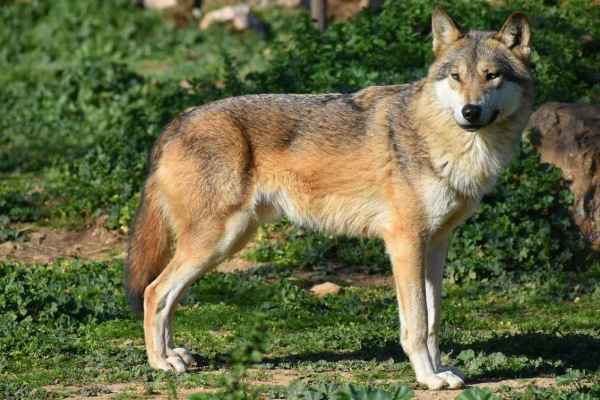
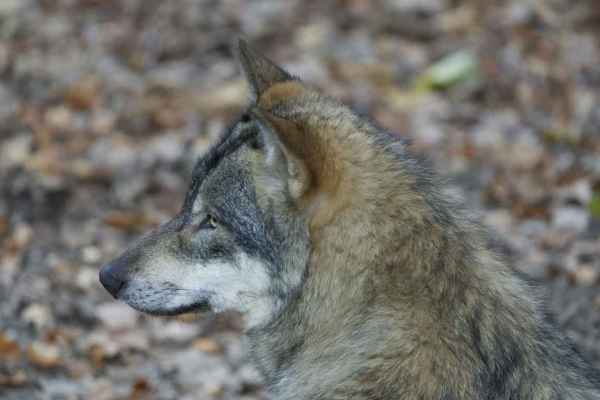
Symbolic image. Photo: Frida Lannerström / Unsplash
Bounty
On 12 October 2026, IG Wild beim Wild submitted two letters to the directorate of the Federal Office for the Environment (FOEN). With a request under the Freedom of Information Act, it is demanding access to the files behind wolf regulation. With a supervisory complaint, it is calling on the FOEN to review the kill bounty of the canton of Ticino.
Why the files matter
In its statements to the Council of Europe, the FOEN says regulation is a last resort. Herd protection must be implemented and less drastic means must have been tried beforehand. Entire packs may only be removed in cases of clearly defined undesirable behaviour (see What the FOEN has assured the Council of Europe in writing). In Switzerland, however, the office nonetheless approves the removal of entire packs, without the published decisions showing how these conditions were examined. IG is therefore demanding the files: the FOEN should make it verifiable whether its practice matches its own assurances.
What IG is demanding
The request comprises six points:
- the inter-office consultation on the 2023 amendment to the Hunting Ordinance, in particular the opinions of the Federal Office of Justice, the Directorate of International Law and the Federal Office for Agriculture, as well as the FOEN's evaluation;
- the corresponding documents on the revision that entered into force on 1 February 2025. The two inter-office consultations are intended to show whether legal concerns were raised within the administration and how the FOEN dealt with them;
- the internal legal assessments on proactive wolf regulation and on the compatibility of the minimum of twelve packs with the Bern Convention, the Federal Constitution and the Hunting Act;
- the the scientific basis for these twelve packs and the documents justifying the departure from the 20 packs set out in the 2016 Alpine Convention report;
- the Correspondence with the Secretariat and the Bureau of the Bern Convention in the proceedings on Swiss wolf policy;
- the documents on the decision to forgo a regular consultation procedure in 2023, including the organisations invited, the deadline set, and the responses received and their evaluation.
Everyone is entitled to access official documents without having to demonstrate a particular interest. The FOEN must in principle respond within 20 days. For extensive documents or those that are hard to obtain, it may extend the deadline, but must inform the applicant in advance. If the authority restricts, refuses or postpones access, or if no response is received within the deadline, the IG can apply for mediation to the Federal Data Protection and Information Commissioner (FDPIC).
The supervisory complaint on Ticino
In Ticino, recreational hunters of the Gruppo Controllo Lupi receive 500 francs for every wolf killed and are equipped with thermal imaging cameras (see 500 francs per wolf). Such a bounty contradicts the assurance that regulation is a last resort: it creates a financial incentive to kill, while the FOEN stresses to the Council of Europe that less drastic measures must be exhausted first.
Then there is the question of night-time kills. In Strasbourg, the FOEN confirms that electronic sighting devices for night-time kills fall under the prohibition of the Bern Convention, and invokes exceptions under Article 9. The IG therefore demands information on which night-vision and thermal imaging technology is being used in Ticino and on which case-by-case assessment any exception is based.
In the regulation of the Peloso and Camoghè packs, no more than two thirds of the young born in 2026 may be killed, with parent animals exempt. In the IG's view, the bounty creates a perverse incentive: it rewards the dead wolf, not restraint in cases of doubt. The FOEN itself has confirmed that misidentifications occur. In the 2024/25 period, three young lynx were killed instead of wolf pups.
The IG requests that the FOEN examine the kill bounty and the use of night-vision and thermal-imaging technology, and disclose the basis for any exceptions. It should instruct the canton to refrain from paying bounties per animal killed and make any further approvals for regulation conditional on this. It should also ensure that no federal funds are used for kill bounties. Whether such funds have so far flowed into the bounties remains unclear. The Confederation pays the cantons up to CHF 30’000 per pack and year for wolf management.
What happens next
A supervisory complaint does not confer party rights. The IG has nevertheless expressly asked the FOEN to inform it of the outcome of the review. Wild beim Wild will report on the authority's responses. The current status of the kills is shown by the wolf counter.
More on the subject of recreational hunting: What the research says about this is shown by Hunting fact-checked: the state of research.
The position of IG Wild beim Wild: IG Wild beim Wild rejects recreational hunting. Our model is the canton of Geneva, which has managed without recreational hunting since 1974: without hunting seasons, without hunting dogs, without driven hunts, without high seats, without the animal cruelty and crime that go hand in hand with hunting season elsewhere. What has worked there for over fifty years disproves every position paper by JagdSchweiz. An association that bases its policy on claims it refutes in its own documents is not a professional organisation, but a factory for misinformation.
Wild animals need a voice
Once a week: research, petitions and background information on recreational hunting. Free of charge and can be unsubscribed from at any time.

All articles are written by IG Wild beim Wild as well as by external co-authors. Research, structuring and editorial processes may be supported by AI-assisted tools.
Support our work
With your donation you help protect animals and give their voice a hearing.
Donate now →