Court halts official fox kills in the French Alps
Two dead lambs in a net were enough for the prefecture to authorise a month of fox hunting with night-vision technology. The Administrative Court of Marseille saw serious doubts about its lawfulness.
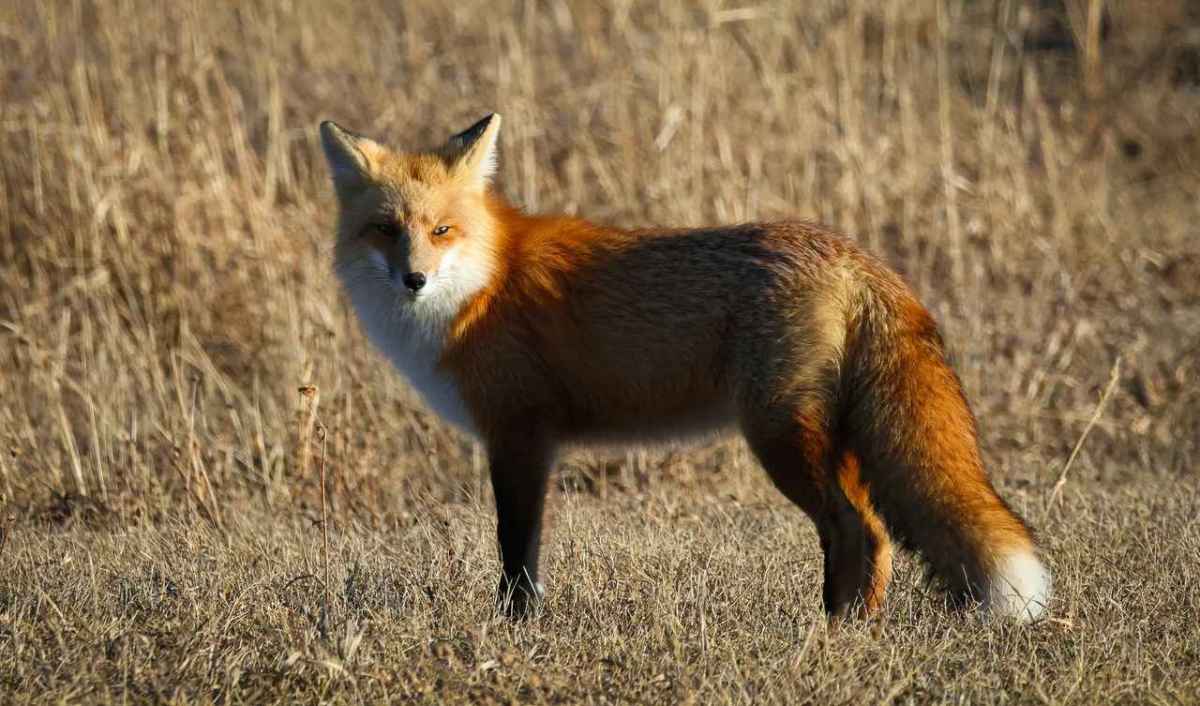
Red fox in an open meadow. Illustrative image. Photo: Quinn Savatgy / Unsplash
An Old Promise Echoes in the Forest
In the French commune of Les Orres in the Hautes-Alpes, foxes could be shot day and night from 6 October 2026, using thermal imaging technology, across the entire municipal territory and right up to the immediate vicinity of residential buildings. The prefecture's order was valid until 8 November and set no upper limit on either the number of operations or the number of foxes killed. Following a legal challenge by the animal welfare organisation One Voice, the Administrative Court of Marseille has suspended the kills. The hearing took place on 26 October, and One Voice made the decision public on 30 October.
Two dead lambs, one missing, no evidence
The grounds for the order were modest: two lambs found dead in a net, and a third that had disappeared. Foxes had been photographed nearby. That was all there was. One Voice countered that the mere presence of a fox says nothing about the cause of death, and that foxes are in any case not typical predators of lambs. Anyone who finds dead animals in the mountains will regularly find foxes there too: they clear away carcasses. That is precisely what they are then blamed for.
The pattern is familiar from the Swiss debate. A kill, a suspicion, a photo, and in the end a kill permit. The burden of proof is reversed: it is not the authority that has to demonstrate that a particular animal caused the damage, but the animal that would have to prove its innocence.
What the judge examined
The judge first acknowledged the urgency: a fox that has been killed cannot be brought back to life, so the measure is irreversible. On the substance, he relied on two points. First, there was no evidence for the attacks attributed to the foxes. Second, the law requires proven significant damage, and that proof was likewise lacking. Together, these gave rise to serious doubts about the lawfulness of the order.
A third point is noteworthy: the judge took the role of foxes in the ecosystem into account in his balancing of interests. That is more than a formality. It means that the benefit of a predator is no longer treated as a side issue that makes no difference against an alleged harm anyway.
The technology that would have been used here
Kills were permitted at night using thermal imaging technology, right up to the edges of settlements, that is, precisely where hunting does not normally take place. With such devices, hunting becomes a search for heat signatures in the dark. How little of this has to do with the image of fair hunting practice is something Wild beim Wild has set out in its dossier on night hunting and high-tech hunting.
In Switzerland, this route barely exists
The decisive difference lies not in compassion but in procedure. In France, an animal welfare organisation can take an individual kill order before the administrative judge within a few days, and it does so regularly and often successfully. In Switzerland, this route is narrow. In September 2026, the Federal Supreme Court denied the association CHWolf the right of associations to lodge appeals, which meant that the killing of seven wolf packs went without judicial review. The details of this ruling can be found in the article "Federal Supreme Court: CHWolf may not challenge wolf kills".
In the case of the fox, the question does not even arise in this form. It is huntable game in almost all cantons, and killing takes place during the regular hunting season, without an individual order that anyone could challenge. What was approved in Les Orres as an exceptional measure and halted by a court is the normal state of affairs here, only without a court.
Around 21,000 foxes killed per year, and Geneva manages without
In Switzerland, around 21,000 foxes are killed per year today, compared with over 42,000 25 years ago. The decline in the bag has not led to any visible problem, as the analysis "Hunting statistics 2000 to 2025" shows. In the canton of Geneva, where recreational hunting has been banned since 1974, annual fox numbers stand at between zero and eighteen, and nothing has collapsed there either. The fact check on the Geneva figures sets out what the official statistics have to say on the matter.
What you can do now
The most effective form of participation is not a signature but a personal letter to your own cantonal parliamentarians. On the campaign page «Ban on fox hunting» you will find the addresses of all the cantons and a template letter that you can adapt and send off in a few minutes. It also documents how the individual cantons have responded to the demand so far.
How far the initiative has now travelled is shown in the article «Pascal Wolf's initiative reaches the EU Parliament». And how the other side argues can be read in the article «Hunting protection president calls vaccination extreme».
More on the subject of recreational hunting: In the dossier The Role and Criticism of Recreational Hunters we shed light on the training, power and self-image of recreational hunters. The scientific evidence is presented in the overview Studies on the Effects of Recreational Hunting.
The position of IG Wild beim Wild: IG Wild beim Wild rejects recreational hunting. Our model is the canton of Geneva, which has managed without recreational hunting since 1974: without hunting seasons, without hunting dogs, without driven hunts, without high seats, without the animal cruelty and crime that go hand in hand with hunting season elsewhere. What has worked there for over fifty years disproves every position paper by JagdSchweiz. An association that bases its policy on claims it refutes in its own documents is not a professional organisation, but a factory for misinformation.
Wild animals need a voice
Once a week: research, petitions and background information on recreational hunting. Free of charge and can be unsubscribed from at any time.

All articles are written by IG Wild beim Wild as well as by external co-authors. Research, structuring and editorial processes may be supported by AI-assisted tools.
Support our work
With your donation you help protect animals and give their voice a hearing.
Donate now →